Appointment
 Find A Doctor
 Lab Report
Advanced Respiratory, Allergy, Sleep & Pulmonary Care at Metro Hospital
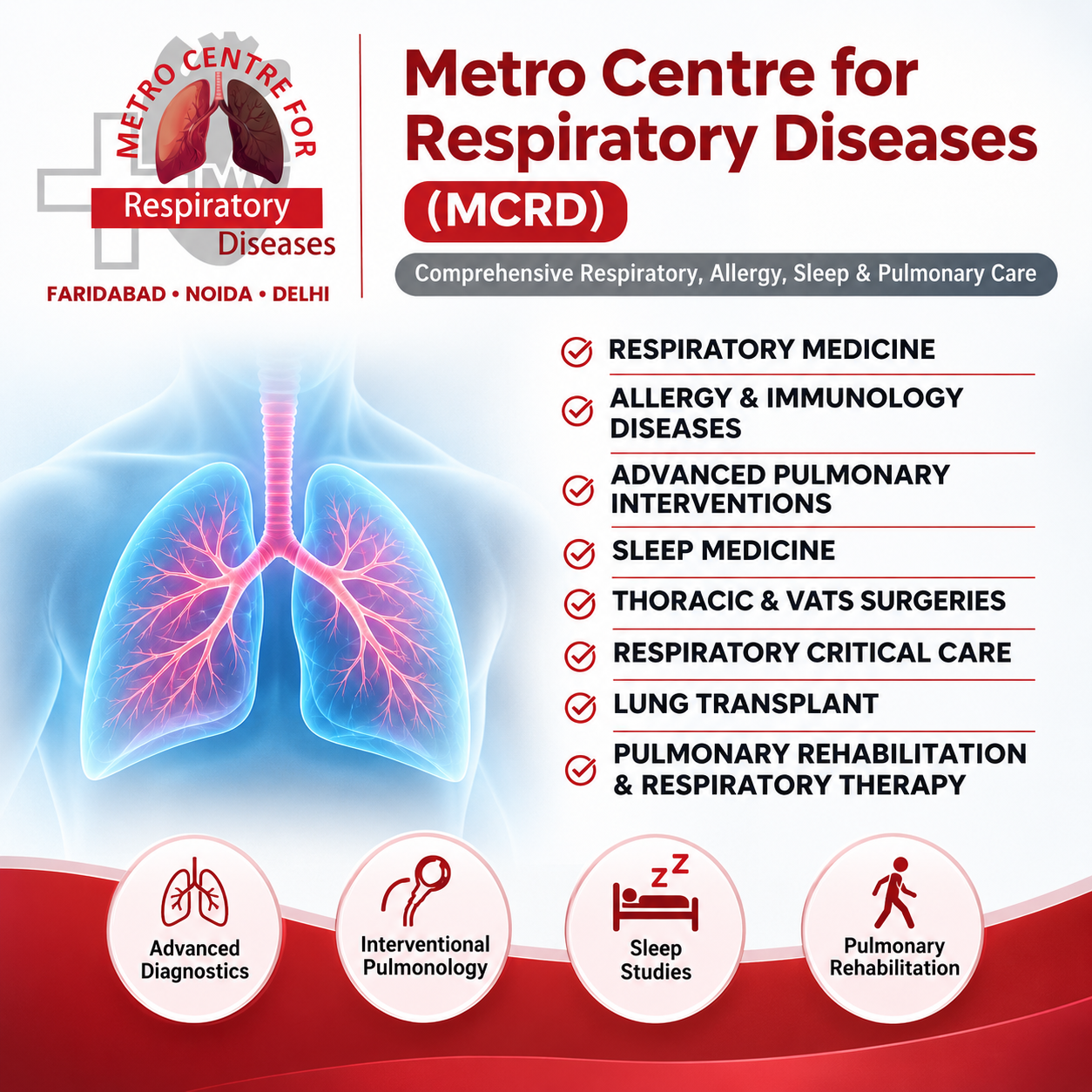
The Metro Centre for Respiratory Diseases (MCRD) at Metro Hospital is a comprehensive centre dedicated to the diagnosis, treatment and long-term management of respiratory and pulmonary disorders. Established under the leadership of Dr. Deepak Talwar, MCRD brings together respiratory medicine, allergy and immunology, advanced pulmonary interventions, sleep medicine, respiratory critical care, thoracic surgery, pulmonary rehabilitation and specialised lung-function diagnostics under one integrated programme.
MCRD was established by Dr. Deepak Talwar in 1999 with the vision of developing an advanced centre for complex respiratory diseases and chest-related procedures. Today, the centre provides specialised respiratory care supported by advanced diagnostic laboratories, pulmonary-function testing, interventional procedures and multidisciplinary critical-care services.
Comprehensive Respiratory Care Under One Roof
Respiratory diseases can range from common allergies and asthma to complex conditions such as COPD, interstitial lung disease, sleep-related breathing disorders, lung cancer and respiratory failure.
At MCRD, patients receive a comprehensive evaluation based on their symptoms, clinical history and appropriate diagnostic testing.
The centre provides specialised services in:
- Respiratory Medicine
- Allergy & Immunology Diseases
- Advanced Pulmonary Interventions
- Sleep Medicine
- Thoracic & VATS Surgery
- Respiratory Critical Care
- Lung Transplant Care
- Pulmonary Rehabilitation & Respiratory Therapy
The respiratory programme at Metro Hospital is integrated with critical-care services to support patients with severe and life-threatening respiratory conditions.
Conditions Treated at Metro Centre for Respiratory Diseases
MCRD provides evaluation and treatment for a wide spectrum of respiratory and chest conditions, including:
- Bronchial Asthma
- COPD
- Chronic Bronchitis
- Emphysema
- Respiratory Allergies
- Allergic Rhinitis
- Interstitial Lung Disease (ILD)
- Pneumonia
- Tuberculosis, including drug-resistant TB
- Pleural Effusion
- Pneumothorax
- Lung Infections
- Sleep Apnea
- Sleep-related Breathing Disorders
- Occupational Lung Diseases
- Autoimmune-related Lung Diseases
- Chronic Cough
- Unexplained Breathlessness
- Lung Nodules
- Lung Cancer
- Respiratory Failure
- Complex Airway Disorders
The existing Respiratory Medicine programme at Metro Hospital also manages asthma, respiratory allergies, COPD, ILD, lung cancer, autoimmune disorders, sleep-related disorders and chest-wall conditions.
Advanced Respiratory Diagnostic Labs at MCRD
Accurate diagnosis is the foundation of effective respiratory treatment. MCRD provides specialised laboratories and physiological tests to assess airway inflammation, allergies, nasal airflow, lung volumes, respiratory muscle strength, gas exchange and exercise capacity.
Allergy Lab
The Allergy Lab provides comprehensive evaluation of patients with suspected respiratory and allergic disorders.
It can support the assessment of conditions such as:
- Allergic rhinitis
- Bronchial asthma
- Recurrent respiratory allergies
- Environmental allergies
- Allergy-related breathing problems
The findings help respiratory specialists develop personalised allergy-management plans.
FeNO Test
Fractional Exhaled Nitric Oxide (FeNO) testing measures nitric oxide present in exhaled air.
It is particularly useful in evaluating eosinophilic airway inflammation and may support the assessment and monitoring of patients with asthma.
The test is:
- Non-invasive
- Quick
- Useful for airway-inflammation assessment
- Helpful in selected patients for monitoring treatment response
Rhinomanometry Test
Rhinomanometry measures airflow through the nose and the resistance encountered during nasal breathing.
It can help evaluate:
- Nasal obstruction
- Allergic rhinitis
- Structural nasal blockage
- Breathing difficulty through the nose
This test provides objective information about nasal airflow rather than relying only on symptoms.
Impulse Oscillometry Test
Impulse Oscillometry (IOS) is a specialised test used to assess airway resistance using gentle pressure waves during normal breathing.
It may be particularly useful in patients who find traditional forced-breathing tests difficult.
IOS can help evaluate:
- Asthma
- Small-airway dysfunction
- Airway obstruction
- Changes in airway resistance
Advanced Pulmonary Function Test Lab
MCRD has an Advanced Pulmonary Function Test Lab for detailed assessment of respiratory physiology and lung performance.
Testing helps doctors understand:
- How much air the lungs can hold
- How quickly air can move through the airways
- Whether airflow obstruction is present
- Whether lung volumes are reduced
- How effectively oxygen and gases move across the lungs
Complete Lung Function Test Lab
The Complete Lung Function Test Lab provides comprehensive assessment of lung mechanics and respiratory function.
Depending on clinical requirements, testing may include:
- Spirometry
- Lung-volume assessment
- Plethysmography
- Diffusion studies
- Airway-resistance measurements
These investigations can help evaluate conditions such as COPD, asthma, ILD and unexplained breathlessness.
Spirometry
Spirometry is one of the most important tests used to assess lung function.
It measures:
- FEV1 – the amount of air forcefully exhaled during the first second
- FVC – the total amount of air that can be forcefully exhaled
- FEV1/FVC ratio – an important measurement for assessing airflow obstruction
Spirometry is commonly used in the evaluation and monitoring of:
- COPD
- Asthma
- Chronic cough
- Breathlessness
- Occupational lung disease
Metro Hospital routinely provides pulmonary-function testing and spirometry as part of its respiratory services.
Spirometry & FRC Plethysmography
Body plethysmography provides a more detailed assessment of lung volumes than standard spirometry alone.
FRC or Functional Residual Capacity measurement helps determine how much air remains in the lungs after a normal breath out.
This testing can help assess:
- Air trapping
- Hyperinflation
- Restrictive lung disease
- Obstructive lung disease
- Complex breathing disorders
Diffusion Study
A Diffusion Study, commonly known as DLCO testing, evaluates how effectively gases move from the lungs into the bloodstream.
It can be especially useful in evaluating:
- Interstitial Lung Disease
- Emphysema
- Pulmonary vascular disorders
- Unexplained breathlessness
- Selected occupational lung diseases
Exercise & Functional Respiratory Assessment Lab
Respiratory symptoms often become most apparent during physical activity. MCRD provides specialised testing to assess how the lungs, heart and muscles respond to exercise.
Exercise Lab
The Exercise Lab evaluates a patient’s breathing response and functional capacity during physical activity.
It can help assess patients with:
- Exercise-induced breathlessness
- Reduced stamina
- Chronic respiratory disease
- Unexplained exercise limitation
Cardiopulmonary Exercise Test Lab
Cardiopulmonary Exercise Testing (CPET) provides an integrated assessment of:
- Heart function
- Lung function
- Oxygen consumption
- Exercise tolerance
- Cardiovascular and respiratory response to exertion
CPET can be useful when the cause of breathlessness cannot be clearly identified through routine resting investigations.
Respiratory Muscle Test
Respiratory muscle testing evaluates the strength of the muscles involved in breathing.
It may help in assessing:
- Respiratory muscle weakness
- Neuromuscular disorders
- Chronic respiratory failure
- Unexplained breathlessness
Six Minute Walk Test
The Six Minute Walk Test (6MWT) measures how far a person can comfortably walk in six minutes while monitoring functional exercise capacity.
It is commonly used to assess and monitor patients with:
- COPD
- Interstitial Lung Disease
- Pulmonary hypertension
- Chronic respiratory disease
- Reduced exercise tolerance
It may also be useful before and after pulmonary rehabilitation.
Advanced Pulmonary Interventions
MCRD provides specialised pulmonary procedures for patients who require advanced diagnostic or therapeutic respiratory care.
The broader Metro respiratory programme currently includes advanced investigations such as:
- Video-assisted bronchoscopy
- Bronchoscopy
- Endobronchial Ultrasound (EBUS)
- Medical thoracoscopy
- CT-guided respiratory procedures
- Pleural procedures
- Foreign-body removal
- Airway interventions
These procedures can assist in evaluating lung infections, airway obstruction, lung masses, enlarged lymph nodes, pleural disease and suspected lung cancer.
Allergy & Immunology Services
Respiratory allergies can significantly affect breathing and quality of life.
The MCRD Allergy & Immunology programme provides evaluation for conditions including:
- Allergic rhinitis
- Allergic asthma
- Environmental allergies
- Recurrent wheezing
- Allergy-related chronic cough
- Respiratory hypersensitivity disorders
Diagnostic assessment may include clinical evaluation together with specialised allergy and airway-inflammatory testing where appropriate.
Sleep Medicine
Sleep-related breathing disorders can affect both sleep quality and overall cardiovascular and respiratory health.
MCRD provides specialised evaluation for:
- Obstructive Sleep Apnea
- Snoring
- Sleep-related breathing disorders
- Excessive daytime sleepiness
- Nocturnal breathing difficulties
Sleep evaluation may include polysomnography or sleep studies where clinically appropriate.
Metro Hospital currently provides sleep studies as part of its Respiratory & Sleep Medicine programme.
Thoracic & VATS Surgery
The respiratory programme works with thoracic surgical specialists for patients who require surgical management of chest and lung disorders.
Video-Assisted Thoracoscopic Surgery (VATS) allows selected thoracic procedures to be performed through smaller incisions compared with conventional open surgery.
Thoracic surgical evaluation may be required for selected patients with:
- Lung lesions
- Pleural disease
- Pneumothorax
- Mediastinal disorders
- Lung tumours
- Other complex thoracic conditions
Respiratory Critical Care
Severe respiratory illness may rapidly become life-threatening.
MCRD is supported by respiratory critical-care services for patients with:
- Acute respiratory failure
- Severe COPD exacerbation
- Severe pneumonia
- Acute asthma
- ARDS
- Severe lung infections
- Complex respiratory emergencies
The respiratory department is integrated with critical care and supported by round-the-clock intensive-care specialists and advanced ventilatory equipment.
Critical-care support may include:
- Oxygen therapy
- Non-invasive ventilation
- CPAP/BiPAP
- Invasive mechanical ventilation
- Continuous respiratory monitoring
Lung Transplant Programme
Lung transplantation may be considered in carefully selected patients with advanced irreversible lung disease when standard medical treatment is no longer sufficient.
The MCRD programme provides multidisciplinary assessment and respiratory management for patients who may require advanced lung-transplant evaluation and continued respiratory care.
Patient eligibility depends on the underlying disease, overall health and detailed multidisciplinary assessment.
Pulmonary Rehabilitation & Respiratory Therapy
Pulmonary rehabilitation is an important component of long-term respiratory care, particularly for people with chronic lung disease.
The programme can combine:
- Supervised exercise
- Breathing exercises
- Respiratory muscle training
- Patient education
- Smoking-cessation support
- Lifestyle counselling
- Functional-capacity assessment
It may benefit patients with:
- COPD
- Chronic respiratory failure
- Interstitial Lung Disease
- Reduced exercise tolerance
- Persistent breathlessness
Metro Hospital’s Respiratory Medicine programme currently provides pulmonary rehabilitation with graduated muscle exercises and training for appropriate patients.
Chairman – Metro Centre for Respiratory Diseases
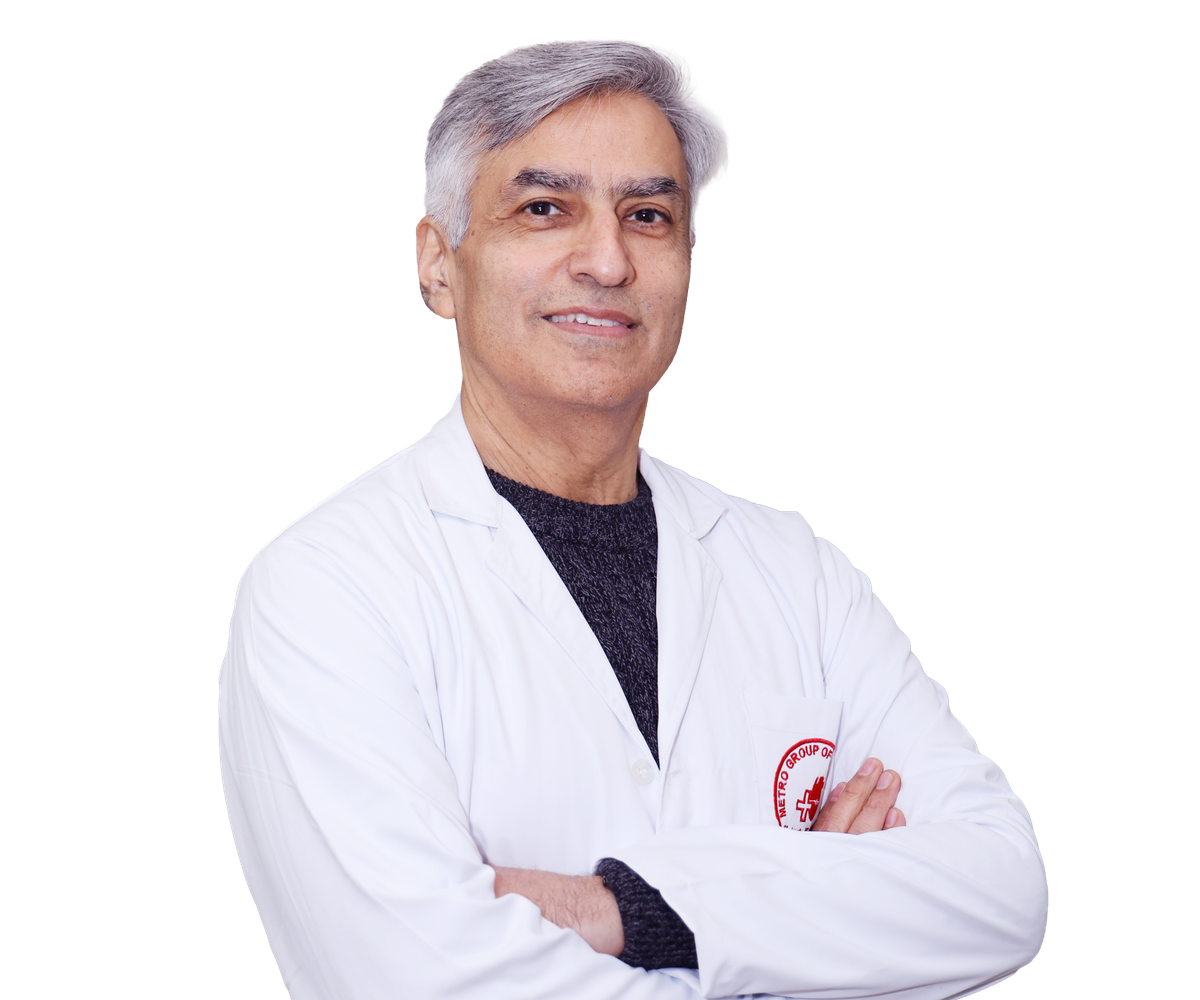
Dr. Deepak Talwar
Dr. Deepak Talwar is Chairman – Metro Centre for Respiratory Diseases and Director – Pulmonary, Allergy, Sleep & Critical Care, MCRD – Faridabad, Noida & Delhi. He is also associated with Pulmonology, Respiratory & Sleep Medicine and the MCRD Allergy Clinic at Metro Hospital.
Dr. Talwar established the Metro Centre for Respiratory Diseases in 1999 and has around four decades of clinical experience in respiratory medicine. His Metro profile highlights extensive experience in the management of complicated respiratory diseases and advanced chest-related procedures.
Areas of Respiratory Care
His clinical work includes management of patients with:
- COPD and chronic respiratory disease
- Bronchial asthma
- Respiratory allergies
- Complex lung disorders
- Sleep-related breathing disorders
- Respiratory critical-care conditions
- Advanced chest and pulmonary disorders
He has previously been associated with institutions including V. P. Chest Institute, RML Hospital, PGI Chandigarh and LNJPN Hospital.
Know more about Dr. Deepak Talwar.
Why Choose Metro Centre for Respiratory Diseases?
Comprehensive Respiratory Care
MCRD brings multiple respiratory specialties together, from routine lung evaluation to advanced pulmonary procedures and critical care.
Specialised Diagnostic Laboratories
The centre provides advanced respiratory testing including:
- Allergy Lab
- FeNO
- Rhinomanometry
- Impulse Oscillometry
- Spirometry
- Complete Lung Function Testing
- FRC Plethysmography
- Diffusion Study
- Exercise Testing
- Cardiopulmonary Exercise Testing
- Respiratory Muscle Testing
- Six Minute Walk Test
Advanced Pulmonary Interventions
Specialised diagnostic and therapeutic procedures support the management of complex airway, lung and pleural disorders.
Integrated Critical Care
The respiratory team works closely with intensive-care specialists for patients with severe respiratory illness.
Pulmonary Rehabilitation
Structured respiratory rehabilitation helps selected patients improve exercise capacity, functional independence and symptom management.
Leadership in Respiratory Medicine
MCRD is led by Dr. Deepak Talwar, who established the centre in 1999 and continues to provide specialist respiratory care as its Chairman.
When Should You Consult a Respiratory Specialist?
Consider consulting MCRD if you experience:
- Cough lasting several weeks
- Repeated wheezing
- Persistent breathlessness
- Chest tightness
- Excessive sputum
- Repeated respiratory infections
- Blood in sputum
- Reduced exercise tolerance
- Persistent nasal allergy
- Loud snoring with daytime sleepiness
- Abnormal chest X-ray or CT findings
- Difficulty controlling asthma or COPD
Early diagnosis can help identify the underlying cause and guide appropriate treatment.
Frequently Asked Questions
What is the Metro Centre for Respiratory Diseases?
Metro Centre for Respiratory Diseases, or MCRD, is Metro’s specialised programme for respiratory medicine, allergy and immunology, sleep medicine, advanced pulmonary interventions, respiratory critical care, pulmonary rehabilitation and specialised lung-function testing.
Who is the Chairman of Metro Centre for Respiratory Diseases?
Dr. Deepak Talwar is Chairman – Metro Centre for Respiratory Diseases and Director – Pulmonary, Allergy, Sleep & Critical Care, MCRD – Faridabad, Noida & Delhi.
Which lung-function tests are available at MCRD?
MCRD offers specialised tests including spirometry, complete lung-function testing, FRC plethysmography, diffusion studies, impulse oscillometry, respiratory muscle testing and exercise-based respiratory assessment.
Does MCRD provide allergy testing?
Yes. The centre has a dedicated Allergy Lab and specialised testing such as FeNO and rhinomanometry for selected respiratory and allergy conditions.
Does MCRD offer COPD and asthma treatment?
Yes. COPD, emphysema, chronic bronchitis, asthma and respiratory allergies are among the major conditions managed within Metro’s respiratory programme.
Is pulmonary rehabilitation available?
Yes. Pulmonary rehabilitation and respiratory therapy are available for appropriate patients, particularly those with chronic respiratory disease and reduced exercise capacity.
Does Metro Hospital provide sleep studies?
Yes. Sleep studies are provided for evaluation of sleep-related breathing disorders such as obstructive sleep apnea.
Does MCRD provide advanced pulmonary procedures?
Yes. The respiratory programme provides advanced diagnostic and interventional procedures including bronchoscopy and other specialised pulmonary interventions based on clinical need.
Comprehensive Respiratory Care at Metro Hospital
The Metro Centre for Respiratory Diseases brings together advanced diagnostics, experienced respiratory specialists, pulmonary interventions, sleep medicine, critical-care support and rehabilitation within one integrated respiratory-care programme.
From evaluating a persistent cough or allergy to managing COPD, ILD, respiratory failure and complex lung disease, MCRD is designed to provide patients with coordinated respiratory care supported by specialised laboratories and multidisciplinary expertise.
Under the leadership of Dr. Deepak Talwar, Chairman – Metro Centre for Respiratory Diseases, the centre continues its focus on comprehensive diagnosis and personalised management of respiratory diseases.
TEAM OF SPECIALISTS