Appointment
 Find A Doctor
 Lab Report
A Complete Guide to SGOT Test: Liver Health Indicators, Normal Range and Price
Oct 12, 2026
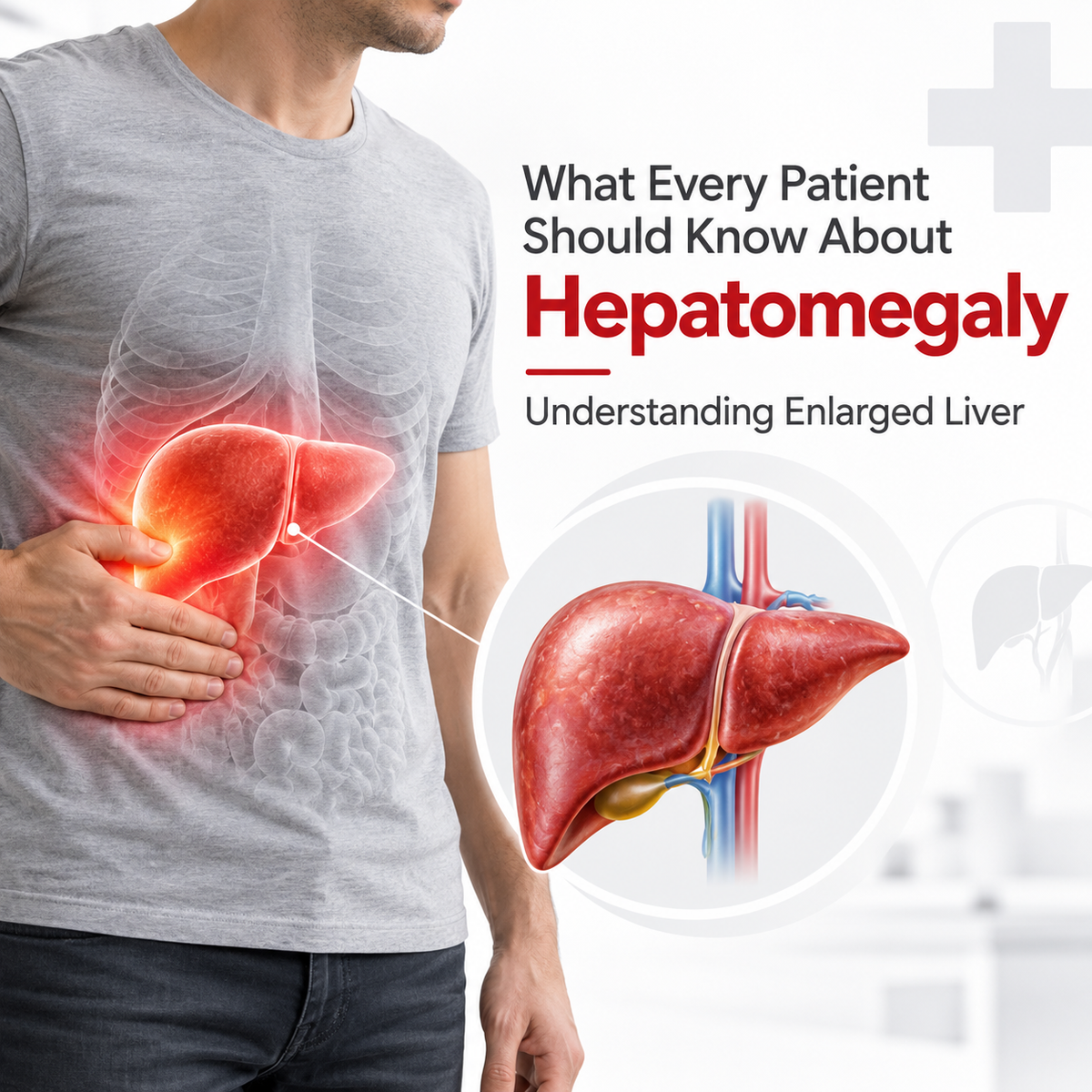
Hepatomegaly is the medical term for an enlarged liver. It is not a disease on its own. Instead, it usually signals that another health condition is affecting the liver, heart, blood vessels, metabolism, or other organs.
Some people with hepatomegaly have no symptoms and discover the problem only during a routine examination, ultrasound, or health check-up. Others may experience upper-right abdominal discomfort, fatigue, nausea, poor appetite, abdominal swelling, or jaundice.
Because the liver performs several essential functions—including processing nutrients, removing toxins, producing bile, storing energy, and supporting blood clotting—you should not ignore an enlarged liver. Identify and treat the underlying cause appropriately.
At Metro Hospital, Faridabad, patients with enlarged liver, fatty liver, hepatitis, cirrhosis, jaundice, abnormal liver enzymes, and other hepatobiliary conditions can receive specialist evaluation through the Medical Gastroenterology Department, with advanced diagnostic support such as ultrasound, CT, MRI, FibroScan, endoscopy, and other investigations when clinically required.
This guide explains what hepatomegaly means, its causes, symptoms, diagnosis, treatment, diet, possible complications, and when to consult a liver or gastroenterology specialist.
Hepatomegaly means that the liver is larger than expected for a person’s age, body size, and sex.
The liver is located mainly in the upper-right abdomen, just below the diaphragm. In a healthy adult, it has a predictable size range, although this varies somewhat between individuals.
An enlarged liver can occur because of:
Current clinical guidance generally considers hepatomegaly a sign of an underlying medical condition rather than a standalone diagnosis. Treatment therefore depends on finding and managing the actual cause.
Not necessarily.
The significance of an enlarged liver depends on:
For example, mild liver enlargement due to fatty liver may improve with weight management and metabolic control.
On the other hand, enlargement associated with advanced cirrhosis, heart failure, severe hepatitis, bile duct obstruction, or certain cancers requires more intensive evaluation and treatment.
The key point is that hepatomegaly should never be treated only as an imaging finding without understanding the cause.
The liver is one of the body’s most important organs.
Its functions include:
Because the liver is involved in so many processes, disease affecting it can eventually impact several other body systems.
Many causes can enlarge the liver.
Some are common and reversible, while others require specialist care.
Fatty liver disease is one of the most common causes of liver enlargement.
It occurs when too much fat accumulates within liver cells.
Today, metabolic fatty liver disease is often referred to as Metabolic Dysfunction-Associated Steatotic Liver Disease (MASLD).
Risk factors include:
Fatty liver frequently causes no obvious symptoms and may be discovered through an ultrasound or abnormal liver enzymes.
Some people remain at the simple fatty liver stage, while others may develop inflammation, fibrosis, and eventually cirrhosis.
Patients with fatty liver or abnormal liver tests can seek evaluation through the Medical Gastroenterology Department at Metro Hospital, Faridabad, which specifically manages fatty liver disease, hepatitis, cirrhosis, and elevated liver enzymes.
Excessive or long-term alcohol intake can cause fat accumulation and inflammation in the liver.
Over time, this may progress through stages such as:
An enlarged liver may occur during earlier stages, while advanced cirrhosis can sometimes cause the liver to become smaller and scarred.
If liver enlargement is associated with alcohol use, complete alcohol avoidance may be advised depending on clinical findings.
Viral infections can inflame and enlarge the liver.
Common viruses include:
Symptoms may include:
Chronic hepatitis B and C can lead to progressive liver damage if not properly managed.
Metro Hospital’s Medical Gastroenterology Department manages hepatitis B, hepatitis C, cirrhosis, portal hypertension, and related liver diseases.
Cirrhosis is advanced scarring of the liver caused by long-term liver injury.
Possible causes include:
The liver may initially enlarge during some stages of chronic liver disease.
As cirrhosis progresses, symptoms may include:
Portal hypertension is an important complication of cirrhosis and may cause fluid accumulation, an enlarged spleen, and bleeding from abnormal veins in the digestive tract.
The liver can also enlarge when blood backs up into it because the heart cannot pump effectively.
This is sometimes called congestive hepatopathy.
Possible associated symptoms include:
Heart failure is a recognised cause of hepatomegaly.
Blockage in the bile ducts may cause abnormal bile flow and affect the liver.
Possible causes include:
Patients may experience:
Metro Hospital’s Gastroenterology Department offers procedures such as ERCP and endoscopic ultrasound for selected biliary and pancreatic conditions.
Certain fluid-filled liver cysts or noncancerous tumours can enlarge the liver.
Examples include:
Many are discovered incidentally during imaging.
Treatment depends on their size, symptoms, and type.
Primary liver cancer can cause enlargement.
Cancer originating elsewhere in the body and spreading to the liver may also increase liver size.
Possible warning signs may include:
However, these symptoms are not specific to cancer and can occur with many other conditions.
Certain inherited conditions can enlarge and damage the liver.
Examples include:
These conditions require specialist evaluation because untreated disease can affect the liver and other organs.
Some medicines and supplements can injure the liver.
Potential risks include:
Mayo Clinic specifically notes that medicines, vitamins, and herbal supplements can contribute to liver damage when used inappropriately or at excessive doses.
Always tell your doctor about all medicines and supplements you take.
Many people with mild hepatomegaly have no symptoms.
When symptoms occur, they may include:
The liver is located in the right upper abdomen.
An enlarged liver may cause:
The discomfort may worsen after meals or with movement.
Chronic liver disease often causes persistent tiredness.
Some patients describe:
Liver inflammation or biliary disease may cause nausea and vomiting.
Poor appetite can occur in several liver diseases.
Persistent appetite loss combined with weight loss requires medical evaluation.
Jaundice causes yellowing of:
It occurs when bilirubin accumulates in the bloodstream.
Assess jaundice associated with hepatomegaly promptly.
Bilirubin may darken the urine when liver function or bile flow is abnormal.
Bile duct obstruction may make stools unusually pale or clay-coloured.
Advanced liver disease may cause fluid accumulation known as ascites.
Ascites can cause:
Cirrhosis and portal hypertension are common causes of ascites.
Fluid retention may cause swelling in the ankles or legs.
Evaluate significant unexplained weight loss, especially if it’s accompanied by liver enlargement or poor appetite.
Diagnosis begins with identifying both the enlarged liver and the cause.
A doctor may examine the abdomen to estimate:
However, physical examination alone is not enough to determine the cause.
Blood tests may include:
Elevated liver enzymes can indicate inflammation or injury, but the pattern varies by condition.
CBC may help identify:
Low platelet levels may occur in advanced portal hypertension.
Testing may include markers for:
Because fatty liver is strongly associated with metabolic disease, doctors may check:
Ultrasound is one of the most commonly used imaging tests for evaluating an enlarged liver.
It can help identify:
Abdominal ultrasound is commonly used as an early investigation when liver disease is suspected.
CT imaging may provide more detailed information about:
MRI can provide detailed soft-tissue imaging and may be used in selected liver conditions.
FibroScan is a non-invasive test that can assess liver stiffness and fat-related changes.
Metro Hospital lists FibroScan among its liver and gastroenterology diagnostic services.
A liver biopsy may be recommended when the diagnosis remains unclear or when doctors need to assess the degree of inflammation or fibrosis.
Doctors take a small liver tissue sample and examine it in a laboratory.
Blood tests, ultrasound, CT, MRI, elastography, and biopsy may all play a role in evaluating hepatomegaly, depending on the suspected cause.
No.
Fatty liver can cause hepatomegaly, but not every enlarged liver is due to fatty liver.
Other causes include:
Therefore, an ultrasound report stating “hepatomegaly” does not automatically mean fatty liver.
The underlying liver appearance and blood tests matter.
Yes, in some cases.
Whether the liver can return towards normal depends on the cause.
For example:
Weight reduction, better diabetes control, improved diet, and regular exercise may reduce liver fat and improve liver size.
Stopping alcohol can allow significant improvement in early stages.
Treating the underlying infection or inflammation can improve liver health.
Improving heart function and reducing fluid congestion may reduce liver enlargement.
However, advanced cirrhosis and permanent scarring may not completely reverse.
No single medication treats an enlarged liver.
The treatment targets the underlying cause.
Management may include:
Lifestyle-based treatment can play an important role in metabolic fatty liver.
Depending on the virus, treatment may include:
Chronic hepatitis B and C require specialist management.
Treatment generally includes complete alcohol cessation.
Additional care may include:
A blocked bile duct may require:
Metro Hospital’s Medical Gastroenterology Department provides ERCP and therapeutic endoscopic services where clinically appropriate.
Patients with advanced cirrhosis may require management of:
In selected advanced cases, liver transplantation may be considered.
Metro Hospital also offers liver transplant and hepatobiliary surgical services within its multispeciality setup.
There is no single universal diet for hepatomegaly.
Diet depends on the underlying condition.
For many patients with fatty liver or metabolic liver disease, a healthy eating pattern may include:
Very rapid weight loss is not recommended.
Gradual weight reduction is generally safer and more sustainable.
Excessive intake of:
can contribute to metabolic problems associated with fatty liver.
If you have an enlarged liver, discuss alcohol use with your doctor.
In several liver conditions, complete avoidance may be advised.
No reliable herbal remedy can universally treat hepatomegaly.
Some herbal products can actually injure the liver.
Do not take products marketed as:
without discussing them with a healthcare professional.
The safest approach is to identify and treat the underlying cause.
Consult a gastroenterologist or hepatologist if you have:
A specialist can help determine whether the problem is mild and reversible or requires further investigation.
Seek urgent medical attention if liver enlargement is associated with:
These symptoms may indicate serious liver or biliary complications.
Because an enlarged liver can result from many different diseases, treatment needs to be based on the underlying diagnosis rather than liver size alone.
Metro Hospital, Faridabad provides comprehensive evaluation through its Medical Gastroenterology Department.
The department manages conditions including:
Metro Hospital also provides diagnostic and therapeutic facilities including:
for selected patients.
Patients can also consult Dr. Vishal Khurana – Gastroenterologist in Faridabad, Director & HOD – Gastroenterology & Hepatobiliary Sciences at Metro Hospital, for evaluation of liver and hepatobiliary disorders.
For conditions requiring surgical intervention involving the liver, gallbladder, bile ducts, pancreas, or gastrointestinal tract, Metro Hospital’s coordinated gastroenterology and surgical services can support further management.
This multidisciplinary setup makes Metro Hospital a strong option for patients seeking enlarged liver treatment in Faridabad, particularly when hepatomegaly is associated with fatty liver, hepatitis, jaundice, bile duct disease, or other complex liver conditions.
Hepatomegaly means an enlarged liver. It usually signals an underlying condition rather than a disease on its own.
Fatty liver disease is a common cause, but hepatitis, alcohol-related liver disease, heart failure, cirrhosis, bile duct obstruction, and other conditions can also cause liver enlargement.
It can range from mild and reversible to serious, depending on the underlying cause. Therefore, identify the cause rather than judging severity from liver size alone.
Yes. Fat accumulation inside liver cells can enlarge the liver, especially in people with obesity, diabetes, or other metabolic risk factors.
Sometimes. Fatty liver, early alcohol-related disease, certain infections, and congestion related to heart conditions may improve when the underlying cause is successfully treated.
Symptoms may include right upper abdominal discomfort, fatigue, nausea, jaundice, poor appetite, abdominal swelling, or dark urine. Some people have no symptoms.
Ultrasound is commonly used initially. Depending on the findings, doctors may also recommend blood tests, CT, MRI, FibroScan, or a biopsy.
The advice depends on the cause, but reducing sugary drinks, excessive processed foods, alcohol, and excess calories is often useful in metabolic fatty liver disease.
A gastroenterologist or hepatologist is generally the appropriate specialist for an enlarged liver, particularly when liver enzymes are abnormal or symptoms are present.
Patients with enlarged liver or other liver conditions can seek evaluation through the Medical Gastroenterology Department at Metro Hospital, Faridabad, which provides liver diagnostics, FibroScan, endoscopic services, and specialist gastroenterology care.
Hepatomegaly, or an enlarged liver, should be seen as a sign that requires explanation, not a diagnosis in itself.
Common causes include:
Some causes are reversible, especially when diagnosed early.
Others may require long-term specialist care.
If an ultrasound shows hepatomegaly, the next step should be to identify the cause through appropriate blood tests, imaging, metabolic assessment, and specialist evaluation.
At Metro Hospital, Faridabad, patients can receive comprehensive liver and hepatobiliary care through the Medical Gastroenterology Department, with access to diagnostic tools such as FibroScan, advanced imaging, endoscopic ultrasound, and ERCP where clinically indicated.
Early evaluation can help distinguish simple fatty liver from hepatitis, bile duct disease, cirrhosis, or another underlying condition—and guide treatment before significant complications develop.
Disclaimer: This blog is intended for general health awareness and educational purposes only. It is not a substitute for professional medical diagnosis or treatment. Consult a qualified gastroenterologist or hepatologist for an enlarged liver or abnormal liver test results.
The SGOT test, also known as the AST test, is one of the most commonly ordered blood tests for assessing...

Women’s Health Matters: Common Gynaecological Issues in Winters Winter brings relief from the scorching summer heat, but it also introduces...