Appointment
 Find A Doctor
 Lab Report
Pancreatic Cancer Awareness Month 2026: Symptoms, Risk Factors, Diagnosis and Treatment
Nov 3, 2026
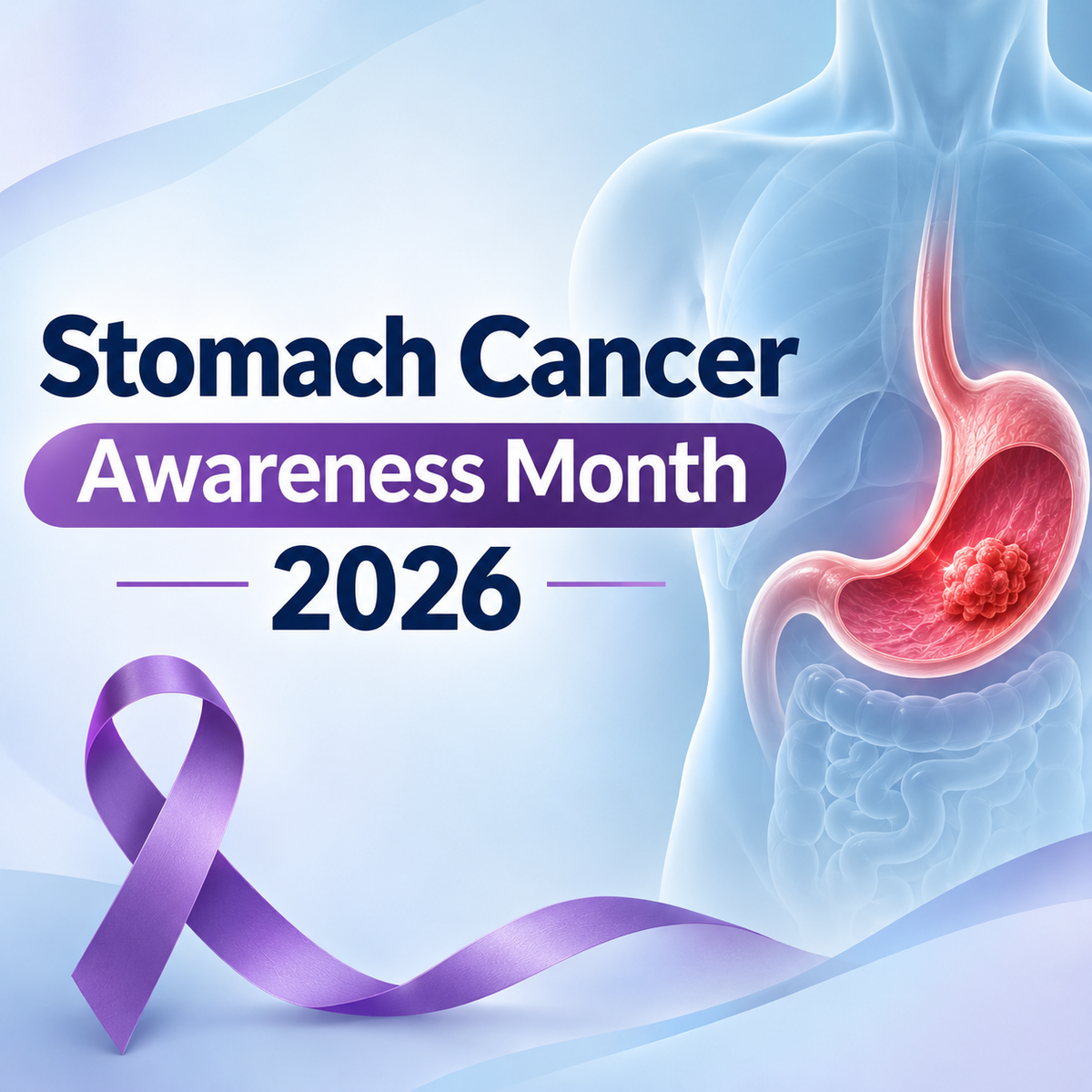
Stomach Cancer Awareness Month 2026 is observed throughout November to raise awareness of gastric cancer, its warning signs, risk factors, prevention, early diagnosis, and treatment.
No Stomach For Cancer established the awareness initiative and first championed Stomach Cancer Awareness Month in 2010. Its goals include educating people about stomach cancer risk factors, promoting earlier detection, supporting research and helping families affected by the disease.
Stomach cancer, also called gastric cancer, develops when abnormal cells begin growing uncontrollably in the stomach lining. One of the major challenges is that early stomach cancer may cause few or no obvious symptoms. When symptoms do appear, they can resemble common digestive problems such as indigestion, acidity, bloating or mild stomach discomfort.
That is why persistent digestive symptoms should not always be dismissed as “gas” or acidity, especially when they occur with weight loss, vomiting, blood in the stool, difficulty swallowing or loss of appetite.
At Metro Hospital, Faridabad, patients with persistent stomach symptoms can seek evaluation through the Medical Gastroenterology Department, which provides upper GI endoscopy, endoscopic ultrasound and other advanced gastrointestinal investigations. Patients diagnosed with stomach cancer can access multidisciplinary cancer care through Metro Cancer Institute, including Surgical Oncology for procedures such as gastrectomy.
This detailed guide explains Stomach Cancer Awareness Month 2026, early symptoms, H. pylori infection, risk factors, diagnosis, staging, surgery, chemotherapy, immunotherapy, targeted therapy and prevention.
Stomach Cancer Awareness Month is observed throughout November 2026.
No Stomach For Cancer designates November as the awareness month and uses it to encourage education, advocacy, fundraising, and research on gastric cancer.
The main goals are to:
Stomach cancer begins when stomach cells develop abnormal changes and start multiplying uncontrollably.
The most common type is gastric adenocarcinoma, which develops from gland-forming cells in the stomach lining.
Other less common stomach cancers include:
NCI notes that gastric adenocarcinoma is the main form of stomach cancer, while some other cancers can also originate in the stomach.
Early gastric cancer frequently causes either:
For example, early stomach cancer may cause:
These symptoms are far more commonly caused by benign digestive problems, so patients may ignore them for months. NCI states that stomach cancer often does not cause obvious symptoms early and may therefore be difficult to detect at an early stage.
Indigestion is extremely common and usually not caused by cancer.
However, persistent or worsening indigestion deserves medical evaluation if it:
NCI lists indigestion and stomach discomfort among possible early stomach cancer symptoms.
Some patients may experience:
This symptom alone is not specific for cancer.
However, persistent bloating combined with appetite loss or weight loss should be evaluated.
Early satiety means feeling full after eating only a small amount.
A tumour may affect:
Persistent early fullness deserves attention, particularly when weight loss develops.
A reduced desire to eat can occur because of many medical problems.
When persistent and associated with:
it should be medically assessed.
Stomach cancer may cause:
NCI includes stomach pain among symptoms that can occur as gastric cancer progresses.
Losing weight without intentionally dieting is an important warning sign.
Cancer-related weight loss may occur because of:
Unexplained weight loss combined with digestive symptoms warrants evaluation.
Nausea and vomiting can occur when a tumour interferes with normal stomach emptying or causes irritation.
More concerning features include:
Bleeding from the stomach may cause stool to appear:
This happens because blood is digested as it passes through the gastrointestinal tract.
NCI lists blood in the stool among symptoms of more advanced stomach cancer.
Black stool can also result from ulcers and other gastrointestinal conditions, so urgent evaluation is important.
Slow gastrointestinal bleeding can cause iron-deficiency anaemia.
Possible symptoms include:
NCI notes that blood tests may identify anaemia in patients undergoing assessment for suspected stomach cancer.
Difficulty swallowing is more commonly associated with oesophageal disease, but it may also occur when tumours affect the upper stomach or gastroesophageal junction.
Progressive difficulty swallowing, especially with weight loss, requires prompt investigation.
When stomach cancer spreads or becomes more advanced, additional symptoms may include:
NCI lists these among symptoms that can occur when stomach cancer has progressed.
One of the most important risk factors for stomach cancer is Helicobacter pylori infection.
H. pylori is a bacterium that can live in the stomach lining.
Chronic infection can lead to:
NCI identifies chronic H. pylori infection as a major risk factor for gastric adenocarcinoma and notes that treating the infection can reduce the risk of some stomach cancers.
No.
H. pylori is common, and most infected people never develop stomach cancer.
Risk depends on factors such as:
Nevertheless, treat persistent H. pylori infection when clinically indicated.
This is one of the strongest known risk factors, particularly for cancers in the main part of the stomach.
Stomach cancer becomes more common with age.
However, it can also occur in younger adults.
Having a first-degree relative with stomach cancer may increase risk.
Certain inherited syndromes can substantially raise risk.
Cigarette smoking increases stomach cancer risk.
NCI notes that risk decreases over time after smoking cessation.
A diet high in:
is associated with increased gastric cancer risk.
Low consumption of fresh fruits and vegetables has also been associated with increased risk.
Long-term inflammation and thinning of the stomach lining may increase the likelihood of precancerous changes.
Intestinal metaplasia occurs when normal stomach cells are replaced by cells resembling intestinal tissue.
It can develop after long-standing gastritis and is considered a precancerous condition in some patients.
Pernicious anaemia is associated with chronic autoimmune gastritis and increased stomach cancer risk.
Inherited conditions associated with higher risk include:
Some families carry inherited genetic variants that strongly increase the risk of diffuse gastric cancer.
A well-known example is a pathogenic variant in the CDH1 gene.
People with a strong family history may require:
Family history is therefore an important part of gastric-cancer risk assessment.
Not every case can be prevented.
However, several modifiable factors may help reduce risk.
NCI evidence indicates that eradication of H. pylori can reduce gastric-cancer risk in some populations.
Smoking cessation reduces gastric-cancer risk over time.
Avoid excessive intake of:
A balanced diet can include:
Diet alone cannot guarantee cancer prevention, but healthier eating supports overall cancer and cardiovascular health.
Many countries do not routinely recommend a single standard screening test for average-risk people.
NCI notes that there is no standard population screening test for stomach cancer.
However, people with significantly increased risk may need specialist surveillance.
These may include individuals with:
Doctors may ask about:
Blood tests may identify:
Occult blood testing may identify hidden gastrointestinal bleeding.
Upper gastrointestinal endoscopy is one of the most important tests for diagnosing stomach cancer.
A thin flexible camera is passed through the mouth to examine the:
Suspicious areas can be directly visualised.
NCI lists upper endoscopy with biopsy as a key diagnostic procedure for stomach cancer.
Metro Hospital’s Medical Gastroenterology Department provides upper GI endoscopy, endoscopic ultrasound and other advanced gastrointestinal diagnostic procedures.
If an abnormal area is seen, doctors can remove a small tissue sample.
A pathologist examines the sample to determine:
A biopsy is generally required to confirm gastric cancer.
EUS can help assess:
Metro Hospital lists endoscopic ultrasound among its gastroenterology diagnostic services.
CT imaging helps determine:
PET-CT may be useful for selected patients during staging.
Metro Cancer Institute lists in-house PET-CT as part of its oncology diagnostic infrastructure.
Staging describes how far the cancer has spread.
Doctors consider:
Broadly, gastric cancer may be:
Treatment varies substantially according to stage.
Modern treatment usually involves a multidisciplinary approach.
Depending on stage and tumour biology, treatment may include:
NCI emphasises multidisciplinary staging and treatment planning because surgery may need to be combined with chemotherapy or radiation.
Selected very early gastric cancers may be treated using endoscopic removal techniques.
NCI lists endoscopic mucosal resection among treatment options for selected early-stage disease.
Eligibility depends on:
Surgery remains a key potentially curative treatment for resectable gastric cancer.
Part of the stomach is removed.
The entire stomach is removed when necessary.
Surgeons commonly remove regional lymph nodes at the same time.
NCI identifies surgical resection with lymph-node removal as a principal treatment for localised gastric cancer.
Metro Hospital’s Surgical Oncology Department specifically lists gastrectomy among its gastrointestinal cancer surgeries.
Chemotherapy may be given:
For some resectable cancers, perioperative chemotherapy is used around the time of surgery. NCI lists perioperative chemotherapy as a standard option for stage II and III gastric cancer.
Metro Cancer Institute provides chemotherapy for solid tumours including gastrointestinal cancers.
Radiation therapy may be used:
It can help control:
NCI notes that palliative radiation can help relieve bleeding, pain and obstruction in advanced disease.
Modern gastric cancer treatment increasingly depends on tumour biomarkers.
Testing may include markers such as:
These results may help determine whether targeted or immune-based treatments are appropriate.
Some stomach cancers overexpress HER2.
HER2-positive metastatic cancers may be treated with HER2-targeted therapy such as trastuzumab combined with systemic treatment in appropriate patients.
CLDN18.2 is another biomarker now relevant in selected advanced gastric cancers.
NCI lists zolbetuximab-based therapy among treatment options for appropriately selected CLDN18.2-positive, HER2-negative metastatic gastric cancer.
Immunotherapy may be used for selected gastric cancers depending on:
Drugs used in modern gastric-cancer care may include immune checkpoint inhibitors such as nivolumab or pembrolizumab in appropriately selected patients.
Stomach surgery can significantly change digestion.
Patients may require:
Some people develop dumping syndrome, where food moves rapidly into the small intestine.
Symptoms may include:
Specialist nutritional support can help manage these changes.
Stomach cancer often requires coordination between:
Metro Cancer Institute provides multidisciplinary cancer care that integrates Medical Oncology, Surgical Oncology, and Radiation Oncology, while Metro Hospital’s Gastroenterology services support endoscopic diagnosis and gastrointestinal treatment.
Patients with suspicious digestive symptoms can begin evaluation through the Medical Gastroenterology Department at Metro Hospital, Faridabad.
Services include:
For confirmed stomach cancer, treatment can be coordinated through Metro Cancer Institute, which manages gastric and other gastrointestinal cancers with chemotherapy, targeted treatment, immunotherapy, surgery and radiation therapy.
Patients requiring surgery can access Surgical Oncology, which lists partial or total gastrectomy-related gastric cancer surgery among its gastrointestinal oncology services.
Additional GI surgical support is available through the Surgical Gastroenterology Department, which works collaboratively with oncology, radiology and nutrition specialists.
Seek medical evaluation for:
These symptoms are often caused by conditions other than stomach cancer, but persistent symptoms deserve proper evaluation.
False.
Most acidity is benign, but symptoms that persist, worsen or occur with weight loss, vomiting or bleeding should be investigated.
False.
Most people with H. pylori do not develop gastric cancer, although chronic infection increases risk.
False.
Early gastric cancer may produce very mild symptoms or none at all.
False.
Upper GI endoscopy is also an important test for investigating suspected stomach cancer and allows biopsy of suspicious tissue.
False.
Treatment may include surgery, chemotherapy, radiation therapy, targeted treatment or immunotherapy depending on stage and biomarkers.
Stomach Cancer Awareness Month is observed throughout November 2026.
Possible early symptoms include indigestion, stomach discomfort, bloating after meals, mild nausea, loss of appetite and heartburn.
Chronic H. pylori infection is a major risk factor for gastric adenocarcinoma, although most infected people never develop cancer.
Yes. Bleeding from a stomach tumour may cause black or tarry stool, although ulcers and other digestive conditions can also cause this symptom.
Upper GI endoscopy with biopsy is a key diagnostic test.
Some early and localised stomach cancers can be treated with curative intent, particularly when complete surgical removal is possible. Outcomes depend heavily on stage.
Treatment may involve partial or total gastrectomy together with regional lymph-node removal.
Yes. Immunotherapy may be used in selected advanced gastric cancers depending on tumour biomarkers and treatment setting.
Not all cases can be prevented, but treating H. pylori when appropriate, avoiding smoking and reducing excess salt intake may help lower risk.
Patients can seek evaluation and multidisciplinary treatment through Metro Hospital and Metro Cancer Institute, Faridabad, supported by Medical Gastroenterology, Surgical Oncology and Surgical Gastroenterology services.
Stomach Cancer Awareness Month 2026 is observed throughout November to improve awareness about gastric cancer and encourage earlier recognition of persistent symptoms.
Important warning signs include:
Most of these symptoms are commonly caused by non-cancerous conditions. However, symptoms that persist, worsen or occur with bleeding or weight loss should not be repeatedly treated only as acidity.
An important risk factor is H. pylori infection, which can cause chronic inflammation and precancerous changes in some people. Smoking, family history, excessive intake of salted or smoked foods and certain stomach conditions also increase risk.
Diagnosis usually involves upper GI endoscopy and biopsy, followed by imaging and staging when cancer is confirmed. Treatment may include surgery, chemotherapy, radiation therapy, immunotherapy and biomarker-directed targeted treatment.
At Metro Hospital, Faridabad, people with persistent digestive symptoms can access endoscopic evaluation through the Medical Gastroenterology Department. Patients diagnosed with gastric cancer can receive multidisciplinary treatment through Metro Cancer Institute and Surgical Oncology, including gastric cancer surgery where appropriate.
This Stomach Cancer Awareness Month, do not ignore persistent digestive symptoms—especially when they occur with unexplained weight loss, vomiting, anaemia or gastrointestinal bleeding.
Disclaimer: This article is intended for general health education only. Digestive symptoms are commonly caused by non-cancerous conditions, and stomach cancer cannot be diagnosed from symptoms alone. Consult a qualified gastroenterologist or oncology specialist for persistent or concerning symptoms.