Appointment
 Find A Doctor
 Lab Report

Dengue Symptoms Day by Day: When Does It Become Dangerous?
Oct 30, 2026
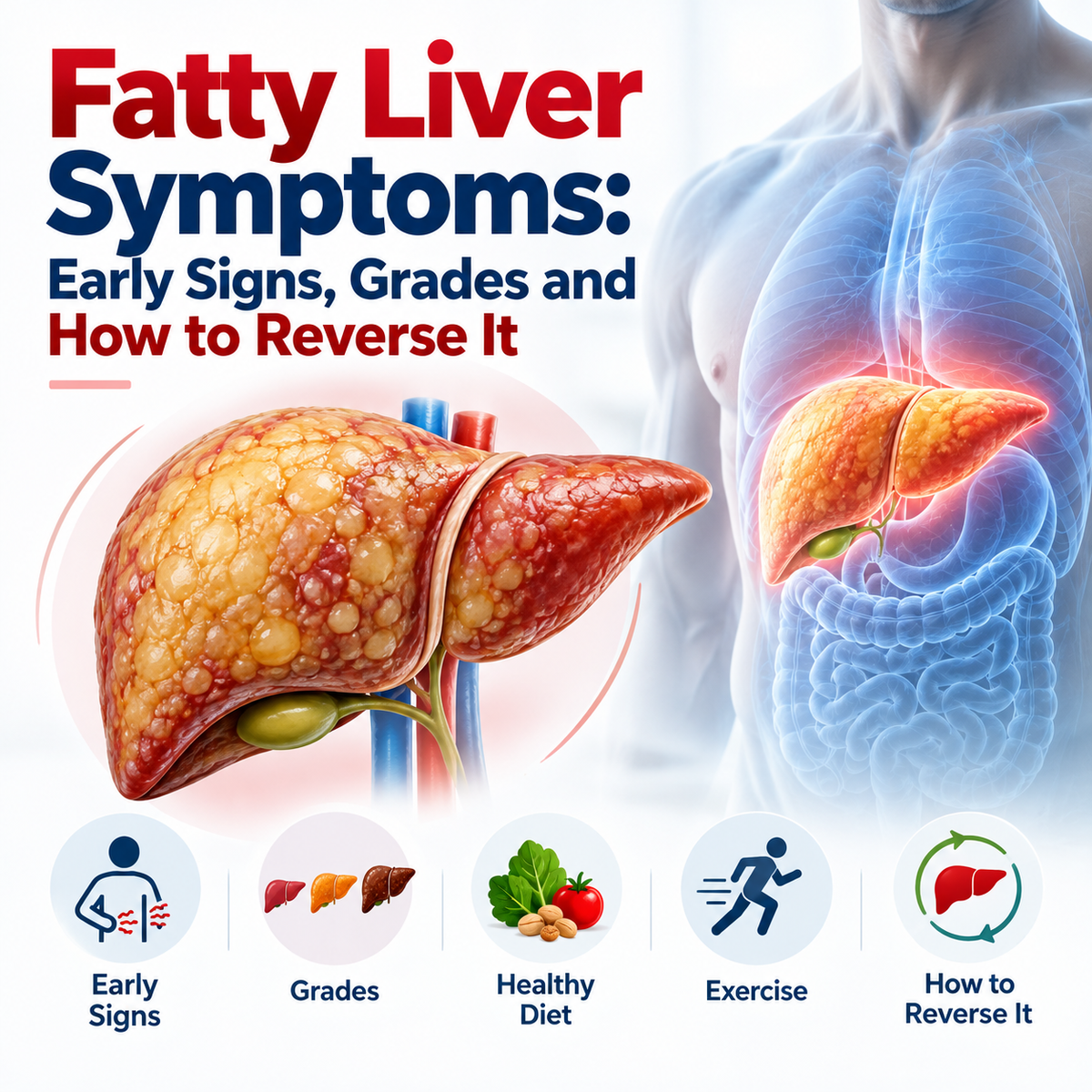
Fatty liver disease is one of the most common liver conditions today, and it often develops silently. Many people have excess fat in the liver for years without obvious symptoms, only discovering it during an ultrasound, routine blood test or health check-up.
The condition is now increasingly referred to as metabolic dysfunction-associated steatotic liver disease (MASLD), replacing the older term nonalcoholic fatty liver disease (NAFLD). MASLD refers to excess fat in the liver in people who also have at least one cardiometabolic risk factor such as overweight, diabetes, high blood pressure or abnormal cholesterol.
In its early stages, fatty liver may cause little or no permanent liver damage. However, in some people it can progress to inflammation, fibrosis, cirrhosis and, eventually, serious liver complications.
The encouraging part is that fatty liver can often improve significantly, especially when identified early. Weight loss, regular physical activity, better diabetes control and healthier dietary habits can reduce liver fat and may also improve inflammation and fibrosis. NIDDK notes that losing around 3–5% of body weight can reduce liver fat, while larger sustained weight loss may be needed to improve inflammation and fibrosis.
At Metro Hospital, Faridabad, patients with fatty liver, abnormal liver enzymes, abdominal discomfort and other liver-related concerns can seek specialist evaluation through the Medical Gastroenterology Department. The department manages fatty liver and other liver disorders and provides diagnostic and therapeutic gastroenterology services.
This guide explains fatty liver symptoms, early warning signs, fatty liver grades, causes, diagnosis, fibrosis risk, treatment and how fatty liver may be reversed or improved.
Fatty liver disease occurs when excess fat accumulates inside liver cells.
A small amount of fat in the liver may be normal, but when fat builds up beyond a healthy level, it is considered hepatic steatosis.
The modern umbrella term is steatotic liver disease (SLD).
When fatty liver occurs in association with metabolic risk factors, it is called:
MASLD – Metabolic Dysfunction-Associated Steatotic Liver Disease
A more advanced form involving inflammation and liver-cell injury is called:
MASH – Metabolic Dysfunction-Associated Steatohepatitis
This replaces the older terminology of NAFLD and NASH.
One of the biggest challenges with fatty liver is that it often causes no symptoms at all.
NIDDK describes MASLD as a “silent disease” because many people have few or no symptoms, even when liver damage has progressed.
When symptoms do occur, they may include:
Feeling unusually tired is one of the more commonly reported symptoms.
You may experience:
Fatigue is non-specific and can also occur with:
So fatigue alone cannot diagnose fatty liver.
Some people experience a dull ache, pressure or discomfort in the upper right side of the abdomen, where the liver is located.
NIDDK specifically lists discomfort in the upper right abdomen among the possible symptoms of fatty liver.
This discomfort is usually:
Severe abdominal pain is not typical of uncomplicated fatty liver and should be evaluated for other causes.
An enlarged liver may cause a sensation of heaviness in the upper abdomen.
This is more likely when there is significant liver enlargement or associated metabolic disease.
General weakness may occur alongside fatigue.
However, because this symptom is nonspecific, blood tests and imaging may be needed to identify the cause.
Many people first discover fatty liver because routine blood tests show raised:
AASLD notes that MASLD is frequently identified incidentally when blood tests reveal elevated aminotransferases or imaging shows fatty infiltration of the liver. Normal liver enzymes, however, do not rule out fatty liver.
A doctor may occasionally detect an enlarged liver during examination.
NIDDK notes that hepatomegaly can be a finding associated with fatty liver.
Metro Hospital has also published guidance on Hepatomegaly and Enlarged Liver, including fatty liver as one of the common underlying causes.
If fatty liver progresses to advanced fibrosis or cirrhosis, symptoms may become more obvious.
Possible warning signs include:
These symptoms suggest more advanced liver disease and require specialist evaluation.
Fatty liver is strongly linked to metabolic health.
Important risk factors include:
Excess body fat, especially around the abdomen, increases the likelihood of fat accumulating in the liver.
Insulin resistance is closely associated with fatty liver.
People with type 2 diabetes are at significantly higher risk of MASLD and its more severe inflammatory form.
Elevated triglycerides are commonly associated with fatty liver.
High LDL cholesterol or low HDL cholesterol may accompany metabolic fatty liver.
Hypertension is a metabolic risk factor associated with MASLD.
Metabolic syndrome generally involves several of the following:
NIDDK identifies obesity, insulin resistance, type 2 diabetes, abnormal cholesterol and metabolic syndrome among the main conditions associated with fatty liver.
Yes.
Fatty liver is more common in people who are overweight, but it can also occur in people with normal body weight.
Possible contributing factors include:
Therefore, normal body weight does not completely exclude fatty liver.
Patients often hear the terms Grade 1, Grade 2 or Grade 3 fatty liver after an ultrasound.
These grades refer mainly to the apparent amount of fat in the liver on imaging.
They should not be confused with fibrosis stages.
Grade 1 usually means mild fat accumulation.
Many patients have no symptoms.
At this stage, lifestyle changes may be especially effective.
Grade 2 indicates more fatty infiltration.
Patients may have:
The risk of associated metabolic problems may also be higher.
Grade 3 indicates extensive fat accumulation.
It does not automatically mean cirrhosis, but it deserves careful evaluation for inflammation and fibrosis.
AASLD pathological descriptions commonly divide steatosis into mild, moderate and severe categories based on the proportion of liver cells containing fat.
This is important.
A person can have significant liver fat but relatively little scarring.
Another person may have less visible fat but more fibrosis.
Fibrosis refers to scarring within the liver.
Typical fibrosis staging ranges from:
The risk of long-term complications is strongly related to the degree of fibrosis.
Often, yes.
Mild fatty liver can frequently improve substantially with:
The earlier you start lifestyle changes, the better.
Moderate fatty liver can also improve.
However, doctors may investigate more carefully for:
Fibrosis affects prognosis more than the ultrasound grade alone.
Severe fat accumulation can improve, particularly if advanced irreversible scarring has not developed.
However, patients with Grade 3 fatty liver need a more thorough assessment.
Tests may include:
The goal is to determine whether significant fibrosis or MASH is present.
Diagnosis usually involves several steps.
Your doctor may ask about:
NIDDK states that doctors assess metabolic risk factors and also investigate alcohol intake and other possible causes of liver disease.
Tests may include:
Elevated ALT or AST may suggest liver inflammation, although normal results do not exclude fatty liver.
Ultrasound is commonly used to detect fatty liver.
It can suggest:
However, ultrasound cannot reliably measure inflammation or early fibrosis.
Elastography measures liver stiffness.
Greater stiffness can suggest fibrosis.
NIDDK notes that transient elastography, shear-wave elastography and magnetic resonance elastography can help assess advanced liver fibrosis.
Doctors may use a non-invasive score called the FIB-4 score.
It uses:
to estimate fibrosis risk.
Patients with higher-risk scores may need additional testing.
Liver biopsy is not necessary for every patient.
It may be considered when:
NIDDK notes that biopsy can definitively demonstrate MASH and accurately assess inflammation and fibrosis, but it is not recommended routinely for everyone.
In many cases, yes—particularly before advanced fibrosis or cirrhosis develops.
The liver can recover well when metabolic stress is reduced.
The most important strategy is usually gradual, sustained lifestyle improvement.
Weight loss is one of the strongest evidence-based treatments.
NIDDK states that:
Weight loss should be gradual because rapid weight loss and malnutrition can worsen liver disease.
No single mandatory fatty-liver diet exists, but several dietary principles are useful.
Choose:
Limit:
NIDDK specifically recommends reducing simple sugars, especially fructose-containing sweetened drinks and foods.
Reduce:
Prefer:
Limit excessive:
NIDDK recommends more low-glycaemic foods such as fruits, vegetables and whole grains.
You don’t need to eliminate rice completely.
The important factors are:
Whole-grain and higher-fibre options may help some people.
Whole fruits can generally fit into a healthy fatty-liver diet.
The concern is more with:
rather than normal portions of whole fruit.
Exercise can help reduce liver fat even if weight loss is modest.
NIDDK notes that physical activity benefits fatty liver even without significant weight loss.
Useful activities include:
Choose an activity you can perform consistently.
Most adults benefit from regular weekly aerobic activity combined with strength training, adjusted according to age and medical fitness.
If you have heart disease, severe obesity or other medical conditions, get professional advice before starting intense exercise.
Yes.
Because insulin resistance and diabetes are major drivers of metabolic fatty liver, better blood-sugar control can help reduce ongoing liver stress.
Patients with diabetes and fatty liver may benefit from coordinated care between gastroenterology and endocrinology.
Metro Hospital’s Diabetes & Endocrinology Department manages diabetes and metabolic disorders that frequently coexist with fatty liver.
Managing:
is important because fatty liver is strongly linked with cardiovascular risk.
Patients with fatty liver should therefore focus on overall metabolic health, not only liver enzyme numbers.
Alcohol can add extra stress to the liver.
NIDDK recommends minimising alcohol intake in people with fatty liver because alcohol can worsen liver damage.
Patients with advanced fibrosis or cirrhosis may be advised to avoid alcohol completely.
No proven juice, herbal preparation, or short-term detox “cleans” fat out of the liver.
Some herbal products can actually cause liver injury.
NIDDK advises discussing supplements and alternative remedies with a doctor because some may damage the liver.
Research has suggested potential liver benefits from coffee in some populations, but it should not be considered a treatment on its own.
Lifestyle, weight control and management of metabolic risk factors remain the foundation.
Lifestyle management remains fundamental.
However, treatment options are evolving.
AASLD updated its MASLD guidance in 2025 to include semaglutide in selected patients with MASH and moderate-to-advanced fibrosis, reflecting newer evidence in this field.
This does not mean that every person with fatty liver needs semaglutide or other medication.
Drug therapy depends on:
Treatment should be specialist-guided.
Fatty liver becomes more concerning when it progresses from simple steatosis to:
The greatest long-term concern is significant fibrosis.
That is why identifying patients at higher fibrosis risk is more important than simply reporting “Grade 1” or “Grade 2” on ultrasound.
Seek prompt medical evaluation for:
These are not typical signs of mild fatty liver.
Fat accumulation can sometimes enlarge the liver.
This is called hepatomegaly.
Metro Hospital’s Hepatomegaly Guide explains that treatment of fatty-liver-related enlargement may involve:
Patients with fatty liver, elevated liver enzymes or suspected fibrosis can consult the Medical Gastroenterology Department at Metro Hospital, Faridabad.
The department treats a wide range of liver and gastrointestinal disorders.
Its specialist team includes doctors experienced in:
Metro Hospital’s current gastroenterology information specifically notes that Dr. Neeraj Dhar manages fatty liver and other liver disorders, while Dr. Vishal Khurana leads Gastroenterology & Hepatobiliary Sciences in Unit I.
Patients with diabetes, obesity or metabolic syndrome may also benefit from assessment through the Diabetes & Endocrinology Department.
For individualised dietary support, Metro Hospital’s Nutrition & Dietetics Department can help plan calorie intake, weight management, and nutrition based on individual health needs.
Most people have no symptoms. When symptoms occur, fatigue and mild discomfort in the upper right abdomen are common.
Grade 1 generally refers to mild fat accumulation in the liver. It is often reversible or can be significantly improved with lifestyle changes.
Grade 2 indicates moderate fat accumulation. The important question is whether inflammation or fibrosis is also present.
Severe liver fat can improve, especially if advanced permanent scarring has not developed. Specialist evaluation for fibrosis is important.
Many patients can substantially reduce or eliminate excess liver fat through sustained weight loss, exercise and metabolic control, especially in earlier stages.
Losing around 3–5% of body weight can reduce liver fat, while greater weight loss may be needed to improve inflammation and fibrosis.
Yes. Fatty liver can cause elevated ALT and AST, although normal liver enzymes do not rule it out.
Yes. Physical activity alone can benefit fatty liver even without major weight loss.
No. MASLD is strongly associated with metabolic factors such as obesity, diabetes, insulin resistance and abnormal cholesterol.
Patients can seek evaluation through the Medical Gastroenterology Department at Metro Hospital, Faridabad for fatty liver, abnormal liver tests and other liver-related concerns.
Fatty liver is common, but it should not be ignored simply because there are no symptoms.
The most important facts to remember are:
The most effective strategies include:
At Metro Hospital, Faridabad, patients with fatty liver can access specialist evaluation through the Medical Gastroenterology Department, with additional metabolic support through Diabetes & Endocrinology and personalised dietary counselling through Nutrition & Dietetics.
The earlier metabolic fatty liver is identified, the greater the opportunity to improve liver health before significant fibrosis develops.
Disclaimer: This article is intended for general health education only. You cannot determine fatty liver severity from symptoms or an ultrasound grade alone. Consult a qualified gastroenterologist or liver specialist for personalised assessment.