Appointment
 Find A Doctor
 Lab Report

Pregnancy Diet Chart: A Month-by-Month Meal Plan for a Healthy Pregnancy
Oct 15, 2026
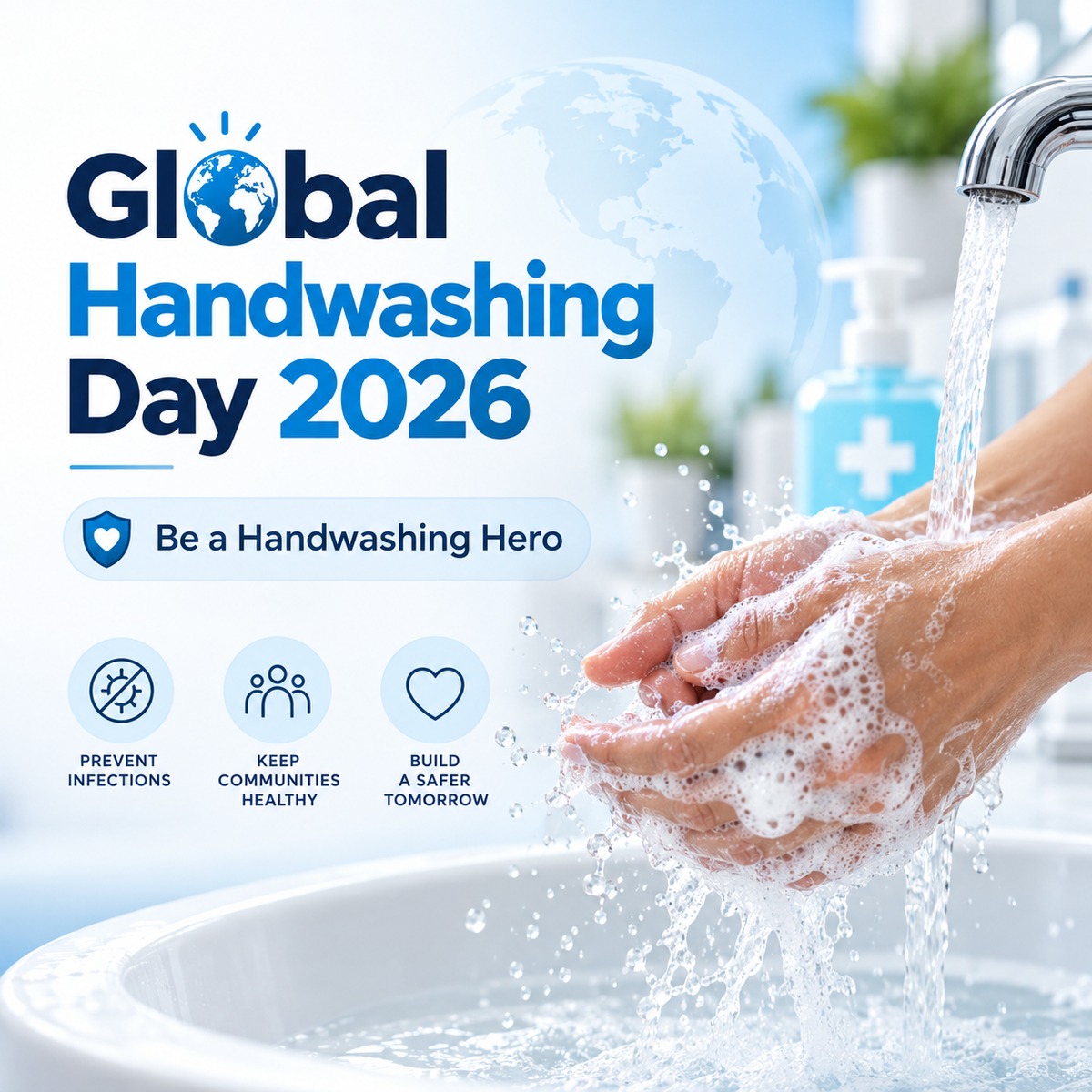
Global Handwashing Day 2026 is observed on 15 October 2026 to raise awareness about one of the simplest and most effective public-health habits: washing hands properly with soap and water.
The official multi-year campaign theme is:
“Be a Handwashing Hero.”
The message is simple. Anyone can become a handwashing hero by practising good hand hygiene, encouraging others to wash their hands at critical times, ensuring access to soap and water, and promoting clean-hand habits in homes, schools, workplaces, and healthcare settings.
Handwashing may seem like a basic daily habit, but it plays a major role in reducing the spread of respiratory infections, diarrhoeal diseases, healthcare-associated infections, and other illnesses. The Global Handwashing Partnership describes handwashing with soap as an easy, effective, and affordable way to prevent disease.
This detailed guide explains the Global Handwashing Day 2026 theme, why handwashing matters, the correct technique, the most important times to wash hands, common mistakes, infection-prevention benefits, and practical ways to promote hand hygiene at home, school, and work.
Global Handwashing Day 2026 is observed on Thursday, 15 October 2026.
The day is celebrated every year on 15 October and was founded by the Global Handwashing Partnership. It is designed to:
Global Handwashing Day was first observed in 2008 and has since grown into a global advocacy movement.
The current multi-year theme is:
The theme encourages people at every level—from children and families to healthcare workers, business leaders, and government officials—to actively support good hand hygiene.
The campaign highlights four broad actions:
The idea is that hand hygiene is not only a personal habit but also a shared public-health responsibility.
Our hands constantly come into contact with:
This means hands can easily pick up germs and transfer them to:
Proper handwashing helps interrupt this chain of transmission.
The Global Handwashing Partnership notes that handwashing with soap can help reduce the spread of respiratory illness, diarrhoeal disease, healthcare-associated infections, and other communicable conditions.
Many infections spread through a simple chain:
Germ source → contaminated hands → face, food, or another person → infection
Washing with soap breaks this chain by physically removing:
Soap works better than water alone because it helps lift oils and microbes from the skin so they can be rinsed away.
Handwashing is especially important at critical moments.
Hands can transfer microbes directly to food and then into the mouth.
This is especially important when handling food for children, older adults, pregnant women, or people with weak immunity.
This is one of the most important moments for preventing faecal-oral transmission of disease.
Wash hands thoroughly after handling diapers or cleaning a child.
Respiratory secretions can contain infectious particles.
Waste can contain microorganisms and contaminated material.
Handwashing helps reduce household transmission of infection.
Wash hands after contact with pets, animal waste, or animal environments.
Clean hands reduce the chance of introducing bacteria into injured skin.
Proper technique matters.
Simply rinsing hands quickly with water is not enough.
A good handwashing routine should include:
Use clean running water.
Use enough soap to cover both hands.
Create a good lather.
Interlace the fingers while rubbing.
Germs can remain in these areas.
Thumbs are commonly missed during quick handwashing.
Rub fingertips against the opposite palm.
Wash around the lower wrist area.
Use clean running water.
Use a clean towel, tissue, or appropriate hand dryer.
A commonly recommended approach is to scrub hands thoroughly for around 20 seconds.
The important thing is not only the clock time but also covering all hand surfaces properly.
Areas commonly missed include:
Water alone can remove some visible dirt, but soap significantly improves the removal of oils, microbes, and contaminants.
Global Handwashing Day specifically promotes handwashing with soap, not only rinsing with water.
Both can be useful, but they are not identical.
Best when:
Useful when:
Sanitiser should contain an appropriate concentration of alcohol and cover all hand surfaces.
Hand sanitiser should not become a permanent substitute for handwashing when soap and water are available.
Even people who wash their hands regularly may make mistakes.
A few seconds may not clean all surfaces adequately.
These areas are often overlooked.
Rinsing alone is less effective.
Where practical, avoid recontaminating clean hands.
A contaminated reusable towel can transfer germs back to clean hands.
Many infectious microorganisms are invisible.
Handwashing can reduce transfer of respiratory viruses from contaminated hands to the:
This is especially important during:
Handwashing should be combined with:
Many diarrhoeal illnesses spread when germs from faecal matter contaminate:
Washing hands with soap after using the toilet and before food preparation is one of the most important preventive measures.
The Global Handwashing Partnership specifically identifies diarrhoeal disease prevention as one of the major benefits of handwashing with soap.
Hand hygiene is particularly important in hospitals because patients may be:
Good hand hygiene helps reduce healthcare-associated infections.
Healthcare facilities also need adequate, conveniently located handwashing stations.
The Global Handwashing Partnership specifically recommends ensuring accessible handwashing stations near toilets and in appropriate patient-care areas.
Children are especially likely to touch:
Schools can promote hand hygiene by:
The goal should be to make clean hands an automatic habit rather than an occasional activity.
Workplaces have many frequently touched surfaces, including:
Employers can encourage good hygiene by providing:
Good hand hygiene can also support workforce productivity by reducing preventable illness and absenteeism.
The Global Handwashing Partnership highlights that healthier workers are less likely to miss work because of preventable infections.
Families can strengthen hand hygiene by making it simple and convenient.
Keep soap:
Children often learn habits from adults, so parents and caregivers should model correct handwashing.
Make it simple and engaging.
You can:
The objective is to create a routine that continues even without reminders.
Hands can contaminate food at multiple stages.
Always wash hands:
Food handlers should pay particular attention because one contaminated pair of hands can potentially expose many people.
Preventing infections can also reduce unnecessary antibiotic use.
If fewer infections occur:
The Global Handwashing Partnership includes antimicrobial resistance among the important public-health challenges supported by better hygiene and infection prevention.
Telling people to wash their hands is not enough if they do not have:
Global Handwashing Day therefore also focuses on advocacy.
Schools, healthcare centres, workplaces, and public settings should have handwashing facilities that are:
The campaign encourages communities and policymakers to make clean hands possible for everyone.
The 2026 theme encourages everyone to take action.
You can become a Handwashing Hero by:
Global Handwashing Day is only one day, but its message should continue year-round.
False.
Many microbes are invisible.
Soap improves the removal of germs and contamination.
Not always.
Soap and water are particularly important when hands are visibly dirty or after toilet use.
Adults also frequently miss proper technique.
Hand hygiene should be a daily habit year-round.
Frequent washing may sometimes cause dryness.
To protect skin:
Healthcare workers or people who need to wash their hands very frequently may need extra skin care.
Schools, hospitals, offices, and communities can organise:
The Global Handwashing Partnership provides official advocacy materials and social media resources for promoting the campaign.
Global Handwashing Day 2026 is observed on 15 October 2026.
The current multi-year theme is “Be a Handwashing Hero.”
The Global Handwashing Partnership founded it.
It helps prevent the spread of infectious diseases by removing germs from the hands before they reach the mouth, nose, eyes, food, or other people.
Important times include before eating, before preparing food, after using the toilet, after coughing or sneezing, after changing diapers, and after caring for someone who is sick.
A thorough wash generally involves around 20 seconds of scrubbing while covering all hand surfaces.
Not always. Hand sanitiser is useful when soap and water are unavailable, but soap and water remain important when hands are visibly dirty or after using the toilet.
Yes. Good hand hygiene reduces the chance of transferring respiratory germs from contaminated hands to the nose, mouth, or eyes.
Hospital patients may be more vulnerable to infection, so hand hygiene is central to preventing healthcare-associated infections.
Schools can organise demonstrations, quizzes, posters, hygiene campaigns, facility checks, and practical handwashing sessions.
Global Handwashing Day 2026 reminds us that one of the most powerful public-health tools is also one of the simplest:
soap, clean water, and the habit of using them properly.
Observed on 15 October, the campaign’s current multi-year theme—“Be a Handwashing Hero”—encourages everyone to take responsibility for promoting clean hands.
Proper handwashing can help reduce the spread of:
The most important action is consistency.
Wash your hands:
Schools, workplaces, hospitals, families, and communities also need accessible handwashing facilities so that good hygiene is easy to practise.
This Global Handwashing Day 2026, wash, lead, advocate, and inspire others to become Handwashing Heroes.
Disclaimer: This blog is intended for general health awareness and educational purposes only.