Appointment
 Find A Doctor
 Lab Report

Heal Your Gut Naturally: Best High-Fibre Foods and Diet Tips for Constipation
Oct 13, 2026
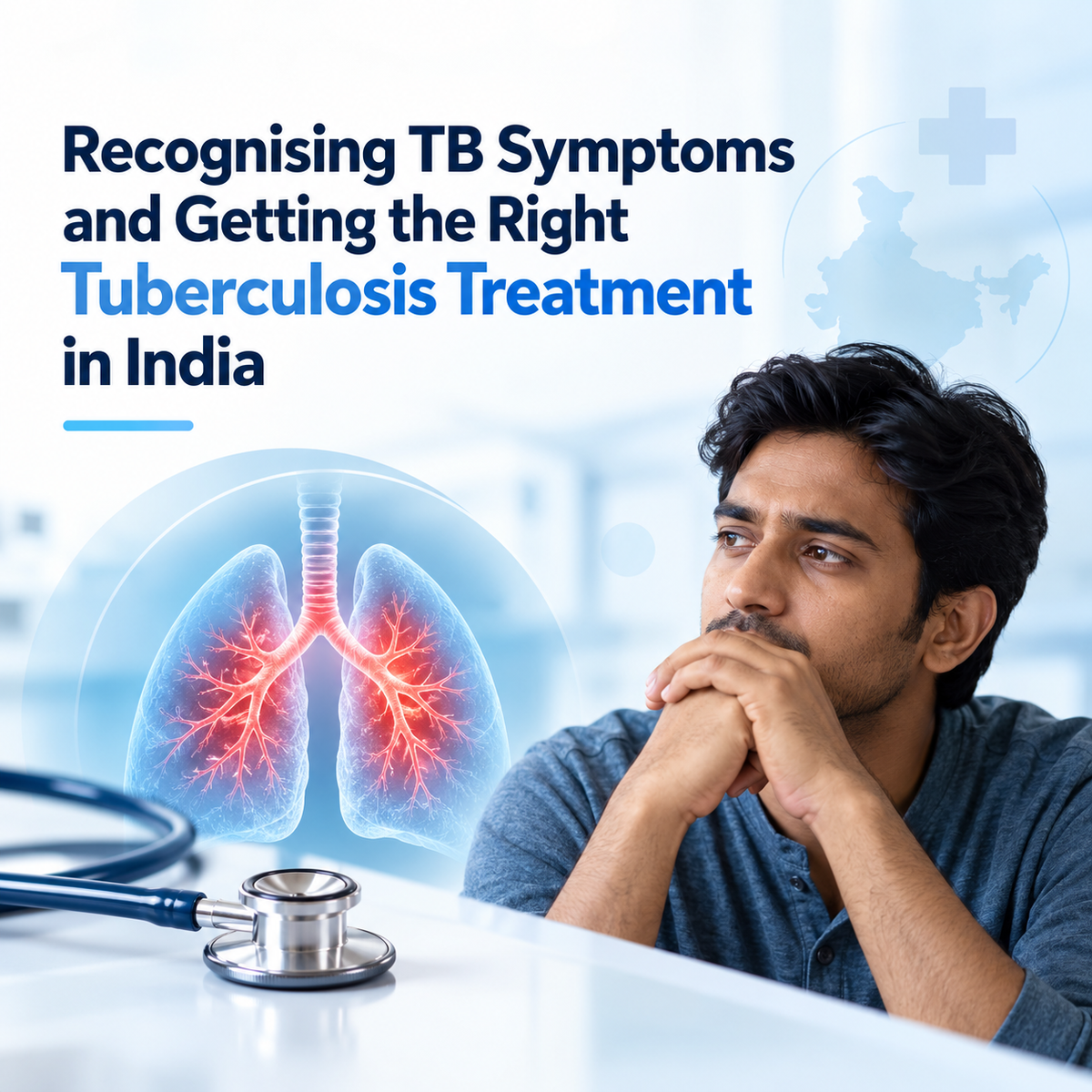
Tuberculosis, commonly known as TB, remains one of the most important infectious diseases in India. It is caused by the bacterium Mycobacterium tuberculosis and most commonly affects the lungs, although it can also involve other parts of the body such as the lymph nodes, brain, spine, kidneys, abdomen, and bones.
The challenge with TB is that its early symptoms can appear ordinary. A persistent cough, low-grade fever, tiredness, or weight loss may initially be mistaken for a seasonal infection or general weakness. This can delay diagnosis and increase the risk of transmission, complications, and more difficult treatment.
The good news is that TB is curable when it is diagnosed early and treated correctly.
In India, the National Tuberculosis Elimination Programme (NTEP) provides free TB diagnostic and treatment services at government and identified treatment centres. The Central TB Division also operates the Nikshay Sampark helpline: 1800-11-6666 for TB-related counselling and support.
Patients who need specialist respiratory evaluation can also seek care at Metro Hospital, Faridabad, where the Pulmonology, Respiratory & Sleep Medicine Department evaluates tuberculosis, drug-resistant TB, pneumonia, pleural disease, and other respiratory conditions.
This detailed guide explains TB symptoms, how tuberculosis spreads, pulmonary and extrapulmonary TB, diagnosis, treatment in India, drug-resistant TB, prevention, nutrition, and when to see a specialist.
Tuberculosis is an infectious disease caused by Mycobacterium tuberculosis.
It mainly affects the lungs, where it is called pulmonary TB, but it can also affect:
The Central TB Division notes that pulmonary TB commonly presents with persistent cough, chest pain, breathlessness, blood in sputum, weight loss, fatigue, and fever.
Pulmonary TB spreads mainly through the air.
When a person with active infectious TB:
Releases tiny infected droplets or airborne particles.
Another person may inhale them, especially after prolonged exposure in a closed or poorly ventilated space.
TB is not usually spread through casual touching, handshakes, sharing clothes, or sitting briefly next to someone.
The risk is greater with prolonged close contact.
Recognising symptoms early is important because timely testing can reduce complications and help prevent transmission.
A cough lasting two weeks or more is one of the most important warning signs of pulmonary TB.
The cough may be:
The Central TB Division specifically lists persistent cough for two weeks or more as a key symptom of pulmonary TB.
TB often causes low-grade or persistent fever.
Some patients notice the fever more in the evening.
Repeated night sweats, especially when combined with weight loss and cough, should not be ignored.
Losing weight without dieting or increased exercise can be a sign of TB.
Many patients develop reduced appetite and progressive weakness.
Ongoing tiredness, weakness, and reduced stamina are common.
Pulmonary TB may cause chest discomfort or pain.
Coughing up blood or blood-streaked sputum requires prompt medical evaluation.
Breathlessness may occur when disease is extensive or when TB causes complications such as pleural effusion.
Pulmonary TB affects the lungs.
It is the form most likely to spread from person to person when active and infectious.
Common symptoms include:
Metro Hospital’s Respiratory Medicine Department provides diagnostic and treatment services for pulmonary TB, including bronchoscopy and other respiratory investigations when needed.
Extrapulmonary TB occurs when tuberculosis affects organs outside the lungs.
Symptoms depend on the site involved.
May cause:
May cause:
May cause:
TB meningitis can cause:
May cause:
The Central TB Division notes that extrapulmonary TB symptoms vary by the organ affected.
Anyone can develop TB, but risk is higher in people with:
People with weakened immunity are more likely to progress from latent infection to active disease.
Latent TB means the bacteria are present in the body but are inactive.
In latent TB:
India’s NTEP also provides guidance on TB preventive treatment for eligible people at increased risk.
Diagnosis should be based on clinical evaluation and appropriate tests.
For suspected pulmonary TB, sputum testing is important.
The Central TB Division notes that TB is confirmed by demonstrating TB bacteria in a clinical sample.
Molecular diagnostic tests can detect TB bacteria and, in selected tests, resistance to important TB medicines.
These tests are especially useful because early identification of drug resistance can help guide the correct treatment plan.
A chest X-ray can show lung changes suggestive of TB.
However, X-ray findings alone may not confirm the diagnosis.
Bronchoscopy may be needed when sputum testing is inconclusive or when doctors need a deeper lung sample.
Metro Hospital’s pulmonology services include bronchoscopy, EBUS, thoracoscopy, and other interventional respiratory procedures.
Depending on the organ involved, doctors may use:
No.
A routine blood test alone cannot usually confirm active TB.
CBC, ESR, and other blood tests may support evaluation, but microbiological or organ-specific diagnostic testing is generally more important.
TB treatment depends on whether the disease is:
Current WHO guidance includes separate recommendations for drug-susceptible and drug-resistant TB and also includes updated shorter regimens for selected resistant forms of TB.
India’s NTEP maintains dedicated guidance for drug-resistant TB and programmatic treatment pathways.
Drug-sensitive TB is generally treated with a combination of anti-tuberculosis medicines.
Clinicians use multiple medicines because TB bacteria can develop resistance if treatment is incomplete or inappropriate.
Patients must:
Stopping treatment early can lead to:
The Central TB Division specifically advises patients to complete treatment and provides free diagnostic and treatment services under the NTEP.
Drug-resistant TB occurs when TB bacteria become resistant to one or more anti-TB medicines.
This may happen because of:
MDR-TB refers to tuberculosis resistant to important first-line medicines.
Drug-resistant TB treatment is more complex and should be supervised by specialists.
India currently follows dedicated National Guidelines for Management of Drug-Resistant TB, and WHO’s 2026 consolidated treatment guidance includes updated shorter regimens for selected patients.
At Metro Hospital, Dr. Hemant Goel specialises in tuberculosis including drug-resistant TB, along with advanced bronchoscopy and interventional pulmonology.
Treatment duration depends on:
Many drug-sensitive cases require several months of treatment.
Drug-resistant TB may require different or longer regimens, although newer treatment strategies may shorten duration in selected patients.
The treating TB specialist should always decide the exact duration.
Yes.
Most patients with appropriately diagnosed and correctly treated TB can recover.
The most important factors are:
Anti-TB medicines can sometimes cause side effects.
Possible symptoms may include:
Do not stop medicines on your own.
Contact the treating doctor if significant side effects occur.
Good nutrition supports recovery.
Patients may benefit from a balanced diet including:
People with significant weight loss may need personalised dietary support.
There is no universal “TB diet.”
The focus should be on:
Alcohol should generally be avoided or discussed with the treating doctor because some TB medicines can affect the liver.
Light activity may be possible as recovery improves.
However, during active illness with fever, severe weakness, or breathlessness, rest is often more appropriate.
Return to exercise should be gradual and based on medical advice.
Effective treatment reduces infectiousness over time.
Open windows and improve air circulation where possible.
Cover the mouth and nose while coughing or sneezing.
Respiratory protection may be recommended in selected situations.
India issued updated national guidance in 2026 on prevention and control of airborne infections, including tuberculosis.
Family or household contacts may need evaluation.
Eligible high-risk contacts and other groups may be considered for preventive therapy under NTEP guidance.
Yes.
The National Tuberculosis Elimination Programme states that free TB diagnostic and treatment services are available at government and identified private and NGO health facilities.
Patients can also contact:
Nikshay Sampark Helpline: 1800-11-6666
for counselling and TB-related support.
Nikshay is India’s digital TB management and notification platform.
It supports:
India also continues the Pradhan Mantri TB Mukt Bharat Abhiyaan and Ni-kshay Mitra support initiatives.
Seek medical evaluation if you have:
People with suspected drug-resistant TB need specialist assessment promptly.
Patients with suspected or confirmed TB can seek specialist respiratory care at Metro Hospital, Faridabad.
The Pulmonology, Respiratory & Sleep Medicine Department evaluates and treats:
The department also provides access to procedures such as:
which may be useful in selected difficult-to-diagnose respiratory cases.
Patients can also consult Dr. Hemant Goel, Director & HOD – Respiratory & Sleep Medicine (Unit-II), whose listed expertise includes Tuberculosis including Drug-Resistant TB, bronchoscopy, EBUS, thoracoscopy, pleural disease, and interventional pulmonology.
For broader respiratory information, Metro Hospital also provides a dedicated Respiratory Care page covering TB symptoms, diagnosis, and treatment.
Common early symptoms include cough lasting two weeks or more, fever, night sweats, fatigue, reduced appetite, and unexplained weight loss.
A cough lasting two weeks or more, particularly with fever, weight loss, blood in sputum, or night sweats, should be evaluated for TB.
Yes. TB is curable when diagnosed properly and treated with the correct medicines for the full recommended duration.
Diagnosis may involve sputum testing, rapid molecular tests, chest X-ray, and organ-specific tests for extrapulmonary TB.
Treatment usually lasts several months, but the exact duration depends on whether TB is drug-sensitive or drug-resistant and on the site of disease.
Yes. The National Tuberculosis Elimination Programme provides free TB diagnosis and treatment through government and identified treatment centres.
Drug-resistant TB occurs when TB bacteria no longer respond adequately to one or more standard anti-TB medicines.
Yes, recurrence or reinfection can occur. Completing treatment and attending follow-up are important.
Pulmonary TB mainly spreads through the air from an infectious person. Casual touching or sharing clothes is not the usual route.
A pulmonologist or respiratory medicine specialist is generally appropriate for pulmonary TB and drug-resistant TB.
Patients can seek TB evaluation and respiratory specialist care through Metro Hospital, Faridabad’s Pulmonology, Respiratory & Sleep Medicine Department.
Dr Hemant Goel, Director & HOD – Respiratory & Sleep Medicine (Unit-II), lists tuberculosis, including drug-resistant TB, among his areas of expertise.
Tuberculosis is serious, but it is preventable, diagnosable, and curable.
The biggest mistake is ignoring early symptoms.
A persistent cough lasting two weeks or more, unexplained fever, night sweats, weight loss, chest pain, or blood in sputum should prompt medical evaluation.
The right treatment depends on whether TB is:
In India, the National Tuberculosis Elimination Programme provides free TB diagnostics and treatment, while specialist hospitals can provide advanced evaluation for complex, extrapulmonary, or drug-resistant disease.
At Metro Hospital, Faridabad, patients can receive respiratory and TB care through the Pulmonology, Respiratory & Sleep Medicine Department, with access to bronchoscopy, EBUS, thoracoscopy, and specialist management of drug-resistant TB when clinically indicated.
If symptoms suggest TB, do not delay testing and do not start or stop anti-TB medicines without medical supervision.
Early diagnosis + correct treatment + full treatment adherence = the best chance of cure and prevention of drug resistance.
Disclaimer: This blog is intended for general health awareness and educational purposes only. It does not replace professional medical advice, diagnosis, or treatment. Anyone with suspected TB symptoms should seek testing and qualified medical evaluation.