Appointment
 Find A Doctor
 Lab Report
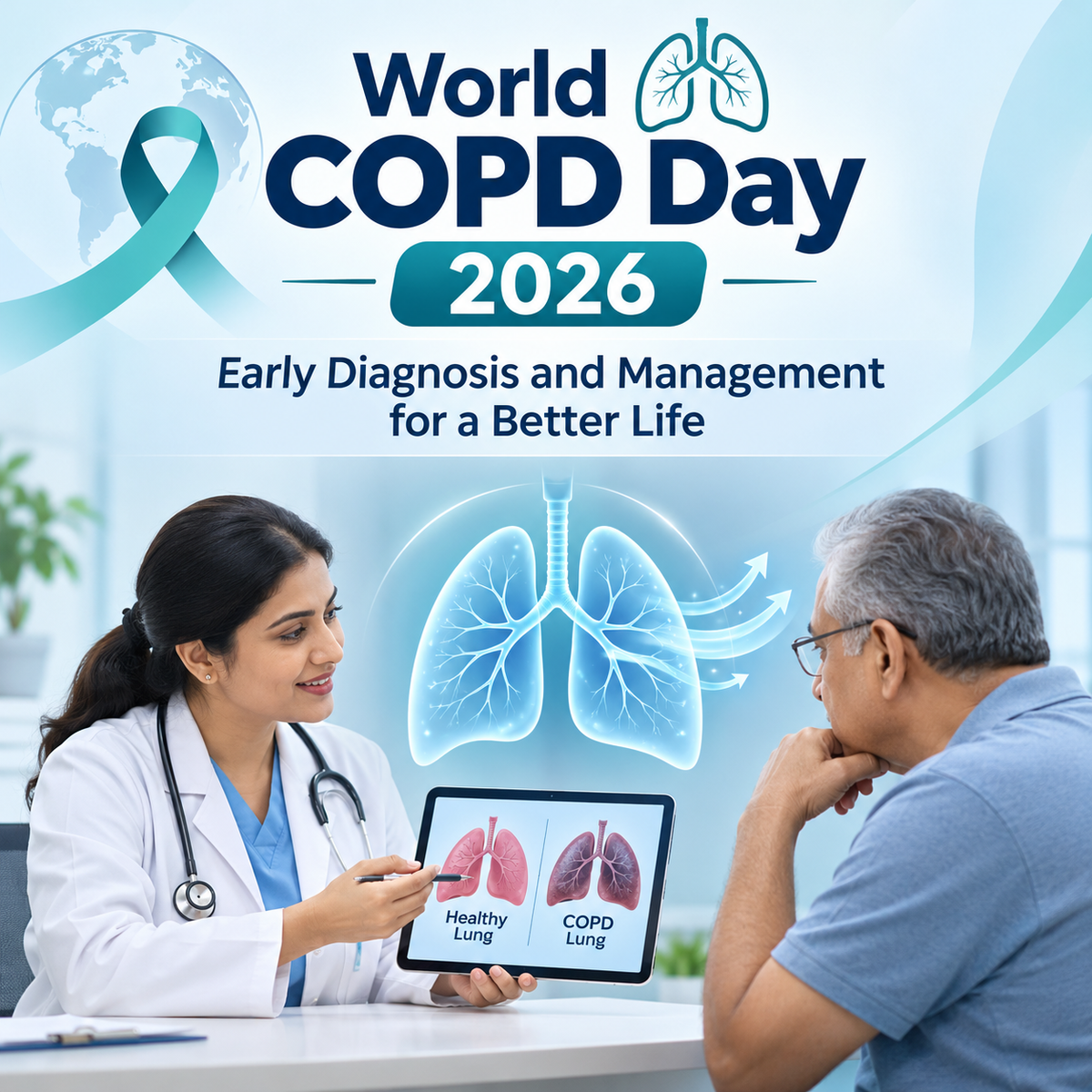
World COPD Day 2026: Theme, Symptoms, Causes, Diagnosis and Treatment
Nov 12, 2026
World Cervical Cancer Elimination Day 2026 will be observed globally on 17 November 2026. In 2025, WHO Member States officially established 17 November as the first global health day dedicated to eliminating a specific cancer. The date marks the anniversary of the 2020 launch of WHO’s Global Strategy to accelerate the elimination of cervical cancer as a public-health problem.
The official 2026 campaign call is:
WHO has announced that this shared campaign message will continue from 2026 through 2030, reflecting the collective effort required to expand HPV vaccination, screening, treatment of precancerous lesions and timely cancer care.
Cervical cancer is one of the few major cancers that can potentially be eliminated as a public-health problem because the tools needed to prevent, detect and treat it already exist.
WHO’s latest 2026 fact sheet states that cervical cancer caused approximately 604,000 new cases and 280,000 deaths worldwide in 2024. It also emphasises that cervical cancer is largely preventable through HPV vaccination and regular screening, and it can often be cured when detected early and treated promptly.
At Metro Hospital, Faridabad, women can access cervical cancer screening through the Obstetrics & Gynaecology Department, which lists Pap smear, liquid-based cytology, HPV DNA testing, VIA, VILI, colposcopy, directed biopsy and LEEP among its screening and diagnostic services. Patients diagnosed with cervical cancer can receive multidisciplinary care through Metro Cancer Institute, including surgery, chemotherapy, radiation therapy and brachytherapy.
This detailed guide explains World Cervical Cancer Elimination Day 2026, its theme, HPV infection, cervical cancer symptoms, risk factors, vaccination, screening, diagnosis, treatment and WHO’s 90–70–90 elimination targets.
World Cervical Cancer Elimination Day 2026 is observed on Tuesday, 17 November 2026.
WHO has officially designated 17 November as World Cervical Cancer Elimination Day beginning from 2025.
The day is intended to:
The 2026 campaign theme is:
WHO states that this common call will guide the global movement from 2026 through 2030.
The theme recognises that elimination requires collaboration between:
The 2026 campaign also encourages the use of:
#EndCervicalCancer
to connect awareness activities globally.
Cervical cancer develops in the cervix, the lower part of the uterus that connects to the vagina.
Most cervical cancers develop gradually.
Before invasive cancer appears, abnormal cells may develop in the cervix. These changes are often called:
When identified during screening, many of these precancerous changes can be treated before they develop into invasive cancer.
This is one of the main reasons cervical cancer is considered highly preventable.
The main cause of cervical cancer is persistent infection with human papillomavirus, or HPV.
WHO states that nearly all cervical cancers are linked to persistent infection with high-risk types of HPV.
HPV is a very common virus.
Most sexually active people may be exposed to HPV at some stage in life.
In most cases, the immune system clears the infection naturally.
However, when infection with a high-risk HPV type persists for years, abnormal cervical cells may gradually develop.
No.
Most HPV infections resolve without causing cancer.
Only a small proportion of persistent high-risk HPV infections progress to:
This progression often takes many years.
That creates an important opportunity for screening and treatment.
Several HPV types can cause cervical cancer.
High-risk types include:
HPV vaccination is designed to protect against the major high-risk strains included in the vaccine.
Persistent high-risk HPV infection is the central risk factor, but several other factors may increase the likelihood that infection persists or progresses.
HPV vaccination can greatly reduce the risk of infection with vaccine-covered high-risk HPV types.
WHO recommends vaccination as one of the most important strategies for cervical cancer elimination.
Precancerous cervical changes often do not cause symptoms.
Without screening, these changes may remain undetected.
Smoking may increase the risk of cervical cellular changes and persistent HPV infection.
Women with weakened immunity may have a greater risk of persistent HPV infection.
WHO states that women living with HIV have approximately six times the risk of developing cervical cancer compared with women without HIV.
The longer high-risk infection persists, the greater the chance of abnormal cervical-cell changes developing.
Early cervical cancer may cause no symptoms at all.
That is why screening is so important.
When symptoms do occur, they may include the following.
One of the most important warning signs is bleeding that is unusual for the individual.
Examples include:
These symptoms may have non-cancerous causes but should be evaluated by a healthcare provider.
Post-coital bleeding can result from several conditions, including:
Persistent or recurrent bleeding after intercourse should not be ignored.
Cervical cancer may sometimes cause vaginal discharge that is:
Again, infection and other gynaecological conditions are more common causes, but persistent discharge deserves assessment.
Pelvic discomfort can occur for many reasons.
However, persistent unexplained pelvic pain may require gynaecological evaluation.
Pain during intercourse can have many benign causes but may occasionally occur with cervical disease.
More advanced cervical cancer may cause:
Symptoms vary depending on where the cancer has spread.
Screening can identify abnormal cervical cells before cancer develops.
This is a major advantage compared with many other cancers.
Screening may detect:
Treatment at the precancer stage can prevent progression to invasive cancer.
HPV testing looks for high-risk HPV types associated with cervical cancer.
WHO recommends high-performance HPV-based screening as a key component of its elimination strategy.
The exact screening interval depends on:
A Pap smear collects cells from the cervix.
These cells are examined for abnormal changes.
The test can identify precancerous or potentially cancerous changes before symptoms develop.
Liquid-based cytology is a modern form of cervical-cell testing.
Instead of placing cells directly onto a slide, the sample is transferred into a liquid medium for laboratory processing.
Metro Hospital’s Obstetrics & Gynaecology Department lists liquid-based cytology among its cervical cancer screening services.
VIA means Visual Inspection with Acetic Acid.
VILI means Visual Inspection with Lugol’s Iodine.
These methods allow trained healthcare professionals to visually identify suspicious cervical changes.
Metro Hospital currently lists both VIA and VILI among its cancer-screening services.
Colposcopy uses magnification to examine the cervix more closely after an abnormal screening result.
A biopsy may be taken from suspicious areas.
Metro Hospital lists:
among its cervical-screening and diagnostic services.
LEEP stands for Loop Electrosurgical Excision Procedure.
It removes abnormal cervical tissue using a thin electrically heated wire loop.
It may be used to treat certain precancerous lesions.
Metro Hospital’s Obstetrics & Gynaecology Department lists LEEP among its cervical-care services.
WHO’s global elimination strategy uses three major targets to be achieved by 2030.
They are known as the 90–70–90 targets.
90% of girls should be fully vaccinated against HPV by age 15.
70% of women should be screened with a high-performance test by age 35 and again by age 45.
90% of women identified with cervical disease should receive appropriate treatment.
WHO highlights these targets as the foundation of the global elimination strategy.
Elimination does not mean there will never be another cervical cancer case.
WHO defines elimination as reducing cervical cancer incidence to a level where it is no longer considered a major public-health problem.
Achieving that requires sustained:
HPV vaccination is one of the most powerful tools available for preventing cervical cancer.
WHO recommends adolescent girls receive one or two doses between ages 9 and 14, depending on the applicable programme and circumstances.
Vaccination works best when given before exposure to HPV.
No.
Vaccination greatly reduces risk but does not eliminate it completely.
Women should still follow recommended cervical-cancer screening guidelines.
Vaccination and screening work together.
Eligibility for HPV vaccination depends on:
Adults who were not vaccinated earlier should discuss eligibility with a qualified doctor.
Not every case can be prevented, but cervical cancer is among the most preventable major cancers.
The strongest strategies include:
WHO emphasises that cervical cancer can be prevented and cured when detected early and treated promptly.
If screening or symptoms raise concern, diagnostic evaluation may include:
A biopsy confirms whether cancer is present.
Further tests may determine:
Tests may include:
Staging helps doctors determine the most appropriate treatment.
Treatment depends on:
Treatment may involve:
Metro Cancer Institute lists cervical cancer among the solid tumours treated within its multidisciplinary oncology programme.
Surgery may be appropriate for selected early-stage cancers.
Procedures can include:
A cone-shaped portion of abnormal cervical tissue is removed.
The uterus and cervix are removed.
More extensive tissue around the cervix and uterus may also be removed.
In selected younger patients with early-stage disease, the cervix may be removed while preserving the uterus to maintain fertility potential.
Metro Hospital’s cervical-cancer treatment information lists conization, hysterectomy, trachelectomy and pelvic lymph-node dissection among surgical options.
Radiation therapy is a major component of cervical-cancer treatment.
It may involve:
Metro Cancer Institute’s Radiation Oncology Department provides multiple radiation techniques including:
Brachytherapy places a radioactive source directly inside or close to the tumour.
This allows a concentrated dose of radiation to be delivered to the cervix while reducing exposure to surrounding tissues.
Brachytherapy is particularly important in many cervical cancer treatment plans.
Metro Hospital provides both external-beam radiation therapy and internal radiation, or brachytherapy, for cervical cancer.
Chemotherapy may be used:
Concurrent chemoradiation is commonly used for many locally advanced cervical cancers.
Metro Hospital’s cervical-cancer programme lists chemotherapy alongside radiation therapy for appropriate cases.
Some patients with advanced or recurrent cervical cancer may benefit from newer treatments.
These may include:
Treatment selection depends on:
Metro Hospital lists targeted therapy and immunotherapy among options for selected advanced or recurrent cervical cancers.
Cervical cancer may require input from several specialists.
A multidisciplinary team can include:
Metro Cancer Institute follows a multidisciplinary tumour-board approach for complex cancers and provides coordinated Medical, Surgical and Radiation Oncology services.
Women seeking cervical-cancer screening can consult the Obstetrics & Gynaecology Department at Metro Hospital, Faridabad.
Its listed cancer-screening services include:
These services can help identify precancerous changes and cervical abnormalities before they progress.
Patients diagnosed with cervical cancer can access comprehensive care through Metro Cancer Institute.
The institute treats gynaecological cancers including:
Treatment may involve:
Metro Cancer Institute’s Radiation Oncology Department uses TrueBeam with HyperArc and provides precision radiation services.
Its listed techniques include:
For cervical cancer, brachytherapy and external-beam radiation are particularly relevant depending on the stage and treatment plan.
Consult a gynaecologist if you experience:
These symptoms do not automatically mean cancer.
However, persistent or unexplained symptoms should not be ignored.
This is one of the most important messages of World Cervical Cancer Elimination Day.
Precancerous cervical changes commonly produce no symptoms.
Waiting for symptoms may mean missing the chance to detect disease at an earlier, more treatable stage.
WHO therefore places screening at the centre of the 90–70–90 elimination strategy.
False.
HPV vaccination, cervical screening and treatment of precancerous lesions can prevent many cervical cancers.
False.
Most HPV infections resolve naturally.
Persistent infection with certain high-risk types creates the greatest concern.
False.
Precancerous cervical changes frequently cause no symptoms.
False.
Vaccinated women should still follow recommended cervical-screening guidance.
False.
Cervical cancer can occur in adult women of different ages, although risk varies across the lifespan.
World Cervical Cancer Elimination Day 2026 is observed on 17 November 2026.
The 2026 campaign theme is “Together We Can Eliminate Cervical Cancer.” WHO will use this shared call from 2026 through 2030.
Almost all cervical cancers are associated with persistent infection with high-risk HPV.
Yes. HPV vaccination, regular screening and treatment of precancerous lesions can prevent many cervical cancers.
Early cervical cancer may cause no symptoms. When symptoms occur, they may include abnormal vaginal bleeding, bleeding after intercourse, unusual discharge or pelvic pain.
Screening may include HPV testing, Pap smear or other methods recommended by national guidelines. Metro Hospital also provides VIA, VILI, colposcopy and directed biopsy when clinically indicated.
The targets aim for 90% HPV vaccination of girls by age 15, 70% screening of women using a high-performance test by ages 35 and 45, and treatment for 90% of women identified with cervical disease.
Yes. Brachytherapy is an important form of internal radiation therapy used for many cervical cancer patients. Metro Hospital lists cervical cancer among the cancers treated with brachytherapy.
Cervical cancer can often be cured when detected early and treated promptly.
Women can access cervical cancer screening through the Obstetrics & Gynaecology Department at Metro Hospital, Faridabad, while confirmed cervical cancer can be treated through Metro Cancer Institute with surgery, Medical Oncology, Radiation Oncology and brachytherapy services.
World Cervical Cancer Elimination Day 2026 will be observed on 17 November 2026 with the global campaign message:
The day is particularly significant because cervical cancer is largely preventable and can often be cured when diagnosed early.
WHO’s strategy centres on three actions:
These actions form the 90–70–90 targets that the global health community is working toward by 2030.
Women should not wait for symptoms before thinking about cervical health because precancerous changes often remain silent.
At Metro Hospital, Faridabad, women can access cervical cancer screening through the Obstetrics & Gynaecology Department, including HPV DNA testing, liquid-based Pap smear, VIA, VILI, colposcopy, biopsy and LEEP.
For women diagnosed with cervical cancer, Metro Cancer Institute provides multidisciplinary treatment including Surgical Oncology, chemotherapy, precision radiation therapy and brachytherapy.
The central message of World Cervical Cancer Elimination Day 2026 is clear:
Cervical cancer is preventable, detectable and treatable—and with HPV vaccination, regular screening and timely treatment, eliminating it as a public-health problem is achievable.
Disclaimer: This article is intended for general health education only. Cervical cancer screening intervals, HPV vaccination eligibility and treatment decisions should be personalised by a qualified healthcare professional.