 Appointment
 Find A Doctor
 Lab Report
Global Iodine Deficiency Disorders Prevention Day 2026: Importance, Symptoms, Prevention and Role of Iodized Salt
Oct 17, 2026
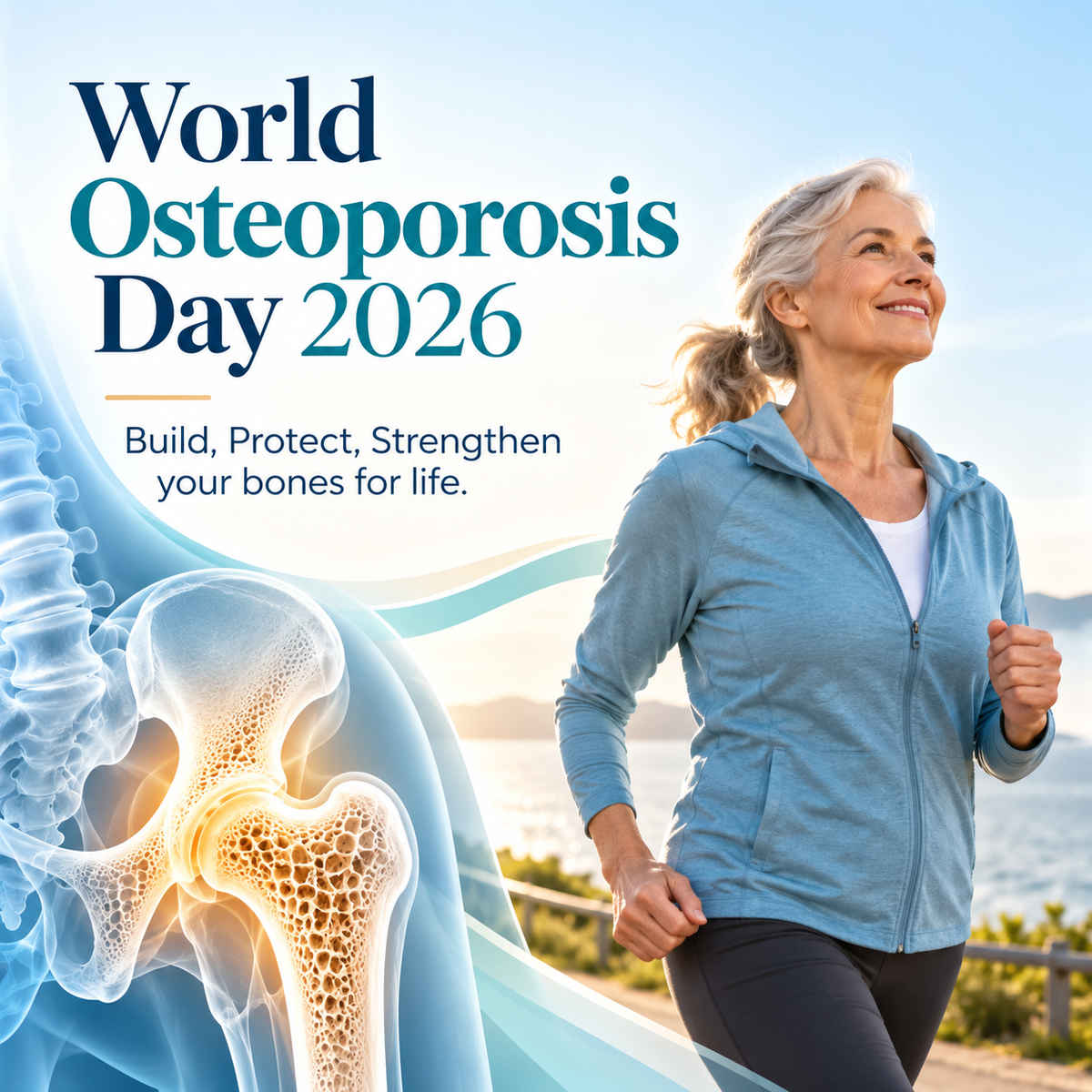
World Osteoporosis Day 2026 is observed on 20 October 2026 to raise awareness about osteoporosis, bone loss, fragility fractures, early diagnosis, and lifelong bone health.
Osteoporosis is often called a silent disease because bone loss can progress for years without obvious symptoms. In many people, the first noticeable sign is a fracture after a minor fall or injury. That is why awareness, screening, exercise, calcium and vitamin D intake, and timely treatment matter.
The 2026 World Osteoporosis Day campaign focuses on the message:
“Build, Protect, Strengthen your bones for life.”
The campaign highlights the importance of supporting bone health at every stage of life—from childhood and early adulthood to older age. Stronger bones come from adequate nutrition and physical activity, protected through healthy lifestyle habits and risk assessment, and strengthened through timely diagnosis and treatment when osteoporosis is already present.
At Metro Hospital, Faridabad, patients with osteoporosis, recurrent fractures, bone pain, joint problems, or concerns about calcium and vitamin D can seek evaluation through the Orthopaedics & Joint Replacement Department. The hospital’s orthopaedic guidance includes osteoporosis management through calcium and vitamin D optimisation, weight-bearing exercise, fall prevention, lifestyle counselling, and bone-health monitoring.
This detailed guide explains the World Osteoporosis Day 2026 theme, osteoporosis symptoms, risk factors, diagnosis, treatment, calcium and vitamin D needs, exercises for bone strength, fracture prevention, and when to consult a bone specialist.
World Osteoporosis Day 2026 is observed on Tuesday, 20 October 2026.
The International Osteoporosis Foundation uses World Osteoporosis Day to raise global awareness about osteoporosis and fragility fractures.
The campaign encourages people to:
The 2026 campaign specifically focuses on lifelong bone health.
The 2026 campaign message is:
The message can be understood in three stages.
Strong bones should be built from childhood through:
During adulthood, bone health can be protected by:
If osteoporosis or a fragility fracture has already occurred, bones can be strengthened and future fracture risk reduced through:
This lifelong approach is the core focus of World Osteoporosis Day 2026.
Osteoporosis is a condition in which bones become weaker and more fragile.
Healthy bone is constantly undergoing a process of:
When bone breakdown happens faster than new bone formation, bone density gradually decreases.
Over time, bones may become fragile enough to fracture after:
The most common osteoporotic fractures affect:
Osteoporosis often causes no pain or obvious symptoms until a fracture occurs.
This is why someone may feel completely healthy while bone density is gradually decreasing.
Many patients discover osteoporosis only after:
This makes screening especially important in high-risk individuals.
Early osteoporosis may not cause symptoms.
As the disease progresses, signs may include:
A fracture after low-impact trauma may indicate weak bones.
Examples include:
Compression fractures in the spine may cause persistent or sudden back pain.
Multiple vertebral compression fractures can gradually reduce height.
Osteoporosis-related vertebral fractures may contribute to a forward-bending posture.
Repeated fractures after relatively minor trauma should prompt evaluation for osteoporosis.
A fragility fracture is a fracture caused by trauma that would not normally break healthy bone.
For example, falling from standing height and breaking:
can be considered a fragility fracture in the appropriate clinical setting.
A previous fragility fracture significantly increases the risk of another fracture.
This is why treatment after the first fracture matters.
Several factors can increase osteoporosis risk.
Bone density gradually decreases with age.
Older adults are therefore at greater risk.
Oestrogen helps protect bone.
After menopause, declining oestrogen can accelerate bone loss.
Women after menopause are therefore an important high-risk group.
Having a parent with osteoporosis or hip fracture may increase risk.
Very low body weight can be associated with lower bone mass.
Long-term inadequate calcium intake may contribute to poor bone health.
Vitamin D helps the body absorb calcium.
Low vitamin D can contribute to poor bone mineralisation and muscle weakness.
Bones respond positively to mechanical loading.
Long-term inactivity can contribute to bone loss.
Smoking negatively affects bone health and fracture healing.
Heavy alcohol intake can weaken bones and increase fall risk.
Medicines such as corticosteroids can accelerate bone loss with long-term use.
Risk may be increased in conditions such as:
Women are particularly vulnerable after menopause because falling oestrogen levels accelerate bone loss.
Women should discuss osteoporosis risk with their doctor if they have:
Bone-density assessment may be recommended depending on age and risk factors.
Osteoporosis also affects men.
Risk factors include:
Because osteoporosis is often viewed as a women’s condition, diagnosis in men may sometimes be delayed.
The main diagnostic test is a DEXA (DXA) scan.
DEXA stands for:
Dual-Energy X-ray Absorptiometry
It measures bone mineral density.
Commonly tested sites include:
The DEXA report usually includes a T-score.
In general:
A doctor should always interpret these values along with age, fracture history, and other clinical factors.
Osteopenia means bone density is lower than normal but not low enough to meet the definition of osteoporosis.
It does not automatically mean a person will develop osteoporosis.
However, it is an opportunity to improve:
and assess additional risk factors.
FRAX is a fracture-risk assessment tool.
It estimates the probability of major osteoporotic and hip fractures over the next 10 years based on factors such as:
It may be used alongside bone-density measurements.
Not every case can be completely prevented, but many risk factors can be modified.
World Osteoporosis Day 2026 specifically promotes lifelong prevention through nutrition, exercise, risk assessment, and healthy lifestyle habits.
Calcium is a major structural component of bone.
Good dietary sources include:
Food is generally preferable when possible.
Use calcium supplements only when recommended based on dietary intake and medical need.
Vitamin D helps the intestine absorb calcium.
Sources include:
Vitamin D deficiency is common and may contribute to bone weakness and muscle problems.
Metro Hospital’s osteoporosis guidance includes calcium and vitamin D optimisation as part of bone-health management.
Protein contributes to:
Sources include:
Weight-bearing exercise stimulates bones.
Examples include:
Tailor exercise to age, balance, and fracture risk.
Muscle-strengthening exercise can improve:
Examples include:
People with severe osteoporosis or previous spinal fractures should seek professional guidance before starting exercise.
Falls are a major cause of osteoporotic fractures.
Balance exercises may include:
Smoking can reduce bone density and slow fracture healing.
High alcohol intake increases both osteoporosis and fall risk.
Simple modifications include:
Do not wait for a fracture if you already have significant risk factors.
A bone-healthy diet should include:
Useful foods include:
Patients who need personalised dietary planning can consult Metro Hospital’s Nutrition & Dietetics Department, which provides evidence-based therapeutic nutrition counselling.
No.
Vitamin D is important, but bone health depends on several factors.
A comprehensive approach includes:
Vitamin D supplements alone cannot replace these measures.
Treatment depends on:
Options may include:
Doctors may prescribe osteoporosis medication when fracture risk is high.
These medicines may work by:
Treatment should be individualised.
One fracture can be a warning sign.
A patient who has experienced one fragility fracture may have a significantly higher risk of another.
World Osteoporosis Day 2026 specifically encourages timely diagnosis and treatment after fracture to reduce future fracture risk.
Hip fractures are among the most serious complications.
They can lead to:
Prevention therefore includes both bone-strengthening treatment and fall prevention.
Vertebral compression fractures may occur with minimal trauma.
Symptoms can include:
Some spinal fractures may initially be missed because pain is attributed to routine back problems.
Consult a doctor if you have:
Patients with osteoporosis, fractures, and related bone-health concerns can seek evaluation through Metro Hospital’s Orthopaedics & Joint Replacement Department.
The department provides comprehensive orthopaedic care, including:
Metro Hospital’s current bone-health guidance specifically describes osteoporosis management as a combination of:
Bone health is closely linked to nutrition.
The Nutrition & Dietetics Department provides personalised diet counselling for people of different ages and medical conditions.
This can be useful for patients with:
World Osteoporosis Day 2026 is observed on 20 October 2026.
The 2026 campaign promotes the message “Build, Protect, Strengthen your bones for life.” It focuses on maintaining strong bones at every age.
Osteoporosis often has no early symptoms. The first sign may be a fracture after minor trauma.
Older adults, postmenopausal women, people with low body weight, long-term steroid users, smokers, and people with certain medical conditions are at increased risk.
DEXA scan is the most commonly used test to measure bone mineral density.
Bone density can sometimes improve with treatment, but the goal is generally to reduce further bone loss and prevent fractures.
No. Bone health also depends on vitamin D, protein, exercise, hormones, and other lifestyle factors.
Weight-bearing and muscle-strengthening exercise are generally useful, but people with severe osteoporosis should follow professional exercise guidance.
Yes. Osteoporosis affects both men and women.
Patients can seek bone-health and osteoporosis evaluation through Metro Hospital, Faridabad’s Orthopaedics & Joint Replacement Department.
World Osteoporosis Day 2026 reminds us to protect bone health throughout life—not only after a fracture occurs.
The campaign message “Build, Protect, Strengthen your bones for life” highlights three essential goals:
Osteoporosis is often silent, which means waiting for pain is not an effective prevention strategy.
Key steps include:
At Metro Hospital, Faridabad, patients with osteoporosis, fractures, and other bone-health concerns can access comprehensive care through the Orthopaedics & Joint Replacement Department, while personalised nutritional guidance is available through Nutrition & Dietetics.
This World Osteoporosis Day 2026, take action before the first fracture: build, protect, and strengthen your bones for life.
Disclaimer: This blog is intended for general health awareness and educational purposes only. It is not a substitute for professional medical diagnosis or treatment. Consult a qualified healthcare professional for an individual bone-health assessment.
Oct 17, 2026

Oct 15, 2026
Oct 15, 2026


