Appointment
 Find A Doctor
 Lab Report
World Occupational Therapy Day 2026: Theme, Importance, Benefits and Role in Rehabilitation
Oct 21, 2026
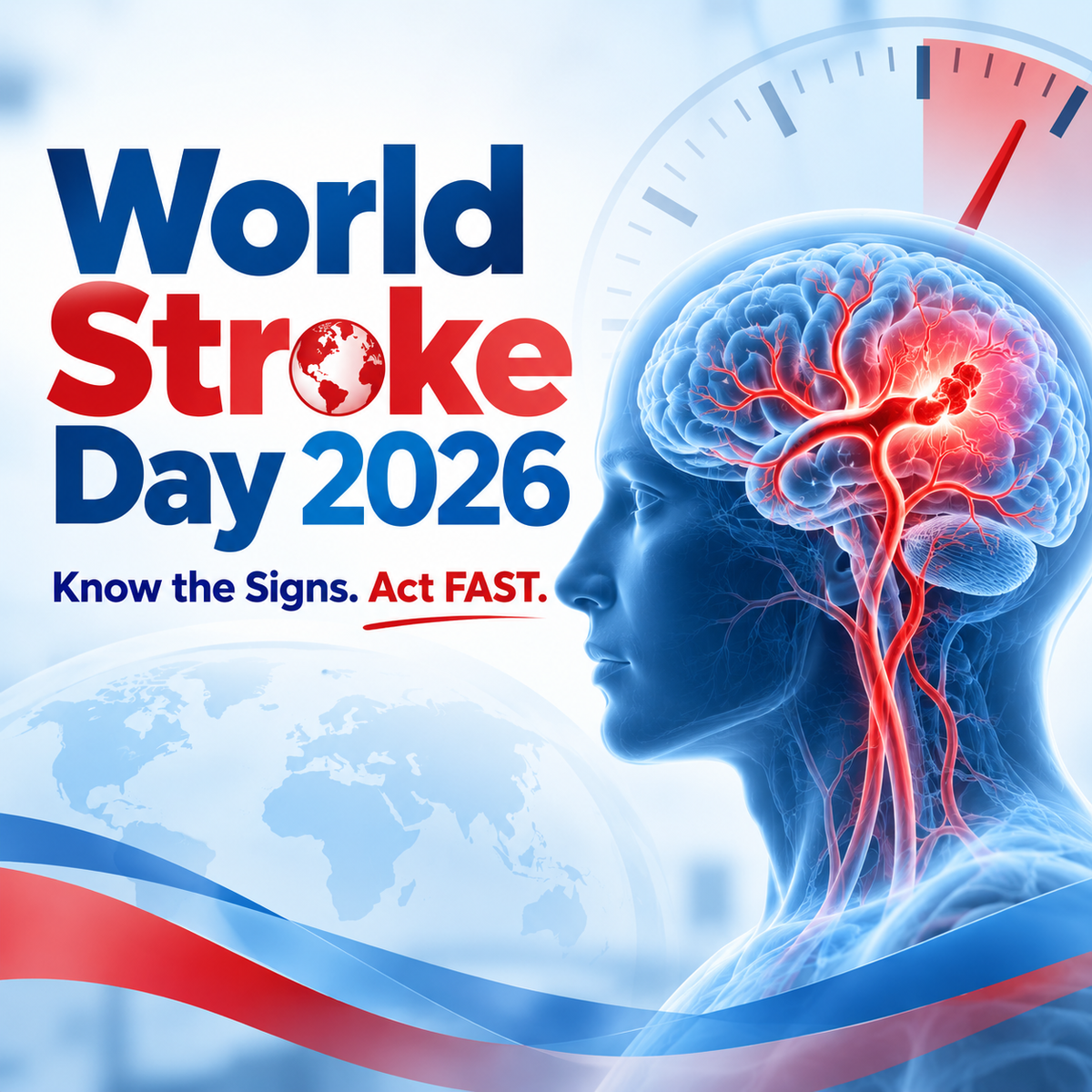
World Stroke Day 2026 is observed on 29 October 2026 to raise awareness about stroke, its warning signs, risk factors, emergency treatment, prevention and recovery.
Stroke is a medical emergency. It occurs when blood flow to a part of the brain is interrupted or when a blood vessel in the brain ruptures. Because brain cells begin to suffer damage quickly when deprived of oxygen, recognising stroke symptoms and reaching a stroke-ready hospital without delay can make a major difference.
The official World Stroke Organisation campaign for 2026 focuses on:
“Every M1nute Counts”
with the action message:
#ActFAST
The campaign highlights the importance of recognising stroke symptoms quickly because time lost is brain lost. The sooner treatment begins, the greater the possibility of limiting brain damage and improving recovery.
At Metro Hospital, Faridabad, patients with suspected stroke can access specialist evaluation through the Neurology Department, which provides care for both ischemic and haemorrhagic stroke along with neuroimaging, thrombolytic therapy and rehabilitation support. Metro Hospital also operates a 24×7 Emergency and Trauma Centre for urgent conditions.
This detailed guide explains the World Stroke Day 2026 theme, stroke warning signs, FAST symptoms, causes, types, risk factors, emergency treatment, thrombolysis, rehabilitation and practical prevention strategies.
World Stroke Day 2026 is observed on Thursday, 29 October 2026.
The World Stroke Organisation uses the day to raise awareness about:
The organisation states that around 12 million people experience a stroke each year globally, making stroke a major cause of death and long-term disability.
The 2026 campaign focuses on:
and the call to:
The World Stroke Organization’s 2026 campaign specifically focuses on building public awareness of stroke symptoms and encouraging people to recognise warning signs and seek emergency care immediately.
The message is simple:
Stroke acts fast. You should too.
A stroke happens when part of the brain does not receive enough blood and oxygen or when bleeding occurs inside or around the brain.
There are two major types:
An ischemic stroke occurs when a blood vessel supplying the brain becomes blocked.
The blockage is commonly caused by:
Ischemic stroke is the most common type of stroke.
A haemorrhagic stroke occurs when a blood vessel in or around the brain ruptures.
This causes bleeding that damages brain tissue and may increase pressure inside the skull.
Both types require urgent hospital treatment.
Brain cells require a continuous supply of oxygen and glucose from blood.
When blood flow stops, brain tissue can become damaged within minutes.
This is why stroke treatment is extremely time-sensitive.
The World Stroke Organization’s 2026 campaign repeatedly emphasises that every minute matters and that rapid emergency treatment can improve survival and recovery.
The easiest way to remember important stroke warning signs is FAST.
Ask the person to smile.
Look for:
Ask the person to raise both arms.
Warning signs include:
Ask the person to repeat a simple sentence.
Look for:
If any of these symptoms occur:
Do not wait. Seek emergency medical help immediately.
The World Stroke Organisation uses FAST as a central part of the 2026 campaign.
Not every stroke presents exactly the same way.
Other symptoms may include sudden:
Metro Hospital’s Neurology Department similarly lists sudden paralysis, weakness or numbness, speech difficulty, confusion, vision problems, loss of balance, dizziness and severe headache among stroke warning symptoms.
Some stroke-awareness programmes expand FAST to BE-FAST.
Sudden:
Sudden:
Facial weakness or drooping.
Sudden arm weakness or numbness.
Slurred or difficult speech.
Seek emergency care immediately.
The key message remains the same: do not wait for symptoms to improve.
A transient ischemic attack, or TIA, occurs when blood flow to the brain is temporarily interrupted.
Symptoms may look exactly like a stroke but disappear within minutes or hours.
This does not mean it is harmless.
A TIA can be an important warning sign that a major stroke may occur later.
Anyone with temporary:
should still seek urgent medical evaluation.
Stroke can result from several underlying conditions.
Hypertension is one of the most important modifiable risk factors for stroke.
Long-term high blood pressure damages arteries and increases the risk of both ischemic and haemorrhagic stroke.
Atrial fibrillation is an abnormal heart rhythm that can allow blood clots to form inside the heart.
A clot may then travel to the brain and cause stroke.
High cholesterol contributes to plaque formation inside arteries.
This can narrow blood vessels and increase clot formation.
Diabetes damages blood vessels over time and increases cardiovascular and stroke risk.
Smoking contributes to:
Excess body weight and inactivity are associated with:
which increase stroke risk.
Important risk factors include:
Some risk factors cannot be changed, but many can be managed through treatment and lifestyle.
Yes.
Although stroke becomes more common with age, it can occur in younger adults and, rarely, children.
Possible causes in younger patients may include:
This is another reason stroke symptoms should never be ignored based solely on age.
Stroke diagnosis usually begins immediately in the emergency department.
Tests may include:
A CT scan of the brain can quickly help determine whether bleeding is present.
This distinction is crucial because treatments differ between ischemic and haemorrhagic stroke.
MRI can provide detailed images of brain tissue and may identify areas of stroke not clearly visible on initial CT.
Tests may assess:
An ECG can identify abnormal rhythms such as atrial fibrillation.
This may be used when a heart-related source of blood clots is suspected.
Treatment depends on:
Some patients with acute ischemic stroke may be eligible for clot-dissolving medication.
This treatment is known as thrombolysis.
Because eligibility is highly time-dependent, reaching a stroke-ready hospital quickly is essential.
Metro Hospital’s Neurology Department currently states that it provides thrombolytic therapy for acute stroke and has treated a substantial number of stroke patients with thrombolysis.
Not every patient is eligible. Brain imaging and clinical assessment are required first.
Some strokes are caused by a large clot blocking a major brain artery.
In selected patients, specialists may remove the clot mechanically through a catheter-based procedure called mechanical thrombectomy.
Suitability depends on:
This is why advanced neuroimaging and specialist assessment are important.
Treatment for brain bleeding differs significantly from treatment for ischemic stroke.
Management may involve:
Metro Hospital provides specialist Neuro & Spine Surgery support for complex neurological and neurosurgical conditions.
People often refer to the early treatment period as a “golden window.”
The exact treatment window depends on the therapy being considered and individual imaging findings.
The important message is:
Do not spend time trying to calculate whether you are still within the window.
Call emergency services and reach a stroke-ready hospital as quickly as possible.
The World Stroke Organization’s message for 2026 is specifically built around this urgency:
Every M1nute Counts.
If you suspect stroke:
If symptoms began during sleep, note the last time the person was known to be normal.
Avoid:
Rapid professional assessment is essential.
Many strokes can be prevented by controlling modifiable risk factors.
The World Stroke Organisation includes prevention as a major part of its stroke-awareness work.
High blood pressure often causes no symptoms.
Regular monitoring and prescribed treatment can significantly reduce risk.
Good blood-sugar control helps protect blood vessels.
Your doctor may recommend:
depending on cardiovascular risk.
Smoking cessation can reduce stroke and heart-disease risk.
Regular activity supports:
Even modest weight reduction may improve:
in overweight individuals.
Patients with atrial fibrillation may require medicines to reduce blood-clot risk.
Never stop prescribed blood thinners without medical advice.
Emphasise:
Limit:
Surviving a stroke is often only the beginning of recovery.
Stroke may affect:
Rehabilitation should be tailored to the individual.
It may involve:
Metro Hospital lists neurological rehabilitation services, including physiotherapy, occupational therapy and speech rehabilitation, as part of recovery support following neurological treatment.
Physiotherapy may focus on:
Early and structured rehabilitation can help patients maximise functional recovery.
Occupational therapy focuses on restoring independence in everyday activities.
This may include:
Stroke can affect language and swallowing.
A speech-language therapist may help patients with:
Swallowing assessment is especially important because difficulty swallowing can increase aspiration risk.
Recovery differs widely between patients.
Some people recover quickly, while others require months of rehabilitation.
Factors affecting recovery include:
The World Stroke Organisation also emphasises the needs and experiences of stroke survivors as part of its wider campaign work.
Metro Hospital provides multidisciplinary neurological care through its Neurology Department.
Its current stroke-related services include:
Metro Hospital states that its Neurology Department has performed thrombolysis in more than 275 stroke patients and provides comprehensive diagnostic imaging and medical, surgical and rehabilitation care.
Suspected stroke requires immediate emergency evaluation.
Metro Hospital operates a 24×7 Emergency and Trauma Centre and currently lists its emergency number as +91 971 191 4000.
Patients requiring neurosurgical assessment can also access the Neuro & Spine Surgery Department.
This multidisciplinary availability can be important for complex haemorrhagic stroke and other neurological emergencies.
World Stroke Day 2026 is observed on 29 October 2026.
The 2026 campaign focuses on “Every M1nute Counts” and urges people to #ActFAST when stroke symptoms appear.
FAST stands for:
Common early signs include sudden facial weakness, arm weakness, speech difficulty, numbness, vision problems, dizziness, loss of balance or severe unexplained headache.
Some patients can recover substantially, especially when treatment begins quickly. Outcomes depend on stroke type, severity, timing of treatment and rehabilitation.
Yes. Stroke symptoms typically appear suddenly and should be treated as an emergency.
Thrombolysis is treatment with clot-dissolving medicine for selected patients with acute ischemic stroke.
Many strokes can be prevented or the risk reduced by controlling blood pressure, diabetes, cholesterol, smoking, obesity and atrial fibrillation.
Recovery varies greatly. Some patients improve within weeks, while others may require months or longer rehabilitation.
Patients with suspected stroke can seek emergency care at Metro Hospital, Faridabad, which provides 24×7 Emergency services and specialist Neurology care with stroke imaging, thrombolysis and rehabilitation support.
World Stroke Day 2026 highlights one of the most important messages in emergency medicine:
Every Minute Counts.
Stroke can begin suddenly and may cause permanent brain damage, disability or death if treatment is delayed.
Remember FAST:
Do not wait for symptoms to improve.
Preventing stroke is equally important. Control:
At Metro Hospital, Faridabad, patients with suspected stroke can access specialist care through the Neurology Department, supported by 24×7 emergency care, CT and MRI imaging, thrombolytic treatment, Neuro & Spine Surgery and neurological rehabilitation.
The World Stroke Organization’s message for 2026 is clear:
Know the signs. #ActFAST. Every minute counts.
Disclaimer: This article is intended for general health education only. Stroke is a medical emergency. If stroke symptoms occur, seek emergency medical attention immediately rather than relying on online information.