Appointment
 Find A Doctor
 Lab Report

International Day of Older Persons 2026: Supporting Health, Independence and Dignity
Oct 1, 2026
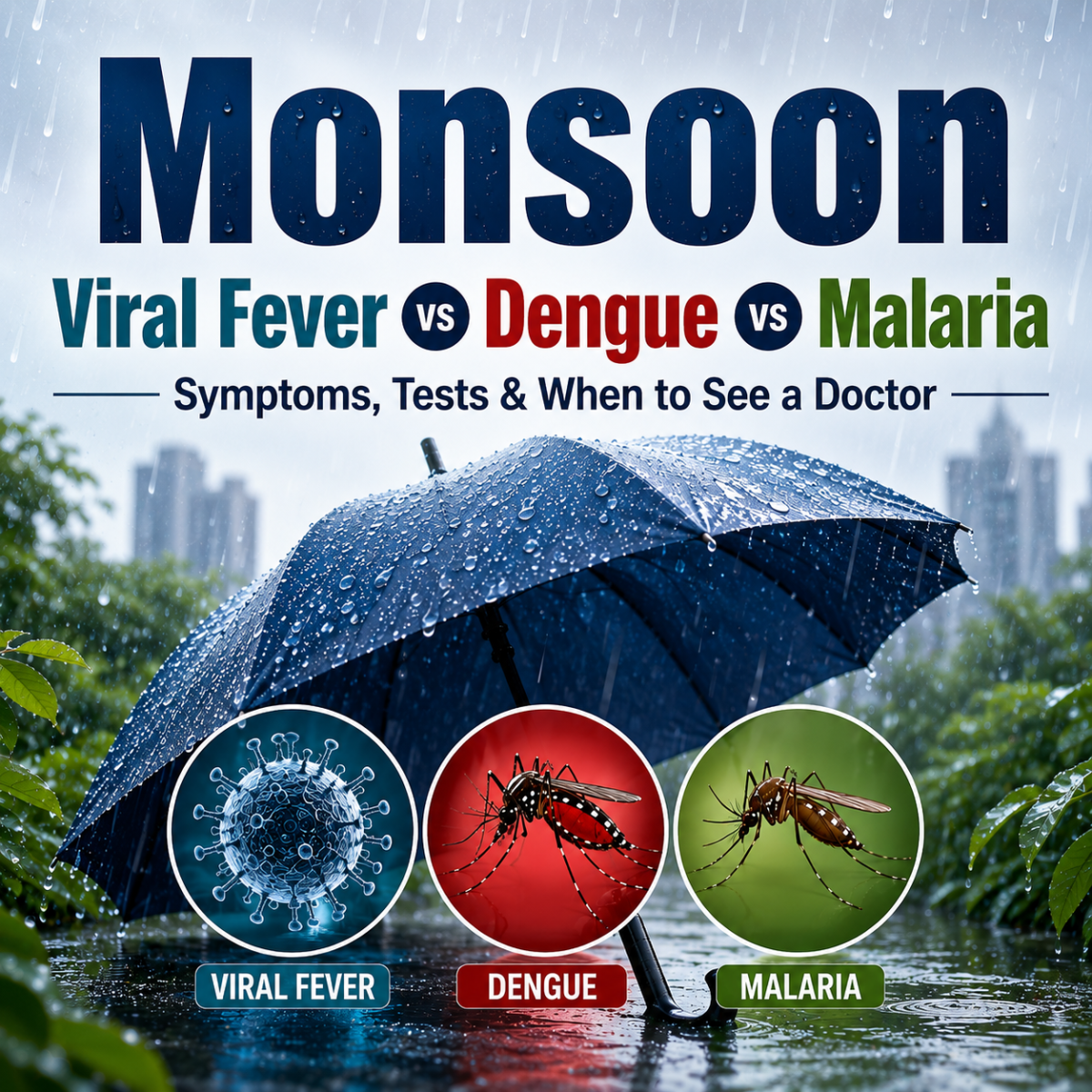
The rainy season brings relief from the summer heat, but it also increases the risk of many infections. Every year during the monsoon, hospitals see a rise in patients suffering from viral fever, dengue, and malaria. Since these illnesses often begin with similar symptoms such as fever and body pain, many people find it difficult to tell them apart.
Ignoring symptoms or delaying treatment can lead to serious complications, especially in the case of dengue and malaria. Understanding the differences can help you seek medical care at the right time.
At Metro Hospital, Faridabad, our experienced physicians and emergency care team provide accurate diagnosis, advanced laboratory testing, and comprehensive treatment for all seasonal infections.
Monsoon creates the perfect environment for germs and mosquitoes.
The reasons include:
Because of these factors, viral infections and mosquito-borne diseases become much more common during the rainy season.
Viral fever is caused by different viruses that spread through cough, sneezing, close contact, or contaminated surfaces.
It usually affects the upper respiratory tract and generally improves within 3 to 7 days with proper rest, hydration, and medications recommended by a doctor.
Most viral fevers recover without complications, but persistent or worsening symptoms should not be ignored.
Dengue is a mosquito-borne viral infection transmitted by the Aedes mosquito, which usually bites during the daytime.
It can range from mild illness to severe dengue, which may cause dangerous bleeding, organ damage, and shock if not treated promptly.
Seek immediate medical attention if you develop:
These symptoms require urgent hospital care.
Malaria is caused by Plasmodium parasites and spreads through the bite of infected Anopheles mosquitoes, which usually bite from dusk to dawn.
Unlike viral fever, malaria can affect the liver, red blood cells, kidneys, and brain if left untreated.
A common feature of malaria is the cycle of chills followed by high fever and heavy sweating.
| Feature | Viral Fever | Dengue | Malaria |
|---|---|---|---|
| Cause | Virus | Dengue virus | Plasmodium parasite |
| Spread | Person to person | Aedes mosquito | Anopheles mosquito |
| Fever | Mild to high | Sudden high fever | Cyclical high fever |
| Chills | Mild | Sometimes | Very common |
| Body Pain | Mild | Severe | Moderate |
| Joint Pain | Mild | Very severe | Mild |
| Rash | Sometimes | Common | Rare |
| Platelet Count | Usually normal | Often decreases | Usually normal or mildly low |
| Bleeding | Rare | Possible in severe cases | Rare |
| Duration | 3–7 days | 7–10 days | Depends on treatment |
Doctors may recommend different blood tests depending on your symptoms.
There is no single test for all viral fevers.
Doctors may advise:
To confirm dengue, doctors may recommend:
Regular monitoring of platelet count is important, but treatment decisions are based on the patient’s overall condition—not just the platelet number.
Malaria diagnosis may include:
Early diagnosis helps prevent serious complications.
No.
Many people assume every fever during the rainy season is dengue. Others start antibiotics without medical advice.
This can delay the correct diagnosis.
Since viral fever, dengue, malaria, typhoid, and other infections often have similar symptoms, only a doctor and appropriate laboratory tests can identify the exact cause.
Visit a doctor if:
Do not ignore these warning signs.
Treatment depends on the underlying cause.
Treatment generally includes:
Treatment focuses on supportive care, including:
Avoid taking painkillers such as ibuprofen or diclofenac unless prescribed, as they may increase the risk of bleeding. Use only medicines recommended by your doctor.
Malaria is treated with prescription anti-malarial medicines.
The exact medication depends on the type of malaria parasite and the severity of the illness. Completing the full course of treatment is essential to prevent recurrence and complications.
Simple preventive measures can significantly reduce your risk:
At Metro Hospital, Faridabad, we provide comprehensive care for monsoon-related illnesses with:
Early diagnosis and timely treatment can prevent complications and support faster recovery.
No. Fever during the rainy season may be caused by viral infections, dengue, malaria, typhoid, influenza, or other illnesses. A doctor’s evaluation and laboratory tests are needed for an accurate diagnosis.
No. Viral fever and dengue are different infections. However, dengue often starts with symptoms that resemble a common viral fever.
A blood test (CBC) is the only reliable way to measure your platelet count.
The Aedes mosquito, which is most active during the daytime.
The Anopheles mosquito, which usually bites from dusk to dawn.
Yes. Although uncommon, a person can be infected with both diseases at the same time, making early testing especially important.
Monsoon is the season when viral fever, dengue, and malaria become increasingly common. Because these illnesses often begin with similar symptoms, self-diagnosis can be misleading and delay appropriate treatment. Recognizing warning signs, getting the right tests, and consulting a doctor early can help prevent serious complications.
If you or a family member develops persistent fever, severe body pain, repeated chills, or any warning signs, don’t wait. Timely medical evaluation can make all the difference.
For expert diagnosis and treatment of monsoon illnesses, trust the experienced team at Metro Hospital, Faridabad, where advanced diagnostics, emergency care, and compassionate medical expertise are available to help you recover safely.