Appointment
 Find A Doctor
 Lab Report
Fatty Liver Symptoms: Early Signs, Grades and How to Reverse It
Oct 30, 2026
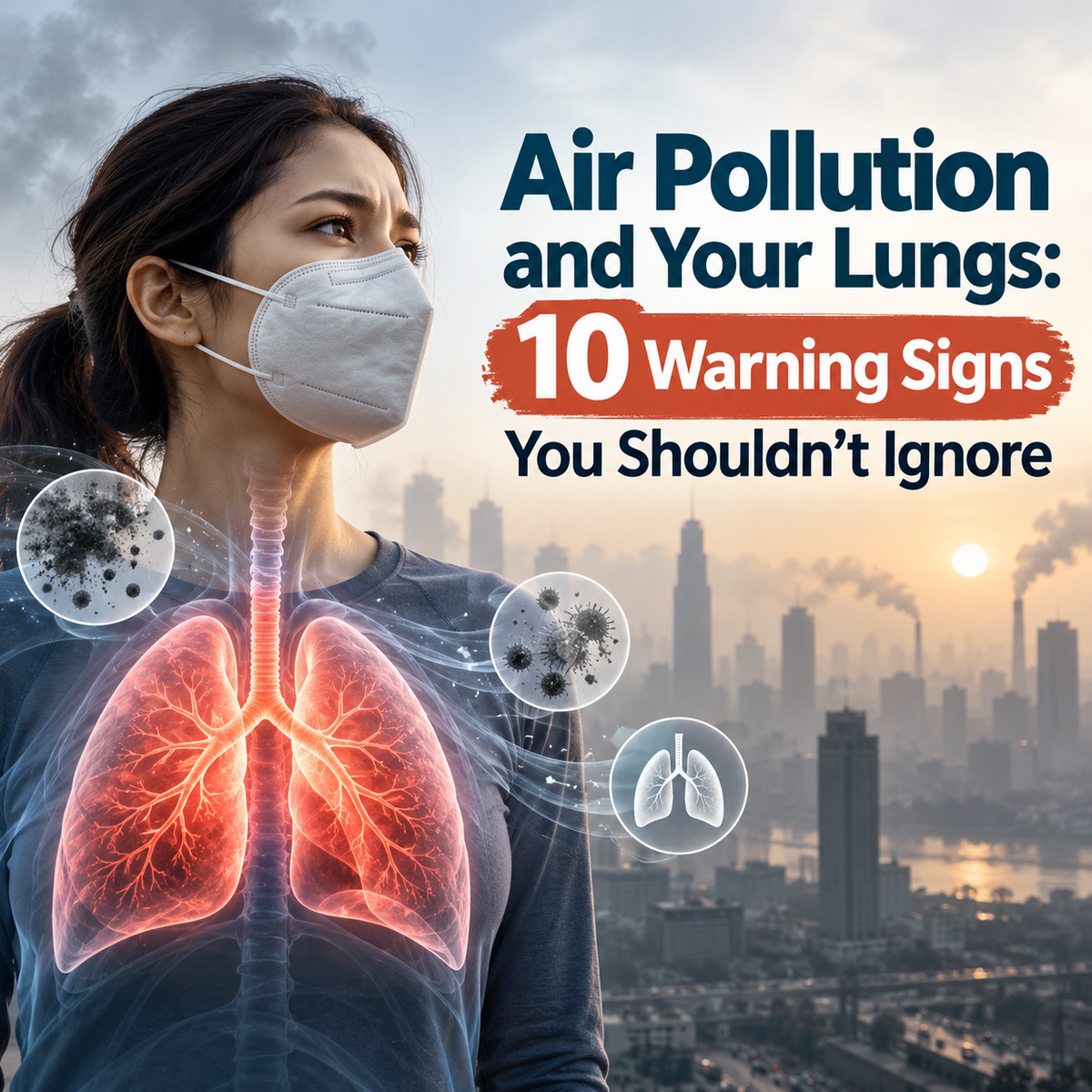
Air pollution is more than an environmental problem—it is a major health concern that can directly affect the lungs, heart, blood vessels and overall quality of life. People living in Delhi-NCR are especially exposed during the colder months, when lower temperatures, slow winds, vehicle emissions, road dust, construction activity and other pollutants combine to worsen air quality. In October 2026, Delhi and Gurugram again experienced multiple days in the moderate-to-poor range, reinforcing concerns about seasonal respiratory illness.
The lungs are among the first organs to feel the effects of polluted air. Fine particulate matter such as PM2.5 can travel deep into the lungs and may even enter the bloodstream, while larger particles such as PM10 can irritate the respiratory tract. WHO identifies air pollution as a major environmental health risk associated with respiratory disease, cardiovascular disease, stroke, lung cancer and respiratory infections.
At Metro Hospital, Faridabad, people with a persistent cough, breathlessness, wheezing, recurrent chest infections, or worsening asthma can seek specialist evaluation through the Pulmonology, Respiratory & Sleep Medicine Department. The department manages asthma, COPD, interstitial lung disease, respiratory allergies, lung cancer, sleep-related breathing disorders and other acute and chronic lung conditions.
This detailed guide explains 10 warning signs that air pollution may be affecting your lungs, who is most at risk, how AQI influences respiratory health, when to seek urgent care, and practical ways to reduce exposure.
Every time you breathe, air passes through the:
Polluted air may contain a mixture of:
WHO notes that PM2.5 is particularly concerning because these particles are small enough to penetrate deeply into the lungs and enter the bloodstream.
Repeated exposure can trigger:
For some people, symptoms may begin within hours of exposure. Others may develop problems gradually over months or years.
Air pollution can affect anyone, but WHO identifies several groups as particularly vulnerable, including:
People with asthma, COPD, chronic bronchitis or occupational dust exposure may notice symptoms earlier because their airways are already more sensitive.
A cough is one of the most common signs of respiratory irritation.
Air pollution can trigger a cough because inhaled pollutants irritate the lining of the throat and airways.
You may notice:
A mild cough for a short period may settle once exposure decreases.
However, seek medical advice if the cough:
Metro Hospital’s respiratory guidance specifically recommends medical evaluation for persistent cough and chronic respiratory symptoms.
Breathlessness can occur when pollution causes:
People may describe it as:
If you have never experienced breathlessness before and it starts during a period of poor air quality, the lungs may be reacting to pollution.
However, breathlessness can also indicate heart disease, infection, asthma, COPD or other serious conditions.
Sudden or severe breathlessness requires urgent medical evaluation.
Wheezing is a whistling sound produced when air moves through narrowed airways.
Pollution can trigger wheezing, particularly in people with:
Wheezing may worsen after:
If wheezing occurs repeatedly, especially at night or with exercise, consult a pulmonologist.
Metro Hospital’s Pulmonology Department treats asthma and respiratory allergies and provides pulmonary function testing to assess airflow limitation.
Chest tightness can feel like:
Polluted air may trigger bronchospasm, particularly in people with asthma.
However, chest tightness can also be related to:
If chest tightness is sudden, severe or associated with sweating, nausea, arm pain or breathlessness, seek emergency medical care.
Do not assume it is only pollution-related.
A burning or scratchy throat after exposure to polluted air is common.
Pollutants can irritate the lining of the upper respiratory tract and may cause:
People who travel daily through heavy traffic or work outdoors may experience these symptoms more often.
Persistent throat symptoms should still be evaluated because reflux, allergy, infection and other conditions can produce similar complaints.
Air pollution can stimulate the airways to produce more mucus.
You may notice:
This is especially common in people with:
If sputum becomes yellow, green, bloody, or foul-smelling, you may need further evaluation.
One subtle warning sign is that normal activity begins to feel more difficult.
You may notice:
On polluted days, exercise can increase the amount of polluted air inhaled because breathing becomes deeper and faster.
People with lung disease should follow local air-quality advisories and avoid strenuous outdoor exercise during poor or very poor AQI periods.
Air pollution can irritate and weaken normal respiratory defence mechanisms.
This may increase susceptibility to conditions such as:
WHO links air pollution exposure with respiratory infections, including pneumonia.
If you are getting repeated chest infections, a respiratory evaluation may help identify underlying asthma, COPD or reduced lung reserve.
Air pollution is a common asthma trigger.
You may notice:
Children with asthma may be particularly sensitive.
Recent Delhi-NCR reporting has highlighted concern about worsening asthma symptoms and respiratory admissions during pollution spikes.
If asthma control worsens repeatedly during high pollution periods, treatment may need review.
Some people describe pollution-related respiratory irritation as:
This may occur because of airway inflammation.
However, persistent chest discomfort should never be self-diagnosed as “pollution.”
It may also be related to:
Seek urgent evaluation for sudden or severe chest pain.
Asthma is one of the conditions most affected by poor air quality.
Pollutants can irritate sensitive airways and trigger:
People with asthma should:
Do not stop preventive inhalers simply because symptoms improve temporarily.
COPD includes chronic bronchitis and emphysema.
Polluted air can worsen:
People with COPD may experience exacerbations during severe pollution.
Metro Hospital’s Pulmonology Department manages COPD and critical respiratory illness and is integrated with critical care for patients who need advanced respiratory support.
Long-term air pollution exposure has been associated with lung cancer risk.
WHO includes lung cancer among the major diseases associated with air-pollution exposure.
This does not mean that every person exposed to polluted air will develop lung cancer.
Risk depends on:
Persistent cough, coughing blood and unexplained weight loss require medical evaluation.
PM2.5 refers to particulate matter measuring less than 2.5 micrometres in diameter.
These particles are extremely small.
WHO notes they can penetrate deep into lung tissue and may enter the bloodstream.
Sources may include:
Long-term exposure is associated with both respiratory and cardiovascular disease.
PM10 refers to particles smaller than 10 micrometres.
These can be inhaled and deposited in the respiratory system.
Common sources include:
Both PM10 and PM2.5 contribute to respiratory irritation.
The Air Quality Index provides a simplified indication of overall air quality.
India commonly classifies AQI as:
| AQI | Category |
|---|---|
| 0–50 | Good |
| 51–100 | Satisfactory |
| 101–200 | Moderate |
| 201–300 | Poor |
| 301–400 | Very Poor |
| 401–500 | Severe |
Recent Gurugram reporting cited these CPCB categories and noted that prolonged exposure to “poor” air can cause breathing discomfort, while even “moderate” air may worsen symptoms in people with asthma or heart and lung disease.
When pollution is high:
Reduce unnecessary outdoor time, especially near:
Metro Hospital also recommends limiting outdoor exposure when pollution levels are high.
Intense exercise increases breathing rate and pollutant intake.
Shift workouts indoors on high-pollution days.
A properly fitted particulate-filtering mask may reduce inhalation of fine particles when outdoor exposure is unavoidable.
Loose cloth masks offer limited protection against fine particulate pollution.
Practical steps include:
High-efficiency particulate air filtration may reduce indoor particulate concentrations when properly used.
However, an air purifier is only one part of exposure reduction.
It cannot eliminate all gaseous pollutants and should not replace:
Steam inhalation may temporarily soothe a dry throat or nasal irritation, but it does not remove PM2.5 from the lungs and does not reverse pollution-related inflammation.
Very hot steam can also cause burns.
Use simple hydration and medical treatment where needed rather than relying on steam as a “lung detox.”
There is no proven juice, supplement or short-term detox that “cleans” polluted lungs.
The lungs have natural clearance mechanisms.
The most useful measures are:
Children are particularly vulnerable because their lungs are still developing.
Helpful measures include:
WHO identifies children among the groups most vulnerable to air pollution.
Older adults may already have:
During polluted periods:
Consult a respiratory specialist if you have:
Metro Hospital specifically recommends early assessment for persistent cough, breathlessness, wheezing and recurrent chest infections because earlier diagnosis may improve treatment outcomes.
Seek immediate medical attention for:
These symptoms should not be attributed to pollution without emergency evaluation.
A pulmonologist may recommend tests depending on symptoms.
PFT assesses how well the lungs move air.
It is useful for:
Spirometry measures:
It may help detect airway obstruction.
This may be advised when infection, lung disease or another structural problem is suspected.
CT may be needed for selected patients with persistent or unexplained respiratory symptoms.
Bronchoscopy allows direct inspection of the airways in selected situations.
Metro Hospital’s Pulmonology Department routinely performs pulmonary function tests, sleep studies and video-assisted bronchoscopy.
Patients experiencing pollution-related breathing symptoms can seek specialist evaluation through the Pulmonology, Respiratory & Sleep Medicine Department at Metro Hospital, Faridabad.
The department manages:
Its respiratory diagnostic facilities include:
Patients can also review Metro Hospital’s Respiratory Care in Faridabad resource, which advises limiting outdoor exposure during periods of high pollution and seeking medical care for persistent respiratory symptoms.
Early symptoms may include cough, throat irritation, mild breathlessness, wheezing, chest tightness and reduced exercise tolerance.
Long-term exposure can contribute to chronic respiratory disease and reduced lung function in susceptible individuals. WHO links air pollution with COPD, lung cancer and respiratory infections.
Yes. Polluted air can irritate sensitive airways and worsen asthma symptoms.
PM2.5 poses particular concern because its smaller particles can penetrate deep into the lungs and enter the bloodstream.
Strenuous outdoor exercise is generally best reduced or avoided during poor or very poor air quality because heavier breathing can increase pollutant exposure.
No. It may reduce indoor particulate matter but cannot eliminate all pollution exposure.
No. Steam may soothe upper-airway irritation but does not remove fine particles from lung tissue.
Airway irritation, asthma and accumulated exposure during the day can all contribute to nighttime cough. Persistent symptoms should be evaluated.
Children, pregnant women, older people and individuals with chronic health conditions are among the groups at higher risk.
Patients can consult the Pulmonology, Respiratory & Sleep Medicine Department at Metro Hospital, Faridabad for evaluation of asthma, COPD, respiratory allergies, chronic cough and other lung conditions.
Air pollution can affect the lungs even before symptoms become severe.
The 10 warning signs you should not ignore include:
Air pollution is especially concerning for people with asthma, COPD, heart disease, older adults and children.
During high pollution periods:
At Metro Hospital, Faridabad, patients with persistent respiratory symptoms can access specialist care through the Pulmonology, Respiratory & Sleep Medicine Department, supported by advanced respiratory testing and critical-care services.
The most important step is not to normalise repeated cough, breathlessness or wheezing simply because pollution is common in Delhi-NCR. Persistent symptoms deserve proper assessment.
Disclaimer: This article is intended for general health awareness only. Sudden chest pain, severe breathlessness, bluish lips, coughing blood or rapidly worsening respiratory symptoms require urgent medical attention.