Appointment
 Find A Doctor
 Lab Report
Fatty Liver Symptoms: Early Signs, Grades and How to Reverse It
Oct 30, 2026
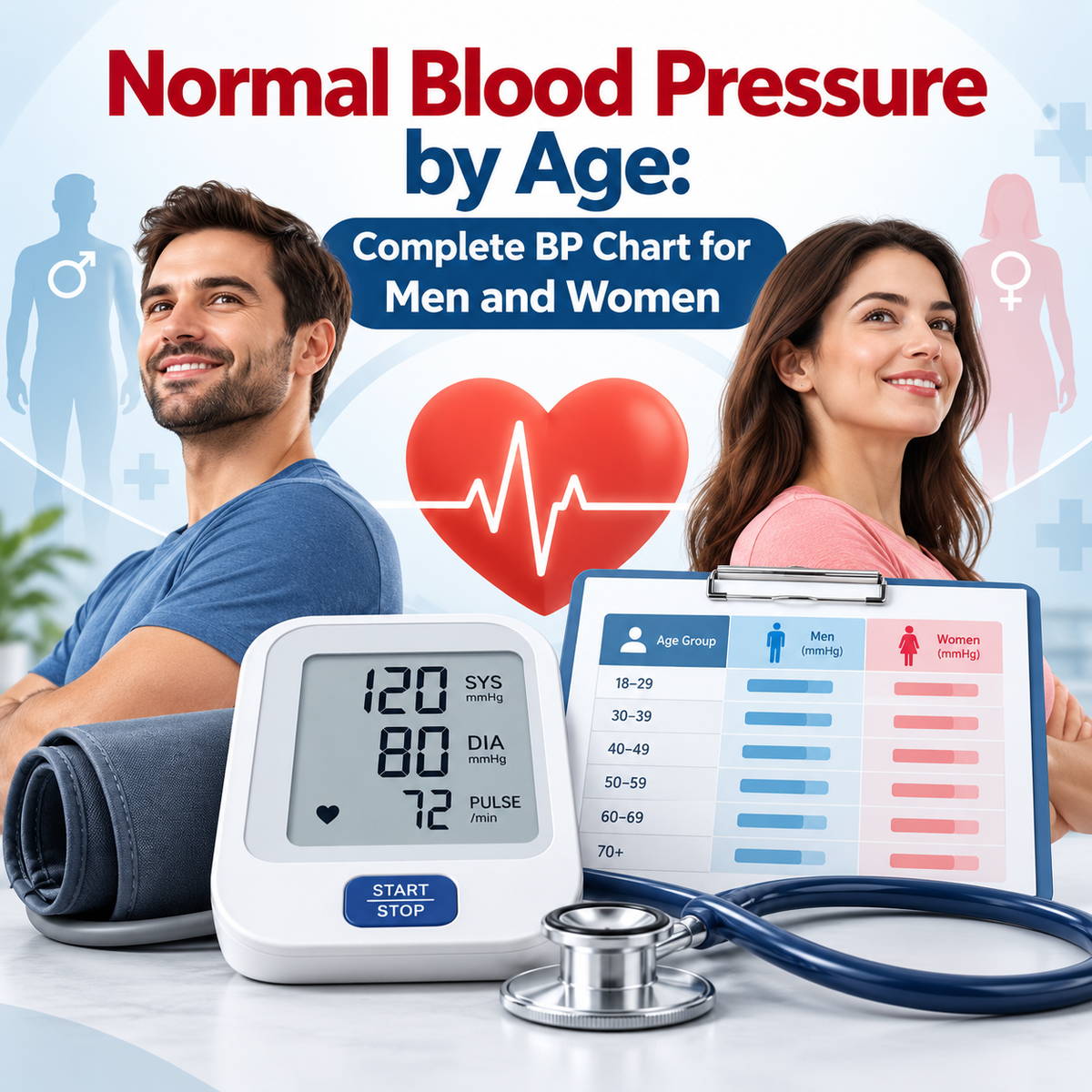
Blood pressure is one of the most important indicators of cardiovascular health. A routine blood pressure reading can provide valuable information about your heart and blood vessels and may help identify hypertension before it causes complications.
Many people search for normal blood pressure by age, assuming that a higher reading automatically becomes normal as they get older. However, current adult blood-pressure guidelines do not define a different “normal” blood pressure for men and women at every age. For adults, a blood pressure below 120/80 mm Hg is generally classified as normal, whether someone is 25, 45 or 70 years old.
Age still matters because blood vessels become less elastic over time and hypertension becomes more common in older adults. Individual treatment targets may also need adjustment based on overall health, frailty, pregnancy, kidney disease, and cardiovascular risk.
At Metro Hospital, Faridabad, patients with high blood pressure, heart-related symptoms or cardiovascular risk factors can seek evaluation through the Cardiology Department. Metro Heart Institute provides cardiovascular assessment including echocardiography, TMT, Holter monitoring and ambulatory blood-pressure monitoring.
This detailed guide explains normal blood pressure by age, BP ranges for men and women, systolic and diastolic pressure, hypertension stages, low blood pressure, home monitoring and when you should consult a doctor.
Blood pressure is the force of circulating blood against your artery walls.
A blood-pressure reading contains two numbers.
For example:
120/80 mm Hg
The first number is the systolic blood pressure.
The second number is the diastolic blood pressure.
Systolic blood pressure measures the pressure inside the arteries when the heart contracts and pumps blood.
In a reading of:
118/76 mm Hg
118 is the systolic pressure.
Diastolic pressure measures arterial pressure while the heart relaxes between beats.
In:
118/76 mm Hg
76 is the diastolic pressure.
Both numbers are important when assessing blood pressure health.
According to the current AHA/ACC classification:
| Blood Pressure Category | Systolic BP | Diastolic BP |
|---|---|---|
| Normal | Less than 120 | and less than 80 |
| Elevated | 120–129 | and less than 80 |
| Stage 1 Hypertension | 130–139 | or 80–89 |
| Stage 2 Hypertension | 140 or higher | or 90 or higher |
| Severe Hypertension | Higher than 180 | and/or higher than 120 |
The 2025 AHA/ACC guideline continues to define normal adult blood pressure as below 120/80 mm Hg.
An important point is that there is not a separate official normal BP threshold for every adult age group.
The following table therefore shows the recommended normal adult category across different ages rather than suggesting that high blood pressure becomes normal with ageing.
| Age Group | Normal BP Category |
|---|---|
| 18–29 years | Below 120/80 mm Hg |
| 30–39 years | Below 120/80 mm Hg |
| 40–49 years | Below 120/80 mm Hg |
| 50–59 years | Below 120/80 mm Hg |
| 60–69 years | Below 120/80 mm Hg |
| 70+ years | Below 120/80 mm Hg, with treatment individualised when needed |
A person’s average measured blood pressure may rise with age, but that does not mean increasingly high readings should automatically be considered healthy.
The latest guideline generally recommends a treatment target below 130/80 mm Hg for adults with hypertension, while allowing additional clinical consideration for certain groups such as people with limited life expectancy or institutional care needs.
Men may develop hypertension at different rates during life, but the basic adult blood-pressure classification does not change simply because someone is male.
| Age in Men | Healthy Adult BP Category |
|---|---|
| 18–29 | Below 120/80 |
| 30–39 | Below 120/80 |
| 40–49 | Below 120/80 |
| 50–59 | Below 120/80 |
| 60–69 | Below 120/80 |
| 70+ | Below 120/80, interpreted in clinical context |
Men with readings consistently reaching 130/80 mm Hg or higher should discuss their cardiovascular risk with a healthcare professional.
The general classification for adult women is also the same.
| Age in Women | Healthy Adult BP Category |
|---|---|
| 18–29 | Below 120/80 |
| 30–39 | Below 120/80 |
| 40–49 | Below 120/80 |
| 50–59 | Below 120/80 |
| 60–69 | Below 120/80 |
| 70+ | Below 120/80, interpreted in clinical context |
However, blood-pressure considerations may differ during:
Pregnancy has specific blood-pressure thresholds and requires obstetric evaluation.
This is a common misunderstanding.
Systolic blood pressure often does increase with age because arteries gradually become stiffer.
But that does not mean a blood pressure of 150/90 should simply be considered “normal because I am older.”
The current AHA/ACC guideline still uses the same adult BP classification while recommending individualised treatment decisions for older adults.
For community-dwelling adults aged 65 or older with hypertension, the guideline generally supports systolic BP treatment below 130 mm Hg when appropriate and tolerated.
A reading around 120/80 has traditionally been considered a healthy benchmark.
Under current AHA classification:
Therefore, a reading of exactly 120/80 is not strictly within the “normal below 120/below 80” category.
One isolated reading is not usually enough to diagnose hypertension.
Repeated measurements provide more useful information.
Under AHA/ACC classification, a consistent blood pressure of 130/80 mm Hg or higher meets the threshold for Stage 1 hypertension.
However, treatment does not depend only on that number.
Doctors also consider:
Yes.
A consistent blood pressure of:
140/90 mm Hg or higher
falls into Stage 2 hypertension under the current AHA/ACC classification.
This generally requires medical evaluation and may need both lifestyle changes and medication.
Low blood pressure is often called hypotension.
A commonly used practical reference is around:
Below 90/60 mm Hg
However, some healthy people naturally have relatively low readings without symptoms.
Low blood pressure becomes more important when accompanied by:
Possible causes include:
Several changes may contribute.
Blood vessels gradually become less elastic as you age.
This often increases systolic pressure.
Over time, people may accumulate risk from:
These conditions become more common with age and can damage blood vessels.
Kidneys play an important role in regulating blood pressure.
Reduced kidney function can contribute to hypertension.
Hypertension is frequently called a silent condition because many people feel completely normal even when their blood pressure is high.
The American Heart Association notes that measuring blood pressure is the only reliable way to know whether hypertension is present.
This is why regular BP checks matter.
Do not wait for symptoms such as headache or dizziness before measuring your blood pressure.
Most mild or moderate hypertension causes no obvious symptoms.
Extremely high blood pressure may sometimes occur with:
A reading above 180/120 mm Hg can represent severe hypertension and requires prompt medical attention, particularly if symptoms are present.
If blood pressure is above 180/120 mm Hg, repeat the reading after a brief rest.
Urgent medical evaluation is particularly important if high BP is accompanied by:
These may indicate acute organ damage and should be treated as an emergency.
Hypertension develops because of a combination of factors.
Common risk factors include:
Some people have secondary hypertension, meaning another medical problem is responsible.
Possible causes include:
Hypertension makes the heart work harder.
Over time, this can contribute to:
The 2025 AHA/ACC guideline identifies high blood pressure as a major modifiable risk factor for cardiovascular disease, stroke, chronic kidney disease and premature death.
Persistently high blood pressure can damage blood vessels supplying the brain.
This increases the risk of:
Managing hypertension is therefore one of the most important strategies for reducing stroke risk.
The relationship works both ways.
High blood pressure can damage the kidneys.
Kidney disease can also raise blood pressure.
People with:
often need particularly careful BP management.
Incorrect technique can significantly alter your result.
Avoid:
Sit quietly before taking the measurement.
You should:
Support your arm at heart level.
Place the cuff on bare skin rather than over clothing.
A cuff that is too small can produce an inaccurately high reading.
AHA guidance recommends taking two readings about one minute apart and recording the results when monitoring at home.
Some people have higher blood-pressure readings in a clinic because of anxiety but lower readings at home.
This is known as white coat hypertension.
Doctors may recommend:
to understand the actual pattern.
Metro Heart Institute lists ambulatory BP monitoring (ABP) among its cardiovascular diagnostic facilities.
Masked hypertension is essentially the opposite.
Clinic blood pressure appears normal, but readings outside the clinic are repeatedly elevated.
Home or ambulatory monitoring can help identify this pattern.
Frequency depends on your health.
People with normal readings may need periodic screening.
More frequent monitoring may be recommended if you have:
Your healthcare professional can recommend the appropriate schedule.
High sodium intake can increase blood pressure.
Reduce:
The DASH dietary pattern emphasises:
The 2025 AHA/ACC guideline strongly recommends heart-healthy eating patterns such as DASH to prevent and manage hypertension.
Excess body weight can increase cardiovascular workload and blood pressure.
Even modest weight reduction may help lower BP in overweight individuals.
Regular moderate physical activity can help improve:
Choose an exercise programme appropriate for your health status.
Smoking damages blood vessels and significantly increases cardiovascular risk.
Excess alcohol can raise blood pressure.
Current hypertension guidance recommends reducing or eliminating alcohol intake as part of lifestyle management.
Chronic stress can indirectly contribute to poor BP control through:
Poor sleep and sleep apnea may contribute to hypertension.
Persistent:
Should be medically evaluated.
For most non-pregnant adults, the basic BP categories are the same for men and women.
Treatment may differ because of:
Gender alone does not create a different normal blood-pressure threshold.
Pregnancy requires separate assessment.
The AHA lists hypertension in pregnancy at 140/90 mm Hg or higher, while severe hypertension during pregnancy is generally 160/110 mm Hg or higher.
High blood pressure in pregnancy may be related to:
Pregnant women with raised BP should consult their obstetrician promptly.
Older adults are more likely to develop isolated systolic hypertension, where the systolic number is high but diastolic pressure may remain lower.
For example:
152/76 mm Hg
This is still hypertension.
It should not simply be dismissed as normal ageing.
Treatment must balance cardiovascular protection with factors such as:
People with persistently elevated blood pressure can seek evaluation at the Cardiology Department at Metro Hospital, Faridabad.
Metro Heart Institute provides cardiovascular diagnostic services including:
Patients who require an initial comprehensive medical assessment can also consult the Internal Medicine Department, which provides adult medical care and management of chronic illnesses.
Consider cardiovascular evaluation if:
A single unusual reading may not diagnose hypertension, but repeated high readings should not be ignored.
Current AHA/ACC guidance defines normal adult blood pressure as less than 120/80 mm Hg.
The official adult BP category does not progressively increase with age. Blood pressure may naturally trend upward as people age, but readings in the hypertensive range still require assessment.
Under current AHA/ACC classification, 130/80 falls into Stage 1 hypertension rather than the normal category.
No. A blood pressure of 140/90 meets the Stage 2 hypertension threshold under current AHA/ACC classification. Treatment decisions may nevertheless be individualised for older adults.
For most non-pregnant adults, the basic classification is the same for men and women.
A reading higher than 180/120 mm Hg is considered severe. If it occurs with chest pain, breathlessness, weakness, numbness, vision changes or difficulty speaking, emergency medical care is required.
A reading below about 90/60 mm Hg is often considered low, but symptoms and your baseline matter.
Yes. Stress, exercise, caffeine, pain and anxiety can temporarily increase BP.
When monitoring at home, the AHA recommends taking two readings about one minute apart and recording them.
Patients can consult the Cardiology Department at Metro Hospital, Faridabad for cardiovascular assessment, including ambulatory BP monitoring and other heart-related investigations.
Understanding normal blood pressure by age is useful, but one important misconception should be avoided:
High blood pressure does not automatically become normal simply because you are older.
For most adults, the current blood-pressure categories remain:
Healthy blood pressure can be supported by:
At Metro Hospital, Faridabad, people with high BP and cardiovascular risk can access specialist assessment through the Cardiology Department, which offers comprehensive cardiac diagnostics including ambulatory BP monitoring, echocardiography, TMT and Holter monitoring.
Checking your blood pressure regularly is one of the simplest ways to identify cardiovascular risk early—especially because hypertension frequently causes no symptoms.
Disclaimer: This article is intended for general health education only. A qualified healthcare professional should personalise blood-pressure targets and treatment based on age, pregnancy status, cardiovascular risk, and other medical conditions.