Appointment
 Find A Doctor
 Lab Report

World Mental Health Day 2026: Theme, Importance, Mental Health Awareness and When to Seek Help
Oct 10, 2026
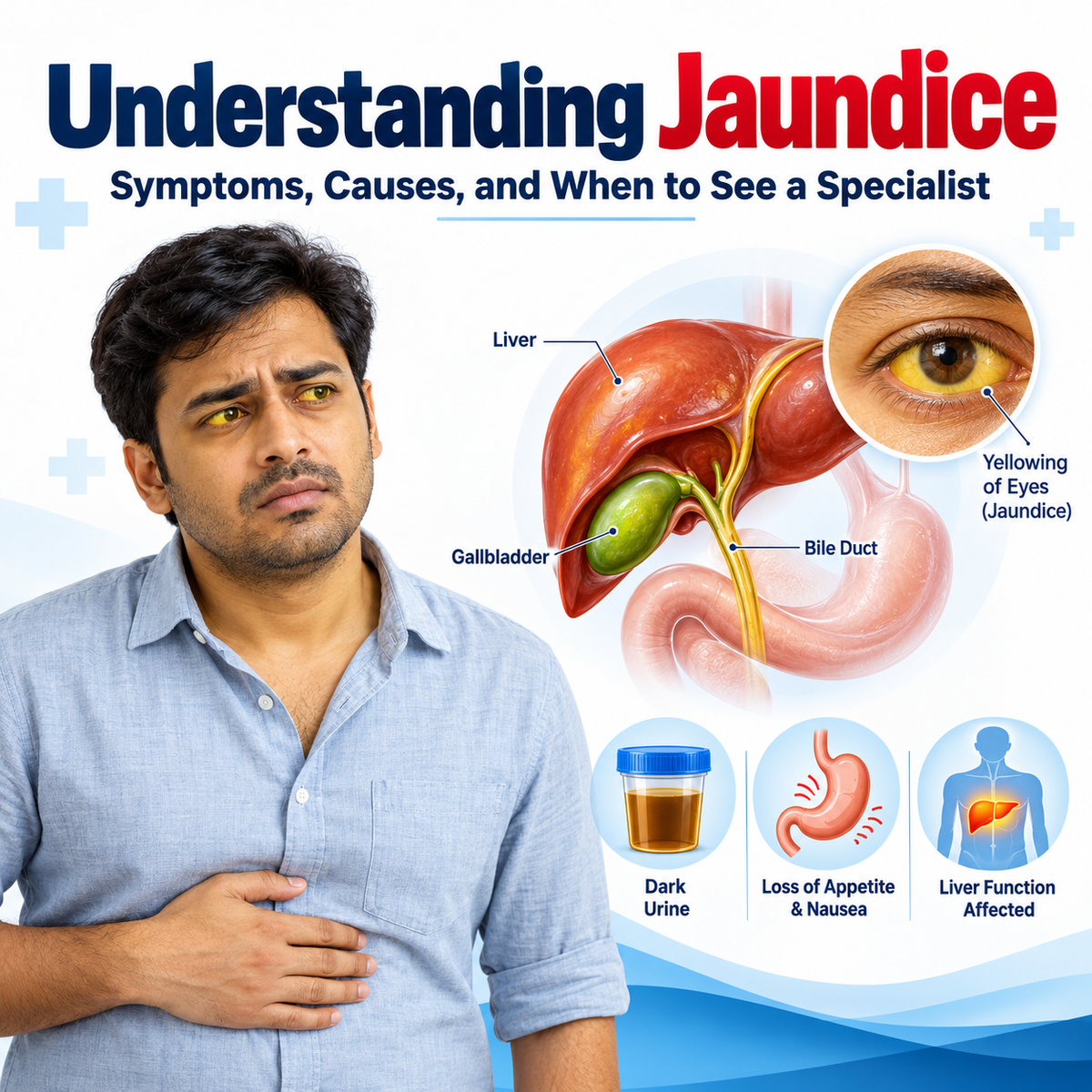
Jaundice is a condition in which the skin and the whites of the eyes develop a yellowish appearance due to an increased level of bilirubin in the blood. It is not a disease by itself. Instead, jaundice is an important sign that something may be affecting the liver, gallbladder, bile ducts, pancreas or the normal breakdown of red blood cells.
In some people, jaundice develops gradually and may first be noticed in the eyes. In others, it may appear along with dark urine, pale stools, itching, abdominal pain, fever, nausea, loss of appetite or unexplained weight loss.
Because the causes of jaundice range from relatively manageable conditions to serious liver and biliary diseases, yellowing of the eyes or skin should not simply be treated at home without identifying the underlying cause.
At Metro Hospital, Faridabad, patients with jaundice, hepatitis, gallstones, bile duct obstruction, fatty liver and other liver-related conditions can be evaluated through the Medical Gastroenterology Department, which provides specialist care for disorders of the liver, pancreas, gallbladder and bile ducts.
This detailed guide explains what jaundice is, its symptoms, causes, types, diagnosis, treatment, possible complications and when you should consult a gastroenterologist or liver specialist.
Jaundice occurs when a yellow pigment called bilirubin accumulates in the blood and body tissues.
Bilirubin is produced naturally when old red blood cells are broken down. The liver normally processes bilirubin and passes it into bile. Bile then travels through the bile ducts into the intestine, where bilirubin is eventually eliminated from the body.
Jaundice can therefore develop when:
As bilirubin rises, the whites of the eyes may turn yellow, followed by yellowing of the skin. Urine may become darker and stools may become pale when bile flow is obstructed.
In adults, jaundice should be evaluated by a healthcare professional because it can be a sign of an underlying liver, gallbladder, blood or pancreatic condition.
Bilirubin is a yellow substance produced during the normal breakdown of old red blood cells.
The process occurs in several stages:
If this process is interrupted at any stage, bilirubin can accumulate in the bloodstream.
A bilirubin blood test is therefore an important part of evaluating jaundice. Doctors may assess total bilirubin as well as direct and indirect bilirubin to help identify where the problem may be occurring.
The symptoms depend on the underlying cause and severity of bilirubin elevation.
Yellowing of the whites of the eyes is one of the most recognisable signs of jaundice.
In some patients, this may be noticed before the skin becomes visibly yellow.
As bilirubin levels rise, the skin can develop a yellow or yellow-orange appearance.
In people with darker skin tones, yellowing may be more difficult to notice on the skin, so checking the whites of the eyes can be particularly helpful.
Urine may become dark yellow, brown or tea-coloured.
Dark urine can occur when increased conjugated bilirubin is excreted through the kidneys.
Bilirubin normally contributes to the brown colour of stool.
If bile cannot reach the intestine because of a blocked bile duct, stool may become unusually pale or clay-coloured.
Generalised itching without a visible rash can occur in certain forms of jaundice, particularly when bile flow is obstructed.
Itching may be mild or severe and can sometimes interfere with sleep.
Jaundice accompanied by abdominal pain can occur with conditions such as:
Pain in the upper-right abdomen may suggest a liver or gallbladder-related problem.
Jaundice associated with fever and chills may suggest infection.
A combination of:
can indicate a potentially serious bile duct infection and requires prompt medical evaluation.
Liver disease, hepatitis, gallbladder disease and pancreatitis may all cause nausea and vomiting along with jaundice.
Many liver and gastrointestinal conditions can reduce appetite.
Persistent loss of appetite accompanied by jaundice warrants investigation.
Weight loss may occur with chronic liver disease or other serious conditions affecting the liver, pancreas or biliary system.
Persistent fatigue is common in many liver conditions.
Patients may feel exhausted even after adequate sleep.
Advanced liver disease can sometimes cause fluid accumulation in the abdomen, known as ascites.
Jaundice associated with abdominal swelling requires specialist evaluation.
Jaundice can be caused by problems occurring before bilirubin reaches the liver, within the liver itself or after bilirubin has been processed by the liver.
For this reason, doctors often broadly classify jaundice into:
Pre-hepatic jaundice occurs when red blood cells are broken down faster than the liver can process the resulting bilirubin.
This causes increased production of unconjugated bilirubin.
Possible causes include:
In these cases, the liver itself may initially be functioning normally, but the bilirubin load exceeds its ability to process it.
Hepatic jaundice occurs when there is a problem within the liver.
The liver may be unable to properly process or excrete bilirubin because liver cells are inflamed, injured or damaged.
Viral infections such as:
can cause liver inflammation and jaundice.
Other symptoms may include:
Metro Hospital’s Medical Gastroenterology Department manages conditions including hepatitis B, hepatitis C and other liver disorders.
Long-term excessive alcohol consumption can cause:
Jaundice can appear when liver damage becomes significant.
Patients with jaundice should avoid alcohol until the underlying cause is properly assessed.
Fatty liver disease is extremely common.
Early fatty liver may not cause jaundice, but advanced liver inflammation or cirrhosis can eventually impair liver function enough to cause yellowing of the eyes or skin.
Cirrhosis is advanced scarring of the liver caused by long-term liver injury.
Possible causes include:
Jaundice can be a sign that liver function has become significantly impaired.
Other symptoms may include:
Certain medications and supplements can damage the liver in susceptible individuals.
Potential causes can include:
Never assume that a herbal or “natural” product is automatically safe for the liver.
If jaundice begins after starting a new medication or supplement, consult a doctor promptly.
Obstructive jaundice occurs when bilirubin has been processed by the liver but bile cannot flow normally into the intestine.
This can happen because of an obstruction within the bile ducts.
Common causes include:
Gallstones are an important cause of obstructive jaundice.
A stone can move from the gallbladder into the common bile duct and block normal bile drainage.
This is called choledocholithiasis.
Symptoms may include:
Patients can learn more about Gall Bladder Stone Treatment at Metro Hospital, Faridabad, where evaluation includes imaging and advanced procedures such as ERCP when clinically appropriate.
Metro Hospital’s gallbladder programme lists high-resolution ultrasound, CT, EUS and ERCP among its available diagnostic and therapeutic facilities.
Stones lodged in the common bile duct can block bile drainage and cause bilirubin levels to rise.
This may produce:
Bile duct obstruction sometimes requires an endoscopic procedure known as ERCP.
Metro Hospital’s Medical Gastroenterology Department provides ERCP, endoscopic ultrasound and other therapeutic endoscopic procedures for selected gastrointestinal and biliary conditions.
The bile duct passes close to the pancreas before entering the intestine.
Certain pancreatic conditions can therefore interfere with bile drainage.
These may include:
Jaundice associated with unexplained weight loss, loss of appetite or persistent abdominal/back pain should be evaluated promptly.
Yes.
Hepatitis means inflammation of the liver.
Possible causes include:
When inflamed liver cells cannot process bilirubin normally, jaundice can develop.
Viral hepatitis is among the recognised causes of hepatic jaundice.
Simple fatty liver usually does not cause jaundice.
However, fatty liver disease can progress in some patients to:
At these more advanced stages, jaundice can occur.
This is why persistent abnormal liver enzymes or fatty liver should not always be ignored simply because there is no pain.
Metro Hospital provides FibroScan along with gastroenterology and liver evaluation for selected patients. Its Gastroenterology Department manages fatty liver, hepatitis, cirrhosis and related liver conditions.
Jaundice is a sign, so diagnosis focuses on identifying what caused bilirubin to rise.
The doctor may ask about:
The doctor may examine:
This measures the amount of bilirubin in the blood.
Doctors may assess:
The pattern can provide clues about whether jaundice is related to blood-cell breakdown, liver processing or bile obstruction.
Liver function testing may include:
The pattern of abnormalities can help differentiate liver-cell injury from bile duct obstruction.
Elevated liver enzymes may occur with viral hepatitis, metabolic fatty liver disease, alcohol-related injury, cirrhosis and certain medications.
CBC may be useful for evaluating:
Depending on the clinical situation, testing may include markers for:
Ultrasound is often an important early imaging investigation.
It can assess:
CT may be used when more detailed imaging is required.
MRCP provides detailed images of the bile ducts and pancreatic ducts.
It can be helpful when doctors suspect:
EUS combines endoscopy and ultrasound to evaluate structures including the pancreas and bile ducts.
Metro Hospital lists EUS as part of its advanced gastroenterology services.
Endoscopic Retrograde Cholangiopancreatography (ERCP) is a specialised endoscopic procedure.
It can be used to treat certain causes of obstructive jaundice.
For example, if a gallstone blocks the common bile duct, ERCP may be used to:
In selected cases, stents may also be placed to relieve obstruction.
ERCP is therefore not simply a diagnostic test; it can be therapeutic.
Metro Hospital’s Gastroenterology service includes ERCP and therapeutic endoscopic procedures for suitable patients.
There is no single medicine that treats every type of jaundice.
Treatment depends entirely on the underlying cause.
Jaundice usually improves when the disease or obstruction responsible for elevated bilirubin is treated.
Treatment depends on the hepatitis virus involved.
Some infections may require mainly supportive care, while chronic hepatitis B or C can require specialist antiviral treatment.
Treatment may involve:
Management may involve:
The responsible medication may need to be discontinued or changed under medical supervision.
Never stop an essential prescribed drug without consulting the doctor who prescribed it.
Patients with advanced liver disease may require:
Jaundice should not be treated only with home remedies because the underlying cause must first be identified.
Hydration, balanced nutrition and rest may support recovery in selected conditions, but they cannot remove a blocked bile duct or treat serious liver disease.
Avoid relying on unproven herbal “liver detox” products.
Certain herbal preparations and supplements themselves can contribute to liver injury.
Diet should depend on the underlying liver or biliary condition.
General principles may include:
Patients with cirrhosis, ascites, severe liver disease or other complications may need specialised nutritional advice.
There is no universal rule that everyone with jaundice must eliminate all dietary fat.
However, people with gallbladder or bile duct problems may have difficulty tolerating very fatty meals.
Your doctor or dietitian can recommend a diet according to the underlying cause.
Yes.
Alcohol should generally be avoided when jaundice or liver injury is being investigated because alcohol places additional stress on the liver.
This is particularly important when alcohol-related liver disease is suspected.
Any new yellowing of the eyes or skin deserves medical evaluation.
Consult a gastroenterologist or liver specialist promptly if you notice:
A gastroenterologist can evaluate whether jaundice is related to the liver, gallbladder, bile ducts or pancreas.
Seek urgent medical care when jaundice occurs with:
Jaundice with fever and abdominal pain can indicate serious biliary infection or obstruction and should not be ignored.
Jaundice itself warrants medical evaluation because some underlying causes can be serious.
Newborn jaundice is different from jaundice developing in adults.
Many newborn babies develop temporary jaundice because their immature liver may not yet process bilirubin efficiently.
Although many cases are mild, very high bilirubin in newborns can be dangerous.
Newborn jaundice should therefore be evaluated by a paediatrician or neonatologist rather than treated using adult jaundice advice.
Jaundice itself is not contagious.
However, some diseases that cause jaundice can spread.
For example, certain forms of viral hepatitis are infectious.
The way they spread depends on the virus.
Therefore, a person with jaundice should first determine the underlying cause before assuming whether there is any infection risk to family members.
Not all causes of jaundice can be prevented, but some risks can be reduced.
Long-term excessive alcohol use can damage the liver.
Obesity, insulin resistance and metabolic conditions are strongly associated with fatty liver disease.
Vaccination is available for hepatitis A and hepatitis B.
Discuss vaccination with your doctor according to your risk.
Do not take large amounts of medicines, herbal products or supplements without medical advice.
Safe food and water practices can help reduce the risk of certain infections, including hepatitis A.
Metabolic conditions can contribute to fatty liver disease and long-term liver damage.
Because jaundice can arise from the liver, gallbladder, bile ducts or pancreas, diagnosis may require more than a routine blood test.
Metro Hospital, Faridabad’s Medical Gastroenterology Department provides evaluation for:
The department manages diseases of the liver, pancreas, gallbladder and bile ducts, making it a relevant specialty for patients presenting with unexplained jaundice.
Depending on the condition, available gastroenterology services include:
These facilities can be particularly important when jaundice is caused by bile duct stones or other forms of obstruction.
Patients requiring specialist evaluation can consult experts such as Dr. Vishal Khurana – Gastroenterologist in Faridabad, Director & HOD – Gastroenterology & Hepatobiliary Sciences at Metro Hospital.
His listed areas of expertise include gastrointestinal and liver disorders along with upper GI endoscopy, colonoscopy, capsule endoscopy, ERCP and endoscopic ultrasound.
Some causes of jaundice may ultimately require surgery.
Metro Hospital’s Surgical Gastroenterology Department provides hepatobiliary and pancreatic surgical care for conditions affecting the liver, gallbladder, bile ducts and pancreas.
This multidisciplinary approach allows medical, endoscopic and surgical specialists to coordinate care according to the cause of jaundice.
Jaundice occurs when bilirubin builds up in the blood. This can happen because of excessive red blood cell breakdown, liver disease or blockage of the bile ducts.
Yellowing of the whites of the eyes is often one of the first noticeable signs. Dark urine, pale stools, fatigue, itching and loss of appetite may also occur.
Jaundice itself is not a disease. It is a sign that may be caused by liver disease, blood disorders, gallstones, bile duct obstruction or pancreatic conditions.
Yes. If a gallstone moves into the common bile duct and blocks bile flow, bilirubin can build up and cause obstructive jaundice.
It depends on the underlying cause. Some causes may be manageable, while others such as severe hepatitis, bile duct obstruction or advanced liver disease can become serious. New jaundice should therefore be medically evaluated.
A bilirubin blood test confirms elevated bilirubin. Additional tests such as liver function tests, ultrasound, viral hepatitis testing, CT, MRCP or other investigations may be needed to determine the cause.
Jaundice often improves when its underlying cause is successfully treated. Treatment therefore depends on whether the problem is hepatitis, gallstones, bile duct obstruction, liver disease or another condition.
Home remedies cannot replace proper diagnosis. Jaundice due to serious liver disease or bile duct obstruction requires medical treatment.
Avoid alcohol and unnecessary medicines or supplements until the cause has been assessed. Diet should be based on the underlying condition rather than following extreme restrictions.
Simple fatty liver generally does not cause jaundice. However, advanced liver damage associated with severe fatty liver disease, fibrosis or cirrhosis can cause yellowing of the eyes.
Dark urine together with yellow eyes can occur when bilirubin levels are elevated and should be evaluated by a doctor.
Consult a gastroenterologist whenever jaundice develops, particularly when it occurs with abdominal pain, dark urine, pale stools, itching, abnormal liver tests, weight loss or persistent digestive symptoms.
Jaundice is an important warning sign rather than a disease by itself.
It occurs when bilirubin accumulates in the bloodstream, causing yellowing of the eyes and skin.
The underlying causes can include:
The treatment depends entirely on identifying and managing the underlying cause.
Patients should not rely only on home remedies or assume that all jaundice is caused by hepatitis.
If you notice yellowing of your eyes or skin, dark urine, pale stools, unexplained itching or other signs of jaundice, consult a healthcare professional promptly.
At Metro Hospital, Faridabad, patients can receive comprehensive jaundice and liver evaluation through the Medical Gastroenterology Department, with access to advanced diagnostic and therapeutic services such as FibroScan, EUS and ERCP. Patients requiring hepatobiliary or pancreatic surgical treatment can also access the Surgical Gastroenterology Department.
Early diagnosis can help distinguish a temporary liver problem from gallstone obstruction, hepatitis or more serious liver disease and allow appropriate treatment to begin without unnecessary delay.
Disclaimer: This blog is intended for general health awareness and educational purposes only. It is not a substitute for professional medical advice, diagnosis or treatment. Yellowing of the eyes or skin should be evaluated by a qualified healthcare professional.