Appointment
 Find A Doctor
 Lab Report

टाइफाइड कैसे होता है: लक्षण, कारण, इलाज और बचाव की पूरी जानकारी
Oct 9, 2026
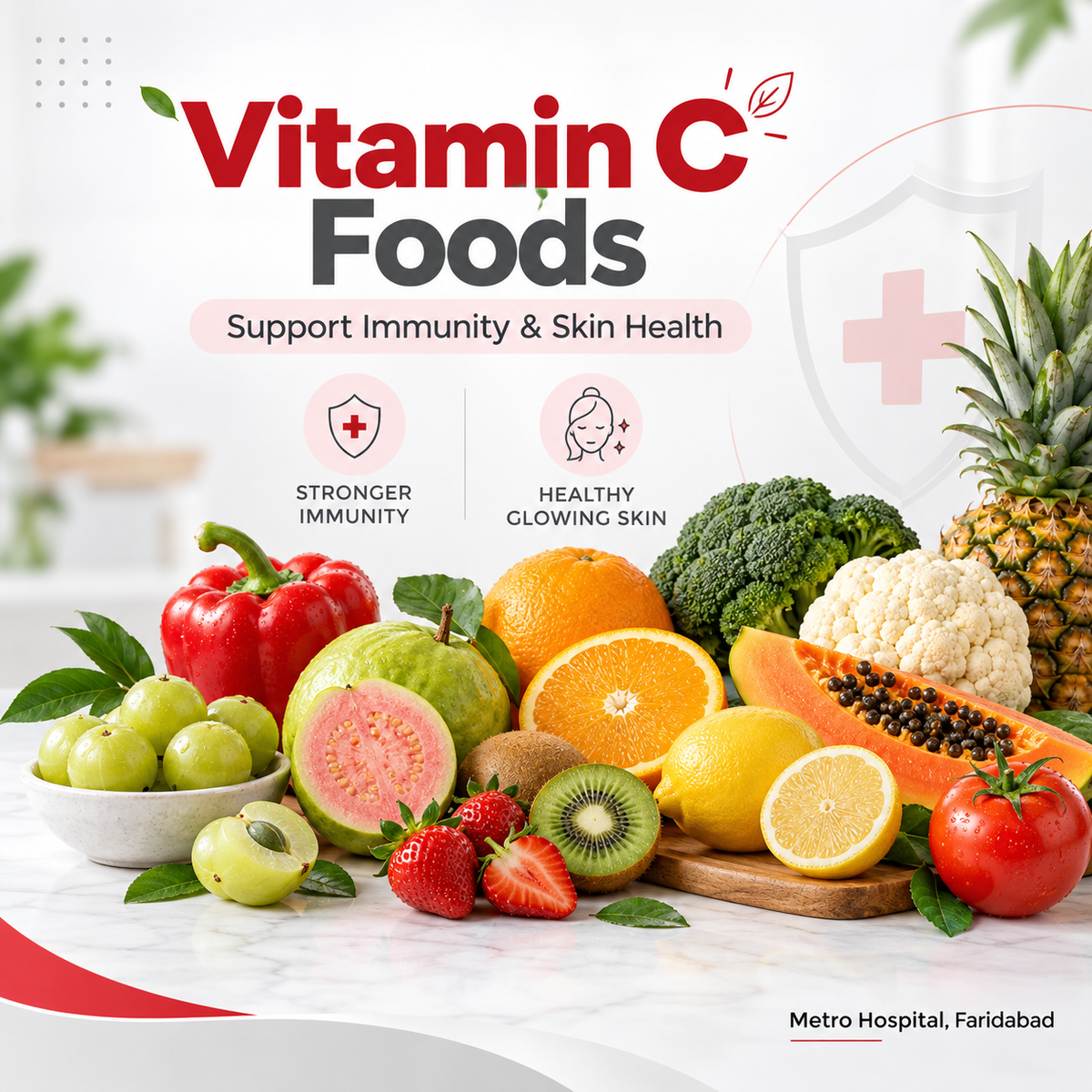
A healthy immune system and naturally radiant skin begin with proper nutrition. While skincare products and supplements often receive the most attention, everyday dietary choices play an equally important role in maintaining overall health. One essential nutrient that supports both immunity and skin health is Vitamin C.
Including Vitamin C foods in your daily diet is a simple and effective way to support the body’s natural defence mechanisms, maintain healthy skin, and promote tissue repair. From commonly available Indian fruits such as amla and guava to vegetables like capsicum and broccoli, there are numerous natural sources of Vitamin C that can easily become part of a balanced diet.
Vitamin C, also known as ascorbic acid, is a water-soluble vitamin that the human body cannot produce on its own. Because the body does not maintain large stores of this nutrient, regular dietary intake is important.
Beyond immune support, Vitamin C contributes to collagen production, wound healing, antioxidant protection and iron absorption. These functions make it particularly valuable for maintaining healthy skin and supporting normal physiological processes.
In this article, we explore the best Vitamin C-rich foods, their health benefits, daily nutritional requirements, signs of deficiency and practical ways to incorporate them into your meals.
Vitamin C is an essential micronutrient involved in several biological functions. It acts as an antioxidant, helping protect the body’s cells against oxidative damage caused by free radicals.
Free radicals are unstable molecules generated through normal metabolic processes and environmental exposure, including pollution, cigarette smoke and ultraviolet radiation. When oxidative stress becomes excessive, it may contribute to cellular damage and other health problems.
Vitamin C also plays an important role in the formation of collagen, a structural protein responsible for maintaining the strength and integrity of skin, blood vessels, cartilage and other connective tissues.
The key functions of Vitamin C include:
Obtaining sufficient Vitamin C from whole foods also provides additional nutrients, dietary fibre and beneficial plant compounds that contribute to a balanced nutritional intake.
Vitamin C plays several important roles in normal immune function. It contributes to the body’s protective mechanisms and supports the activity of immune cells involved in responding to infections.
White blood cells are responsible for identifying and responding to harmful microorganisms. Vitamin C supports several cellular processes involved in immune defence, including the activity of certain white blood cells.
Maintaining adequate Vitamin C levels helps these cells function normally.
During an immune response, the body produces reactive molecules that help fight infections but may also contribute to oxidative stress.
Vitamin C acts as an antioxidant and helps protect healthy cells from excessive oxidative damage.
The skin and other epithelial tissues act as physical barriers against environmental pathogens.
Vitamin C contributes to collagen formation, which is important for maintaining normal skin structure and supporting tissue repair.
A diet containing adequate vitamins and minerals supports overall immune health. Vitamin C is one of several nutrients that contribute to normal immune function, alongside Vitamin A, Vitamin D, zinc, iron and protein.
Although Vitamin C supports the immune system, consuming large amounts does not guarantee protection against infections. Maintaining adequate intake is more important than taking unnecessary high doses.
Healthy skin requires more than topical treatments. Good nutrition provides the essential components needed to maintain skin structure and support natural repair processes.
Collagen is one of the primary structural proteins in the skin. It helps maintain firmness, strength and elasticity.
Vitamin C is essential for normal collagen synthesis. Inadequate Vitamin C intake can affect collagen formation and tissue integrity.
Including Vitamin C-rich foods regularly helps provide the nutritional foundation needed for healthy skin.
Environmental factors such as pollution and sunlight can contribute to oxidative stress and visible skin ageing.
Vitamin C helps neutralise free radicals, supporting the body’s antioxidant defence system.
However, dietary Vitamin C does not replace sunscreen or other established measures for protecting skin against ultraviolet damage.
The body requires collagen to repair damaged tissues. Since Vitamin C contributes to collagen synthesis, it plays an important role in normal wound healing.
People with inadequate Vitamin C intake may experience impaired wound healing, among other deficiency symptoms.
Vitamin C supports the integrity of connective tissues and contributes to the maintenance of healthy skin.
While sufficient Vitamin C is important, eating more than the body requires does not necessarily produce brighter skin or eliminate pigmentation, acne or wrinkles.
For persistent acne, pigmentation, eczema or other skin concerns, professional evaluation through the Dermatology Department at Metro Hospital, Faridabad can help identify the underlying condition and appropriate treatment.
A balanced diet containing fruits and vegetables is generally the best way to obtain Vitamin C. Fortunately, several affordable and easily available Indian foods provide substantial quantities of this nutrient.
Amla is widely recognised as a rich natural source of Vitamin C and has traditionally been included in Indian diets.
Along with Vitamin C, amla contains plant compounds with antioxidant properties. It can be incorporated into meals in several forms, including fresh fruit, chutney or preparations with minimal added sugar.
How to include amla in your diet:
Fresh amla is particularly useful for people looking for locally available Vitamin C-rich fruits. The nutrient content can vary depending on the variety, processing and storage conditions.
Guava is one of the richest commonly available fruit sources of Vitamin C.
It also supplies dietary fibre, making it a useful addition to a balanced diet. Fibre supports digestive health and contributes to feelings of fullness.
Guava can be enjoyed as a mid-morning snack or part of breakfast.
Healthy eating tip: Wash guava thoroughly, slice it and eat it fresh. When appropriate, consuming the edible peel provides additional fibre.
Oranges are among the most familiar Vitamin C-rich fruits. They provide Vitamin C, water and other beneficial plant nutrients.
Regular consumption can contribute to adequate Vitamin C intake and support overall nutritional health.
Whole oranges are generally preferable to orange juice because they provide more dietary fibre.
How to include oranges:
Oranges can be particularly convenient during winter when they are widely available in many Indian markets.
Kiwi is another excellent source of Vitamin C. It also contains dietary fibre, potassium and several beneficial plant compounds.
Including kiwi as part of a varied fruit intake can contribute to normal immune function and overall health.
Kiwi can be eaten directly with a spoon, sliced into fruit bowls or added to unsweetened yoghurt.
Individuals with a known kiwi allergy should avoid the fruit.
Strawberries contain Vitamin C, fibre and naturally occurring antioxidant compounds.
They can add variety to the diet while providing nutrients that support healthy skin and normal cellular function.
Fresh strawberries are a good choice for snacks and breakfast preparations.
Healthy eating tip: Add strawberries to plain curd, overnight oats or fresh fruit bowls without adding excess sugar.
Papaya is a nutritious tropical fruit that provides Vitamin C, Vitamin A precursors and dietary fibre.
Vitamin C supports normal collagen formation, while Vitamin A is important for maintaining healthy skin and epithelial tissues.
Papaya can easily become part of a regular Indian breakfast.
Ways to consume papaya:
Papaya is a convenient option for people who want an affordable, widely available fruit that contributes to daily Vitamin C intake.
Capsicum is one of the best vegetable sources of Vitamin C, especially red bell peppers.
Bell peppers also provide carotenoids and other beneficial nutrients.
The Vitamin C content varies according to colour, ripeness and preparation method. Red capsicum generally contains more Vitamin C than green varieties.
How to include capsicum:
Because Vitamin C is sensitive to prolonged heating, using a combination of raw and lightly cooked capsicum can help preserve more of the nutrient.
Broccoli is a nutritious cruciferous vegetable containing Vitamin C, fibre, folate and several plant compounds.
Its nutritional profile makes it a useful component of a healthy diet.
Broccoli can be steamed, lightly sautéed or incorporated into soups and vegetable preparations.
Avoid overcooking, as prolonged exposure to heat and water can reduce Vitamin C content.
Tomatoes are a convenient source of Vitamin C and other beneficial nutrients, including lycopene.
Although tomatoes contain less Vitamin C than guava or capsicum, their frequent use in Indian cooking can make them a meaningful contributor to daily intake.
Fresh tomatoes can be included in salads, sandwiches, chutneys and vegetable dishes.
Tomatoes are especially useful because they are affordable and available throughout much of the year.
Lemons contain Vitamin C and can be incorporated into a variety of foods.
A small amount of lemon juice may not provide the entire daily Vitamin C requirement, but it can contribute to total intake.
Adding lemon juice to meals containing plant-based iron may also improve non-heme iron absorption.
Practical ways to use lemon:
For people who consume predominantly vegetarian diets, pairing Vitamin C-rich foods with iron-rich ingredients is a useful nutritional strategy.
Cauliflower is another cruciferous vegetable that provides Vitamin C along with fibre and other nutrients.
It is commonly used in Indian households and can be easily incorporated into everyday meals.
Cauliflower may be prepared as sabzi, lightly steamed vegetables or part of mixed vegetable dishes.
To retain more Vitamin C, avoid prolonged boiling and excessive cooking.
Pineapple is a tropical fruit containing Vitamin C, manganese and naturally occurring plant compounds.
It can be consumed fresh as a snack or incorporated into fruit salads.
Fresh pineapple is generally preferable to canned pineapple packed in heavy syrup.
It provides variety to the diet while contributing to daily Vitamin C intake.
The following table provides approximate Vitamin C values for selected foods. The actual amount may vary according to ripeness, variety, portion size, preparation and storage.
| Food | Approximate Vitamin C per 100 g |
|---|---|
| Amla (fresh) | Highly variable; often 200 mg or more |
| Guava | 228 mg |
| Red bell pepper (raw) | 128 mg |
| Kiwi | 93 mg |
| Broccoli (raw) | 89 mg |
| Green bell pepper (raw) | 80 mg |
| Papaya | 61 mg |
| Strawberries | 59 mg |
| Orange | 53 mg |
| Lemon | 53 mg |
| Pineapple | 48 mg |
| Cauliflower (raw) | 48 mg |
| Tomato (raw) | 14 mg |
These values are approximate nutritional estimates, not precise guarantees for every serving. Amla varies particularly widely across varieties and analytical methods. The overall goal should be to consume a range of fruits and vegetables rather than depend on one food.
The recommended daily intake of Vitamin C varies according to age, sex and physiological requirements.
The following are established Recommended Dietary Allowances for healthy adults under the US National Institutes of Health reference framework.
Consumer
+1
| Category | Daily Vitamin C Requirement |
|---|---|
| Adult men | 90 mg |
| Adult women | 75 mg |
| Pregnant women (19+ years) | 85 mg |
| Breastfeeding women (19+ years) | 120 mg |
| Adults who smoke | Additional 35 mg |
These figures provide general nutritional guidance. Individual needs may differ depending on medical conditions, dietary patterns or professional recommendations.
For most healthy adults, consuming a variety of fresh fruits and vegetables can provide sufficient Vitamin C without supplementation.
There is no single scientifically established best time of day to consume Vitamin C-rich foods.
What matters most is regular intake through a balanced diet.
However, different meal timings may be convenient for different people.
Morning: Fresh papaya, guava, orange or kiwi can be included with breakfast.
Mid-morning: A whole fruit can replace highly processed snacks.
Lunch: Adding lemon juice to dal, sprouts or green vegetables can support iron absorption from plant-based foods.
Evening: Fresh fruit, tomatoes or vegetable salads make nutritious snack options.
Dinner: Lightly cooked broccoli, cauliflower and capsicum can contribute to overall Vitamin C intake.
Spreading fruits and vegetables across meals can also improve dietary variety.
A healthy eating routine does not need to be expensive or complicated. Many traditional Indian meals can be adapted to include sufficient Vitamin C.
| Meal | Suggested Food |
|---|---|
| Early morning | Water and a regular breakfast routine |
| Breakfast | Vegetable poha with capsicum and tomatoes |
| Mid-morning | One guava or orange |
| Lunch | Dal, roti, seasonal vegetables and cucumber-tomato salad with lemon |
| Evening snack | Fresh papaya or seasonal fruit |
| Dinner | Roti, paneer or dal, and lightly cooked mixed vegetables |
| Optional variation | Fresh amla chutney or seasonal citrus fruit |
This is an illustrative meal plan, not a personalised diet prescription. Portion sizes and food choices should be adjusted according to age, activity level, medical conditions and overall nutritional needs.
People with diabetes, kidney disease, food allergies or specific dietary restrictions should seek individual guidance before making substantial dietary changes.
Vitamin C deficiency may develop when dietary intake remains inadequate over an extended period.
Although severe deficiency is less common among people who regularly consume fruits and vegetables, it can occur in individuals with highly restricted diets or certain medical conditions.
Possible signs include:
Severe Vitamin C deficiency can cause scurvy, a condition associated with impaired collagen formation and connective tissue problems.
These symptoms are not specific to Vitamin C deficiency and may indicate other medical conditions.
Anyone experiencing persistent fatigue, unusual bruising, bleeding gums or poor wound healing should consult a healthcare professional rather than self-diagnose.
The Internal Medicine Department at Metro Hospital, Faridabad provides evaluation and management of a broad range of adult health conditions, including concerns that may require investigation of underlying nutritional or medical causes.
Vitamin C contributes to healthy skin primarily by supporting collagen production and helping protect cells against oxidative stress.
Adequate dietary intake is therefore important for normal skin health.
However, it is essential to distinguish between maintaining healthy skin and treating existing dermatological conditions.
Eating Vitamin C-rich foods does not guarantee the disappearance of pigmentation, acne scars, fine lines or wrinkles. Skin appearance is influenced by several factors, including genetics, age, sun exposure, hormones, sleep and overall nutrition.
For better long-term skin health:
People interested in understanding age-related skin changes can also read Healthy Habits to Prevent Skin Aging on the Metro Hospital website.
Whole foods are generally the preferred way to obtain Vitamin C because they offer additional nutritional benefits.
Fruits and vegetables provide fibre, water, minerals and naturally occurring plant compounds that supplements may not contain.
Vitamin C supplements can be useful in certain circumstances, particularly when dietary intake is insufficient or a deficiency has been identified.
However, routine high-dose supplementation is not necessary for most healthy individuals consuming a varied diet.
The tolerable upper intake level for adults is 2,000 mg per day from all sources. Excessive supplemental intake may cause abdominal discomfort, nausea and diarrhoea. High-dose supplements also require caution in people with certain medical conditions or those taking specific medications.
Consumer
+1
People receiving chemotherapy or radiation therapy should consult their treating oncologist before taking high-dose antioxidant supplements because interactions with cancer treatment are a concern.
Even individuals who regularly eat fruits and vegetables may not always retain the maximum nutritional benefit.
Vitamin C is water-soluble and sensitive to heat. Prolonged boiling may reduce the Vitamin C content of vegetables.
Prefer steaming, quick sautéing or shorter cooking durations where appropriate.
Vitamin C can gradually decline during prolonged storage and exposure to environmental conditions.
Freshly prepared fruits and vegetables are generally preferable when practical.
Fruit juices may provide Vitamin C, but they often contain less fibre than whole fruits.
Packaged juices may also contain added sugar.
Vitamin C tablets cannot replace the range of nutrients obtained from whole foods.
A variety of fruits and vegetables helps provide different vitamins, minerals and beneficial compounds.
Small dietary changes can make it easier to obtain sufficient Vitamin C consistently.
While most people can meet their Vitamin C requirements through food, professional medical guidance may be necessary in certain situations.
Consult a healthcare professional if you experience unexplained weakness, frequent gum bleeding, unusual bruising, persistent skin problems or delayed wound healing.
People living with chronic conditions may also require a personalised nutritional approach.
At Metro Hospital, Faridabad, patients can access multispecialty medical care for a wide range of health concerns. The hospital’s Internal Medicine and Dermatology departments provide evaluation and treatment for relevant general health and skin conditions.
Medical consultation can help determine whether symptoms are associated with nutritional inadequacy, another medical condition or a combination of factors.
Vitamin C is an essential nutrient that supports normal immune function, collagen production, wound healing and antioxidant protection.
Including Vitamin C-rich foods such as amla, guava, oranges, kiwi, papaya, strawberries, capsicum and broccoli in your daily diet is a practical way to maintain adequate nutritional intake.
Although Vitamin C is important for healthy skin and immunity, it should not be viewed as a miracle nutrient or substitute for medical treatment. The greatest benefits come from combining a varied diet with physical activity, adequate sleep, hydration and preventive healthcare.
Making thoughtful food choices today can support better long-term health and help provide the nutrients your body needs for everyday functioning.
For concerns related to nutritional deficiencies, general health or persistent skin conditions, consult the medical specialists at Metro Hospital, Faridabad.
Book a Consultation at Metro Hospital, Faridabad
Website: www.metrohospitalfaridabad.com
Contact: 7065660066
Location: Sector 16A, Faridabad, Haryana.
Amla, guava, red capsicum, kiwi, broccoli, strawberries, papaya and oranges are among the foods that provide substantial amounts of Vitamin C. Including a variety of these foods can help meet daily nutritional requirements.
Guava, amla, oranges, kiwi, capsicum and broccoli are excellent dietary sources. They support normal immune function by providing Vitamin C, but no single food can prevent all infections.
Vitamin C supports collagen production and antioxidant protection, both of which contribute to normal skin health. Adequate intake may help maintain healthy skin, but it cannot guarantee a brighter complexion or eliminate skin conditions.
Yes. Most people can safely consume a variety of Vitamin C-rich fruits and vegetables daily as part of a balanced diet. Individual food choices should account for allergies and specific medical conditions.
Amla and guava are among the richest commonly available Indian fruit sources of Vitamin C. Their exact nutrient content depends on variety, ripeness and preparation.
The commonly used US Recommended Dietary Allowance is 90 mg for adult men and 75 mg for adult women. Requirements increase during pregnancy, breastfeeding and for people who smoke.
Vitamin C supports general skin health, but consuming Vitamin C-rich foods alone is not a proven treatment for acne. Persistent acne should be assessed by a dermatologist for appropriate treatment.
Lemon water can contribute to Vitamin C intake, but the amount depends on how much lemon juice is used. A small quantity of lemon juice is unlikely to provide the full daily requirement. Other fruits and vegetables should also be included.
Yes. Severe Vitamin C deficiency can interfere with collagen formation and may cause easy bruising, poor wound healing and changes in the skin. A doctor should evaluate persistent symptoms to determine their cause.
For most healthy individuals, obtaining Vitamin C from whole foods is preferable because fruits and vegetables provide additional nutrients and fibre. Supplements may be appropriate when recommended by a healthcare professional.