Appointment
 Find A Doctor
 Lab Report

Hemoglobin Normal Range by Age and Gender: Low Hb Symptoms and Causes
Nov 26, 2026
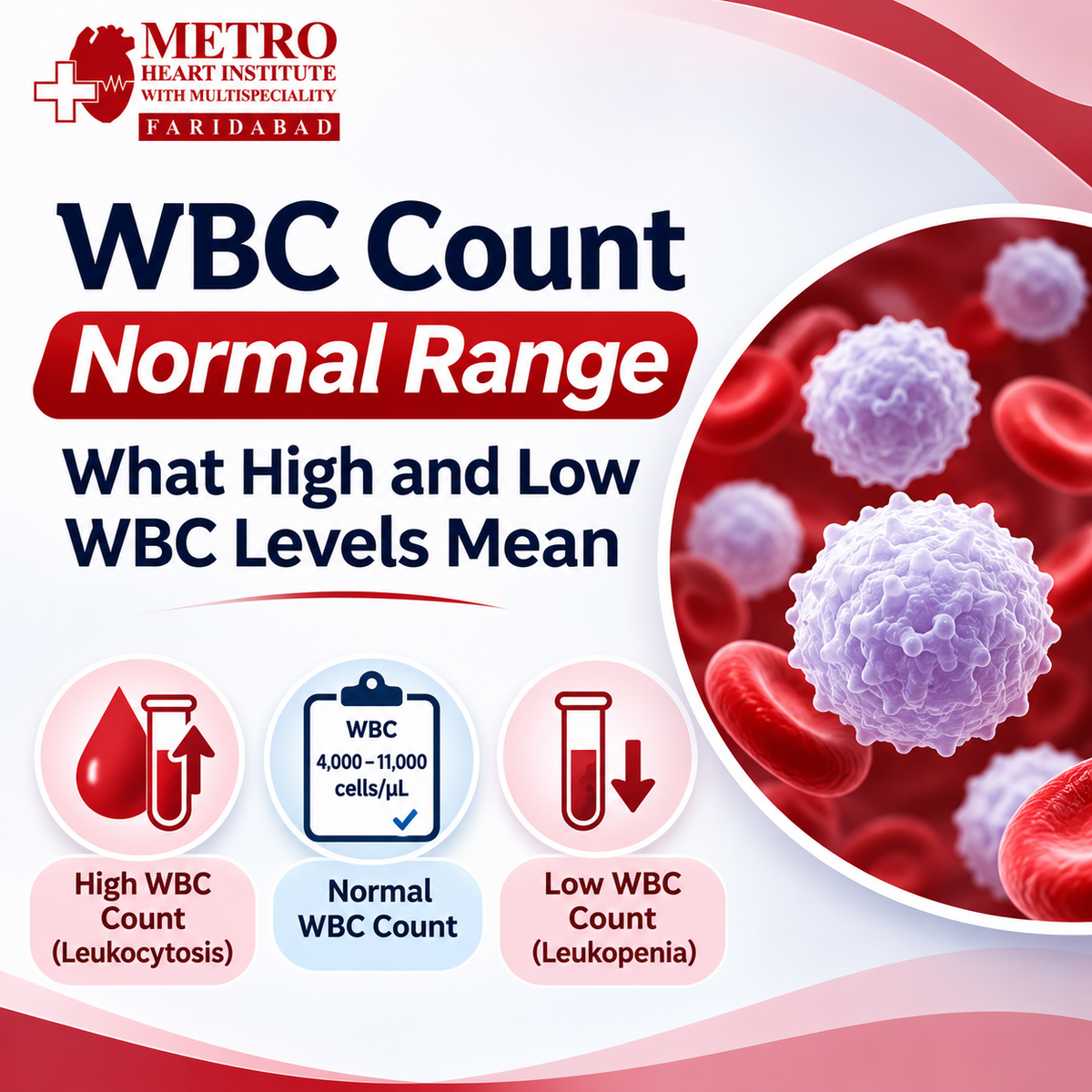
Understanding the WBC count normal range is important for assessing immune system function, identifying infections and detecting potential blood disorders. White blood cells, also known as leukocytes, are an essential part of the body’s immune system. They help protect against bacteria, viruses, fungi and other harmful substances.
The normal WBC count in most healthy adults is approximately 4,000 to 11,000 white blood cells per microlitre (µL) of blood. However, reference ranges may vary depending on age, pregnancy status, laboratory methods and individual medical conditions.
A high WBC count is medically known as leukocytosis, while a low WBC count is called leukopenia. Both conditions can develop for various reasons, ranging from temporary infections and nutritional deficiencies to autoimmune diseases and bone marrow disorders.
An abnormal WBC count does not automatically indicate a serious illness. However, persistently high or low white blood cell levels should be investigated to identify the underlying cause.
At Metro Hospital, Faridabad, patients with abnormal WBC counts, recurrent infections or suspected blood disorders can access diagnostic investigations through Laboratory Services and specialist evaluation through the Haematology & BMT Department.
This comprehensive guide explains the normal WBC count range by age, symptoms of high and low WBC counts, common causes, differential white blood cell counts, treatment options, and when abnormal WBC levels require urgent medical attention.
WBC stands for White Blood Cell Count. It measures the total number of white blood cells circulating in the bloodstream.
White blood cells are primarily produced in the bone marrow, with certain types developing or maturing in lymphatic organs. They continuously monitor the body for infections, foreign substances and abnormal cells.
The main functions of white blood cells include:
WBC count is generally measured as part of a Complete Blood Count (CBC) test, which also evaluates red blood cells, haemoglobin, platelets and other blood parameters.
The commonly used WBC count normal range for adults is:
4,000–11,000 white blood cells per microlitre of blood.
Some laboratories use a reference interval of approximately 4,500–11,000 cells/µL.
| Measurement Unit | Normal WBC Count |
|---|---|
| Cells per microlitre | 4,000–11,000 cells/µL |
| Cells per cubic millimetre | 4,000–11,000 cells/mm³ |
| SI units | 4.0–11.0 × 10⁹/L |
| Total Leukocyte Count (TLC) | 4,000–11,000 cells/mm³ |
Always compare your WBC result with the reference range printed on your laboratory report.
White blood cell counts can vary considerably during childhood. Newborn babies generally have higher WBC counts than adults, which gradually change as the immune system develops.
| Age Group | Approximate WBC Reference Range |
|---|---|
| Newborn babies | 9,000–30,000 cells/µL |
| Infants aged 1–12 months | 6,000–17,500 cells/µL |
| Children aged 1–5 years | 5,000–17,000 cells/µL |
| Children aged 6–12 years | 4,500–13,500 cells/µL |
| Adolescents | 4,500–13,000 cells/µL |
| Adults aged 18–40 years | 4,000–11,000 cells/µL |
| Adults aged 41–60 years | 4,000–11,000 cells/µL |
| Adults above 60 years | Generally similar to adult reference ranges |
Important: These are broad, illustrative reference intervals rather than universal diagnostic values. Paediatric WBC ranges vary significantly by exact age and laboratory method. Children should always be assessed using the appropriate age-specific reference interval.
Most laboratories use broadly similar WBC reference ranges for adult men and women.
| Gender | Common WBC Reference Range |
|---|---|
| Adult men | 4,000–11,000 cells/µL |
| Adult women | 4,000–11,000 cells/µL |
Hormonal changes, pregnancy, stress, medications and underlying illnesses may influence WBC levels.
A slightly abnormal result does not necessarily indicate an immune system disorder, particularly if it is temporary and no other blood parameters are affected.
White blood cell counts may naturally increase during pregnancy because of physiological changes in the immune system.
In some healthy pregnant women, WBC counts may reach approximately 15,000 cells/µL without indicating an infection. Counts may rise further during labour and shortly after delivery.
However, elevated WBC levels accompanied by fever, abdominal pain, urinary symptoms or other signs of infection require medical evaluation.
Use pregnancy-specific reference intervals whenever available.
| WBC Count | General Interpretation |
|---|---|
| Below 2,000 cells/µL | Markedly low WBC count |
| 2,000–3,999 cells/µL | Low WBC count |
| 4,000–11,000 cells/µL | Common normal adult reference range |
| 11,001–15,000 cells/µL | Elevated WBC count |
| 15,001–30,000 cells/µL | More substantial elevation requiring evaluation |
| 30,001–50,000 cells/µL | Markedly elevated WBC count |
| Above 50,000 cells/µL | Very high WBC count requiring prompt assessment |
| 100,000 cells/µL or higher | Extreme elevation requiring urgent specialist assessment |
These categories are intended for general understanding. There is no universal WBC count that determines the severity of every illness.
Doctors also consider the type of white blood cells affected, the rate of change, symptoms and other CBC findings.
The body contains five major types of white blood cells, each performing a different immune system function.
Neutrophils are the most abundant white blood cells in most healthy adults. They provide rapid protection against bacterial and fungal infections.
An elevated neutrophil count may occur with bacterial infections, inflammation, physical stress or corticosteroid use.
A reduced neutrophil count may increase the risk of serious infections.
Lymphocytes play an important role in adaptive immunity and include B cells, T cells and natural killer cells.
They help produce antibodies, recognise infected cells and coordinate immune responses.
Lymphocyte counts may increase during certain viral infections and some blood disorders.
Monocytes help remove damaged cells, microorganisms and cellular debris.
They can develop into macrophages and other immune cells that help regulate inflammation and tissue repair.
Elevated monocytes may occur during chronic infections, inflammatory conditions or recovery from certain illnesses.
Eosinophils are involved in allergic reactions and immune responses against certain parasites.
An elevated eosinophil count may be associated with asthma, allergic disorders, parasitic infections or medication reactions.
Basophils are the least common circulating white blood cells. They release substances such as histamine during immune and inflammatory responses.
Persistent basophil elevation may occasionally indicate an underlying bone marrow disorder.
A Differential Leukocyte Count (DLC) measures the proportion and, preferably, the absolute number of different types of white blood cells.
| White Blood Cell Type | Approximate Adult Percentage |
|---|---|
| Neutrophils | 40–70% |
| Lymphocytes | 20–40% |
| Monocytes | 2–8% |
| Eosinophils | 1–4% |
| Basophils | 0–1% |
These percentages vary between laboratories, and children’s differential counts may differ substantially from adult values.
A percentage alone can sometimes be misleading. Doctors often examine the absolute count of each white blood cell type to determine whether it is genuinely elevated or reduced.
TLC stands for Total Leukocyte Count, while DLC stands for Differential Leukocyte Count.
| Feature | TLC | DLC |
|---|---|---|
| Full form | Total Leukocyte Count | Differential Leukocyte Count |
| What it measures | Total number of white blood cells | Different types of white blood cells |
| Main purpose | Identifies high or low WBC levels | Helps determine which cell type is affected |
| Common use | Infection and blood disorder evaluation | More detailed immune and blood cell assessment |
Both tests provide complementary information about immune system activity.
For example, a patient may have a normal total WBC count but an abnormally low neutrophil count. This is why doctors may examine both TLC and DLC when investigating recurrent infections.
A WBC count above the laboratory’s upper reference limit is known as leukocytosis.
In many adults, a count above 11,000 cells/µL is considered elevated.
Leukocytosis commonly occurs when the immune system responds to infection, inflammation or physical stress. It can also result from medication effects or abnormal blood cell production.
A high WBC count does not necessarily mean that the immune system is stronger or healthier. The underlying reason for the elevation is more important than the number alone.
Bacterial infections are among the most common causes of elevated white blood cell counts.
Conditions that may increase WBC levels include pneumonia, urinary tract infections, appendicitis, skin infections and bloodstream infections.
Neutrophil counts frequently increase during bacterial infections, although blood test findings alone cannot establish the type of infection.
Certain viral infections may increase the total WBC count or lymphocyte count.
However, other viral infections may cause WBC levels to fall. The response depends on the virus involved, the stage of illness and the patient’s immune response.
Inflammatory diseases such as rheumatoid arthritis and inflammatory bowel disease may contribute to persistently elevated WBC counts.
The immune system remains activated as part of the underlying inflammatory process.
Allergic disorders and certain forms of asthma may increase eosinophil levels.
People with elevated eosinophils alongside wheezing, persistent cough or respiratory symptoms can seek evaluation through the Pulmonology, Respiratory & Sleep Medicine Department at Metro Hospital.
Severe physical stress, emotional stress, intense exercise, trauma or surgery can temporarily increase circulating white blood cells.
These changes may resolve once the triggering condition improves.
Smoking can contribute to chronic inflammation and may be associated with persistently elevated WBC levels.
Stopping tobacco use offers important benefits for immune, respiratory and cardiovascular health.
Corticosteroids and medicines that stimulate white blood cell production may increase WBC counts.
Patients should not stop prescribed medication independently because of an abnormal laboratory result.
Major injuries, burns and recent surgical procedures can activate inflammatory responses and temporarily increase white blood cell counts.
Some autoimmune diseases can cause elevated WBC counts through ongoing inflammation, although others may reduce white blood cell levels.
Certain blood cancers and bone marrow disorders may lead to excessive production of abnormal white blood cells.
Possible conditions include acute leukaemia, chronic leukaemia and other myeloproliferative disorders.
An elevated WBC count alone does not confirm cancer. Persistent unexplained elevation, abnormal blood cells or associated changes in haemoglobin and platelets may require specialised haematology assessment.
A high WBC count often does not cause noticeable symptoms on its own. Symptoms generally result from the underlying condition.
Possible associated symptoms include:
Persistent symptoms, particularly unexplained weight loss, night sweats and abnormal bleeding, should not be ignored.
A WBC count of 12,000 cells/µL is mildly elevated compared with the usual adult reference range.
Possible causes include recent infection, inflammation, stress, smoking and certain medications.
A single mildly elevated WBC result is not necessarily a cause for alarm. Your doctor may recommend repeat testing depending on your symptoms and medical history.
A WBC count of 15,000 cells/µL is above the normal adult range.
It may occur during an active infection, inflammation or significant physiological stress.
Its seriousness depends on associated symptoms, the differential WBC count and whether the level remains elevated after recovery.
A WBC count of 20,000 cells/µL represents a substantial elevation in most non-pregnant adults.
It may occur with significant infections, inflammatory conditions, medication effects or blood disorders.
Prompt medical assessment is recommended, particularly when accompanied by fever, breathing difficulty, confusion or severe weakness.
A WBC count below the laboratory’s lower reference limit is called leukopenia.
A commonly used adult threshold is below 4,000 cells/µL.
Low white blood cell levels may occur when the bone marrow produces too few cells, when immune cells are destroyed faster than normal, or when illness and medications affect blood cell production.
The infection risk depends particularly on which type of white blood cell is reduced.
Mild leukopenia may not cause any noticeable symptoms.
When white blood cell counts are significantly reduced, particularly neutrophils, the body’s ability to fight certain infections may become impaired.
Possible signs include:
Frequent bacterial or fungal infections may occur when immune defence is compromised.
Fever may be an early or sometimes the only sign of infection in a person with severe neutropenia.
Painful mouth ulcers and oral infections can occur in some people with significantly reduced neutrophil counts.
Repeated throat infections or persistent throat discomfort may require assessment when accompanied by other immune-related symptoms.
Skin redness, swelling, painful lesions or recurrent infections may occur in people with impaired immune defence.
A low WBC count does not directly reduce oxygen delivery. However, underlying illness, associated anaemia or treatment-related effects may contribute to fatigue.
Frequent respiratory infections may occasionally indicate an underlying immune or blood cell disorder.
Certain viral illnesses can temporarily reduce white blood cell production or alter the distribution of immune cells.
WBC levels may recover after the infection resolves.
Dengue can reduce both white blood cells and platelets.
Patients may also experience high fever, headache, body pain, rash and significant weakness.
A low WBC count alone cannot confirm dengue, and dengue severity cannot be determined from WBC or platelet counts alone.
Severe nutritional deficiencies may interfere with healthy blood cell production in the bone marrow.
This can affect white blood cells, red blood cells and platelets.
Certain cancer treatments suppress bone marrow activity, reducing the production of healthy blood cells.
Regular CBC monitoring helps cancer specialists assess treatment-related changes and infection risk.
Conditions such as systemic lupus erythematosus may cause the immune system to mistakenly target healthy blood cells.
Aplastic anaemia, myelodysplastic syndromes, leukaemia and other bone marrow conditions may reduce normal white blood cell production.
Some antibiotics, antithyroid medicines, anticonvulsants and immunosuppressive drugs may contribute to leukopenia or neutropenia.
Medication-related abnormalities require professional assessment.
Although infections frequently raise WBC levels, severe infections may sometimes cause WBC counts to fall.
This can be a concerning finding, particularly when accompanied by low blood pressure, confusion or organ dysfunction.
An enlarged spleen may trap excessive numbers of circulating blood cells, resulting in reduced WBC, red blood cell or platelet counts.
Certain inherited and acquired immune conditions may affect white blood cell production, survival or function.
Some healthy individuals may also have a naturally lower baseline neutrophil count without increased infection risk. A doctor can help distinguish normal individual variation from disease.
Neutropenia refers to an abnormally low neutrophil count.
Because neutrophils are essential for fighting bacterial and fungal infections, the Absolute Neutrophil Count (ANC) is particularly important when assessing infection risk.
| ANC Level | General Interpretation |
|---|---|
| 1,500 cells/µL or above | Generally adequate for most adults |
| 1,000–1,499 cells/µL | Mild neutropenia |
| 500–999 cells/µL | Moderate neutropenia |
| Below 500 cells/µL | Severe neutropenia |
Reference ranges may vary, and infection risk also depends on the duration and underlying cause of neutropenia.
Severe neutropenia significantly increases vulnerability to certain infections.
Fever in a patient with severe neutropenia or chemotherapy-related immune suppression is a medical emergency and requires immediate hospital assessment.
No single total WBC count determines infection risk in every patient.
For example, two people with the same total WBC count may have very different neutrophil counts.
A markedly low total WBC count, particularly below 2,000 cells/µL, deserves prompt medical assessment. An ANC below 500 cells/µL is especially concerning.
Patients with fever, chills, severe weakness or other signs of infection should seek immediate medical attention rather than waiting for another routine blood test.
A WBC count of 3,000 cells/µL is below the usual adult reference range.
However, the level does not automatically indicate a medical emergency. Doctors assess the ANC, associated symptoms, previous blood results and possible underlying causes.
Persistent leukopenia should be investigated.
A WBC count can provide useful clues about certain blood cancers, but it cannot diagnose cancer on its own.
Blood cancers may be associated with high, normal or low total white blood cell counts.
Additional warning signs may include:
Further investigations, including peripheral blood smear, flow cytometry, molecular testing or bone marrow examination, may be required.
| Feature | High WBC Count | Low WBC Count |
|---|---|---|
| Medical term | Leukocytosis | Leukopenia |
| Common adult threshold | Above 11,000/µL | Below 4,000/µL |
| Common causes | Infection, inflammation, stress, medication | Viral illness, marrow disorders, medication |
| Major concern | Underlying infection, inflammation or abnormal cell production | Potentially increased infection risk |
| Associated symptoms | Fever, body pain, weakness | Recurrent infections, fever, mouth ulcers |
| Treatment | Depends on the underlying cause | Depends on the cause and affected cell type |
Both conditions require medical interpretation rather than treatment based solely on a laboratory number.
White blood cell counts should be interpreted alongside other blood test parameters.
| Blood Parameter | Primary Function |
|---|---|
| WBC count | Immune defence |
| RBC count | Oxygen transport |
| Haemoglobin | Oxygen-carrying protein |
| Platelets | Blood clotting |
| Haematocrit | Proportion of blood occupied by red blood cells |
| MCV | Average red blood cell size |
When white blood cells, red blood cells and platelets are all reduced, the condition is known as pancytopenia.
Pancytopenia can occur because of nutritional deficiencies, bone marrow disorders, infections, medication effects and other medical conditions. It requires appropriate specialist evaluation.
Doctors may recommend several investigations depending on the severity, symptoms and suspected cause.
A CBC measures total white blood cells, haemoglobin, red blood cells, platelets and related parameters.
A DLC identifies which white blood cell populations are elevated or reduced.
A peripheral smear allows specialists to examine blood cells under a microscope. It can help identify abnormal cell shapes, immature cells and other changes that automated blood analysers may not fully characterise.
Blood cultures, urine tests, viral testing or other investigations may be recommended when an infection is suspected.
These tests may help identify nutritional deficiencies affecting blood cell production.
Tests such as C-reactive protein (CRP) and erythrocyte sedimentation rate (ESR) may provide additional information about inflammation.
A bone marrow aspiration or biopsy may be required when persistent abnormalities suggest a bone marrow or blood disorder.
Not every patient with an abnormal WBC count needs this investigation.
No. A WBC count or routine CBC test generally does not require fasting.
However, fasting may be necessary if other blood investigations, such as fasting blood sugar or certain lipid tests, are performed at the same time.
Follow the instructions provided by your healthcare professional or laboratory.
There is no single food, drink or home remedy that reliably increases white blood cell counts in every patient.
The most effective approach is to identify and treat the underlying cause.
However, appropriate nutrition and healthy lifestyle habits can support normal immune and bone marrow function.
Protein provides essential building blocks for healthy cells and immune system function.
Suitable sources include lentils, beans, milk, curd, paneer, soy, eggs, fish and lean meat.
Vitamin B12 supports normal blood cell production.
Dietary sources include milk, dairy products, eggs, fish, meat and fortified foods.
Individuals with confirmed vitamin B12 deficiency may require medical supplementation.
Folate helps support normal cell division and blood cell production.
Include spinach, leafy vegetables, lentils, chickpeas, beans and citrus fruits as part of a balanced diet.
Zinc plays a role in normal immune function.
Useful dietary sources include nuts, seeds, pulses, dairy products, eggs and meat.
High-dose zinc supplements should not be taken unnecessarily because excessive zinc can contribute to copper deficiency and blood cell abnormalities.
Vitamin C supports normal immune function and helps the body absorb iron from plant-based foods.
Amla, guava, oranges, lemons, tomatoes and capsicum are useful dietary sources.
Consistent sleep supports normal immune regulation, recovery and overall health.
Most adults benefit from approximately seven to nine hours of sleep each night.
Smoking and excessive alcohol consumption can negatively affect immune function and overall health.
Reducing these exposures may also benefit bone marrow function in some individuals.
Patients with medication-related leukopenia, cancer treatment-associated neutropenia or other blood disorders should follow their specialist’s treatment and monitoring recommendations.
Lifestyle measures cannot replace medical treatment for severe white blood cell abnormalities.
| Food | Nutritional Benefit |
|---|---|
| Lentils and dals | Protein and folate |
| Spinach | Folate and essential nutrients |
| Amla | Vitamin C |
| Guava | Vitamin C and antioxidants |
| Almonds | Healthy fats and protein |
| Pumpkin seeds | Zinc and other minerals |
| Eggs | Protein and vitamin B12 |
| Milk and curd | Protein and vitamin B12 |
| Chickpeas | Protein, folate and minerals |
| Fish and lean meat | Protein, vitamin B12 and zinc |
These foods support balanced nutrition and normal immune function. They should not be considered a guaranteed treatment for leukopenia.
A high WBC count often reflects an underlying condition. Attempting to lower the number directly without identifying the cause is not recommended.
Depending on the underlying condition, appropriate measures may include maintaining healthy sleep habits, stopping smoking, managing chronic inflammatory conditions and following prescribed treatment for infections.
Antibiotics should only be used when medically indicated. They do not treat every cause of elevated WBC count.
Persistently elevated white blood cell counts require professional evaluation.
Treatment depends on the underlying cause, the affected white blood cell type and the patient’s infection risk.
Possible treatment approaches include:
G-CSF medicines can stimulate neutrophil production in appropriate clinical circumstances, including certain chemotherapy-related conditions. They are not required for every person with a low WBC count.
Treatment targets the condition responsible for leukocytosis.
Depending on the diagnosis, treatment may involve antibiotics for appropriate bacterial infections, management of inflammatory diseases, medication adjustments or specialist treatment for blood and bone marrow disorders.
Temporary WBC elevation may resolve without specific treatment after the underlying illness or physical stress improves.
The recovery period varies depending on the underlying cause.
Temporary abnormalities associated with uncomplicated infections may improve over several days or weeks.
Nutritional deficiencies may require longer treatment, while chronic immune and bone marrow disorders may require ongoing management.
Patients receiving chemotherapy may experience predictable periods of reduced white blood cell counts between treatment cycles.
Follow-up CBC testing helps doctors assess whether white blood cell levels are recovering appropriately.
Specialist evaluation may be appropriate if you experience persistent or unexplained high or low WBC counts, recurrent infections, abnormal blood cells, unexplained anaemia, abnormal platelet counts, swollen lymph nodes, significant weight loss or suspected bone marrow disease.
The Haematology & BMT Department at Metro Hospital, Faridabad provides specialist care for blood and bone marrow disorders.
Early investigation can help distinguish temporary blood count abnormalities from conditions requiring specialised treatment.
Seek immediate medical attention if abnormal WBC levels are associated with:
These symptoms may indicate serious infection, sepsis or another potentially life-threatening medical condition.
Patients requiring urgent medical assessment can access 24×7 Emergency & Trauma Services at Metro Hospital, Faridabad.
Metro Hospital provides multidisciplinary evaluation for patients with abnormal white blood cell counts, infections, immune-related conditions and blood disorders.
The Laboratory Services Department supports blood investigations and diagnostic assessment.
Depending on clinical requirements, patients may need a complete blood count, differential white blood cell count, peripheral blood smear and additional investigations to identify the underlying cause of abnormal blood results.
Metro Hospital’s Haematology & BMT Department provides specialist evaluation and management of blood and bone marrow disorders.
Patients with persistent leukocytosis, leukopenia, neutropenia or abnormalities involving multiple blood cell types can benefit from detailed haematological assessment and individualised treatment planning.
Patients experiencing fever, recurrent infections, weakness or unexplained WBC abnormalities can begin their evaluation through the Internal Medicine Department at Metro Hospital.
Internal medicine specialists can assess possible infections, inflammatory disorders, nutritional deficiencies, and other medical conditions that may contribute to abnormal blood counts.
Appropriate referral to haematology or other specialties may be recommended depending on the findings.
False. Infections, inflammation, stress and medication effects are common causes of elevated WBC levels.
Not necessarily. Infection risk depends on the type of white blood cells affected, their function and the underlying cause.
False. Certain viral infections and severe systemic infections may cause normal or reduced WBC levels.
False. Balanced nutrition supports healthy blood cell production, but no individual food can reliably correct severe leukopenia.
False. Infections can occur even when the total white blood cell count remains within the normal range.
False. Antibiotics treat appropriate bacterial infections and do not treat every cause of leukocytosis.
The commonly used adult WBC count normal range is approximately 4,000–11,000 white blood cells per microlitre of blood. Laboratory reference intervals may vary.
A high WBC count may indicate infection, inflammation, physical stress, medication effects or, in some cases, an underlying blood disorder.
A low WBC count may occur due to viral infections, nutritional deficiencies, autoimmune disorders, chemotherapy, medication effects or bone marrow conditions.
A WBC count of 12,000 cells/µL is mildly elevated in most adults. Its significance depends on symptoms, medical history and other blood test findings.
A count of 3,000 cells/µL is below the normal adult range. Medical evaluation may be needed, especially if neutrophil levels are low or recurrent infections occur.
Yes. Dengue fever can cause both leukopenia and thrombocytopenia. However, neither a low WBC count nor a low platelet count alone confirms dengue.
No single WBC count diagnoses leukaemia. Patients with leukaemia may have high, normal or low white blood cell counts. Additional specialised investigations are required.
Foods containing adequate protein, vitamin B12, folate, zinc and vitamin C support normal immune and blood cell function. No specific food reliably treats every cause of leukopenia.
Yes. Physical and emotional stress can temporarily increase circulating white blood cells in some individuals.
Yes. Temporary leukopenia caused by certain infections or medication effects may improve when the underlying cause resolves. Persistent abnormalities require medical assessment.
WBC count measures the total number of circulating white blood cells, while ANC measures the absolute number of neutrophils. ANC is particularly useful for assessing certain infection risks.
Patients can access CBC and related blood investigations through Laboratory Services at Metro Hospital, Faridabad, with specialist care available through the Haematology & BMT and Internal Medicine departments.
Understanding the WBC count normal range can help individuals recognise abnormal blood test results and seek timely medical evaluation.
For most adults, the commonly used normal white blood cell count is approximately 4,000–11,000 cells per microlitre of blood.
High WBC counts, known as leukocytosis, may develop because of infections, inflammation, stress, medication effects or blood disorders.
Low WBC counts, known as leukopenia, may result from viral infections, nutritional deficiencies, autoimmune diseases, chemotherapy or reduced bone marrow function.
An abnormal WBC count does not automatically indicate a serious disease. However, persistent abnormalities, recurrent infections, unexplained weight loss, unusual bleeding and associated changes in other blood parameters should never be ignored.
At Metro Hospital, Faridabad, patients with abnormal white blood cell counts can access diagnostic investigations, specialist haematology assessment and multidisciplinary medical care to identify and manage the underlying condition.
Do not focus only on increasing or decreasing your white blood cell count. Identifying and treating the underlying cause is essential to maintain healthy immune function and protect your long-term health.
Medical Disclaimer: This article is intended for general health education only. White blood cell reference ranges may vary by age, pregnancy status, laboratory method, and individual medical circumstances. Always consult a qualified healthcare professional for abnormal blood test results. Fever during severe neutropenia or chemotherapy-related immune suppression requires immediate medical attention.