Appointment
 Find A Doctor
 Lab Report

Hemoglobin Normal Range by Age and Gender: Low Hb Symptoms and Causes
Nov 26, 2026
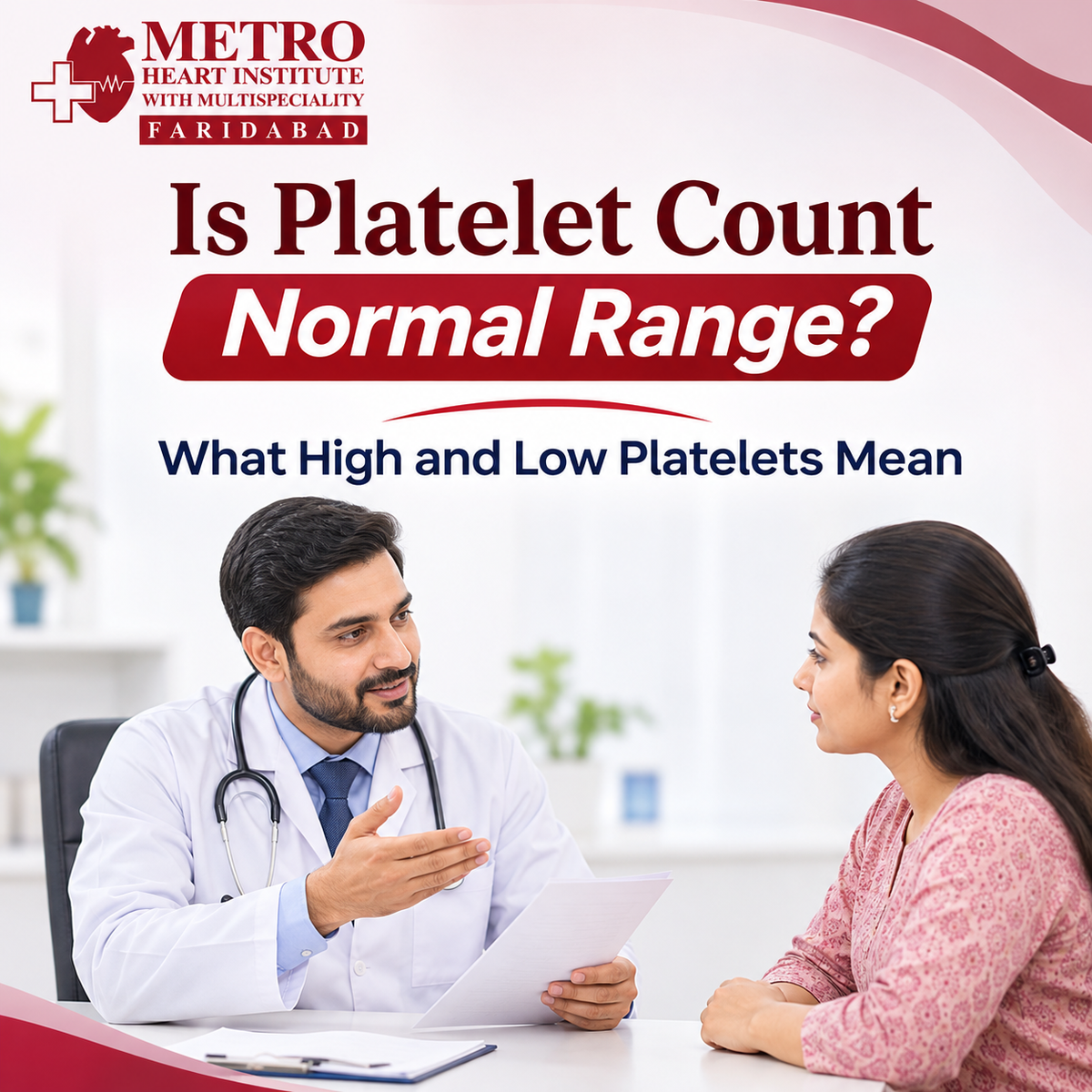
Understanding the platelet count normal range is important for identifying potential blood disorders, infections, bleeding risks and other underlying health conditions. Platelets are tiny blood cell fragments that play an essential role in blood clotting and preventing excessive bleeding after an injury.
The normal platelet count in most healthy adults is approximately 150,000 to 450,000 platelets per microlitre of blood, equivalent to 1.5 lakh to 4.5 lakh platelets. However, some laboratories use a slightly different upper reference limit.
A platelet count below the normal range is called thrombocytopenia, while a platelet count above the normal range is known as thrombocytosis. Both conditions may develop for various reasons, ranging from temporary viral infections and nutritional deficiencies to immune disorders and bone marrow diseases.
In India, platelet count monitoring is particularly important during dengue fever. However, dengue is not the only cause of low platelet counts, and a low platelet count does not automatically mean a platelet transfusion is necessary.
At Metro Hospital, Faridabad, patients with abnormal platelet counts can access comprehensive blood investigations through Laboratory Services and specialist evaluation through the Haematology & BMT Department.
This detailed guide explains the normal platelet count range, causes and symptoms of high and low platelets, dangerous platelet levels, dengue-related platelet reduction, diagnostic tests, treatment options, and when to seek medical attention.
Platelets, medically known as thrombocytes, are small cell fragments produced in the bone marrow by large cells called megakaryocytes.
Unlike red blood cells, which carry oxygen, and white blood cells, which help fight infections, platelets primarily help control bleeding.
When a blood vessel is injured, platelets gather at the damaged area, become activated and stick together to form an initial platelet plug. Other blood-clotting proteins then help stabilise the clot.
The main functions of platelets include:
Platelets generally circulate in the bloodstream for approximately seven to ten days before being removed and replaced by newly produced platelets.
The commonly used platelet count normal range for adults is:
150,000–450,000 platelets per microlitre (µL) of blood.
In Indian laboratory reports, platelet counts are often expressed in lakhs per cubic millimetre or microlitre.
| Measurement Unit | Normal Platelet Count |
|---|---|
| Platelets per microlitre | 150,000–450,000/µL |
| Lakhs per cubic millimetre | 1.5–4.5 lakh/mm³ |
| SI units | 150–450 × 10⁹/L |
Some laboratories use an upper reference limit of 400,000 platelets per microlitre. Always compare your result with the reference range printed on your blood test report.
The following chart provides a general understanding of different platelet count levels.
| Platelet Count | General Interpretation |
|---|---|
| Below 10,000/µL | Critically low; significant spontaneous bleeding risk |
| 10,000–19,999/µL | Very low; urgent medical assessment required |
| 20,000–49,999/µL | Severely reduced; increased bleeding risk |
| 50,000–99,999/µL | Moderately low platelet count |
| 100,000–149,999/µL | Mildly low platelet count |
| 150,000–450,000/µL | Common normal adult reference range |
| Above 450,000/µL | High platelet count |
| 1,000,000/µL or higher | Extremely high platelet count requiring prompt specialist evaluation |
These categories are for general educational purposes. The seriousness of an abnormal platelet count also depends on its underlying cause, rate of change, platelet function, associated symptoms and overall medical condition.
Although platelet counts may vary slightly with age, most laboratories use broadly similar reference intervals for adults.
| Age Group | General Platelet Reference Range |
|---|---|
| Newborns | Approximately 150,000–450,000/µL |
| Children | Approximately 150,000–450,000/µL |
| Teenagers | Approximately 150,000–450,000/µL |
| Adults aged 18–40 years | Approximately 150,000–450,000/µL |
| Adults aged 41–60 years | Approximately 150,000–450,000/µL |
| Adults above 60 years | Approximately 150,000–450,000/µL |
Newborns and children may have age-specific laboratory reference intervals. Older adults may also experience modest variations in platelet counts.
Persistent abnormalities should not be dismissed solely because of age.
Most laboratories use similar adult platelet reference ranges for men and women.
Women may have slightly higher average platelet counts than men, but these differences do not generally require separate diagnostic thresholds.
Pregnancy can also affect platelet levels. Some pregnant women develop mild gestational thrombocytopenia, particularly during the later stages of pregnancy.
However, low platelets during pregnancy require appropriate medical assessment to rule out conditions such as pre-eclampsia, HELLP syndrome and other pregnancy-related complications.
Expectant mothers with abnormal platelet counts can seek evaluation through the Obstetrics & Gynaecology Department at Metro Hospital, Faridabad.
A platelet count below 150,000/µL is generally described as thrombocytopenia.
Low platelet levels may develop when:
Some people with mildly reduced platelet counts have no symptoms, while others may develop significant bleeding problems depending on the severity and underlying cause.
People with low platelets may develop bruises after minor injuries or without remembering any injury.
Bruises may appear on the arms, legs or other areas of the body.
Small red, purple or brown spots called petechiae may develop when tiny blood vessels bleed beneath the skin.
These spots are usually flat and may not fade when pressed.
They commonly appear on the lower legs, although they can occur elsewhere.
Recurrent or unusually prolonged nosebleeds may occur when platelet levels are significantly reduced.
However, nosebleeds can also result from dry air, local irritation and other conditions.
Low platelet counts can cause bleeding while brushing teeth or spontaneous gum bleeding.
Persistent gum bleeding should be investigated, particularly when accompanied by unexplained bruising.
Small cuts or injuries may take longer than usual to stop bleeding.
This can happen when there are insufficient functional platelets to form an effective platelet plug.
Women with thrombocytopenia may experience unusually heavy or prolonged periods.
Repeated excessive menstrual bleeding may eventually contribute to iron deficiency anaemia.
Learn more about the associated warning signs in Metro Hospital’s guide on Iron Deficiency Symptoms, Low Ferritin and Hemoglobin.
Visible blood in urine may occasionally occur with significant thrombocytopenia.
However, urinary tract infections, kidney stones and other urinary conditions can also cause this symptom.
Medical evaluation is necessary to identify the source.
Blood in stool or black, tarry stools may indicate gastrointestinal bleeding.
Although low platelets can increase bleeding risk, gastrointestinal conditions such as ulcers, piles and intestinal inflammation may also be responsible.
Low platelets alone do not usually cause fatigue directly. However, the underlying illness or associated blood loss and anaemia may lead to persistent tiredness, dizziness and weakness.
A sudden severe headache, confusion, seizures, visual disturbances or weakness on one side of the body in a patient with severe thrombocytopenia may indicate serious internal bleeding or another medical emergency.
Immediate medical attention is necessary.
Dengue is a recognised cause of thrombocytopenia, especially during mosquito-borne disease outbreaks in India.
Platelet counts may fall during the course of the infection because of reduced platelet production, immune-mediated destruction and other disease-related processes.
Patients may also experience fever, body pain, headache, nausea, rash and weakness.
Importantly, the seriousness of dengue cannot be determined by platelet count alone.
Read Metro Hospital’s detailed guide on Dengue Symptoms Day by Day: When Does Dengue Become Dangerous? to understand the different phases of dengue infection and associated warning signs.
Several infections can temporarily reduce platelet counts.
These may include viral hepatitis, HIV, malaria, chikungunya and severe systemic bacterial infections.
Platelet levels may recover as the underlying infection improves, although some patients require additional treatment.
Immune thrombocytopenia is a condition in which the immune system mistakenly targets platelets.
ITP may develop in children or adults and can cause isolated thrombocytopenia with otherwise relatively normal blood cell counts.
Treatment depends on bleeding symptoms, platelet levels and individual medical circumstances.
Severe vitamin B12 or folate deficiency can interfere with normal blood cell production in the bone marrow.
This may lead to reduced platelet counts, anaemia, or abnormalities in other blood cells.
Appropriate nutritional testing helps identify whether a deficiency is responsible.
Chronic liver disease can affect platelet production and contribute to spleen enlargement.
An enlarged spleen may retain more platelets, reducing the number circulating in the blood.
Patients with cirrhosis or other significant liver conditions may therefore develop thrombocytopenia.
People with suspected liver-related platelet abnormalities can consult the Medical Gastroenterology Department at Metro Hospital.
Because platelets are produced in the bone marrow, conditions affecting marrow function can reduce their production.
Possible causes include:
Low platelets accompanied by abnormalities in white blood cells or hemoglobin may require specialised haematology evaluation.
Some medicines can interfere with platelet production or trigger immune-mediated platelet destruction.
These may include certain antibiotics, anticonvulsants, chemotherapy medicines and heparin.
Never discontinue prescribed medication independently because of an abnormal platelet count. A doctor should assess whether the medicine is contributing to the problem.
Some cancer treatments temporarily suppress bone marrow activity, leading to reduced production of platelets, red blood cells and white blood cells.
Regular CBC monitoring is an important part of cancer treatment.
Patients receiving chemotherapy may require personalised monitoring through their treating oncology team.
Heavy alcohol consumption can suppress platelet production and contribute to liver disease, both of which may lower platelet counts.
Recovery depends on the extent of bone marrow and liver involvement.
Conditions such as sepsis, disseminated intravascular coagulation (DIC), and thrombotic thrombocytopenic purpura (TTP) can cause significant reductions in platelet counts.
These are potentially life-threatening conditions requiring urgent medical management.
No single platelet count determines the same level of risk for every patient.
In general:
Bleeding risk may be higher in patients taking blood-thinning medicines, those with clotting disorders or individuals experiencing severe systemic illness.
A rapidly falling platelet count may also be more concerning than a stable, mildly reduced count.
A platelet count of 1 lakh, or 100,000/µL, is below the usual adult reference range.
It does not necessarily mean that a person is in immediate danger. However, the cause of the reduction should be identified.
Doctors may recommend repeat CBC testing and additional investigations, particularly if the patient has fever, bleeding symptoms or a continuing decline in platelet levels.
A platelet count of 50,000/µL is significantly below normal.
Some patients may not experience spontaneous bleeding at this level, but the risk of bleeding can increase during injuries, operations or invasive procedures.
The underlying cause and platelet trend are important factors in determining treatment.
Medical assessment is recommended rather than attempting to increase platelets through home remedies alone.
Dengue patients often become concerned when their platelet counts start falling.
Platelets may decline around the time the fever begins to settle, commonly during the critical phase of dengue. This is also when complications related to plasma leakage, bleeding or circulatory instability may develop.
Important warning signs of severe dengue include:
A person with dengue can develop serious complications even when platelet levels are not extremely low.
Doctors therefore monitor platelet trends alongside blood pressure, haematocrit, hydration, urine output and other clinical findings.
Patients experiencing suspected dengue or falling platelet counts can seek evaluation through the Internal Medicine Department at Metro Hospital, Faridabad.
No. A low platelet count alone does not automatically indicate the need for a platelet transfusion in dengue.
Routine preventive platelet transfusions are generally not recommended for dengue patients solely because the platelet count has fallen.
The decision depends on significant active bleeding, clinical stability, associated clotting abnormalities and other medical factors.
Unnecessary transfusions may expose patients to complications without providing meaningful benefit.
A platelet count above 450,000/µL is generally called thrombocytosis.
High platelet counts may occur temporarily in response to another illness or result from an underlying bone marrow disorder.
There are two major categories of thrombocytosis.
Reactive or secondary thrombocytosis occurs when another medical condition stimulates increased platelet production.
It is the more common form of thrombocytosis.
Possible causes include infection, inflammation, iron deficiency, recent surgery and recovery from certain illnesses.
Essential thrombocythaemia is a chronic bone marrow disorder in which abnormal marrow cells produce excessive platelets.
It belongs to a group of conditions known as myeloproliferative neoplasms.
Patients may require long-term monitoring and specialised treatment to reduce the risk of blood clots or bleeding.
Many people with thrombocytosis have no noticeable symptoms. The condition is often identified during routine blood testing.
When symptoms occur, particularly in primary bone marrow disorders, they may include:
Some forms of thrombocytosis increase the risk of blood clots, while extremely high platelet counts can paradoxically increase bleeding risk.
Infections may stimulate the body’s inflammatory response and increase platelet production.
Platelet counts may return to normal once the infection resolves.
Iron deficiency is an important cause of reactive thrombocytosis.
A person with low hemoglobin, low ferritin and elevated platelets may require investigation for nutritional deficiency or chronic blood loss.
Treating the underlying iron deficiency may help normalise platelet levels.
Inflammatory conditions such as rheumatoid arthritis and inflammatory bowel disease may contribute to increased platelet production.
The underlying inflammatory disorder generally needs to be managed.
Platelet counts may rise temporarily during recovery from major surgery, tissue injury or significant blood loss.
The spleen normally stores and removes some circulating platelets.
After surgical removal of the spleen, platelet counts may increase.
Some cancers may stimulate platelet production through inflammation and other biological mechanisms.
An elevated platelet count alone does not indicate cancer, but unexplained persistent thrombocytosis may require further evaluation.
Primary bone marrow disorders that can cause high platelet counts include essential thrombocythaemia, polycythaemia vera and other myeloproliferative neoplasms.
These conditions require specialist haematology assessment.
A platelet count of 5 lakh, or 500,000/µL, is above the commonly used adult reference range.
Possible causes include recent infection, iron deficiency, inflammation and recovery from illness.
A single elevated result does not establish a bone marrow disorder.
Doctors may recommend repeating the test and evaluating other blood parameters before deciding whether specialist investigations are required.
Certain conditions associated with elevated platelet counts, particularly essential thrombocythaemia, can increase the risk of abnormal blood clot formation.
Potential complications include:
However, the risk depends on the underlying condition, age, medical history and other risk factors. Reactive thrombocytosis generally has a lower clotting risk than primary bone marrow disorders.
Patients should not start aspirin or other blood-thinning medicines solely because their platelet count is high.
| Feature | Low Platelet Count | High Platelet Count |
|---|---|---|
| Medical term | Thrombocytopenia | Thrombocytosis |
| Common threshold | Below 150,000/µL | Above 450,000/µL |
| Major concern | Increased bleeding risk | Possible clotting or bleeding risk |
| Common causes | Infections, immune disorders, reduced marrow production | Inflammation, iron deficiency, marrow disorders |
| Possible symptoms | Bruising, petechiae, bleeding gums | Headache, dizziness, tingling |
| Treatment | Based on the underlying cause | Based on the underlying cause and clotting risk |
Both conditions require clinical interpretation rather than treatment based only on laboratory numbers.
Platelet abnormalities are usually identified through a complete blood count.
Depending on the result, symptoms and medical history, additional investigations may be required.
A CBC measures several important blood parameters, including:
The test helps determine whether the platelet abnormality occurs independently or alongside changes in other blood cells.
A peripheral blood smear allows laboratory specialists to examine blood cells under a microscope.
It may help identify abnormal platelet size, platelet clumping, unusual blood cells and other changes associated with underlying blood disorders.
MPV measures the average size of circulating platelets.
Platelet count and MPV can provide complementary information about platelet production and turnover.
For a detailed explanation, read Metro Hospital’s guide on the MPV Blood Test: Normal Range, High and Low MPV Explained.
Liver function tests may be recommended when thrombocytopenia is suspected to be associated with liver disease.
Ferritin, serum iron, vitamin B12 and folate testing may help identify nutritional causes of abnormal blood cell production.
Clotting investigations may be required when patients experience unusual bleeding or when a systemic clotting disorder is suspected.
A bone marrow aspiration or biopsy may be recommended in selected patients with persistent unexplained platelet abnormalities or suspected bone marrow disease.
Specialised genetic testing for mutations such as JAK2, CALR or MPL may be considered when a myeloproliferative disorder is suspected.
Yes. Sometimes platelets clump together inside the blood sample collection tube, causing an automated analyser to report a falsely reduced platelet count.
This phenomenon is called pseudothrombocytopenia.
It does not necessarily mean that the patient actually has low circulating platelets.
A repeat blood test using an appropriate collection tube and examination of a peripheral blood smear may help confirm the actual platelet count.
No scientifically established food or home remedy reliably increases platelet counts in every patient.
The most effective approach is to identify and treat the underlying cause.
However, appropriate nutrition and healthy habits can support normal blood cell production and recovery.
Vitamin B12 is important for normal blood cell production.
Dietary sources include milk, curd, eggs, fish, meat and fortified foods.
Individuals with confirmed vitamin B12 deficiency may require supplements or injections under medical supervision.
Folate supports the production of healthy blood cells.
Useful dietary sources include spinach, green leafy vegetables, lentils, chickpeas, beans and citrus fruits.
Iron is essential for normal red blood cell production.
Although iron-rich foods do not directly increase platelets in everyone, correcting iron deficiency may help normalise abnormal platelet counts associated with nutritional deficiency.
Adequate protein and overall nutrition support bone marrow function and recovery from illness.
Include suitable portions of pulses, dairy products, eggs, nuts, fish or lean meat according to your dietary preferences and medical requirements.
Hydration is particularly important during fever and infections.
However, drinking more water does not directly stimulate platelet production.
Patients with dengue, kidney disease or heart disease should follow their doctor’s fluid-management recommendations.
Alcohol can affect bone marrow function and liver health.
Reducing alcohol exposure may help in cases where alcohol-related disease contributes to thrombocytopenia.
Some medicines and herbal supplements may affect platelet function or increase bleeding risk.
Discuss all prescribed medicines, over-the-counter products and supplements with your doctor.
Papaya leaf extract is commonly promoted as a home remedy for low platelet counts, particularly during dengue fever.
Although some studies suggest possible effects on platelet recovery, the available evidence is insufficient to establish it as a reliable treatment or a way to prevent severe dengue complications.
Papaya leaf juice should not replace medical evaluation, appropriate hydration, laboratory monitoring or hospital treatment when required.
Kiwi, pomegranate and beetroot contain useful nutrients and can form part of a balanced diet.
However, there is no reliable evidence that eating these foods alone can rapidly correct severe thrombocytopenia.
Patients with dangerously low platelet counts should not delay medical care while trying dietary remedies.
Treatment varies depending on the underlying cause and bleeding risk.
Possible approaches include:
Not every patient with low platelets requires hospital admission or transfusion.
Reactive thrombocytosis often improves when the underlying condition is treated.
For example, treating iron deficiency or controlling inflammation may help platelet levels return to normal.
Patients with essential thrombocythaemia or other bone marrow disorders may require medicines to reduce platelet production or lower clotting risk.
Treatment decisions depend on the diagnosis, age, previous blood clots, bleeding history and other individual risk factors.
Specialist evaluation may be appropriate if you experience:
The Haematology & BMT Department at Metro Hospital, Faridabad provides specialised evaluation and management of blood and bone marrow disorders.
Seek immediate medical attention if an abnormal platelet count is accompanied by:
These symptoms may indicate serious bleeding, abnormal blood clot formation or another medical emergency.
Metro Hospital provides 24×7 Emergency & Trauma Services for patients requiring urgent medical assessment and treatment.
Metro Hospital offers multidisciplinary care for patients with abnormal platelet levels, blood disorders and infections affecting platelet production or survival.
The Laboratory Services Department at Metro Hospital provides round-the-clock diagnostic support through its NABL-accredited laboratory.
Laboratory facilities support investigations involving haematology, biochemistry, coagulation, clinical pathology and other diagnostic disciplines.
These investigations can help doctors assess platelet counts and related blood abnormalities.
The Haematology & BMT Department provides specialist care for blood and bone marrow disorders, including haematological malignancies.
Patients with persistent or unexplained platelet abnormalities may require detailed haematology evaluation and personalised management.
Metro Hospital’s Blood Bank operates round the clock and provides blood components, including platelet concentrates.
The department also provides platelet apheresis facilities and compatibility testing to support appropriate transfusion requirements.
Platelet transfusions are administered according to clinical indications and the treating doctor’s assessment.
Patients with dengue, fever, infection-related thrombocytopenia and other acute medical conditions can seek assessment through the Internal Medicine Department.
Coordination between medical specialists, laboratory services, haematology and emergency care supports the management of complex platelet-related conditions.
False. Viral infections, immune disorders, liver disease, medicines, nutritional deficiencies and bone marrow conditions can also cause thrombocytopenia.
False. Transfusion decisions depend on platelet levels, bleeding symptoms, underlying disease and overall clinical condition.
False. Infection, inflammation and iron deficiency are common causes of reactive thrombocytosis.
False. No home remedy can reliably treat every cause of low platelet counts.
False. Some people experience bleeding because of abnormal platelet function or clotting-factor disorders despite having a normal platelet count.
The commonly used adult platelet count normal range is 150,000–450,000 platelets per microlitre, equivalent to 1.5–4.5 lakh platelets.
A platelet count of 1.2 lakh is mildly below the commonly used adult reference range. Its significance depends on symptoms, medical history and previous platelet counts.
A platelet count below 10,000/µL is particularly concerning because of the risk of spontaneous bleeding and requires immediate medical assessment. Higher counts may also be dangerous depending on clinical circumstances.
Possible early symptoms include easy bruising, tiny red or purple skin spots, frequent nosebleeds and bleeding gums. Mild thrombocytopenia may cause no symptoms.
Common causes include infections, inflammation, iron deficiency, recent surgery and certain bone marrow disorders.
Some temporary platelet abnormalities associated with mild infections may resolve as the underlying illness improves. However, persistent or severe abnormalities require medical evaluation.
Foods rich in vitamin B12, folate, protein and other essential nutrients support normal blood cell production. No individual food reliably corrects severe thrombocytopenia.
The frequency depends on the stage of illness, platelet trends, warning signs and clinical condition. The treating doctor determines the appropriate monitoring schedule.
Yes. Iron deficiency anaemia can sometimes cause low hemoglobin alongside reactive thrombocytosis.
Patients can access CBC and platelet investigations through Laboratory Services at Metro Hospital, Faridabad, with specialist evaluation available through the Haematology & BMT Department.
Understanding the platelet count normal range can help individuals recognise abnormal blood test results and seek appropriate medical evaluation.
For most adults, the commonly used normal platelet range is 1.5 lakh to 4.5 lakh platelets per microlitre of blood.
Low platelet counts, known as thrombocytopenia, may occur because of dengue, other infections, immune disorders, nutritional deficiencies, liver disease and bone marrow conditions.
High platelet counts, known as thrombocytosis, may develop due to infections, inflammation, iron deficiency or primary bone marrow disorders.
An abnormal platelet count does not automatically indicate a serious disease. However, persistent abnormalities, rapidly changing platelet levels and associated bleeding or clotting symptoms should never be ignored.
At Metro Hospital, Faridabad, patients can access comprehensive diagnostic investigations through Laboratory Services, specialist blood disorder management through the Haematology & BMT Department, and appropriate transfusion support through the Blood Bank.
Do not focus only on increasing or decreasing your platelet count. Identifying and treating the underlying cause is essential for protecting your long-term health.
Medical Disclaimer: This article is intended for general health education only. Platelet reference ranges and treatment thresholds may vary by laboratory method and individual clinical circumstances. Always consult a qualified healthcare professional for abnormal platelet results. Seek emergency care for uncontrolled bleeding, severe headache, confusion, chest pain or sudden breathing difficulty.