Appointment
 Find A Doctor
 Lab Report
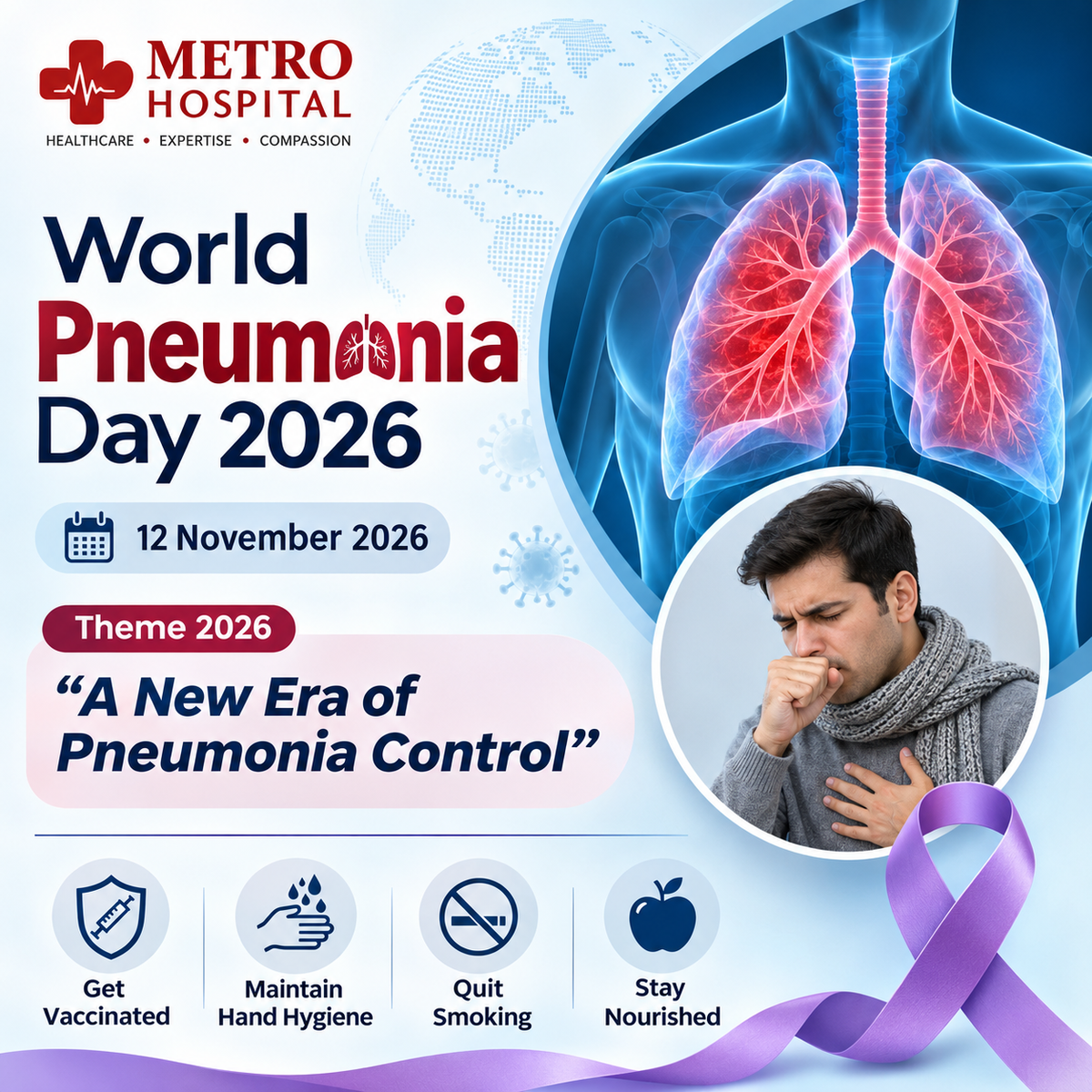
World Pneumonia Day 2026: Theme, Symptoms, Causes, Treatment and Prevention
Nov 7, 2026
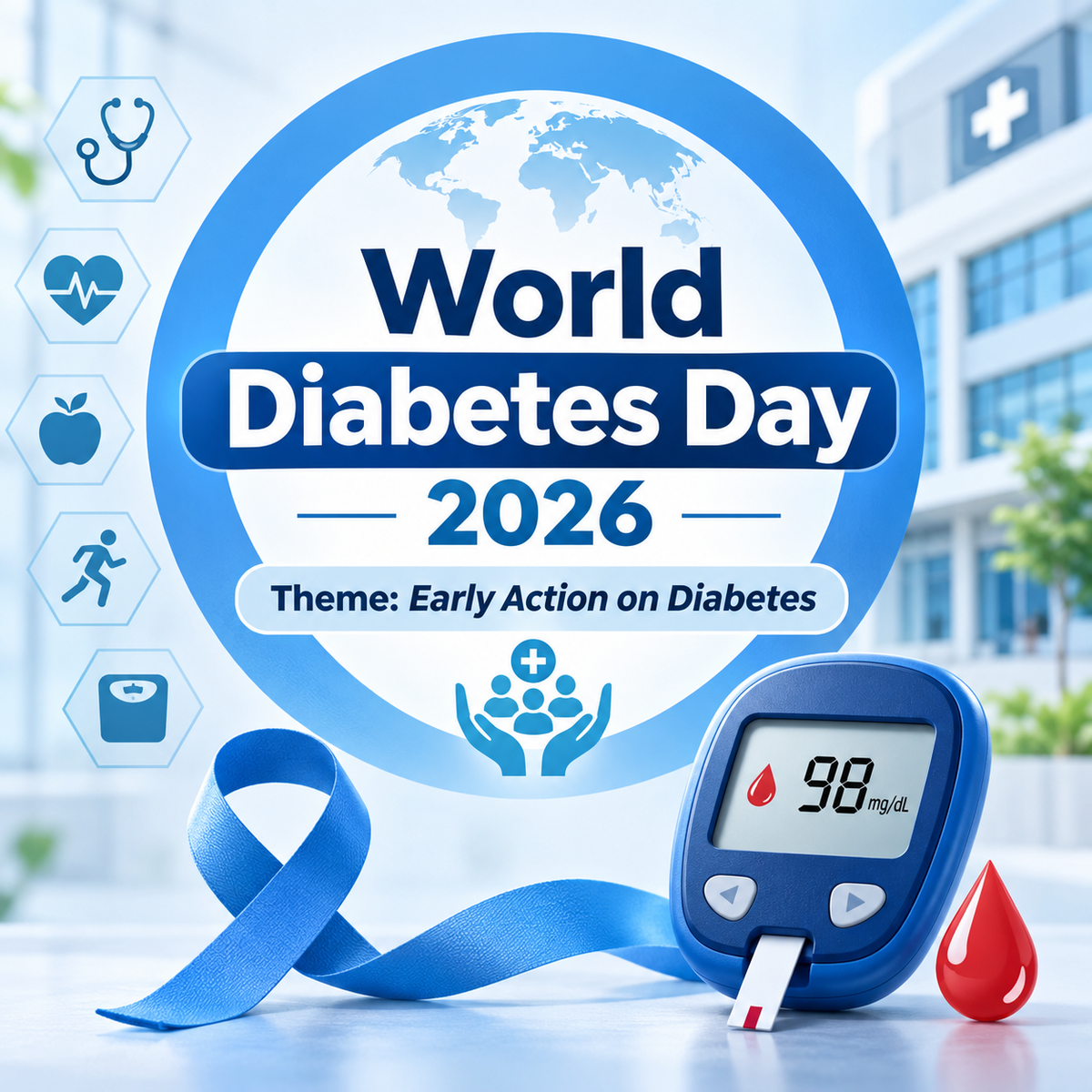
World Diabetes Day 2026 is observed on 14 November 2026 to raise awareness about diabetes, encourage earlier diagnosis, promote timely access to treatment and reduce the risk of long-term complications.
The official World Diabetes Day 2026–27 theme is “Early Action on Diabetes.” The International Diabetes Federation (IDF) and WHO are using the campaign to highlight three priorities: recognising diabetes symptoms earlier, improving timely access to diagnosis and care, and helping people at risk reduce their chances of developing type 2 diabetes.
Diabetes is a chronic metabolic condition in which blood glucose levels remain higher than normal because the body does not produce enough insulin, cannot use insulin effectively, or both. WHO reports that the number of people living with diabetes increased from about 200 million in 1990 to 830 million in 2022, making diabetes one of the world’s major non-communicable health challenges.
One reason the 2026 campaign focuses so strongly on early action is that a large proportion of people living with diabetes do not know they have it. WHO estimates that more than 40% of people with diabetes globally remain undiagnosed, while IDF reports that hundreds of millions are living with diabetes without a diagnosis.
At Metro Hospital, Faridabad, patients with diabetes, thyroid disorders, obesity and other metabolic conditions can seek specialist care through the Diabetes & Endocrinology Department. The department provides care for Type 1 diabetes, Type 2 diabetes and diabetes during pregnancy, including insulin therapy, oral medicines, dietary counselling, continuous glucose monitoring and lifestyle management.
This detailed guide explains World Diabetes Day 2026, its theme, early diabetes symptoms, Type 1 and Type 2 diabetes, risk factors, diagnostic tests such as fasting blood sugar and HbA1c, complications, prevention, diet, exercise and treatment.
World Diabetes Day is observed every year on 14 November.
The date marks the birthday of Sir Frederick Banting, who co-discovered insulin with Charles Best.
The International Diabetes Federation and WHO established World Diabetes Day in 1991, and it became an official United Nations day in 2006. It is now one of the world’s largest diabetes-awareness campaigns, reaching people in more than 160 countries.
The official theme for World Diabetes Day 2026–27 is:
The campaign focuses on:
WHO’s 2026 campaign emphasises that earlier diagnosis must be followed by affordable, uninterrupted, high-quality care.
The campaign hashtag promoted by IDF is:
#ActEarlyOnDiabetes
Diabetes can damage the body gradually, sometimes before a person notices clear symptoms.
By the time Type 2 diabetes is diagnosed, some people may already have complications affecting:
IDF reports that up to 50% of people with Type 2 diabetes may already have complications at the time of diagnosis.
Early diagnosis allows patients to begin:
before complications become more advanced.
Diabetes occurs when blood glucose levels remain persistently elevated.
Glucose is an important source of energy.
After digestion, carbohydrates are converted into glucose.
The pancreas produces the hormone insulin, which helps move glucose from the bloodstream into cells.
Diabetes develops when:
The WHO describes diabetes as a chronic condition that arises when the pancreas does not produce enough insulin or the body cannot effectively use the insulin it produces.
The main types are:
Type 1 diabetes develops when the immune system destroys insulin-producing cells in the pancreas.
As a result, the body produces little or no insulin.
People with Type 1 diabetes require insulin therapy.
WHO notes that Type 1 diabetes may develop at any age and can sometimes be missed or misdiagnosed, particularly in adults.
Symptoms often develop relatively quickly.
Type 2 diabetes is the most common form.
It develops when:
Risk factors commonly include:
WHO India notes that excess body weight and physical inactivity are important drivers of Type 2 diabetes.
Gestational diabetes is high blood sugar first recognised during pregnancy.
It requires monitoring because uncontrolled diabetes during pregnancy can affect:
Women with gestational diabetes also have a higher future risk of developing Type 2 diabetes.
Metro Hospital’s Diabetes & Endocrinology Department specifically provides care for diabetes in pregnancy.
One of the key messages of World Diabetes Day 2026 is to know the symptoms.
WHO lists common symptoms including:
It also advises seeking medical assessment for unexplained weight loss and other possible symptoms.
When blood glucose becomes very high, the kidneys try to remove excess glucose through urine.
This can lead to increased urination, especially:
Frequent urination can lead to fluid loss.
This may cause persistent thirst.
Patients may notice that they drink significantly more water than usual but still feel thirsty.
This is particularly important in Type 1 diabetes.
If glucose cannot enter cells effectively, the body may begin breaking down:
for energy.
This can lead to unintended weight loss.
Poor glucose utilisation can leave the body’s cells without enough usable energy.
Patients may experience:
Some people feel unusually hungry because glucose remains in the bloodstream instead of entering cells effectively.
High blood glucose can temporarily affect fluid balance in the eye.
This may cause fluctuating or blurred vision.
Seek medical assessment for persistent vision problems.
Diabetes can affect:
As a result, cuts and wounds may heal more slowly.
High blood glucose may increase susceptibility to certain infections.
These may include:
Persistent high blood sugar can damage nerves.
Early symptoms of diabetic neuropathy may include:
especially in the feet.
Some people with insulin resistance develop dark, velvety skin in areas such as:
This condition, known as acanthosis nigricans, may be associated with insulin resistance.
Yes.
This is particularly common in Type 2 diabetes.
WHO states that Type 2 diabetes usually develops gradually and may cause few or no obvious symptoms.
This is why people with risk factors should discuss screening even when they feel healthy.
Risk increases with factors such as:
IDF estimates that around 1 in 8 people worldwide is at high risk of developing Type 2 diabetes.
Obesity is one of the strongest modifiable risk factors for Type 2 diabetes.
Excess fat, particularly around the abdomen, can increase insulin resistance.
Even modest weight reduction can improve:
Having a parent or sibling with Type 2 diabetes increases risk.
However, genetics does not mean diabetes is inevitable.
Healthy lifestyle habits can significantly influence overall risk.
Muscle activity helps the body use glucose more effectively.
A sedentary lifestyle may contribute to:
Regular exercise is therefore an important strategy for both diabetes prevention and management.
Diagnosis may involve one or more blood tests.
Common tests include:
A doctor may repeat testing unless symptoms and glucose levels clearly establish the diagnosis.
HbA1c reflects average blood glucose levels over approximately the previous two to three months.
It is useful for:
Unlike a single glucose reading, HbA1c reflects average glucose exposure over time.
Commonly used diagnostic thresholds are:
| HbA1c | Interpretation |
|---|---|
| Below 5.7% | Normal range |
| 5.7–6.4% | Prediabetes |
| 6.5% or higher | Diabetes range |
A qualified clinician should always interpret a diagnosis.
Prediabetes means blood sugar is higher than normal but not yet high enough to meet diabetes diagnostic thresholds.
Prediabetes is important because it increases the risk of:
Lifestyle changes during this stage may delay or prevent progression to Type 2 diabetes.
In many high-risk people, Type 2 diabetes can be delayed or prevented.
WHO recommends:
as key strategies.
No single universal diabetes diet exists.
A healthy pattern generally includes:
Patients should reduce:
Metro Hospital’s Nutrition & Dietetics Department provides specialised nutritional counselling for uncontrolled blood sugar, hypertension, cholesterol and weight management.
No.
Carbohydrates are a normal part of a healthy diet.
The focus should be on:
rather than eliminating all carbohydrates.
Whole grains and high-fibre carbohydrate sources are generally preferable to heavily refined sugary foods.
Not necessarily.
People can generally include whole fruit in a balanced diabetes diet.
The main concerns are:
A dietitian can help plan appropriate portions.
Exercise helps muscles use glucose.
It can improve:
Useful activities may include:
Patients with heart disease, severe neuropathy or other complications should discuss appropriate exercise with their doctor.
Treatment depends on:
Treatment may include:
Metro Hospital’s Diabetes & Endocrinology Department provides insulin therapy, oral medications, lifestyle modification, dietary counselling, diabetes education and continuous glucose monitoring as part of comprehensive diabetes management.
Insulin is essential for people with Type 1 diabetes.
Some people with Type 2 diabetes may also require insulin when:
Using insulin does not mean that diabetes has “failed.”
It is simply one of the most effective treatments when clinically appropriate.
Continuous glucose monitoring, or CGM, uses a sensor to track glucose levels throughout the day and night.
It can help identify:
Metro Hospital lists continuous glucose monitoring among the services available within its diabetes-care programme.
Persistent high blood sugar can damage blood vessels and nerves.
WHO identifies complications including:
Diabetes significantly increases cardiovascular risk.
High blood glucose often occurs alongside:
These combined factors increase the risk of:
High blood glucose can damage the small filtering blood vessels in the kidneys.
Over time this may cause:
Regular kidney monitoring may include:
Diabetes can damage retinal blood vessels.
This may lead to diabetic retinopathy.
Regular eye exams matter because early retinal damage may not cause noticeable symptoms.
Diabetic neuropathy may cause:
particularly in the feet.
Reduced sensation can allow minor injuries to go unnoticed.
Foot complications develop because of a combination of:
People with diabetes should regularly inspect their feet for:
Diabetic ketoacidosis, or DKA, is a serious complication caused by severe insulin deficiency.
It is particularly associated with Type 1 diabetes.
Symptoms may include:
Early diagnosis of Type 1 diabetes can help prevent life-threatening DKA, which is one of the priorities of the World Diabetes Day 2026 campaign.
Hypoglycaemia means blood glucose becomes too low.
Symptoms may include:
Severe hypoglycaemia can cause:
Patients taking insulin or certain diabetes medicines should know how to recognise and manage low blood sugar.
Diabetes during pregnancy requires careful monitoring.
Uncontrolled blood sugar can increase risks for both:
Metro Hospital provides diabetes-in-pregnancy care through its Diabetes & Endocrinology Department, with multidisciplinary coordination where needed.
Monitoring frequency varies.
Doctors may recommend:
The schedule depends on diabetes type and control level.
Patients with suspected or confirmed diabetes can seek specialist care through the Diabetes & Endocrinology Department at Metro Hospital, Faridabad.
The department treats:
Its diabetes services include:
Dr. Arun Kumar C. Singh serves as Director – Endocrinology & Diabetology at Metro Hospital, Faridabad.
His clinical expertise includes management of:
His profile also notes specialist training in Endocrinology from AIIMS, New Delhi.
Diabetes diagnosis and monitoring depend heavily on accurate laboratory testing.
Metro Hospital’s Laboratory Services are available round the clock and include biochemistry, clinical pathology and other diagnostic sections. The hospital laboratory is NABL accredited.
Depending on clinical requirements, tests may include:
Diet plays an important role in diabetes care.
Metro Hospital’s Nutrition & Dietetics Department provides individual consultations for uncontrolled blood sugar and related metabolic conditions.
The department’s dietitians also provide counselling for:
Discuss diabetes testing with your doctor if you have:
Early testing is particularly important because Type 2 diabetes can remain silent for years.
False.
Type 2 diabetes develops because of a combination of:
Sugar intake can contribute to excess calorie intake and weight gain but is not the only cause.
False.
Although obesity significantly increases risk, Type 2 diabetes can also occur in people with normal body weight.
False.
Most people can include suitable portions of whole fruit as part of a balanced diet.
False.
Insulin is a standard and highly effective treatment.
It is essential for Type 1 diabetes and may be appropriate for many people with Type 2 diabetes.
Not necessarily.
Treatment controls blood sugar, but stopping medicine without medical guidance can lead to high glucose again.
World Diabetes Day is observed globally on 14 November 2026.
The official World Diabetes Day 2026–27 theme is “Early Action on Diabetes.”
Common symptoms include increased thirst, frequent urination, tiredness, blurred vision and unexplained weight loss.
Yes. Type 2 diabetes often develops gradually and may cause few or no noticeable symptoms initially.
A healthy diet, regular activity, a healthy body weight and avoiding tobacco can help prevent or delay Type 2 diabetes.
HbA1c is a blood test that estimates average blood glucose over the previous two to three months.
Diabetes can contribute to heart attack, stroke, kidney failure, blindness, nerve damage and lower-limb complications.
No. Treatment depends on diabetes type, glucose levels and individual health. Type 1 diabetes requires insulin, while Type 2 diabetes may be managed with lifestyle changes, oral medicines, injectable medicines or insulin.
Important risk factors include obesity, family history, physical inactivity, high blood pressure, metabolic disorders and previous gestational diabetes.
Patients can consult the Diabetes & Endocrinology Department at Metro Hospital, Faridabad for comprehensive management of Type 1, Type 2 and pregnancy-related diabetes.
World Diabetes Day 2026, observed on 14 November, focuses on one of the most important priorities in diabetes care:
Millions of people worldwide are living with diabetes without knowing it. Earlier symptom recognition and timely testing can help people start treatment before serious complications develop.
Important symptoms include:
Type 2 diabetes risk can often be reduced through:
WHO states that diabetes can lead to serious complications including heart disease, stroke, kidney failure, blindness and lower-limb amputation, but many complications can be prevented or delayed through timely treatment and regular screening.
At Metro Hospital, Faridabad, patients can access specialist diabetes care through the Diabetes & Endocrinology Department, supported by Laboratory Services and personalised dietary guidance through Nutrition & Dietetics.
This World Diabetes Day 2026, know the symptoms, understand your risk and act early—because earlier diagnosis and timely treatment can help prevent serious complications.
Disclaimer: This article is intended for general health education only. A qualified healthcare professional should interpret blood glucose and HbA1c results. Do not start, stop or change diabetes medication without medical advice.