Appointment
 Find A Doctor
 Lab Report
World COPD Day 2026: Theme, Symptoms, Causes, Diagnosis and Treatment
Nov 12, 2026
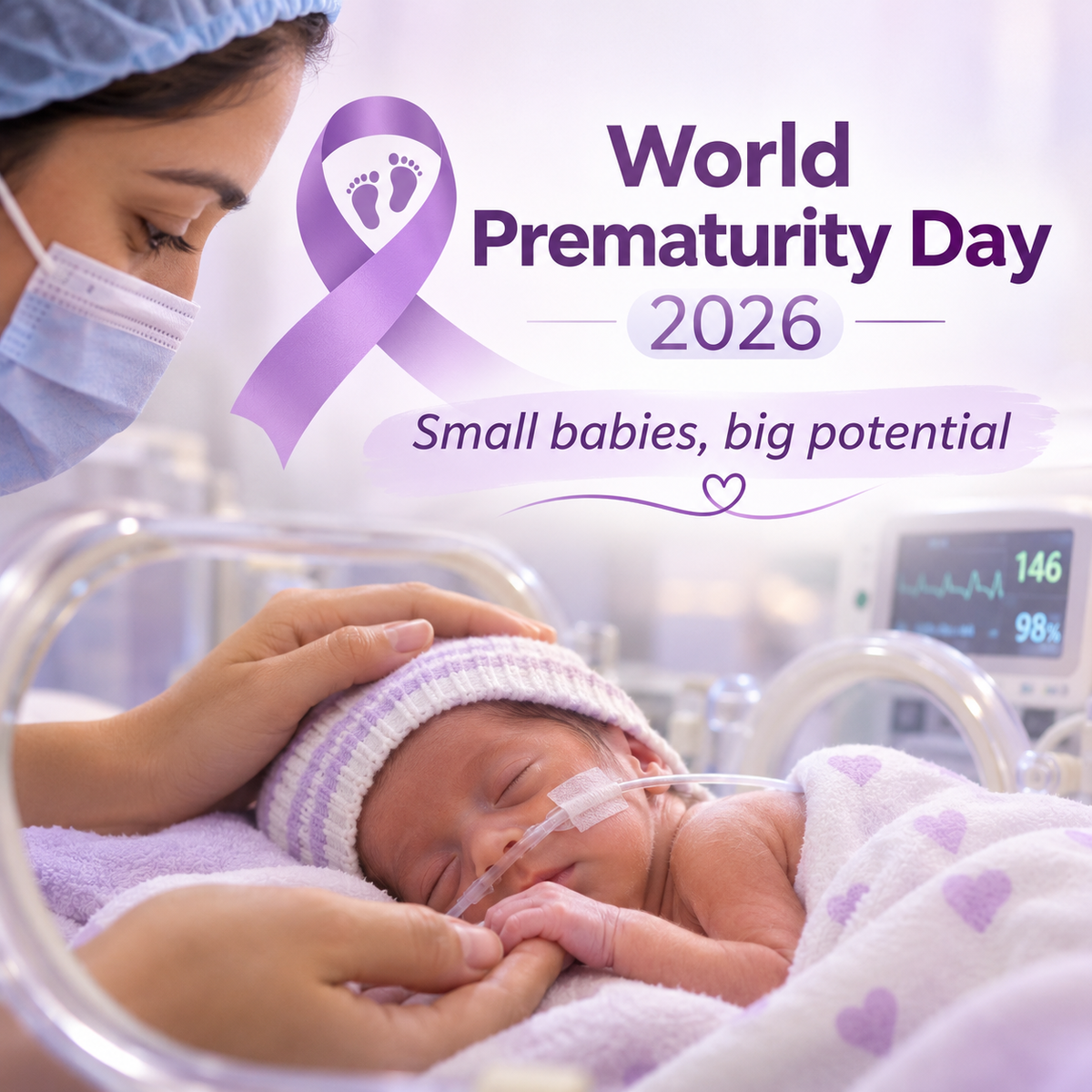
World Prematurity Day 2026 will be observed on 15 November 2026. This is an important change: the day was traditionally marked on 17 November, but from 2026 onward, WHO has officially designated 15 November as World Prematurity Day so it does not overlap with World Cervical Cancer Elimination Day.
The official 2026 slogan is:
The theme highlights that care for premature babies should not stop when they leave the NICU. Follow-up care, developmental monitoring, parental support, nutrition, specialist review and timely interventions are all essential to help babies born too soon grow and thrive.
Prematurity remains a major global child-health challenge. WHO defines a preterm baby as one born before 37 completed weeks of pregnancy. Millions of babies are born preterm every year, and complications of prematurity remain a leading cause of death in children under five.
At Metro Hospital, Faridabad, high-risk pregnancies and preterm labour are managed through the Obstetrics & Gynaecology Department, while premature and critically ill newborns can receive specialised care in the Paediatrics & Neonatology Department, which has a dedicated NICU equipped for very premature and extremely low-birth-weight babies.
This detailed guide explains World Prematurity Day 2026, what preterm birth means, causes and risk factors, warning signs of preterm labour, complications in premature babies, NICU care, Kangaroo Mother Care, follow-up after discharge, prevention and when urgent obstetric care is needed.
World Prematurity Day 2026 will be observed on Sunday, 15 November 2026.
WHO officially shifted the observance from 17 November to 15 November beginning in 2026.
World Prematurity Day was first initiated in 2008 and has since grown into a global movement supporting:
Its main goal is to improve prevention, survival, care quality and long-term outcomes for babies born too soon.
The official 2026 slogan is:
The message has two important parts.
This is a message of hope.
It reminds us that babies born too soon can still grow, develop, and lead fulfilling lives with appropriate care.
This highlights the importance of what happens after NICU discharge.
WHO notes that some premature babies continue to face risks related to:
and therefore require structured follow-up and specialist support.
A baby is considered preterm when born before 37 completed weeks of gestation.
WHO classifies preterm birth into three broad categories:
| Category | Gestational Age |
|---|---|
| Extremely preterm | Below 28 weeks |
| Very preterm | 28 to less than 32 weeks |
| Moderate to late preterm | 32 to less than 37 weeks |
The earlier a baby is born, the greater the likelihood that some organs may still be immature.
A baby’s final weeks inside the uterus are important for development of the:
WHO notes that premature babies are at higher risk of complications including respiratory distress, infections and hypothermia because these systems may not yet be fully developed.
WHO estimated that around 13.4 million babies were born preterm in 2020.
More recent WHO newborn-health materials estimate that approximately 15 million babies are born preterm each year globally.
This means preterm birth is not a rare event.
It is a major global maternal and newborn health issue.
There is not always a single identifiable cause.
WHO notes that preterm birth may occur:
Common risk factors include the following.
Women who have previously delivered prematurely may have a higher risk of preterm birth in a later pregnancy.
This is why previous pregnancy history is important during antenatal assessment.
Women carrying:
have a greater risk of early labour.
WHO specifically identifies multiple pregnancy as a recognised factor associated with prematurity.
Hypertension during pregnancy may increase the likelihood of medically indicated early delivery.
Conditions such as severe preeclampsia may make early birth necessary for the safety of the mother and baby.
Metro Hospital’s Obstetrics & Gynaecology Department specifically manages high-risk pregnancies complicated by high blood pressure and other maternal conditions.
Pre-existing or pregnancy-related diabetes may increase the risk of pregnancy complications.
WHO lists chronic conditions such as diabetes among factors associated with preterm birth.
Certain infections can increase the risk of preterm labour.
These may include infections involving the:
Prompt antenatal treatment is therefore important.
A weak or shortened cervix may increase the chance of early labour or pregnancy loss.
Doctors may use ultrasound to assess cervical length when clinically indicated.
Problems such as:
may increase the risk of early delivery.
If the amniotic sac breaks before labour and before 37 weeks, the risk of:
increases.
A baby that is not growing normally inside the uterus may sometimes need to be delivered early.
Metro Hospital’s high-risk pregnancy services include management of growth-restricted babies.
WHO recommends counselling about tobacco and substance use as part of antenatal care to help reduce preventable pregnancy risks.
Preterm labour means labour begins before 37 completed weeks.
Possible warning signs include:
Any pregnant woman before 37 weeks who experiences repeated contractions or leaking fluid should contact her obstetrician promptly.
Sometimes, depending on:
Doctors may use medicines or other interventions to delay delivery in selected cases.
However, delaying labour is not always safe or appropriate.
Sometimes preterm delivery is medically necessary.
Examples include:
In these situations, continuing the pregnancy may be more dangerous than delivering early.
The risks depend largely on gestational age and birth weight.
Earlier and smaller babies generally require more intensive support.
Premature lungs may not produce enough surfactant, a substance that helps keep the lungs expanded.
This may lead to respiratory distress syndrome.
Metro Hospital’s Obstetrics & Gynaecology page describes use of neonatal ventilation and surfactant therapy for premature babies with immature lungs.
Premature babies have less body fat and may lose heat quickly.
They may require:
WHO identifies hypothermia as a major risk for preterm infants.
Very premature babies may not yet have a coordinated:
Some may initially require:
The immune system of a premature baby is immature.
This can increase susceptibility to:
Strict infection-control practices are therefore especially important in the NICU.
Premature babies may develop jaundice because their livers are still immature.
Phototherapy may be required.
Metro Hospital’s NICU lists phototherapy for neonatal jaundice among its facilities.
Necrotising enterocolitis, or NEC, is a serious intestinal condition that can affect premature babies.
Some cases may require intensive medical treatment or paediatric surgery.
Metro Hospital’s Paediatric Surgery Department provides treatment for necrotising enterocolitis when surgical management is required.
Very premature babies may face higher risks of:
WHO notes that preterm and low-birth-weight babies have a higher risk of developmental disabilities.
Retinopathy of prematurity (ROP) is an eye condition that can affect very premature babies.
It develops because retinal blood vessels are still immature.
Appropriate screening is important because severe ROP can threaten vision.
WHO specifically identifies retinopathy of prematurity as one of the developmental complications associated with prematurity.
Some very premature babies require prolonged oxygen or ventilation.
This may contribute to chronic lung disease such as bronchopulmonary dysplasia.
NICU stands for Neonatal Intensive Care Unit.
It is a specialised hospital unit designed for:
A NICU team may include:
The Paediatrics & Neonatology Department at Metro Hospital, Faridabad provides specialised neonatal intensive care for sick newborns, including very premature and extremely low-birth-weight babies.
Its NICU facilities include:
The department also reports experience managing extremely low-birth-weight infants weighing less than 1 kg.
Kangaroo Mother Care (KMC) involves prolonged skin-to-skin contact between a parent, usually the mother, and a preterm or low-birth-weight baby.
WHO identifies KMC as a major evidence-based intervention for small and premature babies.
Potential benefits include:
KMC can begin in the hospital and continue at home when medically appropriate.
Breast milk is particularly important for preterm infants.
It provides:
However, premature babies may initially have difficulty feeding directly.
NICU teams may use expressed breast milk through feeding tubes until the baby develops stronger feeding coordination.
This is the central message of World Prematurity Day 2026.
Leaving the NICU does not mean monitoring is finished.
WHO’s 2026 campaign specifically emphasises comprehensive follow-up after discharge because premature babies may need continued assessment for:
Premature babies may achieve milestones according to their corrected age rather than chronological age.
Doctors may assess:
Early identification of developmental delay allows earlier intervention.
Very premature babies may need ROP screening.
Follow-up timing is important because retinal changes can progress without obvious symptoms.
Hearing screening may be required before or after discharge.
Early hearing problems can affect:
Preterm babies may require regular monitoring of:
Nutrition plans may be adjusted according to growth.
Most premature infants should receive routine vaccines according to medical guidance.
Vaccination timing may depend on:
Parents should follow the neonatologist or paediatrician’s recommendations.
Not every preterm birth can be prevented.
However, good antenatal care can reduce some risks.
WHO highlights several important strategies.
WHO recommends antenatal care beginning early in pregnancy.
Regular visits allow doctors to identify:
WHO recommends multiple antenatal contacts throughout pregnancy to identify complications early.
Good control of chronic medical conditions may reduce pregnancy complications.
Tobacco use can increase pregnancy risks.
Women should seek professional support to stop smoking before or during pregnancy.
WHO antenatal guidance emphasises a healthy diet and optimal maternal nutrition.
Urinary and reproductive-tract infections should be evaluated and treated appropriately.
Twin and higher-order pregnancies often require closer fetal and maternal monitoring.
The Obstetrics & Gynaecology Department at Metro Hospital, Faridabad provides dedicated high-risk pregnancy and labour care.
The department specifically manages pregnancies complicated by:
and is supported by neonatal intensive care and other multispecialty services.
If a pregnant woman before 37 weeks experiences:
she should seek obstetric assessment promptly.
Depending on the situation, doctors may evaluate:
Seek urgent obstetric care for:
Metro Hospital operates a 24×7 Emergency & Trauma service with emergency physicians, monitoring, laboratory and imaging support.
Premature birth can be emotionally overwhelming.
Parents may experience:
The 2026 campaign specifically recognises that support should include not only medical follow-up for the baby but also practical and emotional support for families.
Parents should feel comfortable asking the neonatal team about:
False.
Risk varies widely according to gestational age, birth weight and complications.
Many preterm babies grow and develop well with appropriate care.
False.
Prematurity refers to gestational age, while low birth weight refers to a weight below 2.5 kg.
A baby may be:
WHO distinguishes these conditions clearly.
False.
Follow-up is one of the major priorities of World Prematurity Day 2026.
False.
Premature birth has many possible causes, and often no clear cause is identified.
False.
Many preterm infants can receive breast milk even if they initially require expressed milk through a feeding tube.
World Prematurity Day 2026 is officially observed on 15 November 2026. From 2026 onward, WHO moved the observance from 17 November to 15 November.
The 2026 slogan is “Small babies, big potential. Invest in follow-up care to protect their future!”
A baby born before 37 completed weeks of pregnancy is considered preterm.
Possible factors include multiple pregnancy, infection, diabetes, high blood pressure, early membrane rupture and other pregnancy complications. In many cases, no single cause is identified.
Possible signs include regular contractions, pelvic pressure, lower back pain, leaking fluid, vaginal bleeding and changes in vaginal discharge.
Their lungs, immune system, digestive system and temperature regulation may still be immature, increasing their risk of breathing problems, infection and feeding difficulties.
KMC involves prolonged skin-to-skin contact and support for breastfeeding. WHO recommends it as an important intervention for preterm and low-birth-weight babies.
Follow-up helps monitor growth, development, hearing, vision, feeding and other health issues that may occur after premature birth.
Not every case can be prevented, but early antenatal care, treatment of infections, healthy maternal nutrition, avoiding tobacco and proper management of diabetes and hypertension can help reduce some risks.
Premature and critically ill newborns can receive specialised neonatal care through the Paediatrics & Neonatology Department at Metro Hospital, Faridabad, which has a dedicated NICU for very premature and extremely low-birth-weight babies.
World Prematurity Day 2026 marks an important change in the global health calendar.
From 2026 onward, it is officially observed on:
rather than 17 November.
The 2026 slogan—
—places special emphasis on the journey after NICU discharge.
Premature babies may face increased risks of:
but advances in neonatal intensive care, Kangaroo Mother Care, nutrition and structured follow-up have significantly improved outcomes.
At Metro Hospital, Faridabad, high-risk pregnancies and preterm labour are managed through the Obstetrics & Gynaecology Department, while premature and critically ill newborns can receive specialised support in the Paediatrics & Neonatology Department and its dedicated NICU.
The key message for World Prematurity Day 2026 is that survival is only the beginning.
Every baby born too soon deserves high-quality neonatal care, continued follow-up, developmental support and the opportunity to reach their full potential.
Disclaimer: This article is intended for general health education only. Pregnant women with contractions, vaginal bleeding, fluid leakage, reduced fetal movement or other concerning symptoms before 37 weeks should seek prompt obstetric assessment.