Appointment
 Find A Doctor
 Lab Report

Is Pollution Affecting Your Breathing? Warning Signs, Lung Risks and How to Protect Yourself
Nov 20, 2026
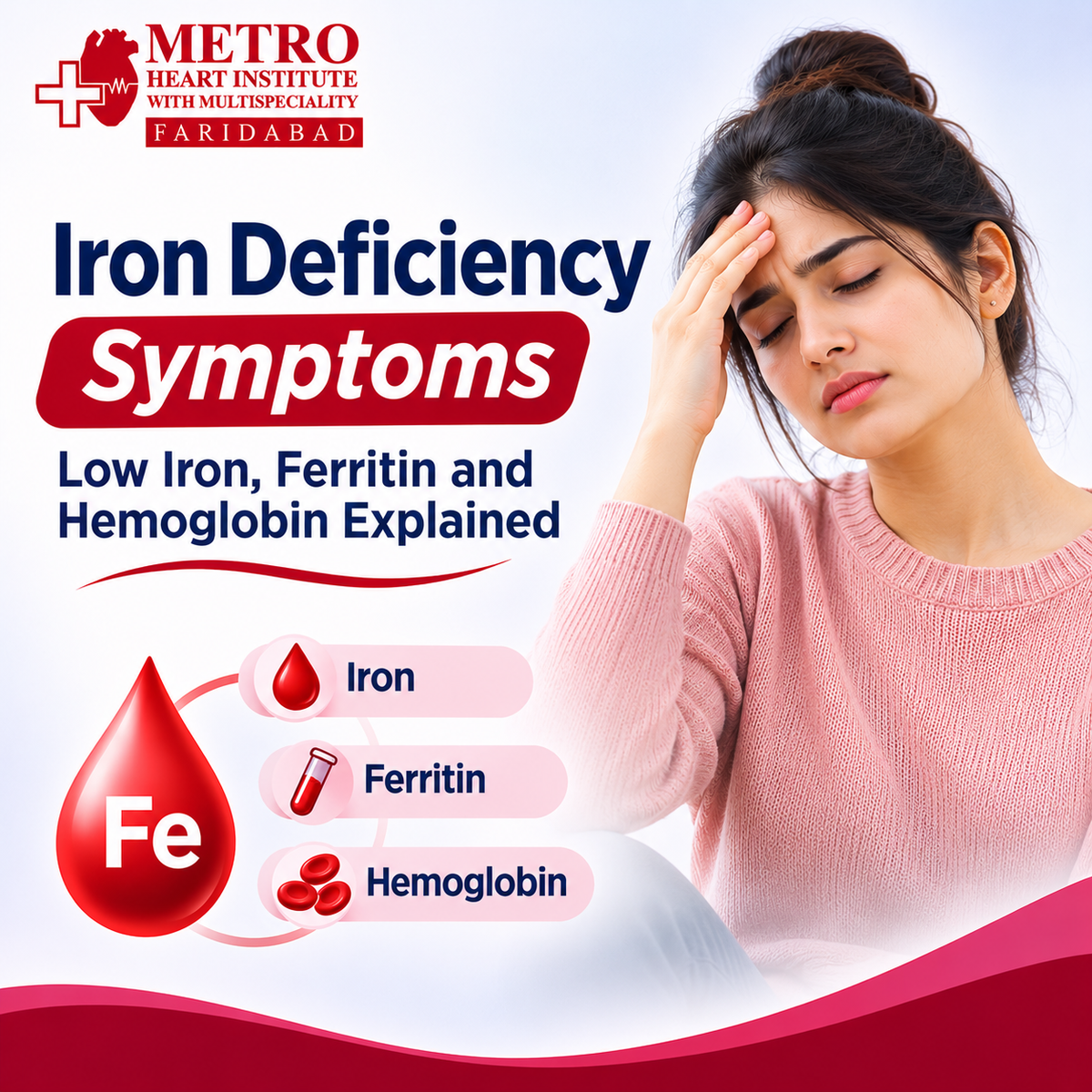
Iron deficiency symptoms can be easy to miss at first. Mild deficiency may cause only tiredness, poor concentration or reduced stamina, while more advanced iron deficiency can lead to dizziness, shortness of breath, pale skin, hair fall, brittle nails, headaches and palpitations.
One reason this topic can be confusing is that low iron, low ferritin and low hemoglobin are related but not exactly the same thing.
A person may develop low ferritin before hemoglobin falls, meaning iron stores can be depleted even before full iron-deficiency anemia appears. Ferritin reflects stored iron, while hemoglobin depends on iron to carry oxygen effectively through the body.
At Metro Hospital, Faridabad, patients with suspected anemia, low hemoglobin or iron deficiency can access diagnostic support through Laboratory Services, which includes hematology and biochemistry testing, and specialist care through the Haematology & BMT Department, which manages iron deficiency anemia and other blood disorders.
This detailed guide explains iron deficiency symptoms, low ferritin, low hemoglobin, common causes, blood-test interpretation, treatment options, iron-rich foods and when to seek medical evaluation.
Iron deficiency happens when the body does not have enough iron to meet its needs.
Iron is essential for:
Iron is needed to make hemoglobin, the protein in red blood cells that carries oxygen from the lungs to tissues throughout the body.
When iron stores begin to fall, the body may first use stored iron.
If deficiency continues, ferritin falls further and eventually hemoglobin production may be affected.
These terms are related but different.
This means the body’s iron stores are low.
A person may have:
at an early stage.
This occurs when iron deficiency becomes significant enough that the body cannot make enough healthy red blood cells or hemoglobin.
Iron deficiency anemia as the most common form of anemia.
Ferritin is a protein that stores iron inside cells.
A ferritin blood test helps estimate how much iron your body has stored.
Ferritin indirectly reflects iron reserves and is often used as part of an iron profile when deficiency is suspected.
Low ferritin often indicates depleted iron stores.
Hemoglobin is the oxygen-carrying protein inside red blood cells.
It helps transport oxygen from the lungs to organs and tissues.
When hemoglobin falls below the normal range, the condition is called anemia.
Mayo Clinic notes that standard hemoglobin ranges are approximately:
although laboratory ranges vary.
Ferritin ranges vary by laboratory.
MedlinePlus gives commonly cited reference ranges of approximately:
However, interpretation depends on:
A ferritin result should therefore be interpreted in clinical context.
This is an important point.
Iron deficiency may develop in stages.
A person can first lose iron stores, causing ferritin to fall.
At this stage:
If iron deficiency continues, hemoglobin may eventually drop and iron deficiency anemia develops.
This is why ferritin can detect iron depletion before anemia becomes obvious.
The symptoms depend on how severe the deficiency is.
Early iron deficiency can be subtle.
Common symptoms include:
Fatigue, weakness, dizziness, pale skin, shortness of breath, headache and heart-rhythm symptoms among common manifestations of iron deficiency anemia.
Fatigue is one of the most common symptoms.
You may feel:
This occurs because reduced hemoglobin may lower oxygen delivery to tissues.
Iron deficiency may cause:
This can be mistaken for stress, lack of sleep or poor fitness.
If hemoglobin falls, the blood carries less oxygen.
The body may compensate by increasing:
You may become breathless while:
MedlinePlus lists shortness of breath among the symptoms of low iron.
Reduced oxygen delivery to the brain may contribute to:
Dizziness among common symptoms of low iron.
Pale skin may become noticeable in:
Pale skin as a common sign of iron deficiency anemia.
Low iron may contribute to:
Headache is listed among the common symptoms of iron deficiency anemia.
The heart may work harder when blood carries less oxygen.
This can cause:
MedlinePlus lists arrhythmia among the possible symptoms of low iron.
Iron deficiency may contribute to hair shedding in some people.
Hair fall alone does not diagnose low iron.
Possible causes of hair loss also include:
Blood testing may help when hair fall occurs with fatigue or other symptoms.
Advanced iron deficiency can affect nail health.
Nails may become:
MedlinePlus list brittle nails among symptoms of iron deficiency anemia.
Restless legs syndrome can occur more frequently in people with low iron stores.
Symptoms include:
MedlinePlus identifies restless legs syndrome as a possible symptom associated with low ferritin and iron deficiency.
People with iron deficiency may feel unusually cold.
Cold hands and feet are among common symptoms.
Iron deficiency can affect:
MedlinePlus lists problems concentrating or thinking among symptoms of iron deficiency anemia.
One unusual but important symptom is pica.
A person may crave:
Craving ice, dirt or clay as a possible feature of iron deficiency anemia.
Iron deficiency may cause:
MedlinePlus lists sore or inflamed tongue among more advanced symptoms.
There are four broad reasons:
Heavy or prolonged periods are one of the most common causes of iron deficiency in women.
Repeated blood loss gradually reduces iron stores.
MedlinePlus identify heavy menstrual bleeding as an important cause.
Women with:
should discuss both iron status and the cause of bleeding with a doctor.
Slow bleeding from the digestive tract may cause iron deficiency.
Possible causes include:
Ulcers, hiatal hernia, colon polyps and colorectal cancer as potential sources of chronic internal blood loss.
Metro Hospital’s Medical Gastroenterology Department provides upper GI endoscopy and colonoscopy for appropriate patients when gastrointestinal bleeding needs investigation.
Pregnancy increases iron requirements.
The body needs additional iron to support:
Pregnant women are therefore at higher risk of iron deficiency.
Iron deficiency can occur when the diet contains insufficient iron.
This may be more likely in people who:
MedlinePlus identifies inadequate dietary iron as a possible cause.
Even if the diet contains enough iron, the body may not absorb it properly.
Possible causes include:
MedlinePlus lists celiac disease, Crohn disease and gastric bypass among conditions associated with poor iron absorption.
Metro Hospital’s Medical Gastroenterology Department also manages malabsorption syndrome and celiac disease.
Frequent blood donation can reduce iron stores in some people.
Regular donors may need periodic monitoring if they develop symptoms.
Some medicines may increase the risk of gastrointestinal bleeding.
MedlinePlus notes that long-term use of aspirin, ibuprofen or blood-thinning medicines can contribute to chronic blood loss.
This distinction is important for understanding test results.
| Test | What It Reflects | What a Low Result May Mean |
|---|---|---|
| Serum Iron | Iron circulating in blood | May suggest low available iron |
| Ferritin | Stored iron | Low iron reserves |
| Hemoglobin | Oxygen-carrying protein | Anemia if below normal |
| TIBC | Iron-binding capacity | Often rises in iron deficiency |
| Transferrin Saturation | Percentage of transferrin carrying iron | Often falls with iron deficiency |
A doctor usually interprets these results together.
Serum iron measures the amount of circulating iron in the blood.
It can vary during the day and may be affected by:
This is why serum iron alone is not usually enough to diagnose iron deficiency.
TIBC stands for:
It measures the blood’s ability to bind and transport iron.
In iron deficiency:
These tests can help clarify the diagnosis.
Transferrin is the protein that carries iron in the bloodstream.
Transferrin saturation indicates how much of that protein is actually carrying iron.
A low value may support iron deficiency.
A low ferritin generally suggests low iron stores.
MedlinePlus explains that lower-than-normal ferritin may indicate iron deficiency anemia or another condition related to low iron.
However, ferritin can behave differently during inflammation.
Sometimes.
Ferritin is also an acute-phase reactant, meaning it can rise during:
MedlinePlus notes that ferritin can be elevated in inflammatory conditions and liver disease.
Therefore, a normal or high ferritin does not always completely rule out iron deficiency in someone with inflammation.
Low hemoglobin means anemia is present.
However, not all anemia is caused by iron deficiency.
Other causes include:
This is why a CBC plus iron studies may be needed.
Doctors may order:
MedlinePlus lists CBC, serum iron, TIBC and ferritin among the tests commonly used for iron deficiency anemia.
Metro Hospital’s Laboratory Services include hematology, biochemistry, clinical pathology and related testing, with round-the-clock diagnostic services.
MCV stands for:
It reflects the average size of red blood cells.
Iron deficiency anemia often causes red blood cells to become:
Red blood cells are often smaller and paler than usual in iron deficiency anemia.
Finding the underlying cause is essential.
Depending on age, sex and symptoms, further tests may include:
When blood tests show iron deficiency anemia, particularly when gastrointestinal or menstrual blood loss is suspected.
Women are particularly vulnerable because of:
Symptoms may include:
Women with heavy periods should not simply keep taking iron indefinitely without finding the reason for ongoing blood loss.
Iron deficiency in adult men deserves careful evaluation because there is usually no regular physiological blood loss.
Doctors may look for:
Persistent unexplained iron deficiency in men should not be ignored.
In older adults, possible causes include:
Unexplained iron deficiency may sometimes require gastrointestinal investigation.
Yes, low iron may contribute to increased hair shedding in some individuals.
However, hair loss is not specific to iron deficiency.
Other causes should also be considered.
Iron deficiency can cause palpitations because the heart may beat faster to compensate for reduced oxygen delivery.
Some people may interpret this sensation as anxiety.
Persistent palpitations still require medical evaluation.
Severe anemia can increase strain on the heart and may cause chest discomfort in susceptible individuals.
Chest pain and fast heartbeat among possible iron deficiency anemia symptoms.
Chest pain should never automatically be assumed to be caused by anemia.
Treatment depends on:
Oral iron is commonly used.
MedlinePlus notes that ferrous sulfate is often prescribed and that oral treatment may improve anemia over several weeks, while therapy may need to continue longer to rebuild iron stores.
Possible side effects include:
Do not start high-dose iron without medical advice.
IV iron may be considered when:
A doctor decides whether this is appropriate.
Blood transfusion is not routinely used for simple iron deficiency.
It may be considered in severe or symptomatic anemia depending on clinical condition.
Dietary iron sources include:
MedlinePlus lists meat, lentils, beans, spinach, kidney beans, peas and fortified products among useful dietary iron sources.
Vitamin C can improve absorption of non-heme iron from plant foods.
Useful sources include:
MedlinePlus specifically notes that vitamin C helps the body absorb iron.
Tea and coffee contain compounds that can reduce non-heme iron absorption when consumed close to meals.
People with deficiency may benefit from separating them from iron-rich meals or supplements.
Sometimes mild deficiency may improve with dietary changes.
However, significant iron deficiency or iron deficiency anemia often requires supplements and investigation of the cause.
Diet alone is not always sufficient.
It is better not to self-treat persistent fatigue with iron supplements without confirmation.
Too much iron can be harmful, so professional assessment is recommended before taking iron supplements.
The timeline varies.
Anemia often improves after several weeks of treatment, but iron therapy may need to continue for months to rebuild iron stores.
Follow-up testing may include:
Seek medical evaluation if you have:
These symptoms may indicate anemia or another medical condition.
If iron deficiency is caused by blood loss from the digestive tract, the source needs to be identified.
Possible clues include:
Metro Hospital’s Medical Gastroenterology Department provides endoscopic evaluation for GI bleeding, including upper GI endoscopy and colonoscopy when clinically indicated.
Patients with persistent anemia, low hemoglobin or suspected iron deficiency can seek evaluation through the Haematology & BMT Department at Metro Hospital, Faridabad.
The department provides diagnosis and management of:
Metro Hospital’s Laboratory Services include:
The laboratory is NABL accredited and operates round the clock.
These facilities can support investigation of:
Patients with fatigue, weakness, dizziness or unexplained anemia can also begin evaluation through the Internal Medicine Department.
Internal medicine specialists can assess broader causes of anemia and coordinate referral to:
depending on the suspected cause.
False.
Other causes include B12 deficiency, chronic disease, kidney disease and blood disorders.
False.
Ferritin may be low before hemoglobin falls.
False.
Excess iron can be harmful and may damage organs.
False.
Men and older adults can also develop iron deficiency, often because of blood loss or malabsorption.
False.
Moderate or severe deficiency often requires supplementation and investigation of the underlying cause.
Common symptoms include fatigue, weakness, dizziness, shortness of breath, pale skin, headache, palpitations and poor concentration.
Low ferritin usually indicates reduced iron stores and may occur before hemoglobin becomes low.
Yes. This may represent early iron deficiency before anemia develops.
Low hemoglobin means anemia is present, but further tests are needed to identify the cause.
Yes, iron deficiency may contribute to hair shedding in some people, though other causes should also be considered.
Yes. Low hemoglobin reduces oxygen-carrying capacity and may cause breathlessness.
Heavy periods, pregnancy and inadequate dietary intake are common causes.
Possible causes include gastrointestinal blood loss, poor absorption and dietary deficiency.
Common tests include CBC, hemoglobin, ferritin, serum iron, TIBC and transferrin saturation.
Patients can seek evaluation through the Haematology & BMT Department, Laboratory Services and Internal Medicine Department at Metro Hospital, Faridabad.
Iron deficiency symptoms can range from mild fatigue and reduced concentration to shortness of breath, dizziness, palpitations, hair fall and brittle nails.
The key difference between the main blood markers is:
Low ferritin may appear before hemoglobin falls, while low hemoglobin indicates anemia.
The most common causes of iron deficiency include:
MedlinePlus emphasise that treatment should not focus only on replacing iron—the underlying cause should also be identified.
At Metro Hospital, Faridabad, patients with low hemoglobin, low ferritin or suspected anemia can access diagnostic testing through Laboratory Services and specialist care through the Haematology & BMT Department. Patients with suspected gastrointestinal blood loss can also be evaluated through Medical Gastroenterology.
Do not self-treat persistent fatigue with iron supplements without testing. The right approach is to confirm the deficiency, identify why it happened and treat both the deficiency and its underlying cause.
Disclaimer: This article is intended for general health education only. Iron, ferritin and hemoglobin reference ranges vary by laboratory and patient factors. Do not start iron supplements without medical advice, especially if the cause of low iron has not been established.