Appointment
 Find A Doctor
 Lab Report
Stomach Pain Location Chart: What Pain in Different Areas May Mean
Nov 20, 2026
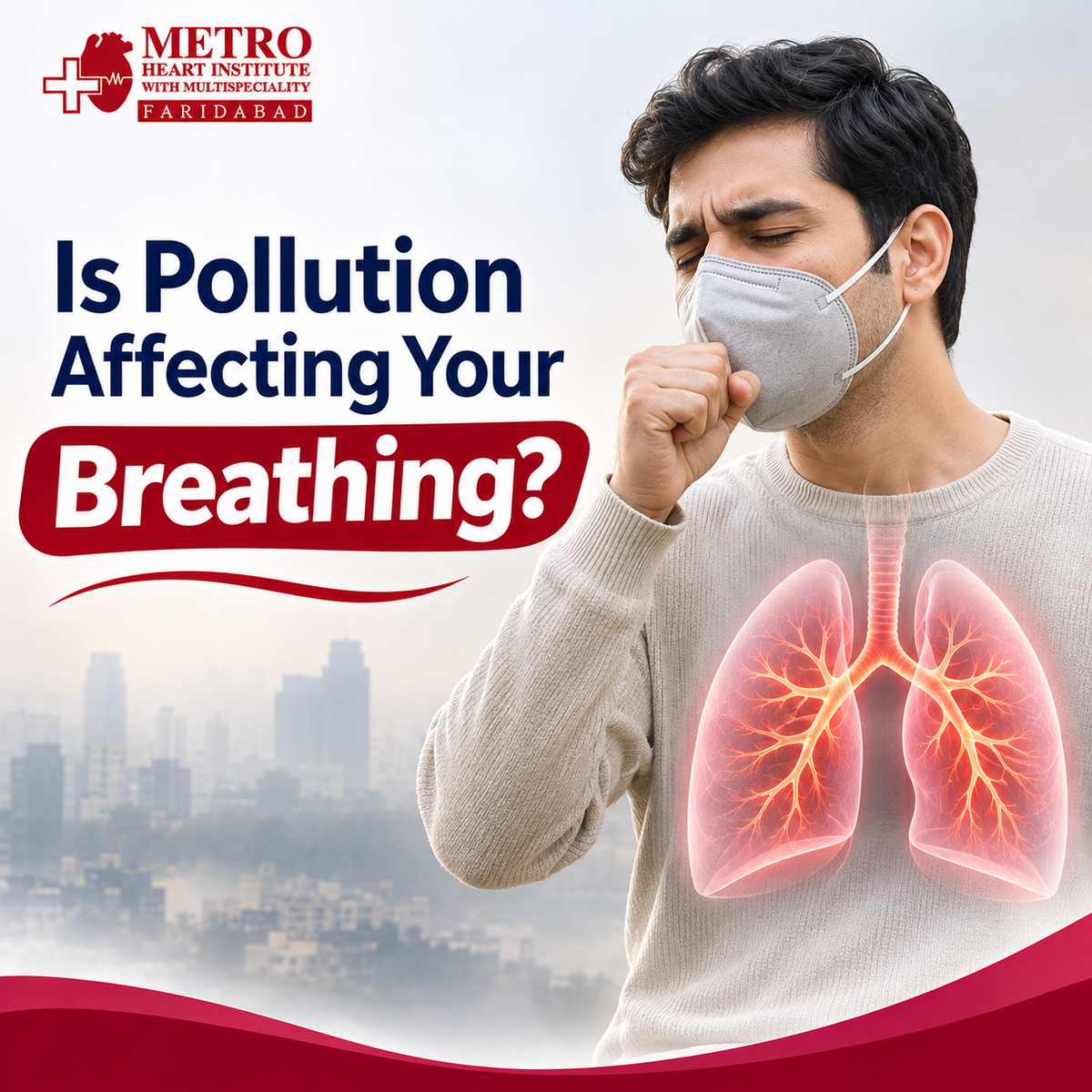
Is pollution affecting your breathing? If you have noticed more coughing, wheezing, throat irritation, chest tightness or shortness of breath during periods of poor air quality, air pollution may be contributing to your symptoms.
This is especially relevant in Delhi-NCR and Faridabad, where seasonal smog, traffic emissions, construction dust, industrial pollution and weather conditions can combine to worsen outdoor air quality. However, breathing problems should never automatically be blamed on pollution alone. Similar symptoms can occur with asthma, COPD, pneumonia, allergies, heart disease and other medical conditions.
Air pollution contains a mixture of harmful substances including PM2.5, PM10, ozone, nitrogen dioxide, sulphur dioxide and carbon monoxide. WHO notes that fine particulate matter can penetrate deeply into the lungs, while the smallest particles may even cross into the bloodstream and affect other organs.
At Metro Hospital, Faridabad, people with pollution-related cough, wheezing, respiratory allergies or unexplained breathlessness can seek specialist evaluation through the Metro Centre for Respiratory Diseases (MCRD), which provides respiratory medicine, allergy care, advanced lung-function testing, pulmonary rehabilitation and respiratory critical care.
This detailed guide explains how pollution affects your breathing, the warning signs to look for, who is most vulnerable, how pollution can worsen asthma and COPD, what PM2.5 means, how lung function is tested, and what you can do to reduce your exposure.
Every breath carries air through the:
When the air contains high concentrations of pollutants, these substances come into direct contact with the respiratory tract.
WHO explains that PM10 particles can penetrate deep into the lungs, while PM2.5 particles are small enough to cross the lung barrier and enter the bloodstream. Pollutants such as ozone, nitrogen dioxide and sulphur dioxide can contribute to airway irritation, asthma, bronchial symptoms and reduced lung function.
Depending on the level and duration of exposure, pollution may trigger:
Repeated long-term exposure is also linked with serious respiratory disease. WHO identifies COPD, lung cancer and respiratory infections among important health outcomes associated with air pollution.
A cough is one of the most common ways the respiratory system responds to irritation.
Polluted air may irritate the:
This can cause a dry cough or increased mucus production.
A cough that appears mainly on high-pollution days may suggest an environmental trigger.
However, you should seek medical assessment if your cough:
Metro Hospital’s respiratory programme specifically recommends specialist evaluation for persistent cough and chronic respiratory symptoms.
If walking, climbing stairs or normal daily activity suddenly feels more difficult during poor air quality, pollution may be irritating your lungs.
Breathlessness can occur when air pollution contributes to:
You may feel:
Breathlessness is also a symptom of asthma, COPD, infection and heart disease.
Sudden or severe shortness of breath requires urgent medical attention.
Wheezing is a high-pitched or whistling sound during breathing.
It occurs when air moves through narrowed airways.
Pollution can trigger wheezing, particularly in people with:
Repeated wheezing should be evaluated rather than simply treated as “seasonal pollution.”
The Pulmonology, Respiratory & Sleep Medicine Department at Metro Hospital evaluates asthma, COPD, respiratory allergies and other lung conditions and provides pulmonary-function testing where indicated.
Pollution exposure may produce a sensation of:
This may occur because irritated airways become narrower.
However, chest tightness should be taken seriously because cardiac conditions can cause similar symptoms.
Seek urgent assessment if chest discomfort is:
Polluted air often irritates the upper airway before more obvious lung symptoms appear.
You may experience:
This may occur after exposure to:
If symptoms continue even when air quality improves, other causes such as allergies, infection or reflux may need evaluation.
Airway irritation can stimulate mucus production.
You may notice:
People with chronic bronchitis or COPD may notice a particularly clear increase in sputum during polluted periods.
Pollution may make ordinary physical activity feel harder.
You may notice:
This is an important symptom because many people unconsciously reduce activity instead of recognising that their breathing has changed.
Metro Hospital’s MCRD provides exercise-based respiratory assessment and functional testing, including Six Minute Walk Testing and Cardiopulmonary Exercise Testing for appropriate patients.
Air pollution is an important asthma trigger.
WHO notes that ozone can cause or worsen asthma, while nitrogen dioxide and sulphur dioxide can contribute to bronchial symptoms and lung inflammation.
A person with asthma may notice:
If you are needing your reliever medication more often than usual, speak with your doctor.
You can also read Metro Hospital’s detailed guide on Asthma Signs and Symptoms.
People with COPD are particularly vulnerable to poor air quality.
Pollution can worsen:
and may contribute to exacerbations requiring medical treatment.
WHO identifies COPD among the diseases strongly associated with air-pollution exposure.
Metro Hospital’s World COPD Day 2026 guide also discusses COPD symptoms, diagnosis, pulmonary rehabilitation and respiratory specialist care.
Long-term exposure to poor-quality air may increase vulnerability to respiratory illness.
WHO lists acute respiratory infections among important health outcomes associated with air pollution.
You should consider medical evaluation if you experience:
PM2.5 means particulate matter measuring 2.5 micrometres or smaller.
These particles are extremely small.
WHO explains that PM2.5 can:
Common sources include:
PM10 refers to particles measuring 10 micrometres or less.
They are larger than PM2.5 but still small enough to enter the respiratory tract and lodge deep in the lungs.
WHO notes that PM10 exposure can contribute to irritation and inflammation of the respiratory lining.
No.
Air pollution can also occur indoors.
Sources may include:
WHO specifically includes indoor air pollution and second-hand smoke among important health concerns.
Good indoor air quality matters as much as reducing outdoor pollution.
Pollution can affect anyone, but some groups are more vulnerable.
These include:
WHO notes that children, older adults and people who are already ill may experience greater health effects from pollution exposure.
Children breathe more air relative to their body size and their lungs are still developing.
Pollution exposure may worsen:
Children with recurrent symptoms during high-pollution periods should be evaluated by a paediatrician or respiratory specialist.
Asthma involves sensitive airways that can become inflamed and narrowed.
Pollution may trigger:
Asthma patients should:
Do not stop preventive inhalers simply because symptoms improve temporarily.
COPD includes:
Pollution can aggravate COPD symptoms and increase the likelihood of exacerbations.
People with COPD should be particularly cautious during high-pollution periods and should follow their respiratory treatment plan consistently.
The Metro Centre for Respiratory Diseases provides comprehensive COPD care, including pulmonary rehabilitation, respiratory-function assessment, and critical-care support.
Long-term air pollution exposure is associated with increased lung-cancer risk.
WHO includes lung cancer among major diseases linked with air pollution.
This does not mean that everyone exposed to pollution will develop cancer.
Individual risk depends on:
Persistent cough, blood in sputum and unexplained weight loss should always be investigated.
Yes.
Smoking is a major respiratory risk factor, but polluted air can affect non-smokers as well.
WHO recognises outdoor air pollution as an independent risk factor for respiratory and cardiovascular disease.
A non-smoker with recurrent:
should not assume the symptoms are harmless.
Short-term exposure may cause temporary airway irritation.
Long-term repeated exposure may contribute to:
WHO emphasises both short-term and long-term health consequences of pollution exposure.
The risk depends on how much pollution you are exposed to and for how long.
You cannot eliminate all pollution exposure, but you can reduce it.
Air Quality Index information can help you decide when to reduce outdoor activity.
On poor air-quality days:
Exercise increases breathing rate.
This means you inhale more air—and potentially more pollutants.
During severe pollution, consider:
A well-fitting particulate-filtering mask may reduce inhalation of fine particles during necessary outdoor exposure.
Loose cloth masks are not designed to filter fine particulate pollution effectively.
When outdoor pollution is extremely high, keeping windows closed for part of the day may reduce indoor exposure.
However, ventilation requirements still vary depending on indoor air quality and other factors.
Avoid:
A suitable purifier with effective particulate filtration may reduce indoor PM levels.
However, an air purifier cannot make outdoor exposure harmless or eliminate every indoor pollutant.
People with asthma or COPD should continue medicines as directed.
Do not change inhaler doses independently because pollution is high.
Hydration may help reduce throat dryness and keep mucus less thick.
However, drinking water does not “wash pollution out of the lungs.”
No.
Steam may temporarily soothe:
but it does not remove PM2.5 or other pollutants from deep lung tissue.
Very hot steam may also cause burns.
No scientifically established drink removes pollution particles from the lungs.
A nutritious diet supports general health, but it should not be marketed as a “lung detox.”
Consider specialist evaluation if you have:
Metro Hospital’s MCRD specifically recommends respiratory specialist assessment for persistent cough, repeated wheezing, breathlessness, chest tightness, excess sputum and reduced exercise tolerance.
Your doctor may assess:
Depending on symptoms, investigations may include:
Spirometry measures:
It is commonly used to evaluate:
Metro Hospital’s MCRD provides spirometry as part of its specialised respiratory diagnostic programme.
More detailed lung testing may assess:
At MCRD, available respiratory diagnostics include:
FeNO measures exhaled nitric oxide and can help assess certain patterns of airway inflammation, particularly in asthma.
MCRD includes FeNO testing among its specialised respiratory diagnostic services.
Patients experiencing breathing symptoms associated with pollution can access comprehensive care through the Metro Centre for Respiratory Diseases (MCRD).
The centre provides:
and manages conditions including:
Dr. Deepak Talwar is Chairman – Metro Centre for Respiratory Diseases and Senior Consultant – Pulmonology, Respiratory Sleep Medicine & MCRD Allergy Clinic at Metro Hospital, Faridabad.
His current Metro profile highlights around four decades of experience and expertise in:
Dr. Talwar established the Metro Centre for Respiratory Diseases in 1999.
Dr. Hemant Goel is Director & HOD – Respiratory & Sleep Medicine at Metro Hospital, Faridabad.
His listed expertise includes:
Patients with pollution-triggered wheezing, breathlessness or chronic cough may require pulmonary-function testing and specialist evaluation to determine whether asthma, COPD or another respiratory disorder is present.
Seek urgent medical care if you experience:
These symptoms should not be managed at home simply because air pollution is high.
False.
Healthy people may also develop throat irritation, cough or reduced exercise tolerance during severe pollution.
False.
Outdoor air pollution is itself a recognised respiratory health risk.
False.
Steam may soothe symptoms but does not remove fine particles from deep lung tissue.
False.
Protection depends on mask fit and filtration performance.
Not necessarily.
Persistent symptoms may indicate:
Possible signs include cough, wheezing, shortness of breath, chest tightness, throat irritation and reduced exercise tolerance.
Yes. Pollution may irritate and narrow the airways, worsening conditions such as asthma and COPD.
PM2.5 refers to particulate matter measuring 2.5 micrometres or less. These particles can penetrate deep into the lungs and may enter the bloodstream.
Yes. Pollutants, including ozone, nitrogen dioxide, and sulphur dioxide, can worsen asthma and bronchial symptoms.
Yes. Air pollution is linked with COPD and can contribute to worsening respiratory symptoms and exacerbations.
Intense outdoor exercise may increase the amount of polluted air inhaled. It is often sensible to reduce strenuous outdoor activity during periods of severe pollution.
No. It may soothe the upper airways but does not remove PM2.5 from the lungs.
Spirometry is often one of the first tests used to assess airflow. More detailed pulmonary-function testing may be needed depending on symptoms.
Seek evaluation for persistent cough, wheezing, breathlessness, repeated chest infections or worsening asthma/COPD symptoms.
Patients can seek specialist evaluation through the Metro Centre for Respiratory Diseases at Metro Hospital, Faridabad, which provides advanced respiratory diagnostics, allergy care, pulmonary interventions and rehabilitation.
So, is pollution affecting your breathing?
It may be, particularly if respiratory symptoms become worse during poor air-quality periods.
Important warning signs include:
Air pollution is more than a temporary irritation.
WHO identifies it as an important risk factor for COPD, respiratory infections, lung cancer, cardiovascular disease and stroke.
During periods of severe pollution, reduce unnecessary exposure, avoid strenuous outdoor exercise, minimise indoor smoke and continue prescribed respiratory treatment.
Most importantly, do not normalise persistent cough or breathlessness simply because pollution is common in Delhi-NCR.
At Metro Hospital, Faridabad, patients with chronic cough, wheezing, asthma, COPD, respiratory allergies or unexplained breathlessness can seek specialist care through the Metro Centre for Respiratory Diseases, supported by advanced lung-function testing, respiratory rehabilitation and critical-care services.
Patients can also consult Dr. Deepak Talwar, Chairman – Metro Centre for Respiratory Diseases, or Dr. Hemant Goel, Director & HOD – Respiratory & Sleep Medicine, for specialist respiratory evaluation.
Disclaimer: This article is intended for general health education only. Sudden or severe breathlessness, bluish lips, chest pain, coughing blood, confusion or rapidly worsening respiratory symptoms require urgent medical attention.