Appointment
 Find A Doctor
 Lab Report

Is Pollution Affecting Your Breathing? Warning Signs, Lung Risks and How to Protect Yourself
Nov 20, 2026
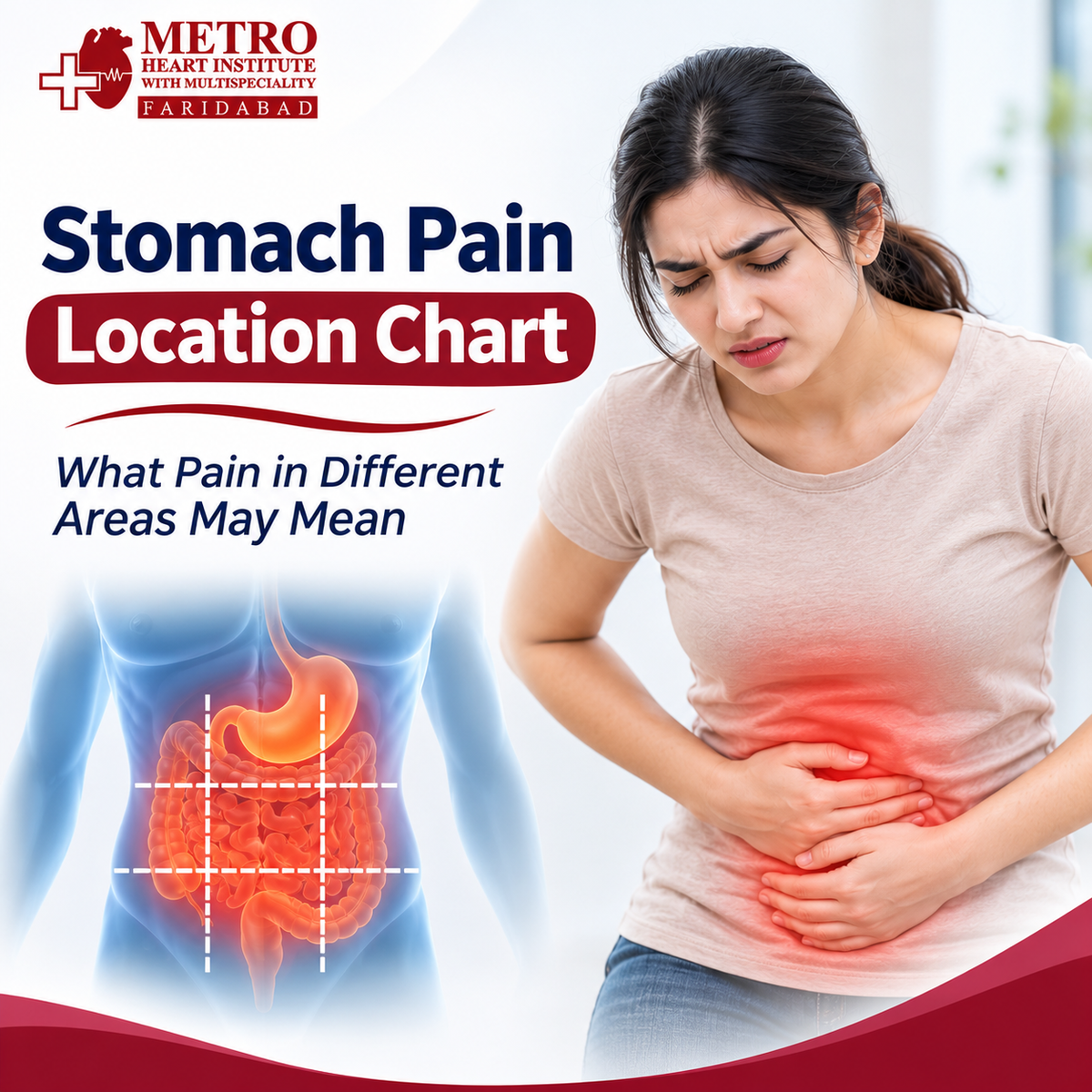
Stomach pain location can provide useful clues about what may be causing discomfort, although pain location alone cannot confirm a diagnosis. The abdomen contains several organs—including the stomach, liver, gallbladder, pancreas, intestines, kidneys, appendix and reproductive organs—so pain in different areas may point toward different conditions.
For example, upper-right abdominal pain may be associated with the gallbladder or liver, upper-left pain may occur with gastritis or pancreatic problems, and lower-right pain is commonly associated with appendicitis. However, gas, constipation, muscle strain and indigestion can also cause abdominal pain in several locations.
Abdominal pain may be mild or severe, sudden or chronic, and both the location and pattern of pain can help guide diagnosis.
At Metro Hospital, Faridabad, patients with persistent stomach pain, abdominal discomfort, bloating, reflux, altered bowel habits or suspected liver, gallbladder, pancreatic or intestinal problems can seek evaluation through the Medical Gastroenterology Department. The department evaluates conditions affecting the oesophagus, stomach, intestines, liver, pancreas, gallbladder and bile ducts.
This detailed guide explains a stomach pain location chart, common causes of pain in different parts of the abdomen, warning signs, when tests may be needed and when abdominal pain requires emergency medical attention.
The abdomen can be divided into several broad areas.
| Pain Location | Possible Causes |
|---|---|
| Upper right abdomen | Gallstones, gallbladder inflammation, hepatitis, liver conditions, bile-duct problems |
| Upper middle abdomen | Gastritis, acid reflux, peptic ulcer, pancreatitis |
| Upper left abdomen | Gastritis, stomach ulcer, pancreatitis, spleen-related conditions |
| Middle abdomen | Gas, indigestion, early appendicitis, bowel problems |
| Right side | Kidney stone, gallbladder disease, bowel conditions |
| Left side | Gas, constipation, diverticular disease |
| Lower right abdomen | Appendicitis, bowel inflammation, ovarian conditions in women |
| Lower middle abdomen | Bladder problems, bowel conditions, pelvic disorders |
| Lower left abdomen | Diverticulitis, constipation, bowel inflammation |
| Generalised abdominal pain | Gas, gastroenteritis, IBS, food poisoning, bowel obstruction |
This chart is only a general guide. Several conditions can cause pain in more than one area.
Different organs are located in different regions of the abdomen.
For example:
Serious causes of abdominal pain can sometimes be narrowed down by location.
However, pain may also radiate, meaning the problem begins in one organ but is felt somewhere else.
Pain in the upper-right abdomen, below the ribs, may involve the:
Gallstones are a common cause of sudden upper-right abdominal pain.
Pain may:
If a gallstone blocks the bile duct, jaundice may also occur.
Metro Hospital’s Medical Gastroenterology Department evaluates biliary stone disease and obstructive jaundice, while the Surgical Gastroenterology Department provides laparoscopic and hepatobiliary surgical treatment where required.
Gallbladder inflammation, or cholecystitis, can cause:
Gallstones and gallbladder inflammation are among the recognised causes of upper-right abdominal pain.
Liver-related causes may include:
Pain may be accompanied by:
Pain in the upper centre of the abdomen, just below the breastbone, is often related to the stomach, duodenum or pancreas.
Gastritis is inflammation of the stomach lining.
Symptoms may include:
A peptic ulcer may cause dull or burning pain in the upper abdomen.
NIDDK notes that peptic-ulcer pain may occur anywhere between the belly button and breastbone and may be associated with bloating, nausea or early fullness.
Acid reflux may cause:
Indigestion may also cause:
Metro Hospital’s Medical Gastroenterology Department evaluates acid reflux, gastritis, peptic ulcers and persistent abdominal discomfort.
The upper-left abdomen contains parts of the:
Upper-left pain can occur with stomach inflammation or ulcer disease.
Symptoms may include:
Pancreatitis can cause severe upper abdominal pain that may extend to the back.
Other symptoms may include:
Pancreatitis is among the potential causes of upper abdominal pain.
Metro Hospital’s Gastroenterology Department also manages acute and chronic pancreatitis.
Pain around the navel or central abdomen can arise from several conditions.
Trapped gas may cause:
Viral or bacterial gastroenteritis may cause:
Appendicitis may initially begin with pain near the belly button before moving to the lower-right abdomen.
This change in location is an important warning sign.
Pain in the lower-right abdomen is often associated with the appendix, bowel or pelvic organs.
Appendicitis is one of the most important causes of lower-right abdominal pain.
Typical symptoms may include:
Appendicitis among important acute causes of abdominal pain and specifically identifies lower-right pain as a possible presentation.
Appendicitis usually requires urgent surgical assessment.
At Metro Hospital, the Surgical Gastroenterology Department and Advanced Laparoscopic Surgery Department provide laparoscopic treatment for appendicitis when clinically indicated.
The lower-left abdomen contains part of the colon and, in women, pelvic reproductive structures.
Diverticulitis is inflammation of small pouches that can form in the colon.
Diverticulitis and diverticulosis are possible causes of lower-left abdominal pain.
Symptoms may include:
Constipation can cause pain anywhere in the lower abdomen but may be more noticeable on the left.
Other symptoms include:
Pain in the lower centre of the abdomen may involve the:
Possible causes include:
Bladder inflammation, IBS, inflammatory bowel disease and hernia are among the possible causes of lower abdominal pain.
Pain along the right side of the abdomen may come from several areas.
Possible causes include:
If the pain begins in the back or flank and travels toward the groin, a kidney stone may be more likely.
Left-sided pain may occur with:
Persistent left-sided pain accompanied by fever or changes in bowel habits should be evaluated.
Sometimes pain is spread across much of the abdomen.
Common causes include:
Common non-serious causes of abdominal pain include gas, indigestion and pulled muscles.
However, generalised severe pain can also occur with:
Stomach pain after eating can occur with:
Post-meal abdominal pain may be associated with indigestion, trapped gas, constipation, food allergies or food poisoning.
Pain after fatty meals, especially in the upper-right abdomen, can suggest gallbladder disease.
The pain may appear:
Burning pain in the upper abdomen may be associated with:
Metro Hospital specifically lists abdominal pain or burning related to ulcer disease among reasons to consult a gastroenterologist.
Cramping pain commonly occurs with:
If cramping becomes severe or is associated with inability to pass stool or gas, bowel obstruction should be considered.
Pain with bloating may occur with:
Metro Hospital’s Medical Gastroenterology Department evaluates dyspepsia, gas, bloating and abdominal distension.
Possible causes include:
Persistent diarrhoea accompanied by:
Should be medically assessed.
Constipation-related pain is often:
Chronic constipation may need evaluation if accompanied by:
Vomiting can occur with:
Persistent vomiting with severe abdominal pain is a warning sign.
Fever suggests inflammation or infection.
Possible causes include:
Pain with high fever deserves prompt evaluation.
Blood in stool should never be ignored.
Possible causes include:
Metro Hospital’s Gastroenterology Department manages GI bleeding and provides colonoscopy and endoscopic treatment when clinically appropriate.
Black, tarry stool can indicate bleeding from the upper gastrointestinal tract.
Possible causes include:
This requires prompt medical evaluation.
Seek emergency care if abdominal pain is associated with:
These are reasons to seek urgent or emergency medical attention.
Metro Hospital provides 24×7 Emergency & Trauma Services for acute and critical medical conditions.
Diagnosis depends on:
Doctors may recommend:
Upper GI endoscopy may be recommended for:
Metro Hospital provides upper GI endoscopy through its Medical Gastroenterology Department.
Colonoscopy may be recommended for:
Metro Hospital provides full colonoscopy, ileoscopy and lower GI biopsy services where clinically indicated.
Patients with recurrent or unexplained stomach pain can seek specialist care through the Medical Gastroenterology Department at Metro Hospital, Faridabad.
The department manages:
Diagnostic services include:
Dr. Vishal Khurana is Director & HOD – Gastroenterology & Hepatobiliary Sciences at Metro Hospital, Faridabad.
His expertise includes:
His current Metro profile states that patients with persistent acidity, reflux, bloating, and abdominal discomfort can seek a gastroenterology evaluation.
When abdominal pain is caused by a condition requiring surgery, patients may be evaluated through the Surgical Gastroenterology Department.
The department provides treatment for:
and offers laparoscopic and minimally invasive surgical procedures.
No.
A stomach pain location chart helps you understand possible causes, but location alone is not enough.
Doctors also consider:
The same location can be affected by several different conditions.
False.
Upper abdominal pain can also occur with ulcers, gallstones or pancreatitis.
False.
Appendicitis is important to consider, but other bowel, urinary and pelvic conditions can cause similar pain.
False.
Trapped gas can cause significant discomfort, although severe or persistent pain should still be assessed.
False.
Conditions such as ulcers, bowel obstruction or pancreatitis may occur without fever initially.
Not always.
Intermittent pain can occur with gallstones, ulcers and other conditions.
Possible causes include gallstones, gallbladder inflammation, hepatitis and other liver or biliary conditions.
Common causes include gastritis, peptic ulcer, acid reflux and pancreatic conditions.
Gas, gastroenteritis and early appendicitis are possible causes.
Appendicitis is an important cause, particularly when pain progressively worsens or moves from the navel to the lower right.
Diverticulitis, constipation and bowel conditions are common possibilities.
Yes. Gas pain can move and may be felt in the upper, middle or lower abdomen.
Severe pain, persistent vomiting, fever, blood in stool, black stool, abdominal swelling or rapidly worsening pain requires medical assessment.
There is no single best test. Depending on symptoms, doctors may recommend blood tests, ultrasound, CT, endoscopy or colonoscopy.
A gastroenterologist is usually appropriate for persistent digestive or abdominal symptoms.
Patients can seek evaluation through the Medical Gastroenterology Department at Metro Hospital, Faridabad, with Surgical Gastroenterology and 24×7 Emergency care available when required.
A stomach pain location chart can provide useful clues, but abdominal pain should always be interpreted along with other symptoms.
In general:
Abdominal pain can range from minor gas or indigestion to conditions requiring urgent treatment, and that location, pattern and duration all help guide diagnosis.
At Metro Hospital, Faridabad, patients with persistent or unexplained abdominal pain can consult the Medical Gastroenterology Department for evaluation of stomach, intestinal, liver, pancreatic and gallbladder conditions.
Patients requiring operative treatment can be referred to the Surgical Gastroenterology Department, while severe or sudden abdominal pain can be managed through 24×7 Emergency Services.
Seek urgent medical attention if stomach pain is severe, rapidly worsening or accompanied by vomiting blood, black or bloody stools, high fever, persistent vomiting, significant abdominal swelling or difficulty breathing.
Disclaimer: This article is intended for general health education only. A stomach pain location chart cannot diagnose the cause of abdominal pain. Persistent, severe or unexplained symptoms should be evaluated by a qualified healthcare professional.