Appointment
 Find A Doctor
 Lab Report

H1N1 (Swine Flu) in India: Symptoms, Causes, Prevention, Treatment and When to See a Doctor
Aug 27, 2026
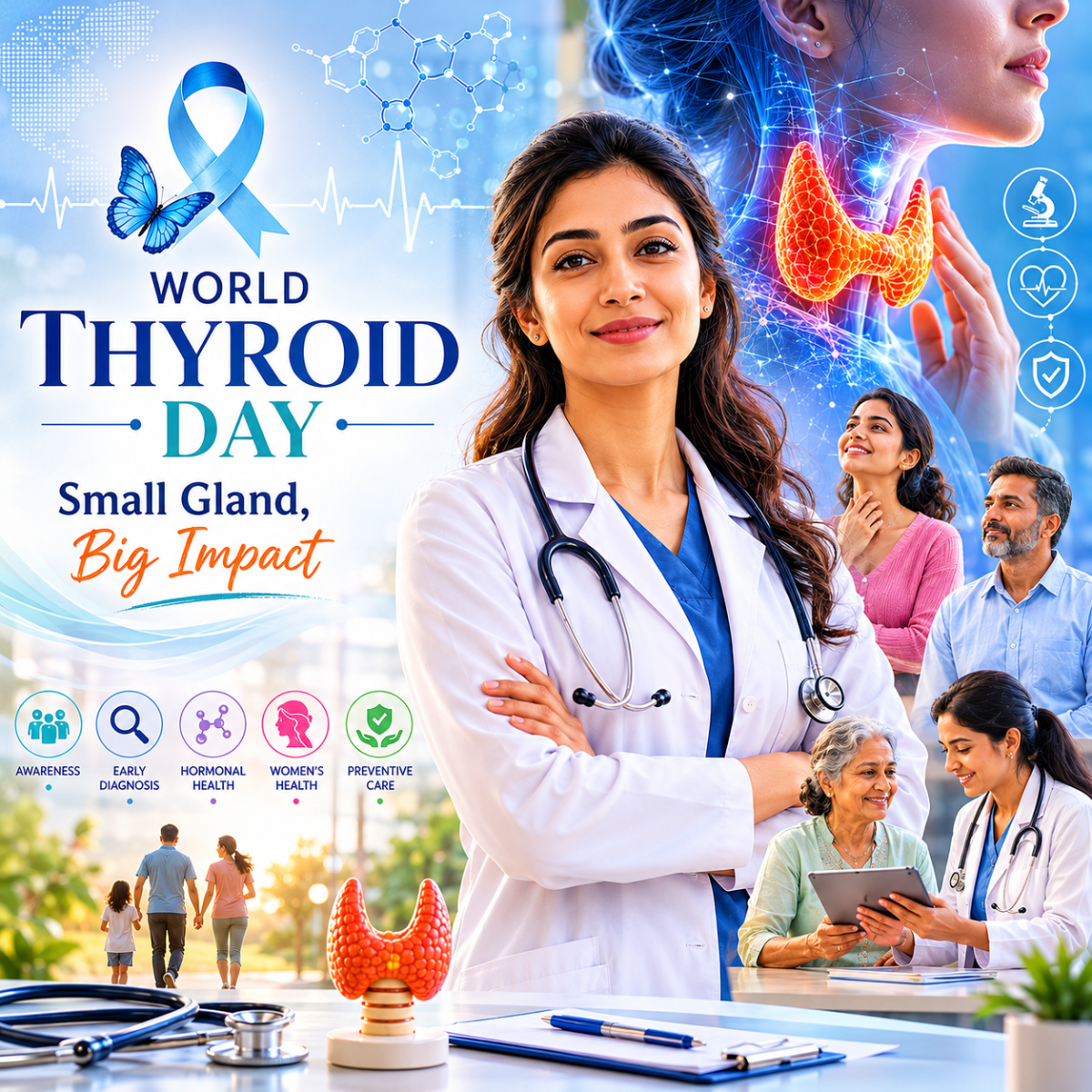
Every year on May 25, the world observes World Thyroid Day to raise awareness about thyroid disorders, early diagnosis, and the importance of lifelong hormonal health. Despite being a small butterfly-shaped gland located in the neck, the thyroid controls some of the body’s most essential functions — metabolism, heart rate, temperature regulation, fertility, mood, digestion, and energy levels.
Yet, millions of people continue to ignore the early warning signs of thyroid dysfunction until it begins affecting their quality of life.
In India, thyroid disorders are emerging as one of the most common endocrine health problems. Experts estimate that nearly 42 million Indians suffer from some form of thyroid disease, while a large number remain undiagnosed. Women, particularly during pregnancy, postpartum years, and menopause, are disproportionately affected.
At Metro Hospital Faridabad, we believe awareness is the first step toward prevention and early treatment. On this World Thyroid Day, it is important to understand how thyroid disorders affect the body, why India is witnessing a rise in cases, and how timely diagnosis can help prevent long-term complications.
Understanding the Thyroid Gland
The thyroid is a small endocrine gland located at the front of the neck. It produces two major hormones:
These hormones regulate the body’s metabolism and influence almost every organ system. The gland itself is controlled by Thyroid Stimulating Hormone (TSH), produced by the pituitary gland.
When thyroid hormone production becomes imbalanced, it leads to thyroid disorders.
The two most common conditions are:
1. Hypothyroidism (Underactive Thyroid)
The thyroid produces insufficient hormones, slowing down body functions.
2. Hyperthyroidism (Overactive Thyroid)
The thyroid produces excessive hormones, accelerating body functions.
Apart from these, thyroid nodules, goiter, Hashimoto’s thyroiditis, Graves’ disease, and thyroid cancer are also increasingly being diagnosed in India.
Why Thyroid Disorders Are Rising in India
India has witnessed a sharp increase in thyroid-related illnesses over the last two decades. Several factors contribute to this growing burden:
Lifestyle Changes
Sedentary lifestyles, stress, obesity, irregular sleep patterns, and unhealthy dietary habits can disrupt hormonal balance.
Autoimmune Disorders
Conditions such as Hashimoto’s thyroiditis are becoming more common, especially among women.
Nutritional Deficiencies
Although iodized salt programs have improved iodine intake nationwide, certain regions still face micronutrient imbalances that affect thyroid health.
Increased Screening and Awareness
More people are undergoing preventive health check-ups, leading to better detection of previously unnoticed thyroid abnormalities.
Hormonal and Reproductive Factors
Pregnancy, PCOS, infertility, and menopause are strongly linked with thyroid dysfunction.
Thyroid Disorders in India: Important Statistics
India carries one of the largest thyroid disease burdens globally.
Here are some alarming facts:
These numbers highlight why thyroid screening should no longer be ignored.
Common Symptoms of Thyroid Disorders
One of the biggest challenges with thyroid disease is that symptoms often develop gradually and may resemble stress, aging, or nutritional deficiencies.
Symptoms of Hypothyroidism
Symptoms of Hyperthyroidism
If these symptoms persist for weeks or months, medical evaluation becomes essential.
Why Thyroid Disorders Often Go Undiagnosed
Many patients live with thyroid dysfunction for years before diagnosis. This happens because:
In women especially, thyroid symptoms are often mistaken for stress, postpartum changes, or menopausal transitions.
This delay in diagnosis can increase the risk of complications involving the heart, fertility, bones, metabolism, and mental health.
Thyroid Disorders and Women’s Health
Women are far more vulnerable to thyroid disease due to hormonal fluctuations throughout life.
Pregnancy and Thyroid Health
Untreated thyroid disorders during pregnancy can lead to:
That is why thyroid testing during pregnancy is increasingly recommended.
Fertility Concerns
Both hypothyroidism and hyperthyroidism can affect ovulation and menstrual cycles, contributing to infertility.
Menopause and Thyroid Confusion
Symptoms like fatigue, mood swings, and weight gain often overlap between menopause and hypothyroidism, making proper testing important.
Thyroid Disorders in Children
Children can also suffer from thyroid dysfunction.
Warning signs include:
Congenital hypothyroidism, if untreated, may affect brain development. Early newborn screening plays a critical role in prevention.
The Link Between Thyroid Health and Mental Well-being
The thyroid gland significantly affects emotional and cognitive health.
Patients with thyroid dysfunction may experience:
Recent awareness campaigns around World Thyroid Day have increasingly highlighted this connection between thyroid imbalance and mental wellness.
How Thyroid Disorders Are Diagnosed
Diagnosis usually involves a combination of:
Blood Tests
Imaging
Fine Needle Aspiration (FNA)
Used for evaluating thyroid nodules when necessary.
Regular preventive health check-ups can detect thyroid dysfunction early — often before major symptoms appear.
Can Thyroid Disorders Be Prevented?
Not all thyroid conditions are preventable, especially autoimmune diseases, but healthy lifestyle choices can reduce risk and improve management.
Key Preventive Measures
Maintain Adequate Iodine Intake
Use iodized salt in recommended quantities.
Eat a Balanced Diet
Include:
Manage Stress
Chronic stress affects hormonal regulation.
Exercise Regularly
Physical activity supports metabolism and endocrine health.
Avoid Self-Medication
Unverified supplements and fad diets can disrupt thyroid balance.
Schedule Regular Health Check-ups
Especially if you:
Treatment and Long-Term Management
The good news is that most thyroid disorders are manageable with timely treatment.
Management may include:
Patients diagnosed early generally lead completely healthy and active lives with proper monitoring.
Why Awareness Matters on World Thyroid Day
Thyroid disease is often called a “silent disorder” because symptoms can remain unnoticed for years. However, delayed diagnosis can significantly affect physical, emotional, reproductive, and cardiovascular health.
World Thyroid Day serves as a reminder that:
Increasing public awareness is especially important in India, where thyroid disorders continue to rise across urban and semi-urban populations.
Final Thoughts
Thyroid health is deeply connected to overall well-being. From metabolism and fertility to heart health and emotional balance, this small gland has a massive impact on daily life.
As we observe World Thyroid Day, the message is clear — do not ignore persistent symptoms, prioritize preventive screening, and seek timely medical advice.
At Metro Hospital Faridabad, our specialists are committed to providing comprehensive evaluation, diagnosis, and treatment for thyroid disorders with a patient-centered approach.
Because early detection is not just about treating disease — it is about protecting long-term health and quality of life.