 Appointment
 Find A Doctor
 Lab Report
World Stroke Day 2026: Theme, Symptoms, FAST Warning Signs, Prevention and Treatment
Oct 21, 2026
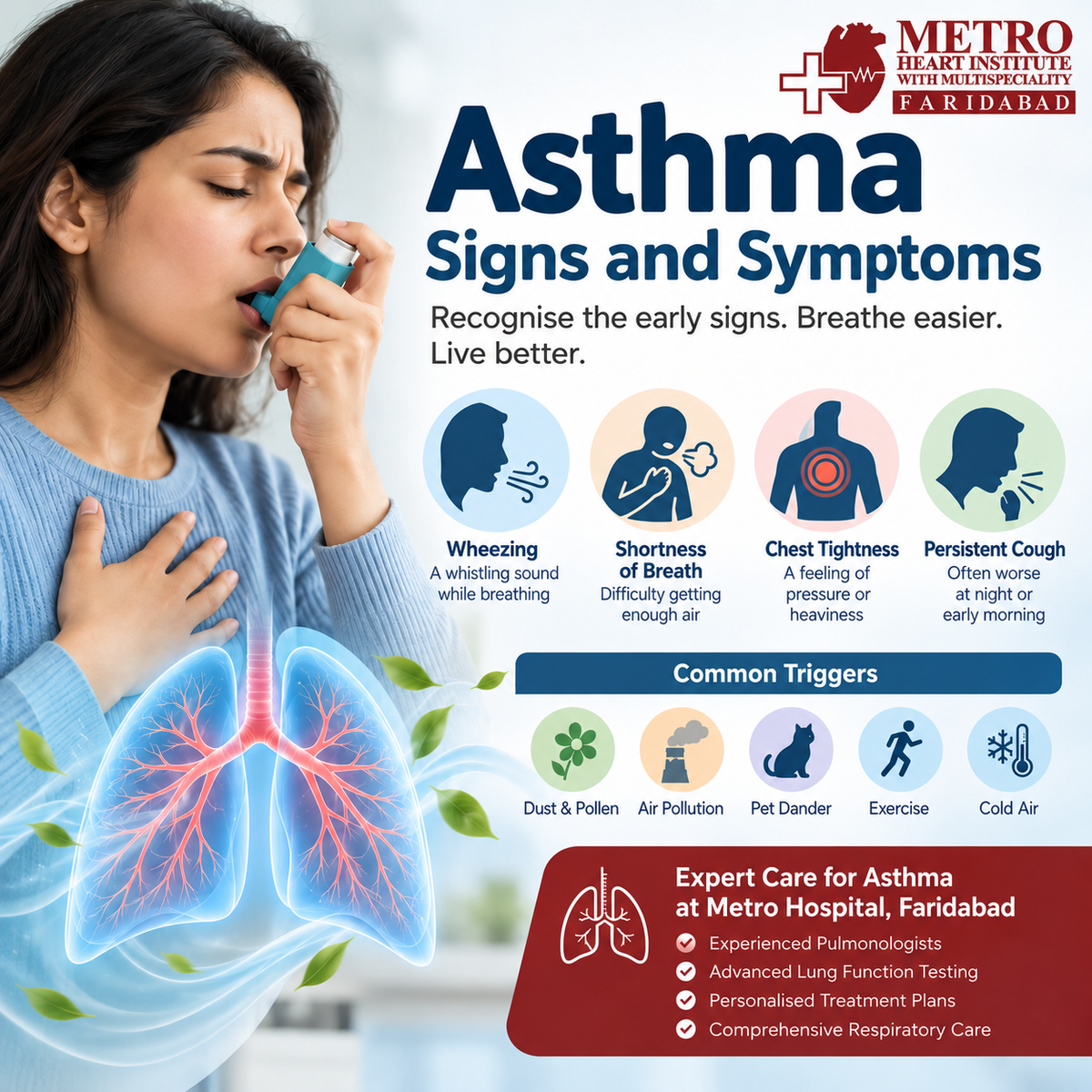
Asthma is a chronic respiratory condition that affects the airways and can make breathing difficult. For some people, symptoms are mild and occasional. For others, asthma can cause repeated episodes of wheezing, coughing, chest tightness and shortness of breath that interfere with sleep, exercise, work and daily life.
One of the most important things about asthma is that its symptoms can change over time. They may appear suddenly, worsen at night, occur after exercise, or be triggered by allergens, pollution, cold air or viral infections. According to the 2026 Global Initiative for Asthma (GINA) strategy, typical asthma symptoms include wheeze, shortness of breath, chest tightness, and cough, and they often vary in frequency and intensity.
Recognising asthma signs and symptoms early can help patients seek proper diagnosis and treatment before symptoms become severe.
At Metro Hospital, Faridabad, patients with asthma and other breathing disorders can seek specialist care through the Pulmonology, Respiratory & Sleep Medicine Department. The department manages asthma, respiratory allergies, COPD, interstitial lung disease, sleep disorders and other chronic respiratory conditions, supported by pulmonary function testing and other advanced respiratory diagnostics.
This detailed guide explains the early signs of asthma, common symptoms, nighttime asthma, exercise-induced symptoms, severe asthma warning signs, triggers, diagnosis, treatment and when to consult a pulmonologist.
Asthma is a chronic inflammatory disease of the airways.
The airways are tubes that carry air in and out of the lungs. In asthma, these airways can become:
When the airway muscles tighten and inflammation increases, it becomes harder for air to move freely.
This can produce symptoms such as:
GINA defines asthma by a history of variable respiratory symptoms together with variable expiratory airflow limitation.
The four classic symptoms are:
Wheezing is a high-pitched or whistling sound that usually occurs when breathing out.
It happens when air moves through narrowed airways.
Wheezing may be:
Not every person with asthma wheezes, and not every wheeze is caused by asthma.
Other conditions, such as COPD, airway obstruction, or respiratory infection, can also cause wheezing.
People with asthma may describe this as:
Shortness of breath may occur suddenly or gradually.
Some people experience it only during:
Chest tightness is often described as:
In asthma, this sensation may occur when airway muscles tighten.
However, chest tightness can also be caused by heart disease, acid reflux, anxiety and other conditions, so persistent or unexplained chest discomfort should be medically evaluated.
Asthma-related cough is often:
Some people have cough-variant asthma, where coughing is the main or only obvious symptom.
NHLBI notes that asthma coughing is particularly common at night or early in the morning.
Asthma does not always begin with a dramatic attack.
Early signs may be subtle.
Possible early symptoms include:
Children may show early signs such as:
Early recognition can help avoid repeated symptoms and future exacerbations.
Asthma is characterised by variability.
Symptoms may:
GINA notes that asthma symptoms often vary in timing and intensity and may be triggered by exercise, laughter, allergens, cold air, or viral infection.
This variability is one clue doctors use when considering an asthma diagnosis.
Nighttime asthma, also called nocturnal asthma, is common.
Symptoms may include:
NHLBI notes that asthma symptoms are often worse at night or early in the morning.
Frequent nighttime symptoms may indicate poorly controlled asthma.
Exercise can trigger asthma symptoms in some patients.
Common symptoms include:
Symptoms may become particularly noticeable after stopping exercise.
GINA identifies exercise as a common asthma trigger and notes that worsening after exercise can be characteristic.
Proper treatment usually allows most people with asthma to remain physically active.
Allergic asthma occurs when allergens trigger airway inflammation.
Common triggers include:
Symptoms may occur together with:
Metro Hospital’s respiratory services include evaluating and treating asthma and respiratory allergies.
Colds, influenza and other respiratory infections may worsen asthma.
Patients may experience:
GINA identifies viral respiratory infections as a common trigger for asthma exacerbations.
An asthma attack, also called an asthma exacerbation or flare-up, is an acute or gradual worsening of symptoms.
Symptoms may include:
GINA defines an exacerbation as worsening of symptoms and lung function compared with a patient’s usual condition.
Severe attacks can be dangerous and, in rare cases, fatal.
Asthma control may be deteriorating if:
NHLBI lists these as important signs that asthma may be worsening.
Seek urgent medical care if a person with asthma develops:
These signs may indicate a serious asthma attack.
If symptoms are severe or worsening rapidly, seek emergency evaluation.
Metro Hospital, Faridabad provides emergency care for acute respiratory conditions, along with Pulmonology and Critical Care services. The hospital’s Respiratory Department integrates with critical care for patients needing advanced breathing support.
Asthma can present differently in children.
Possible symptoms include:
Young children may not be able to describe breathlessness clearly.
Parents may instead notice:
Asthma diagnosis in young children requires careful evaluation because wheezing can also occur with viral infections and other childhood respiratory conditions.
Yes.
Some patients have cough-variant asthma.
In these individuals, the main symptom may be a persistent dry cough, particularly:
Because there may be little or no obvious wheezing, diagnosis can sometimes be delayed.
Asthma can increase mucus production.
Some patients may notice:
However, large amounts of coloured sputum may suggest respiratory infection or another condition and should be assessed.
Asthma and COPD can share symptoms such as:
However, asthma symptoms often vary significantly over time, whereas COPD symptoms are usually more persistent and progressive.
Metro Hospital’s Pulmonology Department manages both asthma and COPD and provides pulmonary function testing to help evaluate chronic breathing disorders.
Asthma and allergies are related but not identical.
Allergies may cause:
Asthma primarily affects the lower airways and causes:
Some people have both allergic rhinitis and asthma.
Anxiety or panic attacks can cause:
These symptoms may resemble asthma.
However, asthma involves airway narrowing and can often be demonstrated through lung function testing.
Patients should avoid self-diagnosing chronic breathlessness as anxiety or asthma without proper evaluation.
Acid reflux can cause:
Asthma may also coexist with GERD.
A specialist may need to determine whether one condition triggers or mimics the other.
Asthma triggers vary from person to person.
Common triggers include:
Airborne irritants can inflame sensitive airways.
Both active and passive smoke exposure can worsen asthma.
Seasonal pollen can trigger allergic asthma.
Proteins from animal skin, saliva or hair can trigger symptoms in susceptible people.
Mould spores may worsen allergic respiratory disease.
Cold air can trigger airway narrowing.
Exercise may trigger symptoms, particularly when asthma is not well controlled.
Respiratory infections commonly trigger asthma attacks.
Perfumes, cleaning chemicals and fumes may provoke symptoms.
GINA notes that beta-blockers may worsen asthma in some patients, while aspirin and some NSAIDs can trigger symptoms in susceptible individuals.
Symptoms alone are not enough to confirm asthma.
GINA recommends confirming the diagnosis using a combination of:
Spirometry is one of the most important tests.
It measures:
Doctors may repeat spirometry after giving a bronchodilator.
If lung function improves significantly, this can support an asthma diagnosis.
GINA identifies bronchodilator responsiveness testing as one of the main ways to demonstrate variable airflow.
Metro Hospital’s Pulmonology Department has a dedicated Pulmonary Function Laboratory equipped for routine spirometry.
A peak-flow meter measures how quickly air can be blown out.
Peak flow may be useful for:
GINA recommends peak expiratory flow testing when spirometry is not available rather than relying on symptoms alone.
If allergic asthma is suspected, doctors may recommend:
The goal is to identify relevant triggers rather than avoiding unnecessary foods or environmental exposures.
A chest X-ray is usually not required to diagnose uncomplicated asthma.
It may be performed when doctors suspect:
Asthma treatment aims to:
Treatment is individualised according to symptom severity and future risk.
Modern asthma management usually includes treatment containing an inhaled corticosteroid (ICS).
GINA states that ICS-containing treatment substantially reduces the risk of severe asthma exacerbations.
These medicines reduce airway inflammation.
Patients should not stop prescribed controller inhalers simply because symptoms improve.
Reliever medicines help relax narrowed airway muscles.
Some patients require them only occasionally, while frequent need may indicate poor asthma control.
If reliever use is increasing, medical review is important.
Even the right medicine may not work effectively if inhaler technique is poor.
Common mistakes include:
Patients should have inhaler technique checked regularly.
An asthma action plan is a personalised written guide explaining:
NHLBI encourages patients with asthma to discuss an asthma action plan with their healthcare provider.
Asthma is generally considered a chronic condition rather than something that can be permanently cured.
However, it can often be controlled very effectively.
With appropriate treatment, many patients can:
Symptoms may become very mild or absent for long periods.
Some children experience fewer symptoms as they grow older.
However, symptoms may return later, especially after exposure to triggers or respiratory infections.
Poorly controlled asthma can lead to:
Severe uncontrolled attacks can be life-threatening.
Smoking worsens airway inflammation and makes asthma harder to control.
Avoid triggers that clearly and repeatedly cause symptoms.
Patients with well-controlled asthma should generally be encouraged to exercise.
Obesity can worsen asthma symptoms and breathlessness.
Respiratory infections can trigger asthma exacerbations, so appropriate vaccination may help reduce infection risk.
Nasal allergies can worsen respiratory symptoms.
Consider seeing a pulmonologist if you have:
A specialist evaluation may also help if the diagnosis is uncertain.
Patients with asthma can access comprehensive respiratory evaluation through the Pulmonology, Respiratory & Sleep Medicine Department at Metro Hospital, Faridabad.
The department manages:
Its facilities include:
Patients can also learn more through Metro Hospital’s dedicated Respiratory Care in Faridabad resource, which specifically lists wheezing, shortness of breath, chest tightness, persistent nighttime or early-morning cough, exercise difficulty and recurrent respiratory infections among common asthma symptoms.
Patients with chronic or difficult-to-control asthma may also consult Dr. Hemant Goel, Director & HOD – Respiratory & Sleep Medicine (Unit-I) at Metro Hospital, Faridabad.
His listed expertise includes:
Early asthma signs may include recurrent dry cough, mild wheezing, chest tightness, breathlessness during exercise and nighttime coughing.
The four classic symptoms are wheezing, shortness of breath, chest tightness and cough.
Yes. Asthma-related cough is often worse at night or in the early morning.
Yes. Some patients have cough-variant asthma, where persistent cough may be the primary symptom.
Asthma is suspected when respiratory symptoms vary over time and occur with triggers such as exercise, allergies, cold air or viral infection. Confirm the diagnosis with lung-function testing.
Common triggers include viral infections, dust, pollen, pollution, smoke, exercise, cold air, allergens and certain medicines.
Asthma is usually manageable with proper treatment, but severe attacks can be dangerous and potentially fatal.
Diagnosis generally involves a history of variable symptoms plus lung-function testing such as spirometry or peak expiratory flow measurement.
Asthma is usually a chronic condition, but symptoms can often be controlled very effectively with appropriate treatment.
Patients can consult the Pulmonology, Respiratory & Sleep Medicine Department at Metro Hospital, Faridabad for diagnosis and management of asthma, respiratory allergies and other lung conditions.
Recognising asthma signs and symptoms early matters because symptoms can range from a mild, occasional cough to a severe breathing emergency.
The most common symptoms are:
Asthma symptoms often:
If asthma symptoms become more frequent, wake you from sleep, interfere with exercise or require repeated use of reliever medication, asthma may not be adequately controlled.
Severe breathlessness, inability to speak normally, bluish lips, confusion or rapidly worsening symptoms require urgent medical attention.
At Metro Hospital, Faridabad, patients with asthma can access specialist respiratory care through the Pulmonology, Respiratory & Sleep Medicine Department, supported by pulmonary function testing, spirometry, bronchoscopy, allergy-related respiratory care, pulmonary rehabilitation and critical-care facilities.
The most important step is not to ignore persistent respiratory symptoms. Early diagnosis, correct inhaler use, trigger control and appropriate long-term treatment can help most people with asthma maintain an active and healthy life.
Disclaimer: This article is intended for general health education only and should not be used for self-diagnosis. A qualified healthcare professional should evaluate persistent wheezing, breathlessness, coughing, or chest tightness.
Chest pain can be frightening because many people immediately associate it with a heart problem. However, chest discomfort can also...

An MPV blood test measures the average size of your platelets, the small blood cells that help your body form...
Oct 21, 2026

Oct 21, 2026

Oct 21, 2026


