Appointment
 Find A Doctor
 Lab Report

Heal Your Gut Naturally: Best High-Fibre Foods and Diet Tips for Constipation
Oct 13, 2026
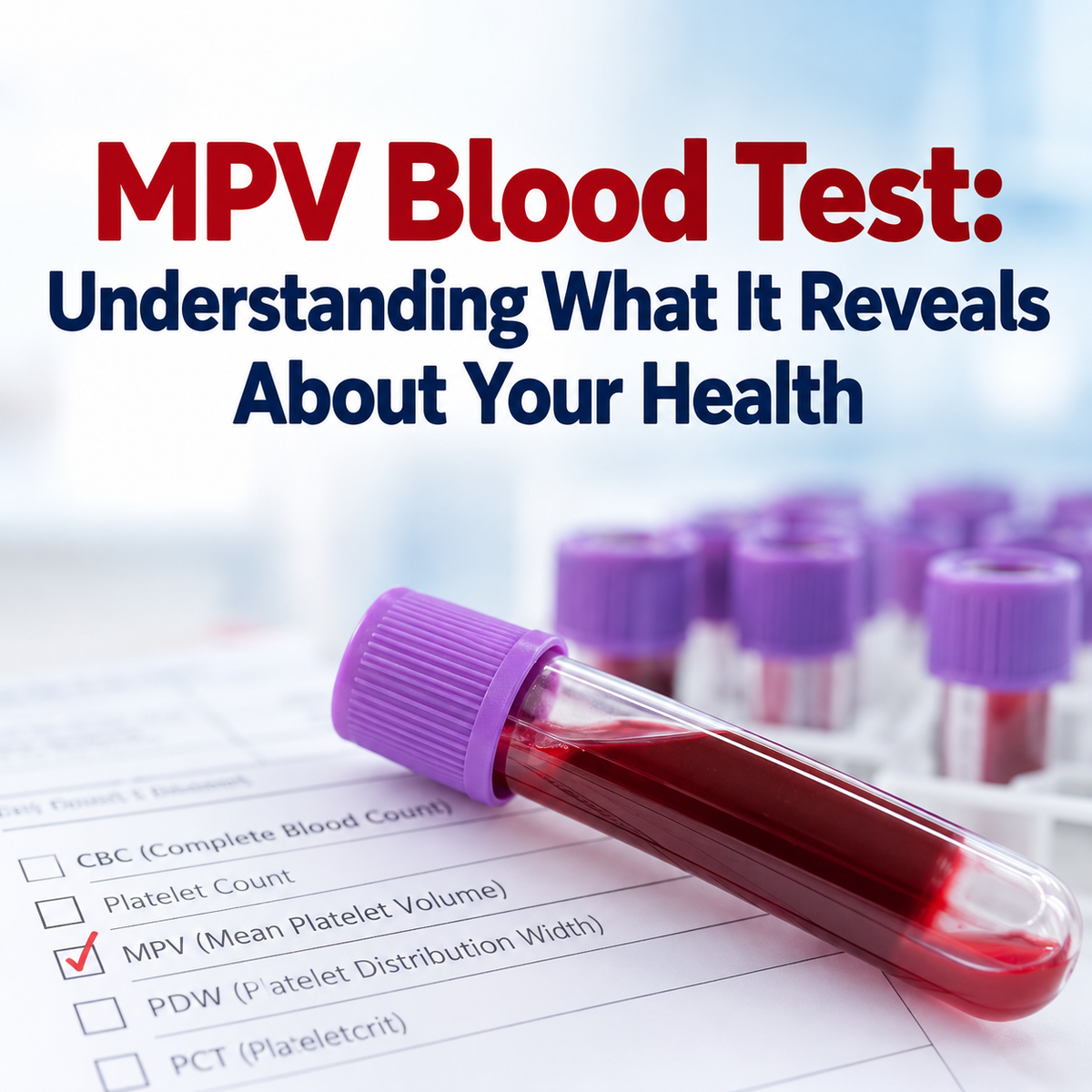
An MPV blood test measures the average size of your platelets, the small blood cells that help your body form clots and stop bleeding. MPV stands for Mean Platelet Volume, and it is usually reported as part of a Complete Blood Count (CBC).
An abnormal MPV result can sometimes provide clues about how quickly your bone marrow is producing platelets, whether platelets are being destroyed or consumed, and whether another condition may be affecting platelet production.
However, you should never interpret MPV on its own.
A high or low MPV does not automatically mean you have a disease. Doctors usually interpret it together with:
At Metro Hospital, Faridabad, patients can undergo CBC and platelet-related investigations through the Laboratory Services, which include haematology, coagulation studies and other diagnostic sections.
This detailed guide explains what an MPV blood test is, the normal range, what high and low MPV mean, how MPV relates to platelet count, common causes of abnormal results, symptoms to watch for and when to seek medical advice.
MPV stands for Mean Platelet Volume.
The test calculates the average size of the platelets circulating in your blood.
Platelets, also called thrombocytes, are formed in the bone marrow and play an essential role in blood clotting.
When a blood vessel is injured, platelets gather at the site and help create a clot to reduce bleeding.
MPV indicates the average size of these platelets.
In general:
Therefore, platelet size can sometimes indicate how actively the bone marrow is producing new platelets.
An MPV test is most useful when interpreted together with other CBC parameters, particularly the platelet count.
MPV means:
M – Mean: Average
P – Platelet: Blood cells involved in clotting
V – Volume: The amount of space the platelets occupy
So, the MPV test essentially measures the average size of your platelets.
MPV is commonly measured automatically during a CBC.
Your doctor may order a CBC for:
MPV becomes particularly useful when the platelet count is abnormally high or low.
A platelet count tells you how many platelets are present.
MPV tells you how large they are on average.
Together, these results can provide a more complete picture of platelet health.
For example:
These are general patterns, not diagnoses.
The normal MPV range varies between laboratories.
A commonly quoted adult reference range is around:
7.0 to 9.0 femtoliters (fL)
However, different laboratories may use slightly different limits depending on:
That is why the reference range printed on your laboratory report matters more than a generic online value.
Don’t assume an MPV result is abnormal just because it differs from a number found online.
A high MPV means that the platelets are larger than the laboratory’s expected average.
Larger platelets are often younger platelets.
This may suggest that the bone marrow is producing and releasing platelets relatively quickly.
However, high MPV is not a diagnosis.
It must be interpreted alongside the platelet count and overall clinical picture.
High MPV may be seen in association with conditions such as:
Cleveland Clinic also notes that MPV may be influenced by menstruation, altitude, strenuous exercise, pregnancy and certain medicines.
Low MPV means the circulating platelets are smaller on average.
In some situations, this may suggest that the bone marrow is not producing large numbers of new platelets.
Possible associations include:
Again, a low MPV alone cannot diagnose any of these conditions.
A doctor will interpret it with the platelet count, blood smear and other tests when necessary.
This is a common question.
If MPV is slightly high but the platelet count is normal, the result may not indicate a serious problem.
Possible explanations include:
Doctors usually look at whether:
A single isolated high MPV without symptoms often requires context rather than immediate concern.
Similarly, low MPV with a normal platelet count may sometimes be a normal individual variation.
It should be interpreted according to:
A repeat CBC may occasionally be recommended if the result is unexpected.
This combination may suggest the body is losing or destroying platelets while the bone marrow responds by producing younger, larger platelets.
One possible example is immune thrombocytopenia.
However, this pattern can occur for multiple reasons.
A doctor may consider additional evaluation such as:
Self-diagnosis based on MPV and platelet count is not recommended.
A low platelet count with low MPV may suggest reduced platelet production.
Possible reasons can include:
However, this pattern still needs full clinical interpretation.
These two tests are related but measure different things.
Measures the number of platelets in the blood.
A commonly used adult reference range is approximately:
150,000 to 400,000 platelets per microliter,
but laboratory ranges vary.
Measures the average size of platelets.
Labs often interpret these two results together.
PDW stands for Platelet Distribution Width.
While MPV measures the average platelet size, PDW measures how much platelet sizes vary from one another.
Together, platelet count, MPV and PDW can help doctors evaluate platelet production and variation.
An abnormal PDW or MPV does not automatically indicate disease.
MPV itself usually does not cause symptoms.
Symptoms occur because of the underlying condition affecting the platelets.
Possible symptoms include:
High platelet counts may sometimes be associated with:
In some platelet disorders, clotting risk may increase.
Not necessarily.
A high MPV does not predict whether someone will develop a blood clot.
Although larger platelets may be more biologically active, thrombosis risk depends on many factors, including:
MPV should not be used alone to determine blood clot risk.
Yes.
Inflammation and infection can influence platelet production and activation.
MPV may therefore change during:
The significance depends on the entire CBC and clinical situation.
Certain nutritional deficiencies may be associated with changes in MPV and platelet production.
Cleveland Clinic lists deficiencies involving nutrients such as:
among conditions that have been associated with high MPV values.
This does not mean that an abnormal MPV automatically proves a vitamin deficiency.
Some studies have observed higher MPV values in people with diabetes.
Diabetes can affect blood vessels and platelet function, but MPV is not used as a standalone test to diagnose diabetes or predict complications.
Blood glucose and HbA1c remain the standard tests for assessing diabetes.
Researchers have studied MPV in relation to cardiovascular disease and platelet activation.
However, it should not be used by itself to diagnose heart disease or predict heart attack risk.
Cardiovascular risk is assessed using broader factors such as:
Yes.
Pregnancy can influence platelet parameters.
Conditions such as preeclampsia may also affect platelet count and MPV.
Pregnant women should have their obstetrician interpret abnormal CBC results rather than comparing them with general adult reference ranges.
Yes.
Regular strenuous exercise can temporarily influence platelet size and MPV.
If you have an unexpected abnormal result, your doctor may ask about recent intense exercise.
Some medicines can affect platelet production or bone marrow function.
These may include:
Do not stop a prescribed medicine because of an abnormal MPV result without discussing it with your doctor.
MPV is measured using a routine blood sample.
A healthcare professional usually:
The blood draw usually takes only a few minutes.
Usually, you don’t need to fast for an MPV or CBC test.
However, if the CBC is being performed along with:
you may be asked not to eat for a specified period.
Always follow the instructions provided by your doctor or laboratory.
Several non-disease factors can influence MPV.
These include:
This is another reason why a small difference from the reference range may not always be clinically important.
Different laboratories may use different:
Therefore, normal ranges can differ.
MedlinePlus recommends comparing your result with the reference interval printed on the same laboratory report, rather than using values from another laboratory or online source.
Usually, there is no reason to panic based on MPV alone.
A mildly abnormal result may occur even in healthy people.
The more important questions are:
Doctors usually consider all these factors before deciding whether further testing is needed.
If MPV and platelet count are significantly abnormal, a doctor may consider:
The tests selected depend on the clinical picture.
Consult a healthcare professional if you have:
If MPV is only slightly outside the reference range and all other results are normal, your doctor may simply monitor it.
Seek urgent medical attention if you experience:
These symptoms require immediate evaluation regardless of the MPV result.
Patients needing a CBC, platelet count, MPV, or other haematology tests can access diagnostic services through the Laboratory Services at Metro Hospital, Faridabad.
Metro Hospital states that its diagnostic laboratory is NABL accredited and operates round the clock.
Its laboratory sections include:
The hospital also uses automated haematology analysers for blood-cell testing.
Don’t treat an MPV result as an isolated number.
At Metro Hospital, CBC findings can be interpreted alongside:
If abnormal platelet findings require additional support, Metro Hospital also operates a 24×7 Blood Bank that provides blood components, including platelet concentrates and platelet apheresis, for appropriate clinical situations.
This integrated diagnostic approach is especially useful for patients with significant platelet abnormalities, unexplained bleeding or complex medical conditions.
MPV stands for Mean Platelet Volume. It measures the average size of platelets circulating in the blood.
A commonly cited adult range is approximately 7–9 fL, but laboratory reference ranges vary. Always use the reference range printed on your report.
High MPV means the platelets are larger on average. This can occur when the bone marrow releases younger platelets more actively, but you must interpret the result with the platelet count and medical history.
Low MPV means the platelets are smaller on average. In some situations, it may be associated with reduced new platelet production, but it cannot diagnose a condition on its own.
Not necessarily. A mildly high MPV with normal platelet count and no symptoms may have little clinical significance. A doctor should review persistent or marked abnormalities.
MPV alone does not determine blood clot risk. Many other factors contribute to thrombosis.
This can occur because of normal variation, exercise, pregnancy, inflammation or other factors. Interpret the result with the complete CBC.
Usually no, unless other tests being performed at the same time require fasting.
Yes. Strenuous physical exercise may temporarily influence MPV values.
The most important accompanying value is the platelet count. Doctors may also consider PDW, haemoglobin, white cell count and a peripheral blood smear.
CBC and haematology testing, including platelet-related parameters, are available through Metro Hospital, Faridabad’s NABL-accredited Laboratory Services.
If MPV is repeatedly abnormal, the platelet count is also abnormal, or you have bruising or bleeding symptoms, medical evaluation is recommended.
The MPV blood test provides information about the average size of your platelets and is generally reported as part of a routine Complete Blood Count.
It can offer useful clues about platelet production and turnover, but you should never interpret MPV alone.
Doctors usually consider it together with:
A high MPV does not automatically mean a blood clot or serious disease, and a low MPV does not automatically indicate bone marrow failure.
Small variations may occur because of laboratory methods, exercise, pregnancy, medicines or normal biological variation.
If your report shows an abnormal MPV, first check the laboratory reference range and discuss the result with a qualified healthcare professional rather than relying on a single online number.
At Metro Hospital, Faridabad, patients can undergo CBC and platelet-related investigations through the Laboratory Services, with access to haematology and coagulation testing as part of a comprehensive diagnostic setup.
Early and accurate interpretation is particularly important when abnormal MPV occurs alongside low platelets, unexplained bruising, recurrent bleeding or other CBC abnormalities.
Disclaimer: This blog is for general health education and awareness only. Always interpret laboratory values according to your laboratory’s reference range, symptoms, medical history, and professional medical advice.

The SGOT test, also known as the AST test, is one of the most commonly ordered blood tests for assessing...

Hepatomegaly is the medical term for an enlarged liver. It is not a disease on its own. Instead, it usually...