Celebrating Hope: A Deep Dive into World IVF Day 2025
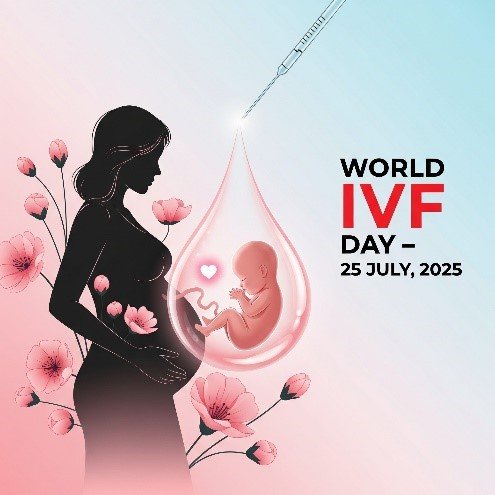
Every year on July 25th, people around the world pause to recognize World IVF Day, a celebration of courage, science, perseverance, and above all, hope. It’s a day that honors individuals and couples who have journeyed through infertility to parenthood via in vitro fertilization (IVF), as well as the healthcare professionals, researchers, and advocates who have made such dreams possible.
At Metro Hospital Faridabad, we are proud to be part of this transformative journey. As a trusted name in advanced reproductive care, we dedicate this blog to all those who have walked the IVF path and those still hoping.
This blog explores the origins of IVF, the significance of World IVF Day, the emotional and scientific dimensions of the treatment, and how Metro Hospital Faridabad stands at the forefront of global fertility care.
- The Genesis: How IVF Changed Reproductive Medicine
1.1. A Wholly New Hope
Prior to the late 20th century, many faced infertility in silence and stigma. IVF emerged as a revolutionary option for those who had no alternatives. The process involves retrieving eggs from the ovaries, fertilizing them with sperm in a lab dish, and transferring the embryo back into the uterus.
1.2. The Culmination of Pioneering Research
- Early experiments: Early 1900s scientists experimented with fertilizing animal eggs outside the body. While groundbreaking, it took decades for human application.
- Landmark moment: On July 25, 1978, Louise Brown, the first “test‑tube baby,” was born in England—marking the dawn of a new era in reproductive health.
1.3. The Ripple Effect
Louise Brown’s birth launched a cascade of developments:
- Numerous IVF clinics globally.
- Advances in genetics (preimplantation genetic testing).
- Growth in related fields like surrogacy and fertility preservation.
- IVF’s pivotal role in LGBTQ+ and single-parent families.
- World IVF Day: Genesis, Mission, & Global Significance
2.1. Remembering July 25
July 25th isn’t just any date—it echoes the day Louise Brown was born. World IVF Day aims to:
- Raise awareness about infertility and treatment options.
- Shine light on the emotional struggles faced by couples.
- Celebrate success stories and demystify IVF.
2.2. Advocates at the Center
Infertility affects approximately one in six couples worldwide. While numbers can vary, that statistic alone reveals how deeply IVF matters—not just to individuals, but communities and societies at large.
2.3. A Global Tapestry of Participation
Countries worldwide observe World IVF Day through:
- Fertility clinic open houses.
- Conferences, webinars, and panel discussions.
- Media campaigns—personally testing and uplifting.
- Educational initiatives in schools and universities.
- Understanding Infertility: The Emotional and Clinical Journey
3.1. The Personal Impact of Infertility
Infertility extends far beyond medical charts:
- Couples often face isolation, guilt, and grief.
- Romantic relationships may strain under relentless testing and repeated disappointments.
- Societal pressures—especially in cultures where parenthood is expected—can amplify distress.
3.2. Diagnosis to IVF: Mapping the Treatment Course
Typical steps include:
- Evaluation – medical, hormonal, and imaging tests for both partners.
- First-line efforts – ovulation induction, timed intercourse, or intrauterine insemination (IUI).
- IVF recommendation – triggered by specific diagnoses or treatment failures.
- IVF cycle – ovarian stimulation, egg retrieval, fertilization, and embryo transfer.
- Supportive care – emotional, psychological, and physical.
- Follow-up – including post-IVF counseling and prenatal monitoring.
3.3. IVF Challenges: Clinical, Legal, Emotional
- Physical risks: ovarian hyperstimulation syndrome (OHSS), multiple pregnancies, and rare complications.
- Emotional toll: uncertainty and chemical pregnancy risks.
- Legal considerations: embryo ownership, surrogacy legislation, and access disparities.
- The Triumphs: Inspirational Stories of IVF
4.1. Personal Triumphs
Stories from IVF recipients illuminate the journey:
- A couple enduring five miscarriages finds joy after a successful IVF pregnancy.
- A same-sex male couple welcomes twins via donor eggs and surrogacy.
- A cancer survivor preserves fertility and later holds a child, a testament to resilience and science.
4.2. From Science to Social Transformation
IVF has made profound contributions:
- Genetic screening of embryos helps reduce inherited disorders.
- Fertility preservation, especially for cancer patients, allows women to freeze eggs prior to treatment.
- Family diversity grows through LGBTQ+ parenting and single-parent success via IVF.
- Global Access to IVF: Inequities and Advances
5.1. An Uneven Global Landscape
- Some nations (France, Israel, Denmark) provide partial/full IVF funding.
- In contrast, many low-income regions have minimal or no access.
- Private clinics often dominate in developing countries, creating cost barriers.
5.2. Technological Innovations Improving Accessibility
- Low-cost IVF models: simplified lab setups and protocols.
- Telemedicine: enabling remote counseling and monitoring.
- Mobile clinics: bringing services to underserved rural communities.
- Education: demystifying treatment and addressing social taboos.
5.3. Metro Hospital Faridabad: A Hub of Global IVF Care
At Metro Hospital Faridabad, we are proud to be at the forefront of IVF innovation and care. Our hospital is fully equipped with advanced IVF and reproductive technologies and staffed by a team of expert fertility specialists, embryologists, and compassionate caregivers.
We proudly provide treatment for patients from across the globe, offering individualized, affordable, and results-driven IVF care. Our facility has become a trusted destination for couples seeking hope, healing, and successful parenthood through IVF.
5.4. Policy & Advocacy Imperatives
- Campaigning for IVF coverage in public insurance plans.
- Fostering public–private partnerships for greater clinic distribution.
- Encouraging gender-affirming reproductive research and LGBTQ+ inclusive family policies.
Conclusion: A Day of Reflection, Visibility, and Progress
World IVF Day is more than a date—it’s a symbol of transformation:
- It emphasizes that IVF is not “just science”—it’s deeply human.
- It bears witness to the resilience of those navigating both medical and emotional unknowns.
- It celebrates a mosaic of families—single parents, LGBTQ+, donors, surrogates.
- It calls for action: better funding, ethical oversight, wider access, and innovation.
- It honors the milestone that began with Louise Brown’s birth—one that has reshaped what “possible” looks like.
At Metro Hospital Faridabad, we celebrate this day not only as a tribute to medical progress but also to the strength of the human spirit. We remain dedicated to making fertility care inclusive, accessible, and deeply supportive for all who walk through our doors—from India and around the world.
World IVF Day 2025 is here—let’s make it count, together.
 Appointment
 Find A Doctor
 Lab Report