 Appointment
 Find A Doctor
 Lab Report
Global Iodine Deficiency Disorders Prevention Day 2026: Importance, Symptoms, Prevention and Role of Iodized Salt
Oct 17, 2026
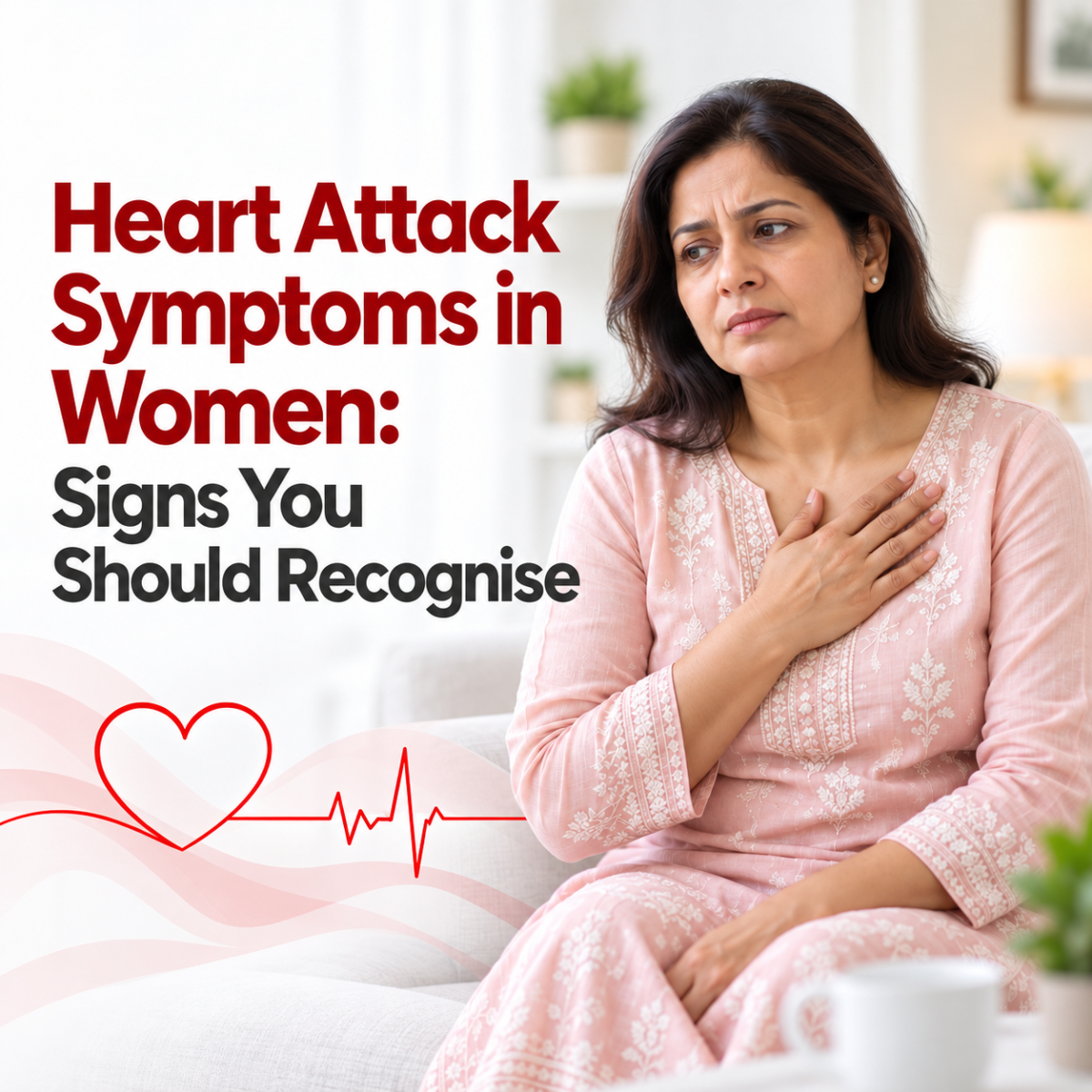
Chest discomfort during a busy morning, unexpected breathlessness or an unusual wave of nausea can be easy to explain away. A woman may assume she is tired, anxious or experiencing acidity. However, symptoms that are new, unexplained or occurring together deserve attention.
Heart attack symptoms in women can include chest pain, shortness of breath, upper-body discomfort, nausea, cold sweating and unusual weakness. Chest pain or discomfort remains the most common symptom in both women and men. However, some women experience a heart attack without prominent chest pain.
Recognising these signs does not mean treating every episode of tiredness or indigestion as a heart attack. It means understanding when symptoms need urgent medical assessment and avoiding delays caused by assumptions.
If you or someone nearby develops new chest pressure, severe breathlessness, collapse, or concerning symptoms suggesting a heart attack, call an ambulance immediately. Do not drive yourself or wait for a routine appointment.
A heart attack occurs when blood flow to part of the heart muscle becomes severely reduced or blocked. Without enough oxygen, the affected muscle can become damaged.
The most common cause involves coronary artery disease. Fatty deposits, called plaque, build up inside the arteries supplying the heart. If a plaque ruptures, a blood clot can form and obstruct blood flow.
Other causes are also possible. These include a severe spasm of a coronary artery or a tear within its wall, known as spontaneous coronary artery dissection.
A heart attack requires emergency treatment. Early assessment and appropriate care can limit damage, which is why recognising symptoms and acting promptly matters.
Many people picture a heart attack as sudden, crushing chest pain followed by collapse. Although that can happen, it is not the only presentation.
Women may experience chest discomfort alongside symptoms such as an upset stomach, breathlessness, shoulder pain or unusual weakness. These symptoms can be mistaken for less serious problems, particularly when they are not dramatic.
Descriptions also vary. Someone may report “pressure,” “heaviness,” “burning” or “tightness” rather than pain.
Avoid dismissing symptoms because they do not match a familiar image of a heart attack. A clear description of what feels different—and when it started—can help emergency professionals assess the situation.
Chest discomfort is the most common heart attack symptom in women.
It may feel like squeezing, fullness, pressure or heaviness in the centre of the chest. It can last for several minutes or ease and return. The discomfort does not always feel severe.
Do not wait for pain to become unbearable before seeking help. New or unexplained chest pressure, especially with sweating, nausea or breathlessness, needs immediate assessment.
Unexpected difficulty breathing can occur with or without chest discomfort.
A woman may feel unusually breathless while resting or during an activity she normally manages comfortably. When breathlessness develops suddenly or accompanies other concerning symptoms, it should not automatically be attributed to poor fitness or anxiety.
Severe breathing difficulty is an emergency, regardless of whether chest pain is present.
Heart attack discomfort is not always limited to the chest. It may involve one or both arms, the shoulders, upper back, neck or jaw.
Some women describe upper-back pressure rather than a sharp pain. Others notice discomfort spreading between areas.
Pain in these locations has many possible causes. However, new unexplained discomfort occurring with chest pressure, nausea, sweating or breathlessness warrants urgent attention.
An upset stomach can sometimes accompany a heart attack. Symptoms may include nausea, vomiting or discomfort in the upper abdomen.
This overlap can lead someone to assume the problem is acidity or something they ate. The concern is greater when digestive symptoms occur alongside breathlessness, cold sweating, chest discomfort or unusual weakness.
Symptoms alone cannot reliably distinguish indigestion from a heart problem.
An unexplained cold sweat can be another warning sign, particularly when it occurs with chest pressure, dizziness or nausea.
Sweating has many ordinary causes, including heat and physical activity. What matters is the overall situation: an unexpected episode with other possible heart attack symptoms should prompt emergency assessment.
Feeling faint or unusually lightheaded may occur during a heart attack, although these symptoms can also result from other conditions.
Do not try to walk off dizziness when it accompanies chest discomfort, sweating or breathing difficulty. Sit down, call for help and avoid driving.
Collapse or loss of responsiveness requires an immediate emergency response.
Some women experience unusual fatigue or weakness as part of their symptoms.
Tiredness alone is common and does not establish a heart attack diagnosis. However, sudden or unexplained weakness occurring with chest discomfort, breathlessness or nausea should not be ignored.
Persistent fatigue without emergency symptoms still deserves a medical review, especially when it represents a noticeable change from your usual health.
No. A heart attack can occur without obvious chest pain, although chest discomfort remains the most common symptom.
This distinction is important. Saying that women “usually do not have chest pain” can be misleading. Equally, assuming that the absence of pain rules out a heart attack can delay care.
Consider the combination of symptoms and how suddenly they appeared. Significant breathlessness, upper-body discomfort, cold sweating or nausea may require urgent evaluation even when chest pain is absent.
There is also no dependable symptom checklist that predicts a heart attack a fixed number of days in advance. Do not rely on claims about guaranteed warning signs “30 days before” an event.
Heartburn and heart-related discomfort can overlap. Both may cause a burning or uncomfortable sensation in the chest or upper abdomen.
The following situations need particular attention:
| Symptom pattern | Appropriate response |
|---|---|
| New chest pressure with sweating, nausea or breathlessness | Seek emergency medical help. |
| Unexplained upper-body discomfort with faintness or breathing difficulty | Arrange immediate emergency assessment. |
| Chest discomfort that improves but returns | Do not assume the problem has resolved; seek urgent help if a heart attack is suspected. |
| Recurring digestive discomfort without emergency features | Arrange a medical consultation to establish the cause. |
The table is not a diagnostic test. A clinician needs to assess symptoms and, where appropriate, perform investigations.
Do not use an antacid trial or home remedy to decide whether it is safe to delay emergency care.
Yes. Heart attacks can occur before menopause and in younger adults. Age influences risk, but youth does not exclude a cardiac emergency.
Some younger women develop acute coronary problems through mechanisms other than the usual pattern of longstanding plaque build-up. Spontaneous coronary artery dissection is one example that doctors may consider in an appropriate clinical setting.
A woman who exercises regularly or appears physically fit should still seek assessment for concerning symptoms. Fitness, body shape and a previously reassuring check-up cannot determine the cause of a new episode of chest discomfort.
Several factors can increase the likelihood of a heart attack:
A risk assessment considers these factors together. For example, someone may feel well while having high blood pressure or raised cholesterol that needs management.
Share your complete medical and family history during a planned consultation. Include existing prescriptions and any previous cardiovascular investigations.
Risk assessment is useful for prevention, but it should never delay emergency treatment when symptoms are already present.
Heart attacks during pregnancy are uncommon, but they can happen during pregnancy or soon after childbirth.
Pregnancy-related changes, together with conditions such as diabetes, obesity or pre-eclampsia, may affect risk. New chest pain or significant breathlessness during this period needs prompt medical attention.
Do not assume that every symptom is a normal part of pregnancy or recovery after delivery. Tell the emergency team if you are pregnant or have recently given birth so they can assess and treat you appropriately.
Describe the symptoms clearly and give your exact location. Mention when the symptoms started and whether the person is awake and breathing normally.
Do not wait for a family member to finish work or for a preferred specialist to become available. An emergency assessment takes priority over a planned consultation.
Sit in a comfortable position while help is being arranged. Avoid unnecessary walking, climbing stairs or physical exertion.
An ambulance allows trained personnel to assess the situation and respond if the condition worsens during transport.
Follow advice from emergency professionals about whether to take any medicine. Do not take someone else’s prescription or delay calling for help while searching for tablets.
If the person becomes unresponsive and is not breathing normally, call emergency services, begin CPR and follow the dispatcher’s instructions. Use an automated external defibrillator if available and follow its prompts.
For local assistance, Metro Hospital’s contact page lists Emergency: +91 9711914000 and Ambulance: +91 9899449970. Seek the nearest appropriate emergency care without delaying to reach a preferred hospital.
Symptoms are the starting point, but tests help doctors determine what is happening.
An electrocardiogram, or ECG, records the heart’s electrical activity and can identify changes that suggest a heart attack.
Troponin testing helps detect heart muscle injury. Blood tests may need to be repeated because changes can develop over time.
Depending on the findings, doctors may use an echocardiogram to assess heart function or coronary angiography to examine the heart’s arteries.
A single normal ECG does not always exclude a heart attack. Doctors interpret the results alongside symptoms, examination and blood tests. Continuing or returning symptoms should be reported promptly.
Hospital treatment aims to restore or improve blood flow and manage complications.
Depending on the type of heart attack and clinical situation, treatment may involve medicines, coronary angioplasty with stent placement or bypass surgery. Not every patient needs the same procedure.
You can learn about angiography and angioplasty at Metro Hospital, Faridabad for general information. During an emergency, however, investigations and treatment should be guided by the attending medical team.
After discharge, prescribed medicines, follow-up and cardiac rehabilitation may form part of recovery.
Prevention involves consistent habits and management of existing risk factors.
Build meals around vegetables, fruits, whole grains and suitable protein sources. Limit excess salt, added sugars and heavily processed foods. Avoid tobacco and seek support if quitting is difficult.
Regular physical activity, adequate sleep and maintaining a healthy weight also support cardiovascular health. If you have symptoms or a known heart condition, discuss an appropriate activity plan with your clinician.
Keep track of blood pressure, cholesterol and blood sugar as advised. Take prescribed medicines consistently and ask questions when instructions are unclear.
A useful practical step is to keep a short health record containing your diagnoses, medicines, allergies and relevant family history. Bring it to consultations so discussions focus on your individual needs.
For women and families searching for the best heart hospital in Faridabad, access to specialist assessment, cardiac investigations and timely emergency care matters.
Metro Hospital, Faridabad, provides cardiology services supported by cardiologists, cardiac catheterisation facilities and coronary angioplasty services. Its Cardiology Department offers a point of contact for planned assessment of symptoms and cardiovascular concerns.
The hospital also lists 24×7 emergency and trauma services, supported by trained emergency physicians.
For a routine visit, bring previous reports and a current medicine list. For suspected heart attack symptoms, seek emergency treatment immediately rather than booking an outpatient appointment.
Chest pain or discomfort is the most common symptom. It may feel like pressure, squeezing, heaviness or tightness rather than severe pain.
Yes. Some women experience symptoms such as breathlessness, nausea, upper-body discomfort or unusual weakness without prominent chest pain.
No. Discomfort can involve either arm, the back, shoulders, neck, jaw or chest. Some people do not experience arm pain at all.
Yes. Discomfort may ease and return. Temporary improvement does not make a suspected heart attack safe to ignore.
No. Fatigue has many possible causes. Sudden weakness with chest discomfort, sweating or breathlessness is more concerning and needs urgent assessment.
Some symptoms overlap. New chest discomfort or significant breathlessness should not automatically be labelled anxiety, particularly when symptoms are unexplained or severe.
Not always. Doctors may need repeated ECGs, troponin tests and further assessment depending on the symptoms and timing.
Arrange a planned review if you have cardiovascular risk factors, a relevant family history or concerns about your heart health. Current symptoms suggesting a heart attack require emergency care instead.
Recognising a change and acting promptly can make a difference. For planned heart care, consult the cardiology team at Metro Hospital, Faridabad. For suspected heart attack symptoms, call for emergency help immediately.
Oct 17, 2026
Oct 17, 2026

Oct 15, 2026


