Appointment
 Find A Doctor
 Lab Report

Is Pollution Affecting Your Breathing? Warning Signs, Lung Risks and How to Protect Yourself
Nov 20, 2026
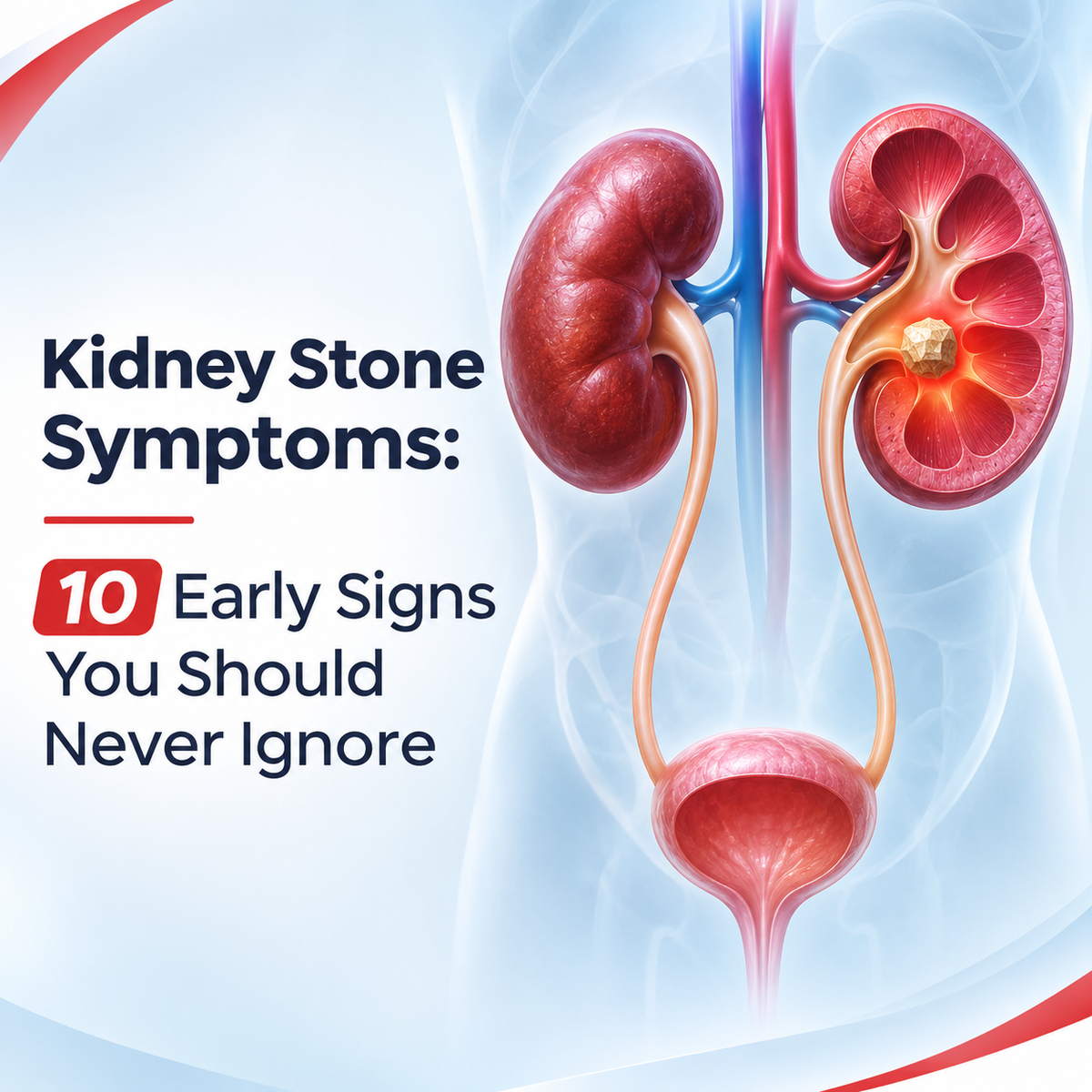
Kidney stone symptoms can appear suddenly and may range from mild discomfort to severe pain that becomes difficult to tolerate. Some stones remain silent while sitting in the kidney, but symptoms often begin when a stone moves into the ureter—the tube that carries urine from the kidney to the bladder.
Typical signs may include sharp pain in the back or side, pain radiating toward the lower abdomen or groin, blood in the urine, burning while urinating, frequent urination, nausea and vomiting. If a stone causes urinary blockage or infection, symptoms can become more serious and require urgent treatment. NIDDK notes that kidney stones may cause sharp pain in the back, side, lower abdomen, or groin; blood in the urine; urinary urgency; painful urination; and difficulty passing urine.
At Metro Hospital, Faridabad, patients with suspected kidney stones can seek specialist evaluation through the Department of Urology. The department provides kidney-stone treatment using approaches including ureteroscopy for ureteric stones and PCNL for renal stones, alongside advanced endourology and minimally invasive urological care.
This guide explains the 10 early symptoms of kidney stones, what kidney-stone pain feels like, causes and risk factors, diagnostic tests, treatment options, prevention and warning signs that require emergency medical attention.
Kidney stones are hard, crystal-like deposits that develop from minerals and salts present in urine.
NIDDK describes a kidney stone as a solid, pebble-like piece of material that may form in one or both kidneys when certain minerals become highly concentrated in the urine.
Common stone-forming substances include:
Kidney stones vary in size.
Some are:
A very small stone may pass without causing noticeable symptoms, while a stone moving through the ureter can produce severe pain.
A stone may remain inside the kidney without causing significant discomfort.
Symptoms often begin when the stone:
A stone stuck in the ureter may obstruct urine flow, cause swelling of the kidney and trigger ureteric spasms, resulting in severe pain.
This classic kidney-stone pain is often called renal colic.
One of the most recognisable kidney stone symptoms is sharp pain in the side or back, usually below the ribs.
The pain may occur on:
depending on which kidney or ureter is affected.
It may begin suddenly and become intense very quickly.
Sharp pain in the side or back is a key symptom of kidney stones.
Kidney-stone pain does not always remain in one location.
As the stone travels downward through the ureter, pain may move from the:
Back → side → lower abdomen → groin
Kidney-stone pain can spread into the lower abdomen and groin and may change location as the stone moves through the urinary tract.
This migrating pattern is an important clue.
Kidney-stone pain often does not remain at the same intensity.
It may:
This happens because the ureter contracts as it tries to move the stone toward the bladder.
NIDDK notes that kidney-stone pain may last a short or long time and can come and go in waves.
Pain may become so intense that a person finds it difficult to remain still.
Blood in urine is an important warning sign of a kidney stone.
Urine may look:
This is called hematuria.
A moving stone may irritate or scratch the lining of the urinary tract, causing bleeding.
NIDDK lists pink, red or brown urine among common kidney-stone symptoms.
Visible blood in urine should always be evaluated by a doctor because other urinary conditions can also cause it.
A stone travelling closer to the bladder may cause:
NIDDK specifically lists pain while urinating as a symptom of kidney stones.
Burning urination may also occur with a urinary tract infection, so testing may be required to determine the cause.
Another early symptom is feeling the need to urinate more frequently than usual.
You may notice:
NIDDK lists frequent or urgent urination among kidney stone symptoms.
This can occur when a stone reaches the lower ureter near the bladder.
A stone that partially blocks urine flow may make it difficult to pass a normal amount of urine.
You may experience:
NIDDK lists inability to urinate or passing only a small amount as an important warning sign.
Complete inability to pass urine requires urgent medical assessment.
Urine may become:
NIDDK identify cloudy or foul-smelling urine among possible kidney-stone symptoms.
When cloudy or foul-smelling urine occurs with:
an infection should be considered.
Kidney-stone pain may be accompanied by:
The kidneys and gastrointestinal tract share nerve pathways, which may contribute to nausea during severe renal colic.
NIDDK specifically notes nausea and vomiting alongside kidney-stone pain.
Repeated vomiting can also lead to dehydration and may require hospital treatment.
Fever and chills are particularly important symptoms.
A kidney stone alone does not usually cause high fever.
When fever or chills occur with a suspected kidney stone, it may suggest urinary infection combined with obstruction.
NIDDK lists fever and chills among kidney-stone symptoms; urgent medical evaluation is needed when severe pain occurs with fever and chills.
This combination should not be ignored.
The 10 symptoms to remember are:
Any combination of these symptoms warrants medical evaluation.
Yes.
A small stone sitting quietly inside the kidney may produce no symptoms.
NIDDK notes that a small stone that passes easily through the urinary tract may not produce symptoms at all.
Symptoms usually become noticeable when the stone:
Kidney-stone pain is often described as:
It may come in waves and change position.
A person may be unable to:
Pain so severe that a person cannot sit still or find a comfortable position is a reason to seek prompt medical care.
Ordinary muscular back pain and kidney-stone pain can sometimes be confused.
Often:
More commonly:
Clinical evaluation may still be needed to confirm the cause.
Kidney infections may also cause flank pain.
However, infection is more likely when there is:
A kidney stone plus infection may become an emergency because the stone can block infected urine.
Kidney stones form when urine becomes concentrated enough for minerals to crystallise.
NIDDK notes that high levels of calcium, oxalate and phosphorus in the urine can contribute to stone formation.
Several factors can increase risk.
Low fluid intake makes urine more concentrated.
This allows stone-forming minerals to crystallise more easily.
NIDDK identifies adequate fluid intake as one of the most important strategies for preventing kidney stones.
People living or working in hot climates may lose more fluid through sweat.
If this fluid is not replaced adequately, urine can become concentrated.
This may increase kidney-stone risk.
High sodium intake can increase calcium excretion in urine in some people.
People with recurrent calcium stones may be advised to reduce dietary sodium.
Excessive animal protein may increase stone risk in susceptible people.
NIDDK notes that prevention plans may involve changes in sodium, animal protein, calcium and oxalate intake depending on the type of stone.
Some people have a greater inherited tendency to form stones.
A family history of recurrent kidney stones may increase risk.
Once a person has developed one stone, the likelihood of recurrence can be higher.
Preventive evaluation becomes particularly important after recurrent episodes.
Obesity and metabolic conditions can alter urinary chemistry and increase the likelihood of certain stones.
Understanding the type of stone can help prevent recurrence.
The main types include:
These are the most common.
They may consist of:
These may develop when urine remains too acidic.
They are sometimes associated with:
These are often associated with urinary infection.
They may grow rapidly and become large.
These are caused by a rare inherited condition in which excessive cystine enters the urine.
Doctors may use:
NIDDK states that healthcare professionals diagnose kidney stones using medical history, physical examination and appropriate tests.
Urine testing can help detect:
A urine culture may be required if infection is suspected.
Blood tests may measure:
Ultrasound can identify:
A non-contrast CT scan is commonly used when more detailed imaging is required.
It can help identify:
Treatment depends heavily on:
NIDDK notes that healthcare professionals decide treatment based on stone size, location and type.
Yes.
Many small stones can pass through the urinary tract without a procedure.
Treatment may include:
NIDDK states that small stones may pass spontaneously and patients may be advised to drink fluids and use pain medicine.
However, not every stone should simply be “waited out.”
A procedure may be required when a stone:
NIDDK notes that larger stones, stones causing severe pain or those blocking the urinary tract may require urgent treatment.
Modern treatment depends on stone size and location.
A thin scope is passed through the urinary tract to reach the stone.
The stone may be:
Metro Hospital’s Urology Department lists ureteroscopy for ureteric stones among its kidney-stone services.
RIRS stands for Retrograde Intrarenal Surgery.
A flexible endoscope is passed through the urinary tract into the kidney.
It allows selected kidney stones to be fragmented using laser technology without an external incision.
Dr. Ankit Gupta lists flexible RIRS and advanced endourology among his areas of expertise.
PCNL stands for Percutaneous Nephrolithotomy.
It is commonly used for larger kidney stones.
The stone is accessed through a small tract created through the back.
Metro Hospital’s Urology Department lists PCNL for renal stones among its treatment services.
Laser energy may be used during endoscopic procedures such as:
to break stones into smaller fragments.
Modern endourology techniques can reduce the need for conventional open surgery in many patients.
Patients with kidney stones can seek specialist care through the Department of Urology at Metro Hospital, Faridabad.
The department provides comprehensive care for:
Its current kidney-stone services include:
Dr. Ankit Gupta is Dy. Director & HOD – Urology, Kidney Transplant & Robotic Surgery (Unit-II) at Metro Hospital, Faridabad.
His expertise includes advanced endourology procedures such as:
His Metro Hospital profile specifically identifies advanced endoscopic treatment for kidney stones as an area of expertise.
Metro Hospital’s current urology team also includes:
Dr Kinjal Banerjee’s expertise includes:
A nephrologist may also be involved when kidney stones occur alongside:
Patients with broader kidney-health concerns can also be evaluated through the Nephrology Department at Metro Hospital.
Seek urgent medical attention if you have:
Immediate medical attention for severe pain, pain with vomiting, pain with fever and chills, blood in urine or difficulty passing urine.
A blocked urinary tract with infection can become dangerous quickly.
Most kidney stones do not cause permanent kidney damage when diagnosed and treated appropriately.
NIDDK states that kidney stones rarely cause permanent damage when treated by a healthcare professional.
However, prolonged obstruction or repeated infection can place kidney function at risk.
Prevention depends partly on the stone type.
However, several general measures are useful.
Adequate fluid intake is one of the most effective preventive strategies.
NIDDK recommends drinking enough fluids to keep urine diluted and reduce crystal formation.
Water should usually be the main beverage.
People with heart failure, kidney failure or fluid restrictions should follow individual medical advice.
Reducing sodium may help lower calcium excretion in the urine in susceptible patients.
Try to limit:
This is an important misconception.
People with calcium stones do not automatically need a calcium-free diet.
Dietary calcium may actually play a protective role in certain calcium-oxalate stone patterns.
A personalised diet is preferable to unnecessary restriction.
People with recurrent uric-acid or certain calcium stones may be advised to reduce excessive intake of:
NIDDK notes that dietary prevention may depend on stone type and can involve changes in animal protein intake.
A healthy weight and metabolic control may reduce the risk of certain kidney stones.
If you pass a stone, your doctor may recommend collecting it.
NIDDK notes that a stone can be sent to a laboratory to determine its type, which can help guide prevention.
Citrus drinks contain citrate, which may help prevent certain stones by interfering with crystal formation.
NIDDK notes that citrus drinks such as lemonade and orange juice may help protect against some kidney stones because of their citrate content.
However, lemon water is not a guaranteed treatment or prevention strategy for every type of stone.
No.
Alcohol is not recommended as a kidney-stone treatment.
Beer can contribute to:
Water remains the preferred fluid for most people.
False.
Small stones may remain symptom-free or pass unnoticed.
False.
Many small stones can pass naturally.
Treatment depends on size, location, blockage and symptoms.
False.
Pain may move into the abdomen and groin as the stone travels through the ureter.
False.
Blood in urine should be evaluated by a healthcare provider.
False.
Dietary recommendations depend on the stone type and individual urine chemistry.
Early symptoms may include sharp side or back pain, pain radiating to the groin, blood in urine, urinary urgency or burning during urination.
It commonly begins in the side or back below the ribs and may travel toward the lower abdomen or groin.
Yes. Pain may occur in waves and vary in intensity as the ureter contracts around the stone.
Yes. Urine may appear pink, red or brown.
Yes. Nausea and vomiting commonly accompany severe renal-colic pain.
Fever is concerning because it may indicate infection. Fever or chills with kidney-stone symptoms requires prompt medical evaluation.
Small stones may pass spontaneously, depending on their size and location.
Depending on stone size and location, treatments may include ureteroscopy, RIRS or PCNL. Metro Hospital’s Urology Department provides procedures including PCNL and ureteroscopy for kidney and ureteric stones.
Adequate hydration and personalised dietary changes involving sodium, animal protein, calcium and oxalate may help prevent recurrence.
Patients can consult the Department of Urology at Metro Hospital, Faridabad for evaluation and treatment of kidney and ureteric stones using endourological and minimally invasive techniques.
Kidney stones can remain silent initially, but once a stone begins moving through the urinary tract, symptoms can become intense.
The 10 kidney stone warning signs you should never ignore are:
Kidney stones are usually diagnosed using a combination of:
Treatment depends on the size and location of the stone, the presence of urinary blockage, and the severity of symptoms. Small stones may pass naturally, while larger or obstructing stones may require procedures such as ureteroscopy, RIRS or PCNL.
At Metro Hospital, Faridabad, patients with suspected kidney stones can access comprehensive urological care through the Department of Urology. The department provides treatment for kidney and ureteric stones using modern endourological and minimally invasive techniques.
Patients can also consult Dr. Ankit Gupta, Dy. Director & HOD – Urology, Kidney Transplant & Robotic Surgery (Unit-II), whose expertise includes RIRS, PCNL and URSL for advanced kidney-stone management.
Severe pain, fever, chills, vomiting, blood in urine or difficulty passing urine should never be ignored, as these symptoms may indicate urinary obstruction or infection requiring urgent treatment.
Disclaimer: This article is intended for general health education only. Kidney-stone symptoms can overlap with urinary infection and other abdominal conditions. Seek professional medical evaluation for persistent or severe symptoms.