Appointment
 Find A Doctor
 Lab Report

World Mental Health Day 2026: Theme, Importance, Mental Health Awareness and When to Seek Help
Oct 10, 2026
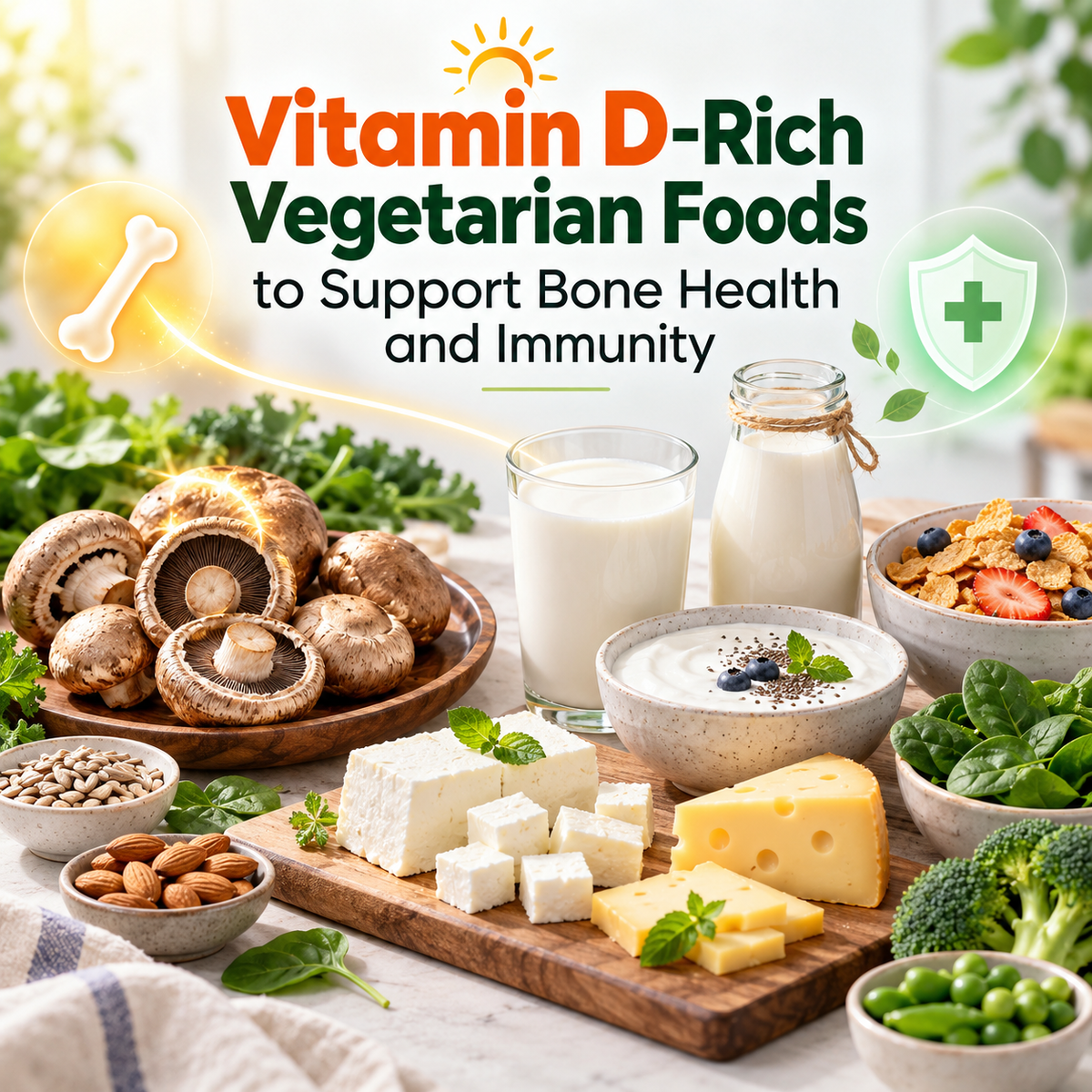
Vitamin D is one of the most important nutrients for healthy bones, muscle function, calcium absorption and normal immune function. Yet getting enough vitamin D from food alone can be difficult, especially for people following a vegetarian or mostly plant-based diet.
Unlike many vitamins, vitamin D is naturally present in only a limited number of foods. Most naturally rich dietary sources are animal-based, so vegetarians need to pay closer attention to fortified foods, UV-exposed mushrooms, dairy products where applicable, sunlight exposure, and supplements when medically advised.
This does not mean a vegetarian diet cannot support healthy vitamin D levels. It simply means you need to be more intentional with your food choices.
At Metro Hospital, Faridabad, patients with concerns about vitamin D deficiency, weak bones, recurrent fractures, hormonal or metabolic problems, and dietary deficiencies can receive multidisciplinary support through Endocrinology, Orthopaedics & Joint Replacement, and Nutrition & Dietetics.
This detailed guide explains the best vitamin D-rich vegetarian foods, how vitamin D supports bones and immunity, signs of deficiency, who is at risk, how much you may need and how to improve vitamin D naturally and safely.
Vitamin D is a fat-soluble vitamin with several important roles in the body.
It helps with:
One of vitamin D’s most important functions is helping the intestine absorb calcium efficiently.
Without enough vitamin D, the body may struggle to use dietary calcium properly even when calcium intake is adequate.
Over time, vitamin D deficiency can contribute to weak or poorly mineralised bones. In children, severe deficiency can lead to rickets, while in adults it can contribute to osteomalacia and increased bone fragility.
Bones are living tissues that continuously break down and rebuild.
For this process, the body needs adequate amounts of:
Vitamin D improves the absorption of calcium and phosphorus from the digestive tract.
If vitamin D remains too low for a long period, calcium absorption may fall, forcing the body to compensate by drawing calcium from bones.
This can contribute to:
Vitamin D therefore works together with calcium rather than replacing it.
A bone-healthy diet should ideally include both.
Vitamin D also supports normal immune function.
Vitamin D receptors are found in several immune cells, and the nutrient helps regulate immune responses.
However, it is important not to overstate this role.
Vitamin D supports normal immune function, but taking excessive vitamin D does not guarantee protection against infections.
The goal should be to maintain adequate levels rather than consume unnecessarily high doses.
Vitamin D is naturally found in relatively few foods.
Some of the richest natural sources are fatty fish and fish liver oils, which vegetarians do not consume.
People following vegetarian or vegan diets therefore tend to rely more heavily on:
The NIH notes that people following ovo-vegetarian or vegan diets may be at greater risk of vitamin D inadequacy because natural food sources are limited.
The most important thing to understand is that very few vegetarian foods naturally contain large amounts of vitamin D.
This makes fortified foods especially useful.
Mushrooms are one of the most useful plant-based sources of vitamin D.
When mushrooms are exposed to ultraviolet light, they can produce significant amounts of vitamin D2.
Examples may include:
However, ordinary mushrooms not exposed to UV light may contain very little vitamin D.
The difference can be substantial. NIH data show that UV-exposed white mushrooms can provide considerably more vitamin D than untreated mushrooms.
You can add mushrooms to:
When buying packaged mushrooms, check whether the label mentions UV-exposed, vitamin D enhanced or similar wording.
Many packaged milk products are fortified with vitamin D, although fortification practices vary by brand and country.
If you consume dairy, fortified milk can be one of the easiest ways to add vitamin D to your diet.
One cup of fortified milk may provide a useful proportion of the daily vitamin D requirement, depending on the product.
Always check the nutritional label rather than assuming every milk brand contains vitamin D.
It can be used in:
Fortified soy milk is particularly useful for vegans and people avoiding dairy.
Many fortified soy beverages contain both:
This combination can support bone health.
NIH data show that fortified soy, almond and oat beverages can provide roughly 100–144 IU vitamin D per cup depending on the brand.
Look for unsweetened versions when possible, especially if you have diabetes, obesity, or metabolic concerns.
Almond milk naturally contains very little vitamin D, but many commercial varieties are fortified.
Read the label carefully.
Choose products that provide:
Remember that fortified almond milk is nutritionally different from whole almonds.
Almonds do not provide the same vitamin D benefit.
Oat milk is another increasingly popular vegetarian option.
Like other plant-based beverages, its natural vitamin D content is usually low, but fortified products may provide useful amounts.
Fortified oat milk can be used in:
Some breakfast cereals are fortified with vitamin D.
The amount varies considerably by brand.
When choosing cereal, check the nutrition panel for:
A fortified cereal eaten with vitamin D-fortified milk or plant-based milk can provide a practical vegetarian breakfast option.
NIH identifies fortified cereals as one of the dietary sources that can help contribute to vitamin D intake.
Some yogurt products are fortified with vitamin D.
However, this is not universal.
Plain yogurt is a good source of calcium and protein, but it may not contain meaningful vitamin D unless it has been fortified.
Check the label for:
Vitamin D / Cholecalciferol / Ergocalciferol
Choose unsweetened or lower-sugar options when possible.
Some commercially available orange juices are fortified with vitamin D and calcium.
This can be useful for people who do not consume dairy.
However, fruit juice contains naturally occurring sugars and may not be suitable in large quantities for people with:
Whole fruit is generally preferable for fibre, but fortified juice can contribute some vitamin D when used appropriately.
Cheese can provide small amounts of vitamin D naturally.
However, it is not generally considered a major vitamin D source.
Cheese can contribute:
but should not be relied upon as the main strategy for correcting vitamin D deficiency.
NIH data show that cheddar cheese contains only a small amount of vitamin D compared with fortified milk or UV-exposed mushrooms.
Paneer is popular in Indian vegetarian diets and is useful for:
However, standard paneer is not naturally a rich source of vitamin D.
This is an important distinction.
Paneer can support bone health nutritionally, but it should be paired with genuine vitamin D sources such as fortified dairy, sunlight or supplements where necessary.
Butter and ghee may contain small amounts of vitamin D, depending on how they are produced.
However, they are high in fat and should not be consumed excessively simply to obtain vitamin D.
They are not reliable substitutes for fortified foods or medically appropriate supplements.
If you eat eggs but not meat or fish, egg yolks can contribute some vitamin D.
One large egg typically provides only a modest amount.
Eggs are useful nutritionally because they also provide:
But they should not be considered a high-dose vitamin D source.
For strict vegetarians who do not consume eggs, fortified foods and mushrooms become even more important.
For many people, getting adequate vitamin D from food alone is difficult.
This is true even for people who eat animal foods.
NIH notes that naturally occurring vitamin D is present in relatively few foods and that fortified foods, sunlight and supplements can play important roles in meeting requirements.
Vegetarians should therefore think of vitamin D intake as coming from four possible sources:
General recommendations vary by age.
NIH guidance lists approximate daily requirements as:
Individual needs may differ depending on:
Do not use general daily requirements as a treatment dose for diagnosed deficiency. Treatment may require a different dose under medical supervision.
Two common forms are:
Mushrooms mainly provide vitamin D2.
Vitamin D3 is commonly found in supplements and animal-derived sources.
For strict vegans, some vitamin D3 supplements derived from lichen are available.
Both forms can raise vitamin D levels, though specific supplementation decisions should be based on individual needs.
The skin can make vitamin D when exposed to UVB radiation from sunlight.
However, the amount produced varies significantly depending on:
UVB light does not pass effectively through glass, so sitting next to a sunny window does not produce the same vitamin D effect as direct skin exposure.
Because UV radiation also contributes to skin cancer risk, it is not advisable to intentionally overexpose the skin.
Food and medically appropriate supplements can be safer ways to address deficiency.
Certain people have a higher risk.
These include:
This may include individuals who:
Ageing skin becomes less efficient at producing vitamin D from sunlight.
Higher melanin levels reduce the skin’s ability to produce vitamin D from UVB exposure.
Limited natural food sources can increase the risk when fortified foods are not consumed regularly.
Vitamin D can become distributed into body fat, contributing to lower circulating levels in some individuals.
Conditions affecting fat absorption can interfere with absorption of this fat-soluble vitamin.
Examples may include certain:
The kidneys play an important role in converting vitamin D into its active form.
Certain kidney conditions can therefore affect vitamin D metabolism.
Mild deficiency may cause no obvious symptoms.
More significant deficiency may contribute to:
In severe or prolonged deficiency, bones may become poorly mineralised.
In adults, this condition is called osteomalacia.
Children can develop rickets.
However, symptoms such as fatigue and muscle pain are not specific to vitamin D deficiency, so a blood test may be needed.
The usual blood test is:
25-hydroxyvitamin D [25(OH)D]
This measures the main circulating form of vitamin D and is used to assess vitamin D status.
Your doctor may also order:
depending on the clinical situation.
Vitamin D is particularly important in people at risk of osteoporosis.
Osteoporosis causes bones to become weaker and increases fracture risk.
Risk factors can include:
Vitamin D optimisation is usually considered alongside:
Metro Hospital’s Orthopaedics & Joint Replacement Department provides comprehensive bone and joint care. Metro’s orthopaedic information also includes evaluation for vitamin D deficiency and calcium disorders as part of bone-health assessment.
Vitamin D is important, but it is only one part of a bone-healthy diet.
Vegetarian calcium sources include:
Bone tissue also contains protein.
Useful vegetarian sources include:
Magnesium is found in:
Leafy green vegetables can provide vitamin K, which also plays a role in bone metabolism.
A varied diet is better than focusing on one nutrient alone.
Vitamin D is involved in normal immune function, but it should not be promoted as a cure for infections.
Adequate vitamin D status helps support the normal functioning of immune cells.
However:
The most effective immune-supportive lifestyle includes:
A practical meal pattern could look like this:
This should be adapted according to:
For personalised dietary planning, patients can consult Metro Hospital’s Nutrition & Dietetics Department, which provides evidence-based therapeutic diet planning and nutrition counselling.
Yes.
Because dietary sources are limited, supplements may be needed when:
The dosage should depend on:
Do not assume that everyone needs very high-dose vitamin D.
Vitamin D can be taken daily when the dose is appropriate.
However, excessive supplementation can cause toxicity.
Too much vitamin D may lead to excess calcium in the blood.
Possible symptoms of toxicity may include:
High-dose vitamin D should therefore not be taken indefinitely without medical supervision.
Yes, vitamin D and calcium are often considered together because vitamin D helps calcium absorption.
But not everyone automatically needs calcium supplements.
If dietary calcium intake is adequate, additional calcium may not always be necessary.
Your doctor may consider:
before recommending supplementation.
Vitamin D deficiency may sometimes be identified during evaluation for broader endocrine or metabolic problems.
Patients with thyroid disease, obesity, diabetes, bone metabolism disorders or calcium abnormalities may require a more comprehensive endocrine assessment.
Metro Hospital’s Diabetes & Endocrinology Department provides evaluation and treatment for hormone-related and metabolic disorders.
Consider medical evaluation if you have:
Do not assume every body ache is caused by vitamin D deficiency.
Several other problems can produce similar symptoms.
Vitamin D deficiency can sometimes involve more than diet alone.
The right specialist depends on why the deficiency developed and what symptoms are present.
At Metro Hospital, Faridabad, relevant support includes:
For:
The department focuses on evidence-based nutrition counselling and personalised diet planning.
For patients with:
Metro Hospital provides specialist endocrinology care for a wide range of metabolic and hormonal disorders.
For patients with:
Metro Hospital’s orthopaedic services include comprehensive bone and joint evaluation, and its bone-health guidance includes vitamin D and calcium optimisation as part of osteoporosis management.
A multidisciplinary approach can be particularly useful when a patient has vitamin D deficiency together with obesity, diabetes, osteoporosis or dietary restrictions.
UV-exposed mushrooms are among the most significant non-animal natural sources. Fortified foods such as milk, soy milk and certain cereals can also provide meaningful amounts.
Indian vegetarian diets can include fortified milk, fortified dairy products, UV-exposed mushrooms, fortified breakfast cereals and fortified plant-based beverages. Paneer and cheese provide only small amounts unless specifically fortified.
No. Paneer is useful for calcium and protein but is not naturally a rich vitamin D source.
Yes, particularly mushrooms exposed to UV light. Their vitamin D content can be substantially higher than mushrooms grown without UV exposure.
Most whole fruits are not meaningful natural sources of vitamin D. Some packaged orange juices are fortified with vitamin D, but the vitamin is added during processing.
Almonds themselves are not meaningful sources of vitamin D. However, some commercially produced almond milks are fortified with vitamin D.
It can be difficult to meet requirements from unfortified foods alone. Fortified foods, UV-exposed mushrooms, sunlight and supplements when needed are often important.
Possible symptoms include bone pain, muscle weakness, muscle aches and fatigue, but mild deficiency may cause no obvious symptoms.
Vitamin D supports normal immune function, but excessive supplementation does not necessarily improve immunity further.
If a blood test confirms deficiency, the quickest safe correction is usually a doctor-recommended supplementation plan rather than relying only on food.
Milk contains limited natural vitamin D. Many packaged milk products are fortified, so the label should be checked.
Sunlight can contribute significantly, but vitamin D production varies with skin tone, season, pollution, clothing, age and other factors. Sun exposure through glass does not effectively produce vitamin D.
Vitamin D is essential for strong bones, calcium absorption, muscle function and normal immune health.
For vegetarians, however, vitamin D deserves special attention because very few plant-based foods naturally contain meaningful amounts.
Some of the most useful vegetarian sources include:
Paneer, cheese and other dairy foods can support bone health because of their calcium and protein content, but they generally should not be relied upon as major vitamin D sources unless fortified.
For many people, the most practical strategy combines a balanced diet, fortified foods, safe sunlight exposure and medically appropriate supplementation where needed.
If you experience persistent bone pain, muscle weakness, recurrent fractures or have repeatedly low vitamin D levels, proper medical evaluation is more useful than taking high-dose supplements on your own.
At Metro Hospital, Faridabad, patients can access personalised nutrition counselling through Nutrition & Dietetics, metabolic and hormonal evaluation through Diabetes & Endocrinology, and comprehensive bone-health care through Orthopaedics & Joint Replacement.
The key is not simply to consume more vitamin D, but to maintain the right level as part of a balanced approach to lifelong bone and metabolic health.
Disclaimer: This blog is intended for general health education and awareness only. It should not replace professional medical advice, diagnosis or treatment. Vitamin D supplements, particularly high-dose preparations, should be taken under appropriate medical guidance.