Appointment
 Find A Doctor
 Lab Report
Symptoms of Jaundice in Adults
Nov 19, 2026
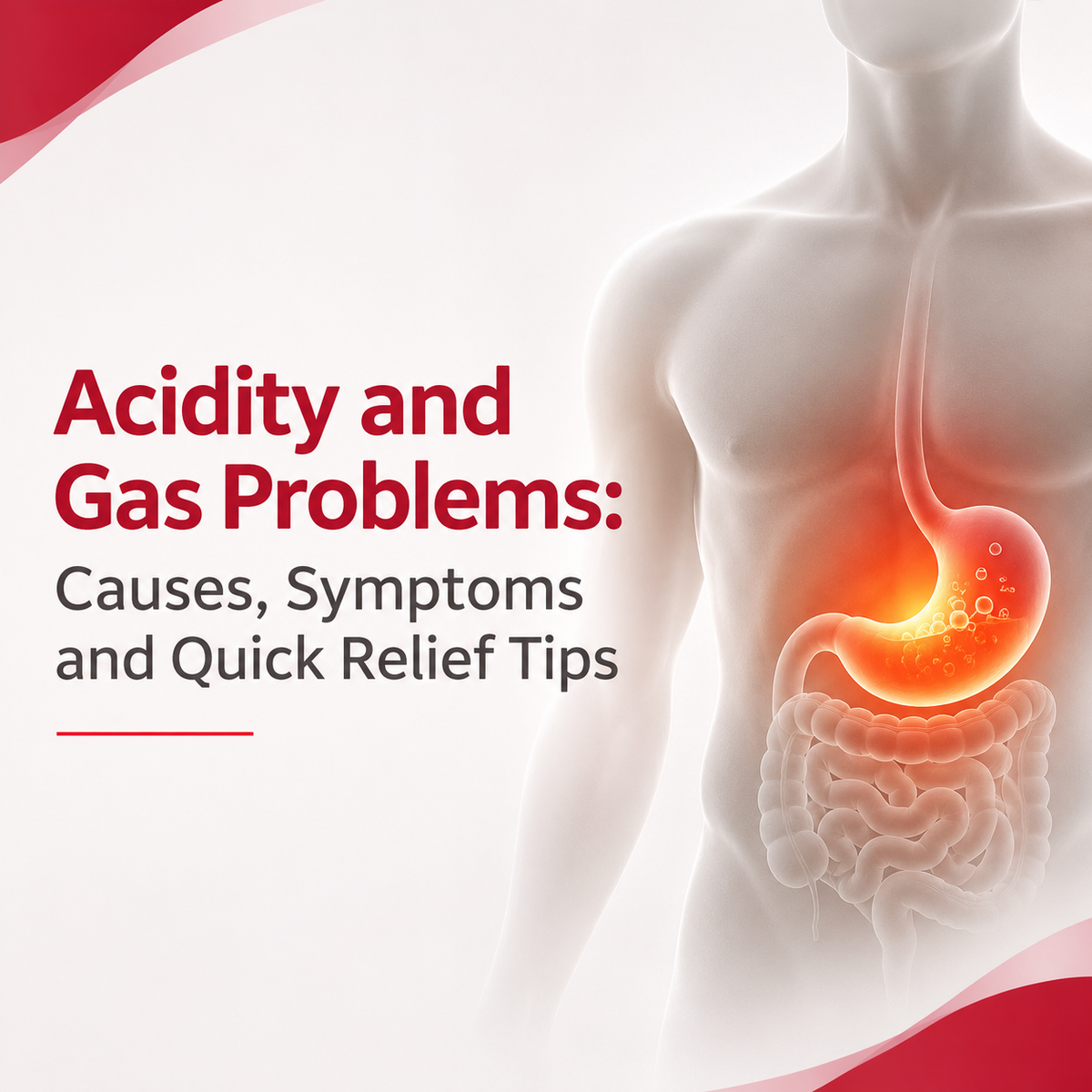
Acidity and gas problems are among the most common digestive complaints. Almost everyone experiences occasional heartburn, burping, bloating or abdominal fullness, especially after overeating or consuming certain foods. However, when these symptoms become frequent, severe or start affecting daily life, they may be linked with conditions such as acid reflux, GERD, indigestion, constipation, food intolerance or other gastrointestinal disorders.
Acidity usually refers to excessive acid-related symptoms such as burning in the chest, sour taste or regurgitation. Gas, on the other hand, commonly causes:
NIDDK notes that common gas symptoms include belching, bloating, abdominal distension and passing gas, while GERD commonly causes heartburn and regurgitation.
At Metro Hospital, Faridabad, people with persistent acidity, GERD, gas, bloating, abdominal discomfort or digestive problems can seek evaluation through the Medical Gastroenterology Department. The department manages conditions including dyspepsia, gas, bloating, GERD, acidity, heartburn, peptic ulcer disease and swallowing difficulties.
This detailed guide explains the causes of acidity and gas, common symptoms, food triggers, quick relief tips, home measures, treatment options, warning signs and when to consult a gastroenterologist.
Acidity is a commonly used term for symptoms related to acid reflux or indigestion.
Normally, a muscular valve called the lower oesophageal sphincter helps prevent stomach contents from flowing back into the oesophagus.
If this valve becomes weak or relaxes at the wrong time, stomach acid may travel upward.
This can cause:
NIDDK explains that gastroesophageal reflux occurs when stomach contents travel back into the oesophagus, while GERD is a more persistent condition that causes repeated symptoms or complications.
Gas is a normal part of digestion.
Gas enters the digestive tract when:
Some gas is released by burping.
The rest passes through the intestines.
Having some gas after meals is normal, but symptoms become troublesome when they are excessive or recurrent.
Although they often occur together, they are not the same problem.
| Acidity | Gas |
|---|---|
| Burning sensation | Bloating |
| Heartburn | Burping |
| Sour taste | Passing gas |
| Acid regurgitation | Abdominal fullness |
| Throat irritation | Cramping |
| Often related to GERD | Often related to digestion, food or swallowed air |
Some people may have both at the same time.
Typical acidity or acid-reflux symptoms include:
A burning sensation behind the breastbone, often after eating.
It may sometimes rise toward the throat.
NIDDK identifies heartburn as one of the classic symptoms of acid reflux and GERD.
Stomach contents may come back into the mouth, causing:
This is known as regurgitation.
Some people experience:
in the upper abdomen.
Acid-related indigestion may sometimes cause nausea.
GERD may occasionally cause symptoms outside the stomach, including:
Gas symptoms commonly include:
NIDDK notes that gas symptoms differ from person to person and are often most noticeable during or after meals.
Several digestive habits can contribute to both problems.
For example:
may increase bloating and reflux symptoms at the same time.
Large meals stretch the stomach.
This can increase pressure and promote reflux.
People prone to acidity often feel worse after:
Smaller meals may reduce symptoms.
Eating close to bedtime can worsen acid reflux because lying down makes it easier for stomach contents to move upward.
NIDDK recommends finishing meals several hours before lying down when reflux symptoms occur.
Certain foods can trigger symptoms in some people.
Common triggers may include:
NHS also lists coffee, tomatoes, alcohol, chocolate and fatty or spicy foods among common indigestion triggers.
Caffeine-containing beverages may worsen acidity in some individuals.
If symptoms regularly occur after:
consider reducing intake and monitoring response.
Smoking can worsen reflux and contributes to many other serious health conditions.
NIDDK identifies smoking and secondhand smoke exposure among factors that can contribute to GERD.
Excess abdominal weight can increase pressure on the stomach.
This can promote acid reflux.
Weight reduction may improve symptoms in overweight individuals.
Hormonal and physical changes during pregnancy can increase acid reflux.
Pregnant women should discuss medication use with their obstetrician rather than self-medicating.
A hiatal hernia occurs when part of the stomach moves upward through the diaphragm.
It can increase the likelihood of reflux.
Some medicines can worsen reflux symptoms.
Examples may include:
NIDDK lists several medication groups that can contribute to GERD.
People may swallow extra air while:
NIDDK specifically recommends eating more slowly and avoiding chewing gum, hard candy, straws and fizzy drinks to reduce swallowed air.
Carbonated beverages add gas directly to the digestive system.
Examples include:
Reducing them may improve frequent bloating.
Some foods naturally produce more intestinal gas.
Common examples include:
Not everyone reacts to the same foods.
Constipation may cause:
Treating constipation often reduces gas symptoms.
NHS identifies constipation as one of the common digestive causes of bloating.
Gas may occur after eating foods that are poorly tolerated.
Examples can include:
Persistent symptoms may require medical or dietary evaluation.
IBS can cause:
Symptoms often fluctuate over time.
Coeliac disease can cause bloating and digestive symptoms after gluten exposure.
NHS lists coeliac disease among possible causes of recurrent bloating.
Fast eating increases swallowed air and may also encourage overeating.
Slow, mindful eating can help.
Occasional reflux is common.
GERD refers to more persistent reflux that repeatedly causes symptoms or complications.
Possible GERD symptoms include:
If acidity occurs repeatedly every week or frequently requires medication, it is worth discussing with a gastroenterologist.
Indigestion, also known as dyspepsia, commonly causes:
NHS notes that indigestion is often caused by stomach acid irritating the stomach lining or oesophagus.
Mild, occasional symptoms can often improve with simple measures.
Avoid lying down immediately after eating.
Sitting upright helps reduce reflux.
A short, gentle walk may support digestion and help reduce bloating.
Avoid intense exercise immediately after a heavy meal.
Adequate hydration supports digestive function.
Small sips may be more comfortable than drinking a large amount at once when bloated.
If you already feel bloated, carbonated beverages can make gas worse.
Choose plain water instead.
Smaller meals reduce stomach distension.
This may help both:
NHS recommends smaller, more frequent meals for people troubled by bloating.
Try to leave at least a few hours between the evening meal and bedtime.
NHS advises avoiding food for about three to four hours before bed for indigestion, while NIDDK advises eating meals two to three hours before lying down to manage reflux.
Chew food properly.
Avoid rushing through meals.
This reduces swallowed air and may help with bloating.
Keep a simple food diary.
Record:
This can help identify personal triggers.
If symptoms are frequent, consider reducing:
and monitor whether symptoms improve.
Tight waistbands may increase abdominal pressure and make reflux uncomfortable.
Lifestyle strategies are usually safer than relying on unproven remedies.
Helpful measures may include:
Be cautious about repeatedly using:
because these may not be appropriate for everyone.
Milk may feel soothing temporarily, but high-fat milk can worsen reflux in some individuals.
Therefore, milk should not be considered a universal treatment for acidity.
There is no evidence that lemon water cures GERD.
Some people tolerate it well, while acidic drinks may worsen symptoms in others.
Individual response matters.
Some people use ajwain traditionally for digestive discomfort.
However, persistent bloating or pain should not be managed only with home remedies.
If symptoms recur frequently, the underlying cause should be evaluated.
Depending on symptoms, doctors may recommend:
Antacids can provide relatively quick relief for mild heartburn.
NIDDK notes that they may help mild GERD symptoms but should not be used every day for severe or persistent symptoms without medical advice.
These medicines reduce stomach acid production.
PPIs reduce stomach acid more strongly and are commonly used for GERD.
NIDDK states that PPIs generally provide better acid suppression and can help heal the oesophageal lining in many patients with GERD.
Long-term or frequent use should be medically supervised.
Treatment depends on the cause.
For example:
Some over-the-counter medicines such as simethicone are used for bloating, but persistent symptoms should be discussed with a doctor or pharmacist.
Not every patient with acidity needs endoscopy.
Doctors may recommend upper GI endoscopy when symptoms are:
Metro Hospital’s Medical Gastroenterology Department provides upper GI endoscopy, colonoscopy, capsule endoscopy, ERCP, endoscopic ultrasound and therapeutic endoscopic procedures.
Yes.
Acid reflux can cause burning or discomfort behind the breastbone.
However, chest pain should never automatically be assumed to be gas or acidity.
Heart-related chest pain can sometimes feel similar.
Seek urgent medical evaluation if chest discomfort is:
Metro Hospital’s existing guide on Chest Pain Due to Gas also emphasises ruling out serious heart and lung causes when symptoms overlap.
Pregnancy can increase:
because of hormonal changes and pressure from the growing uterus.
Pregnant women should avoid starting repeated medicines or herbal treatments without consulting their doctor.
Stress does not necessarily create extra stomach acid in every person, but it can worsen digestive symptoms by affecting:
NHS includes stress and anxiety among factors that may contribute to indigestion symptoms.
Helpful long-term habits include:
NIDDK specifically recommends weight reduction when appropriate, smoking cessation, changes in eating habits and head elevation during sleep for people with GERD.
Try the following:
NIDDK recommends eating slowly and reducing habits that increase swallowed air, while NHS recommends exercise, hydration and smaller meals for bloating.
Common triggers include:
Not everyone needs to avoid all of these.
Remove only foods that consistently trigger symptoms.
Depending on the person, gas may increase after:
Do not unnecessarily eliminate healthy foods unless they reliably cause symptoms.
Consult a gastroenterologist if you have:
NIDDK and NHS both recommend medical assessment for persistent reflux or indigestion associated with swallowing problems, bleeding, weight loss or repeated vomiting.
Patients with recurrent acidity and digestive symptoms can consult the Medical Gastroenterology Department at Metro Hospital, Faridabad.
The department manages conditions including:
Depending on symptoms, evaluation may include:
Dr. Vishal Khurana is Director & HOD – Gastroenterology & Hepatobiliary Sciences at Metro Hospital, Faridabad.
His areas of expertise include:
His current Metro Hospital profile specifically notes that patients with frequent acidity, gas and bloating can seek evaluation through the Gastroenterology Department.
Metro Hospital’s current Gastroenterology team also includes:
The department manages a broad range of digestive, liver and gastrointestinal conditions.
Seek medical evaluation promptly if acidity or gas is accompanied by:
NIDDK lists these among symptoms that may indicate GERD complications or other serious gastrointestinal problems.
Most bloating is harmless.
However, persistent bloating deserves assessment when associated with:
NHS recommends medical evaluation for persistent or severe bloating associated with these features.
False.
Gas and acid reflux are different problems, although they may occur together.
False.
Chest pain can also arise from heart or lung conditions.
Do not self-diagnose severe chest pain.
False.
Other factors include obesity, late meals, smoking, pregnancy, hiatal hernia and certain medicines.
Not necessarily.
Frequent burping often results from swallowing excess air.
Not without medical guidance.
Regular symptoms may indicate GERD or another condition that needs evaluation.
Acidity commonly occurs when stomach contents reflux into the oesophagus because the lower oesophageal sphincter does not prevent backward flow effectively.
Common causes include swallowing air, fizzy drinks, certain foods, constipation, food intolerance and IBS.
Sitting upright, avoiding lying down after meals, eating smaller meals and avoiding known triggers may help mild symptoms.
Gentle walking, staying hydrated, reducing fizzy drinks, and eating slowly may help.
No. Occasional reflux is common, whereas GERD refers to recurrent or persistent reflux symptoms or complications.
Possible causes include eating quickly, food intolerance, constipation, IBS or excess swallowed air. Persistent symptoms deserve evaluation.
Yes, but severe or unexplained chest pain should be assessed because heart disease may cause similar symptoms.
Stress and anxiety may worsen indigestion and digestive symptoms in some individuals.
Seek medical evaluation if symptoms are frequent, persistent, severe or associated with swallowing difficulty, bleeding, repeated vomiting or weight loss.
Patients can seek evaluation through the Medical Gastroenterology Department at Metro Hospital, Faridabad, which manages acidity, GERD, gas, bloating, dyspepsia, heartburn and other digestive conditions.
Acidity and gas problems are common, but frequent symptoms should not simply be ignored or repeatedly treated with home remedies.
Acidity may cause:
Gas commonly causes:
Simple measures such as:
may help reduce symptoms.
However, persistent reflux may indicate GERD, while recurrent bloating can sometimes be related to constipation, food intolerance, IBS or other digestive problems.
At Metro Hospital, Faridabad, patients with persistent acidity, GERD, gas, bloating and abdominal discomfort can consult the Medical Gastroenterology Department. The department provides specialist evaluation and advanced diagnostic services including endoscopy where clinically appropriate.
Patients can also consult Dr. Vishal Khurana, Director & HOD – Gastroenterology & Hepatobiliary Sciences, for evaluation of persistent digestive and gastrointestinal symptoms.
Do not ignore persistent acidity or gas if it is accompanied by unexplained weight loss, swallowing difficulty, vomiting, bleeding or severe chest or abdominal pain.
Disclaimer: This article is intended for general health education only. Frequent or severe digestive symptoms require professional medical evaluation. Severe chest pain should not automatically be attributed to gas or acidity.