Appointment
 Find A Doctor
 Lab Report
Acidity and Gas Problems: Causes, Symptoms and Quick Relief Tips
Nov 19, 2026
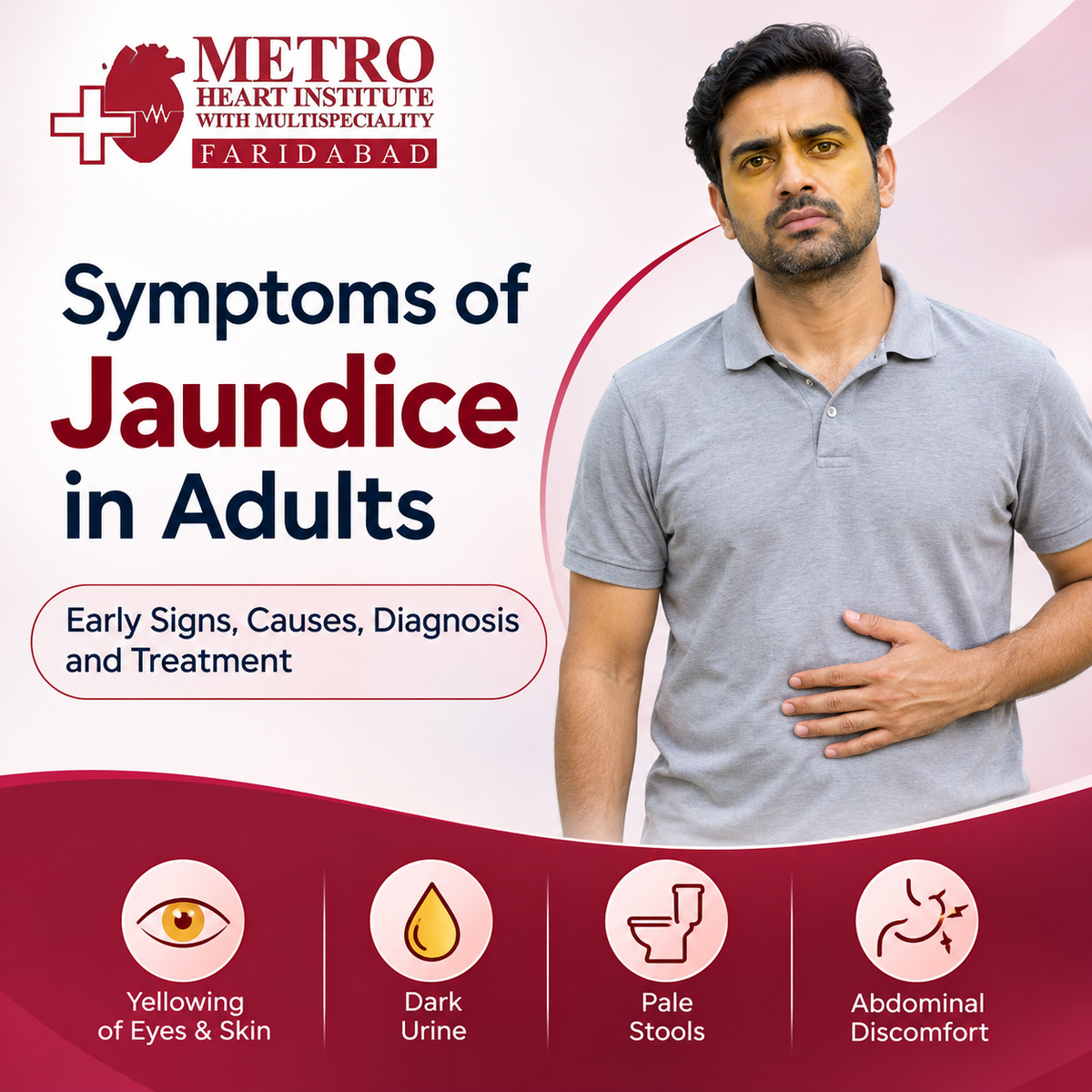
Symptoms of jaundice in adults can range from obvious yellowing of the eyes and skin to less noticeable signs such as dark urine, pale stools, itching, fatigue, nausea or abdominal discomfort.
Jaundice itself is not a disease. It is a sign that bilirubin has accumulated in the blood, usually because of a problem involving the liver, gallbladder, bile ducts, pancreas or breakdown of red blood cells.
The most recognisable symptom is yellowing of the skin and the whites of the eyes. However, depending on skin tone and the severity of bilirubin elevation, yellowing of the skin may sometimes be difficult to notice initially. The eyes may show the change more clearly. The NHS also identifies dark urine, pale stools and itchy skin as common features associated with jaundice.
Because adult jaundice may be associated with conditions such as hepatitis, gallstones, pancreatitis, alcohol-related liver disease or other hepatobiliary disorders, it should not simply be treated as a minor digestive problem.
At Metro Hospital, Faridabad, patients with jaundice, abnormal liver tests, dark urine, abdominal pain or suspected liver and biliary disease can seek specialist assessment through the Medical Gastroenterology Department. The department specifically lists jaundice related to viral hepatitis, obstructive jaundice and biliary stone disease among the conditions requiring gastroenterology evaluation.
This detailed guide explains the symptoms of jaundice in adults, early warning signs, causes, bilirubin, diagnosis, liver-function testing, treatment and when jaundice requires urgent medical care.
Jaundice is a condition in which the:
develop a yellowish appearance.
This happens because a yellow pigment called bilirubin builds up in the bloodstream.
Bilirubin is produced naturally when old red blood cells are broken down.
Normally:
A problem anywhere in this pathway may cause bilirubin levels to rise.
The exact symptoms depend on the underlying cause.
The most common signs include:
Metro Hospital’s current jaundice information also identifies yellowing of the skin and eyes, dark urine, pale stools, fatigue, itching, abdominal pain, nausea and vomiting among common symptoms.
One of the earliest and most recognisable symptoms is yellowing of the sclera, the white part of the eyes.
This is sometimes more noticeable than skin yellowing.
The change may begin as:
If the whites of the eyes become clearly yellow, medical evaluation is advisable.
As bilirubin levels increase, the skin may develop a yellow or golden appearance.
Yellowing may be more difficult to recognise in people with darker skin tones.
The NHS notes that in brown or black skin, yellowing of the skin may be less obvious while yellowing of the whites of the eyes may remain easier to recognise.
Urine may become noticeably darker even when the person is drinking enough fluids.
It may appear:
Dark urine often occurs when conjugated bilirubin is being excreted through the kidneys.
Dark urine combined with yellow eyes or pale stools deserves prompt evaluation.
Normal stool gets much of its brown colour from bile pigments.
If bile cannot reach the intestine properly, stool may become:
This may happen when the bile duct is blocked.
Possible causes include:
The NHS identifies paler-than-usual stools as a common symptom accompanying jaundice.
Persistent itching, medically called pruritus, may occur when bile-related substances accumulate in the bloodstream.
The itching may:
Itching associated with jaundice can be particularly troublesome in obstructive bile-duct disorders.
People with jaundice may experience:
Fatigue is especially common when jaundice is caused by:
Hepatitis-related symptoms may include tiredness, nausea, vomiting, appetite loss, dark urine, pale stools and jaundice.
Some adults with jaundice notice:
Loss of appetite may occur with inflammatory liver conditions such as hepatitis.
Persistent loss of appetite accompanied by weight loss needs evaluation.
Jaundice may occur with:
These symptoms may occur with:
Repeated vomiting combined with jaundice should not be ignored.
The liver and gallbladder are located in the upper right side of the abdomen.
Pain in this area may occur with:
NHS guidance on hepatitis lists pain under the right side of the ribs among possible symptoms.
Severe abdominal pain with jaundice can indicate a more urgent condition.
Possible causes include:
Urgent medical assessment may be required, especially if pain occurs with fever or vomiting.
Jaundice accompanied by fever may occur with:
Fever, severe abdominal pain and jaundice together can require urgent medical assessment.
Weight loss is not a typical feature of every jaundice case.
However, unexplained weight loss with jaundice can be an important warning sign.
It may occur with:
Persistent weight loss deserves investigation.
Abdominal swelling may develop in advanced liver disease.
Fluid accumulation in the abdomen is called ascites.
Possible associated features include:
Ascites combined with jaundice can indicate significant liver dysfunction.
Advanced liver disease can lead to fluid retention.
This may cause swelling around the:
This symptom needs specialist assessment.
The liver produces proteins required for normal blood clotting.
Significant liver dysfunction may lead to:
These signs may indicate more advanced liver disease.
Severe liver dysfunction may cause toxins to accumulate in the bloodstream and affect the brain.
This may lead to:
This condition is known as hepatic encephalopathy and requires urgent medical attention.
The earliest signs may be subtle.
They can include:
The skin may not become obviously yellow immediately.
This is why dark urine and yellow eyes are often important clues.
There are many possible causes.
Broadly, jaundice may occur because of:
Hepatitis means inflammation of the liver.
Viral hepatitis may be caused by viruses including:
Symptoms may include:
Metro Hospital’s Medical Gastroenterology Department provides care for hepatitis B, hepatitis C and other liver diseases.
Gallstones can block the bile duct.
When bile cannot flow normally, bilirubin accumulates.
Possible symptoms include:
Metro Hospital specifically lists obstructive jaundice and biliary stone disease among conditions requiring gastroenterology evaluation.
Long-term excessive alcohol consumption can damage liver cells.
Over time this may lead to:
The NHS identifies alcohol-related liver disease among possible causes of jaundice.
Fatty liver itself may remain silent for years.
However, advanced fatty liver disease may progress to:
Advanced liver disease can eventually produce jaundice.
Metro Hospital’s existing guide on Fatty Liver Symptoms also notes jaundice as a warning sign of advanced liver disease.
Cirrhosis occurs when chronic liver injury causes extensive scarring.
Possible causes include:
Advanced cirrhosis can cause:
Inflammation of the pancreas may sometimes cause jaundice if swelling obstructs bile flow.
The NHS includes pancreatitis among recognised causes of jaundice.
A blockage of the common bile duct may lead to obstructive jaundice.
The cause may involve:
Persistent painless jaundice, particularly with weight loss, requires prompt investigation.
Some conditions cause red blood cells to break down faster than normal.
This increases bilirubin production.
The NHS lists conditions such as sickle cell disease among possible jaundice causes.
Doctors may classify jaundice according to where the problem occurs.
This occurs before bilirubin reaches the liver.
It may be caused by excessive breakdown of red blood cells.
This occurs because the liver cannot process bilirubin normally.
Possible causes include:
This occurs when processed bile cannot flow normally from the liver into the intestine.
Possible causes include:
No.
Jaundice is a sign or symptom of another underlying problem.
Treatment therefore depends on finding the cause.
Simply reducing the yellow colour does not treat the disease responsible for jaundice.
Evaluation may include:
Blood bilirubin testing measures:
The pattern can help doctors understand whether the problem is more likely related to:
LFTs commonly include:
The pattern helps doctors assess liver and bile-duct function.
Metro Hospital’s current jaundice information lists liver-function tests and blood testing among important diagnostic tools.
A CBC may help identify:
Depending on the clinical picture, testing may be performed for:
Ultrasound may evaluate:
It is often one of the first imaging investigations for suspected obstructive jaundice.
Metro Hospital’s jaundice page lists ultrasound and CT imaging among diagnostic tools used in evaluation.
More detailed imaging may be required if ultrasound suggests:
Magnetic Resonance Cholangiopancreatography may provide detailed imaging of:
ERCP can be both diagnostic and therapeutic.
It may help:
Metro Hospital’s Medical Gastroenterology Department provides ERCP along with endoscopic ultrasound and other advanced gastroenterology procedures.
There is no single treatment for jaundice.
Treatment depends entirely on the underlying cause.
Treatment depends on the type of hepatitis.
Some infections may resolve with supportive care, while others require antiviral or specialist management.
Gallstones blocking the bile duct may require:
depending on the condition.
Treatment may involve:
Treatment focuses on restoring bile flow.
This may require:
depending on the cause.
No specific food can cure jaundice.
A balanced diet may support recovery, but treatment must address the underlying disease.
Helpful general habits may include:
Patients with serious liver disease may need personalised dietary advice.
Sugarcane juice is commonly used as a traditional remedy, but it does not treat causes such as:
Jaundice requires proper diagnosis rather than relying only on home remedies.
Some mild conditions may resolve when the underlying cause improves.
However, adult jaundice should not be ignored because it can indicate serious liver or bile-duct disease.
The NHS recommends urgent medical assessment when the skin or whites of the eyes become yellow.
Seek urgent medical care if jaundice is accompanied by:
These symptoms may indicate serious liver dysfunction, infection or bile-duct obstruction.
This combination deserves particular attention.
Jaundice plus:
may indicate infection involving the bile ducts.
Such symptoms may require urgent hospital treatment.
Painless jaundice accompanied by unexplained weight loss should always be evaluated promptly.
Possible causes may include:
Adults with jaundice can seek specialist evaluation through the Medical Gastroenterology Department at Metro Hospital, Faridabad.
The department specifically recommends consultation for:
Available gastroenterology diagnostic services include:
depending on clinical need.
Metro Hospital also has a dedicated Jaundice Treatment information page describing evaluation with blood tests, liver-function tests, ultrasound and CT imaging according to the suspected cause.
Dr. Vishal Khurana is Director & HOD – Gastroenterology & Hepatobiliary Sciences at Metro Hospital, Faridabad.
His current profile notes expertise in gastrointestinal and liver disorders and advanced procedures including:
Patients with jaundice related to liver, gallbladder, biliary or pancreatic disease may require evaluation by a gastroenterologist or hepatobiliary specialist depending on the suspected cause.
Metro Hospital’s gastroenterology team also includes Dr. Neeraj Dhar, Associate Director & HOD – Gastroenterology Unit-II, who manages liver and digestive disorders including fatty liver, pancreatitis and gastrointestinal bleeding.
False.
Jaundice is a sign of an underlying condition.
False.
Other causes include:
False.
Adult jaundice needs medical evaluation even when other symptoms are mild.
False.
It cannot treat conditions such as hepatitis, cirrhosis or obstructive jaundice.
False.
Dark urine can also occur when bilirubin is excreted in urine, particularly in jaundice.
Early symptoms may include slight yellowing of the whites of the eyes, dark urine, fatigue, nausea and reduced appetite.
Yellowing of the skin and whites of the eyes is the most recognisable sign.
Dark urine can occur when excess conjugated bilirubin is excreted through the kidneys.
Stool can become pale when bile does not reach the intestine normally, often because of bile-duct obstruction.
Yes. Itching may occur when bile-related substances accumulate in the bloodstream.
Yes. A gallstone can block the bile duct and cause obstructive jaundice.
No. Jaundice may result from liver disease, gallstones, pancreatitis, bile-duct obstruction or increased red-cell breakdown.
Common tests include bilirubin, liver-function tests, CBC, hepatitis tests and abdominal imaging. Further testing depends on the suspected cause.
Jaundice associated with severe abdominal pain, fever, vomiting, confusion, bleeding or rapid deterioration needs urgent assessment.
Patients can consult the Medical Gastroenterology Department at Metro Hospital, Faridabad for evaluation of jaundice, viral hepatitis, obstructive jaundice and biliary stone disease.
The symptoms of jaundice in adults should not be ignored because jaundice usually indicates an underlying problem affecting bilirubin metabolism or bile flow.
Important warning signs include:
Possible causes include:
Diagnosis may involve:
Treatment is directed at the cause rather than the yellow colouring itself.
At Metro Hospital, Faridabad, patients with jaundice and liver-related symptoms can seek specialist evaluation through the Medical Gastroenterology Department, which manages viral hepatitis, obstructive jaundice, biliary stone disease, cirrhosis and pancreatic conditions and provides advanced diagnostic services including ERCP, EUS and FibroScan.
Patients can also consult Dr. Vishal Khurana, Director & HOD – Gastroenterology & Hepatobiliary Sciences, for gastrointestinal and liver-related evaluation.
If the whites of your eyes or your skin become yellow, especially with dark urine, pale stools, fever, abdominal pain or unexplained weight loss, seek medical evaluation rather than relying only on home remedies.
Disclaimer: This article is intended for general health education only. Jaundice requires diagnosis of its underlying cause. Seek prompt medical evaluation for new yellowing of the skin or eyes, particularly when associated with pain, fever, vomiting, confusion or bleeding.