Appointment
 Find A Doctor
 Lab Report

World Children’s Day 2026: Theme, Child Health, Rights, Nutrition and Preventive Care
Nov 16, 2026
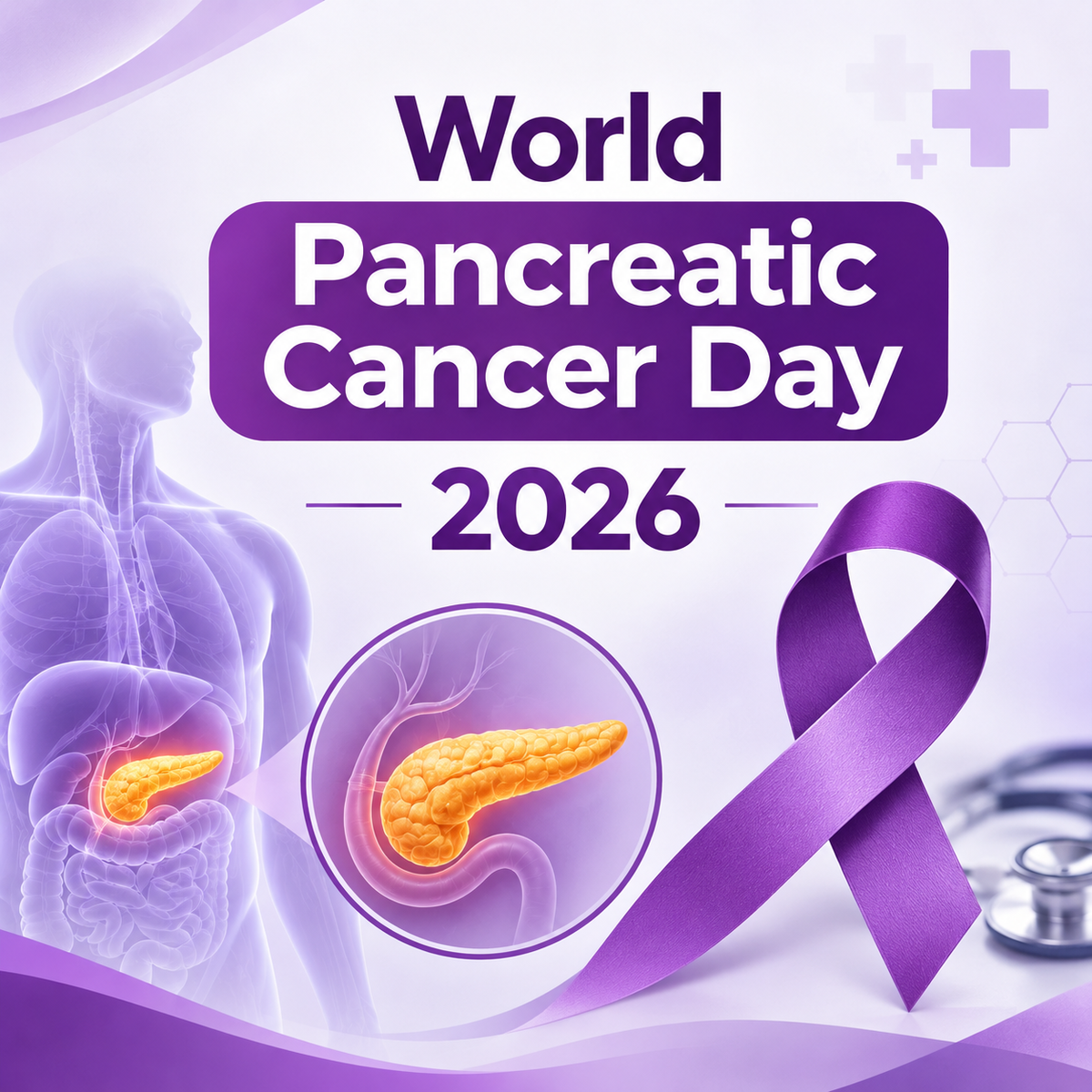
World Pancreatic Cancer Day 2026 will be observed on 19 November 2026 to increase awareness about pancreatic cancer, encourage people to recognise possible symptoms and risk factors, and promote earlier medical evaluation.
Pancreatic cancer remains one of the most difficult cancers to detect early because it often causes few or no noticeable symptoms during its initial stages. The World Pancreatic Cancer Coalition notes that pancreatic cancer continues to have a very low five-year survival rate in many parts of the world, making earlier recognition and better access to diagnosis and treatment particularly important.
The 2026 campaign encourages people to:
At Metro Hospital, Faridabad, patients with unexplained jaundice, persistent upper abdominal pain, back pain, unexplained weight loss or suspected pancreatic disease can seek specialist evaluation through the Medical Gastroenterology Department. Patients who require advanced pancreatic or hepatobiliary surgery can be evaluated through the Surgical Gastroenterology Department.
For patients diagnosed with pancreatic cancer, multidisciplinary cancer care is available through Metro Cancer Institute – Medical Oncology, supported by Surgical Oncology and Radiation Oncology where clinically appropriate.
Patients with pancreatic, liver, biliary or gastrointestinal symptoms can also consult Dr. Vishal Khurana, Director & HOD – Gastroenterology at Metro Hospital, Faridabad.
This detailed guide explains World Pancreatic Cancer Day 2026, pancreatic cancer symptoms, major risk factors, diagnosis, staging, surgery, chemotherapy, molecular testing, targeted therapy and supportive treatment.
World Pancreatic Cancer Day 2026 is observed on 19 November 2026.
Throughout November, during Pancreatic Cancer Awareness Month, the World Pancreatic Cancer Coalition coordinates global activities that culminate on World Pancreatic Cancer Day.
The campaign aims to:
The 2026 campaign does not centre on a single short “theme” as some other health observances do.
Instead, the World Pancreatic Cancer Coalition is focusing on three major ideas:
The coalition specifically encourages people to seek medical advice if something feels wrong because earlier diagnosis may allow more treatment options.
The pancreas is an organ located deep in the upper abdomen, behind the stomach.
It has two important functions:
The pancreas produces enzymes that help digest:
It also produces hormones, including insulin, which help regulate blood glucose.
Pancreatic cancer develops when abnormal pancreatic cells begin to grow uncontrollably.
The majority of pancreatic cancers arise from the exocrine portion of the pancreas and are commonly classified as pancreatic ductal adenocarcinoma.
Pancreatic cancer is challenging because early disease often causes few or no symptoms.
The pancreas also lies deep in the abdomen, making small tumours difficult to detect during routine physical examinations.
NCI notes that pancreatic cancer generally has no obvious early symptoms, and many symptoms appear only after the disease has progressed.
This is why awareness of subtle warning signs matters.
Pancreatic cancer symptoms depend on:
Common symptoms may include the following.
Jaundice causes:
A tumour in the head of the pancreas may block the bile duct, causing bilirubin to accumulate in the bloodstream.
NCI lists jaundice as one of the key symptoms of pancreatic cancer.
When bile flow is obstructed, urine may become unusually dark.
Patients may describe it as:
Dark urine with yellowing of the skin or eyes should be evaluated by a doctor.
A blocked bile duct can prevent bile from reaching the intestine normally.
This can make stools appear:
NCI includes light-coloured stools among the symptoms associated with pancreatic cancer.
Bile salts building up in the bloodstream may cause significant itching.
This may accompany:
Pancreatic cancer may cause pain in the upper or middle abdomen.
It may be:
In some patients, the pain worsens after eating.
Pancreatic tumours can cause pain that radiates from the abdomen toward the back.
NCI lists upper or middle abdominal pain and back pain among possible symptoms.
Persistent abdominal and back pain should not repeatedly be assumed to be gas or acidity without evaluation.
Weight loss without dieting is an important warning sign.
It may occur because cancer affects:
A patient may notice:
Persistent loss of appetite with unexplained weight loss requires assessment.
Pancreatic cancer may cause persistent weakness or fatigue.
NCI identifies fatigue among the possible symptoms of pancreatic cancer.
If a tumour presses on the stomach or upper intestine, it can affect food passage and contribute to:
Some patients may experience:
These symptoms are very common and usually have non-cancerous causes.
However, persistent bloating with weight loss or jaundice should not be ignored.
New diabetes in later life can occasionally be associated with pancreatic cancer.
NCI notes that a new diagnosis of diabetes in someone without typical risk factors may sometimes be an early sign, particularly when accompanied by other concerning symptoms.
Most new diabetes cases are not caused by pancreatic cancer, but the combination of:
may warrant further evaluation.
Advanced pancreatic cancer can increase the tendency for blood to clot.
Possible symptoms include:
NCI notes that newly diagnosed blood clots may be associated with pancreatic cancer in some patients.
The exact cause is not known in most cases, but several risk factors are recognised.
Cigarette smoking increases pancreatic cancer risk.
Stopping smoking is one of the most important modifiable preventive measures.
Obesity is associated with increased risk.
Maintaining a healthy weight may help reduce overall cancer and metabolic risk.
Long-standing pancreatic inflammation can increase the risk of pancreatic cancer.
NCI identifies chronic pancreatitis as an established risk factor.
People with a family history of pancreatic cancer may have a higher risk.
The risk is particularly important when several close relatives are affected.
Inherited gene changes associated with increased risk include:
NCI identifies these genes among recognised inherited pancreatic-cancer risk factors.
Long-standing diabetes is associated with increased pancreatic-cancer risk.
At the same time, pancreatic cancer can occasionally cause new-onset diabetes.
Not every case can be prevented.
However, risk reduction may include:
People with a strong family history or inherited cancer-risk syndrome should discuss genetic counselling and surveillance with a specialist.
Routine screening is not recommended for average-risk adults.
Unlike some cancers, there is no standard population screening programme for pancreatic cancer.
Higher-risk individuals with:
may be considered for specialist surveillance.
Depending on individual risk, surveillance may involve:
Diagnosis usually begins with:
NCI states that imaging tests are central to both diagnosing pancreatic cancer and determining its stage.
Blood tests may include:
These tests do not diagnose pancreatic cancer by themselves but may identify abnormalities related to bile-duct obstruction or general health.
CA 19-9 can be elevated in some pancreatic cancers.
However, it is not suitable as a general population screening test.
It can also rise in:
NCI notes that tumour-marker measurements can help assess disease burden and treatment response when elevated.
A contrast-enhanced CT scan is one of the most important diagnostic and staging tools.
It can help assess:
MRI can provide detailed images of the pancreas and surrounding structures.
MRCP can help evaluate:
Endoscopic ultrasound, or EUS, allows close examination of the pancreas using an ultrasound probe attached to an endoscope.
It may also help obtain biopsy samples.
At Metro Hospital, Faridabad, the Medical Gastroenterology programme provides advanced endoscopic evaluation, including EUS for selected pancreatic and biliary disorders.
ERCP may be used when a pancreatic tumour blocks the bile duct.
It can help:
NCI lists ERCP among procedures that may assist in the diagnosis of pancreatic cancer, particularly in the presence of bile-duct obstruction.
A biopsy removes tissue so a pathologist can confirm whether cancer is present.
Biopsy can be obtained using:
Molecular testing has become increasingly important in pancreatic cancer.
NCI recommends molecular profiling because certain gene changes may create opportunities for targeted treatments.
Testing may identify alterations involving:
Genetic testing can identify inherited mutations that may:
People diagnosed with pancreatic cancer may be advised to discuss germline genetic testing with their treating team.
Pancreatic cancer is often described according to whether it is:
The tumour appears removable with surgery.
The tumour may involve nearby blood vessels but could potentially become operable after treatment.
The cancer has significant local involvement and usually cannot initially be completely removed.
The cancer has spread to distant organs.
Treatment depends heavily on these categories.
Some patients with early, surgically removable pancreatic cancer can be treated with curative intent.
However, surgery is possible only for a proportion of patients because many cases are diagnosed at a more advanced stage.
Earlier evaluation therefore matters.
Surgery remains a key treatment for resectable pancreatic cancer.
The Whipple procedure, or pancreaticoduodenectomy, is commonly used for tumours in the head of the pancreas.
It may involve removal of:
NCI describes the Whipple procedure as a standard surgical approach for tumours in the pancreatic head.
A distal pancreatectomy is commonly used for tumours in the:
of the pancreas.
The spleen may also need to be removed in some cases.
In selected cases, the entire pancreas may need to be removed.
Patients then require lifelong management of:
At Metro Hospital, Faridabad, the Surgical Gastroenterology and Surgical Oncology teams manage pancreatic surgery.
The hospital’s Surgical Oncology services include pancreatic resections such as pancreatectomy as part of gastrointestinal cancer surgery, while Surgical Gastroenterology supports the management of pancreatic and hepatobiliary conditions.
Chemotherapy may be used:
Treatment choice depends on:
At Metro Cancer Institute, Medical Oncology provides systemic cancer treatment for solid tumours, including gastrointestinal cancers.
Neoadjuvant treatment is given before surgery.
It may help:
Adjuvant chemotherapy is given after surgery to reduce the risk of recurrence.
Targeted therapy is becoming increasingly important in selected pancreatic cancers.
NCI’s current guidance lists several molecularly targeted options for specific mutations and tumour profiles.
This reinforces the importance of molecular testing.
KRAS mutations are extremely common in pancreatic cancer.
NCI’s 2026 pancreatic-cancer treatment update notes the approval of daraxonrasib for certain advanced, previously treated pancreatic cancers with KRAS mutations.
This does not mean the treatment is appropriate for every patient.
Eligibility depends on:
Immunotherapy has a role in only a small proportion of pancreatic cancers.
Patients with certain molecular features may benefit.
Testing is therefore important before deciding whether immunotherapy is suitable.
Radiation therapy may be considered for selected patients with:
At Metro Cancer Institute, the Radiation Oncology team can coordinate radiation treatment depending on clinical need.
Supportive care is important at every stage.
It may include:
If a pancreatic tumour blocks bile flow and causes jaundice, an endoscopic stent may be placed to relieve obstruction.
This can help improve:
Some patients develop pancreatic exocrine insufficiency.
This can lead to:
Pancreatic enzyme replacement may improve digestion in selected patients.
Patients may struggle with:
Nutrition plans may involve:
Diet should be individualised.
Pancreatic cancer treatment often involves multiple specialists, including:
A multidisciplinary approach helps coordinate:
Patients with suspected pancreatic disease can begin evaluation through the Medical Gastroenterology Department at Metro Hospital, Faridabad.
Relevant services can include:
Patients requiring surgery may be managed through:
while systemic cancer treatment can be coordinated through:
This integrated approach allows diagnosis, staging and treatment planning to take place within a multidisciplinary care pathway.
Seek medical evaluation if you develop:
These symptoms do not necessarily mean pancreatic cancer, but they should be investigated.
False.
Early pancreatic cancer may cause no symptoms.
False.
Jaundice can also result from blockage of the bile duct by a pancreatic tumour.
False.
Smoking increases risk, but pancreatic cancer also occurs in non-smokers.
False.
Treatment may include:
Depending on stage.
False.
Most people with newly diagnosed diabetes do not have pancreatic cancer.
However, new diabetes associated with unexplained weight loss or other warning signs may need further evaluation.
World Pancreatic Cancer Day 2026 is observed on 19 November 2026.
The 2026 campaign focuses on raising awareness of symptoms and risk factors, encouraging earlier diagnosis and inspiring action to improve outcomes rather than promoting a single short official theme.
Pancreatic cancer often has no clear early symptoms. Possible symptoms include jaundice, abdominal or back pain, unexplained weight loss, dark urine, pale stools and loss of appetite.
Yes. Pain in the upper or middle abdomen that radiates to the back can occur.
Pancreatic cancer can sometimes be associated with new-onset diabetes, although most people with diabetes do not have pancreatic cancer.
Risk factors include smoking, obesity, chronic pancreatitis, family history and certain inherited mutations such as BRCA1, BRCA2, PALB2 and ATM.
Diagnosis may include CT, MRI, EUS, ERCP, blood tests and biopsy. Molecular and genetic testing may also be recommended.
Some pancreatic cancers can be removed when diagnosed at a resectable stage. Procedures may include the Whipple operation or distal pancreatectomy.
Yes, but only for selected patients with specific molecular alterations. Molecular testing is important because it may identify actionable mutations.
Patients can seek multidisciplinary evaluation and treatment at Metro Hospital and Metro Cancer Institute, Faridabad, with support from Medical Gastroenterology, Surgical Gastroenterology, Surgical Oncology, Medical Oncology and Radiation Oncology.
World Pancreatic Cancer Day 2026 will be observed on 19 November 2026.
The World Pancreatic Cancer Coalition is using the day to raise awareness of one of the most difficult cancers to diagnose early and to encourage people to recognise symptoms, understand risk factors, and seek medical advice sooner.
Important warning signs include:
Pancreatic cancer is difficult to detect early, but earlier diagnosis may provide more treatment options.
Modern treatment can involve:
At Metro Hospital, Faridabad, patients with suspected pancreatic disease can be evaluated through Medical Gastroenterology and Surgical Gastroenterology, while confirmed pancreatic cancer can be treated through Metro Cancer Institute, supported by Surgical Oncology, Medical Oncology and Radiation Oncology.
The most important message for World Pancreatic Cancer Day 2026 is:
Know the symptoms, understand the risks, and do not ignore persistent unexplained changes—earlier evaluation can make an important difference.
Disclaimer: This article is intended for general health education only. Pancreatic cancer cannot be diagnosed from symptoms alone. Persistent jaundice, unexplained weight loss, abdominal or back pain, or other concerning symptoms should be evaluated by a qualified healthcare professional.