Appointment
 Find A Doctor
 Lab Report
Cancer Warning Signs: 12 Symptoms You Should Never Ignore
Oct 26, 2026
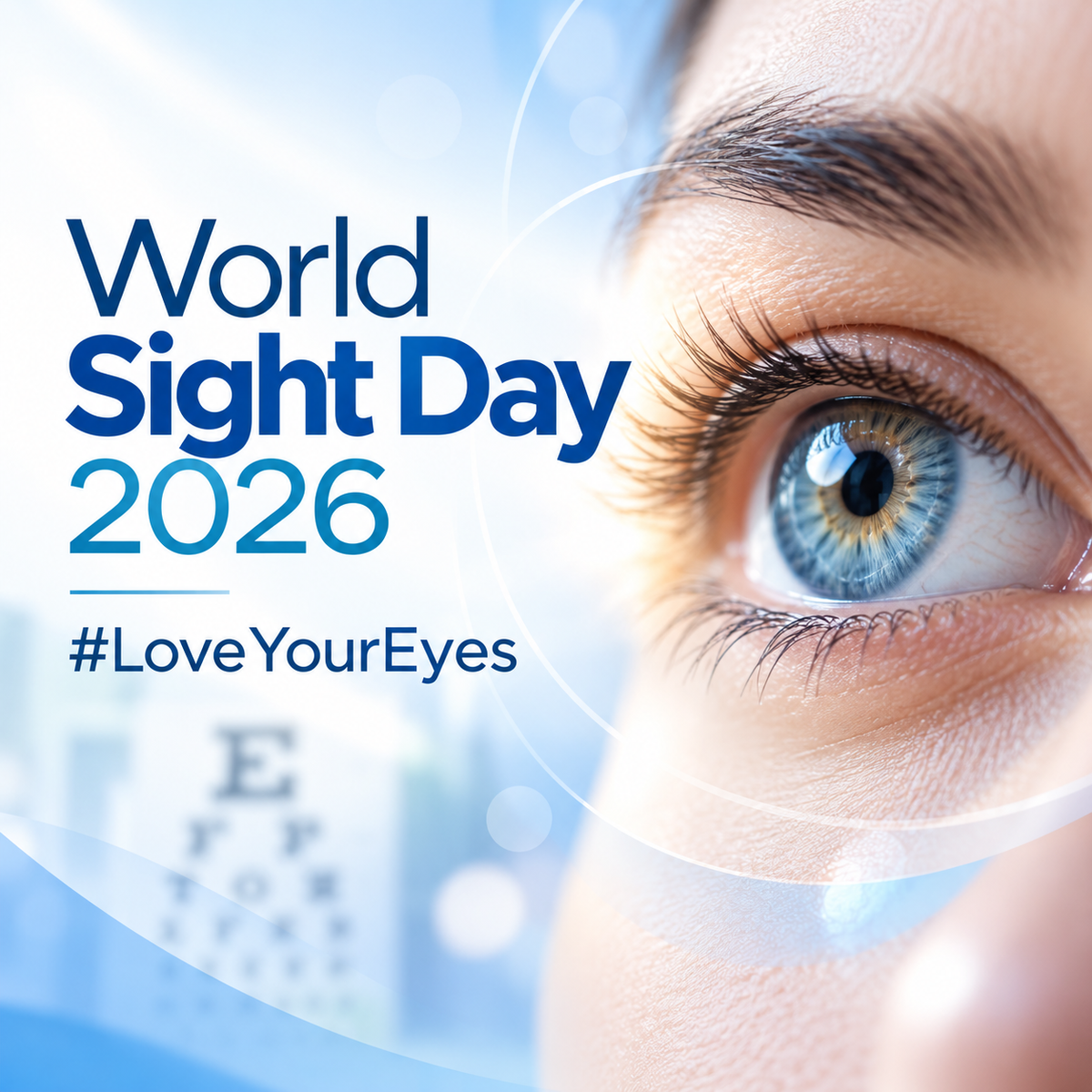
Our eyes allow us to learn, work, communicate, travel and experience the world around us. Yet eye health often receives attention only when vision begins to change. Many eye conditions can progress gradually, and some may not cause noticeable symptoms during their early stages. Regular eye examinations and timely treatment can therefore play an important role in protecting vision.
World Sight Day 2026 provides an important opportunity to remind individuals, families, schools, workplaces and communities that eye health deserves attention at every stage of life.
Observed on 8 October 2026, World Sight Day brings global attention to blindness, visual impairment, accessible eye care and the importance of protecting our eyesight. The campaign is coordinated by the International Agency for the Prevention of Blindness (IAPB), which is once again encouraging people around the world to prioritise their vision through the message #LoveYourEyes.
The occasion is particularly significant because vision problems affect people across all age groups. According to the World Health Organization, at least 2.2 billion people worldwide have near or distance vision impairment, and in at least 1 billion cases, the impairment could have been prevented or has yet to be addressed.
World Sight Day 2026 is therefore more than an awareness campaign. It is a reminder to make eye care part of routine healthcare rather than waiting for serious vision problems to appear.
World Sight Day 2026 Date: 8 October 2026
World Sight Day is traditionally observed on the second Thursday of October every year. In 2026, it falls on Thursday, 8 October.
The day encourages people to understand their eye health, schedule regular eye check-ups, recognise warning signs early and support better access to quality eye care.
The World Sight Day 2026 theme and campaign message is “Love Your Eyes.”
The 2026 campaign continues the global #LoveYourEyes movement while placing the power of people, personal stories, lived experiences and community action at the centre of World Sight Day. IAPB is also encouraging five million people to pledge to #LoveYourEyes and promoting eye screenings in schools, workplaces and public institutions.
An important component of the 2026 campaign is “Every Story Counts.” The idea is to give people an opportunity to share how vision and access to eye care affect their education, independence, livelihood, relationships and overall quality of life.
The message behind the campaign is simple: protecting eyesight should become a priority for everyone.
Loving your eyes means:
World Sight Day 2026 also reinforces the larger goal of making quality eye care accessible to everyone.
Vision problems can affect almost every part of daily life.
Difficulty seeing clearly may affect a child’s ability to read and learn, an adult’s productivity at work, the ability to drive safely and an older person’s independence and mobility.
The global scale of the problem is significant. The WHO estimates that at least 2.2 billion people have near or distance vision impairment, and at least 1 billion cases could have been prevented or remain unaddressed.
Uncorrected refractive errors and cataracts remain among the leading causes of vision impairment globally. Other important causes include glaucoma, diabetic retinopathy and age-related macular degeneration.
These figures highlight an important message: many people continue living with vision problems even when effective eye care may be available.
World Sight Day encourages early detection, timely treatment and greater awareness about conditions that can affect eyesight.
Several eye conditions can affect vision. Some develop gradually, while others may require immediate medical attention.
Refractive errors are among the most common causes of blurred vision.
They occur when the eye cannot focus light correctly on the retina.
Common refractive errors include:
Myopia: Distant objects appear blurred while nearby objects may remain clearer.
Hyperopia: Nearby objects may appear blurred, although the effect varies depending on age and severity.
Astigmatism: Vision may appear blurred or distorted at different distances.
Presbyopia: Age-related difficulty focusing on nearby objects, commonly becoming noticeable after around 40 years of age.
The WHO identifies uncorrected refractive error as a leading cause of vision impairment among both children and adults.
Regular eye testing can identify refractive errors and help determine whether spectacles, contact lenses or another correction option is appropriate.
A cataract develops when the natural lens of the eye becomes cloudy.
It is commonly associated with ageing, although cataracts may occur for other reasons as well.
Possible cataract symptoms include:
Cataract is one of the leading causes of vision impairment globally.
When a cataract significantly affects vision and everyday activities, an ophthalmologist may recommend cataract surgery.
Patients looking for evaluation and treatment can learn more about cataract and comprehensive eye care at Metro Hospital.
Glaucoma refers to a group of eye conditions that can damage the optic nerve.
Some forms of glaucoma may progress without obvious symptoms during their early stages. This is one reason routine eye examinations become increasingly important with age and for individuals with risk factors.
Depending on the type of glaucoma, treatment may include medicines, laser procedures or surgery.
Metro Hospital’s Ophthalmology Department provides glaucoma evaluation and treatment services, including glaucoma surgery and laser-based treatment.
People living with diabetes need to pay particular attention to their eye health.
Persistently elevated blood glucose can damage small blood vessels in the retina and result in diabetic retinopathy.
The condition may not cause noticeable symptoms in its early stages.
As it progresses, patients may experience:
Managing diabetes and undergoing periodic retinal examinations are important components of diabetic eye care.
Age-related macular degeneration, commonly called AMD, affects the macula, which is responsible for detailed central vision.
It can make activities such as reading, recognising faces and seeing fine details difficult.
The risk generally increases with age, making regular eye evaluations especially important for older adults.
Dry eye can occur when the eyes do not produce enough tears or when the tear film does not function properly.
Possible symptoms include:
Dry eye is common, especially among people spending long periods using computers, smartphones and other digital devices.
Persistent symptoms should be assessed instead of relying continuously on over-the-counter eye drops without medical advice.
Eye health is particularly important during childhood because good vision supports reading, learning, participation in sports and overall development.
Children may not always realise that their vision is abnormal because they may assume everyone sees the same way.
Parents and teachers should watch for signs such as:
The 2026 World Sight Day campaign specifically includes expanded Love Your Eyes Kids resources and encourages eye screenings in schools.
Early identification of refractive errors and other childhood eye conditions may prevent avoidable difficulties with learning and daily activities.
Digital devices have become an essential part of modern life.
Computers, smartphones, tablets and televisions are used for education, entertainment, communication and professional work. Long periods of uninterrupted screen use, however, can contribute to eye discomfort.
Digital eye strain may cause:
A useful habit is the 20-20-20 rule.
After approximately 20 minutes of screen use, look at something around 20 feet away for about 20 seconds.
Additional steps include:
Screen-related discomfort that persists despite these measures should be evaluated by an eye specialist.
World Sight Day 2026 continues to promote Love Your Eyes at Work, encouraging employers and employees to prioritise healthy vision in the workplace.
Different professions create different eye-health risks.
Office professionals may experience digital eye strain, while workers in factories, construction sites, laboratories and industrial environments may be exposed to dust, chemicals, particles or physical injuries.
Workplace eye protection can include:
Eye protection should be considered an essential component of occupational health.
Eye health cannot always be separated from overall health.
Conditions such as diabetes and hypertension can affect blood vessels throughout the body, including those supplying the eyes.
People with diabetes may be at risk of diabetic retinopathy and other eye problems. Regular comprehensive eye examinations can help identify retinal changes at an earlier stage.
Similarly, controlling blood pressure, blood glucose and other cardiovascular risk factors contributes to overall eye health.
This is why people with chronic medical conditions should discuss the appropriate frequency of eye examinations with their healthcare provider.
Some eye symptoms require urgent medical attention.
Consult an ophthalmologist promptly if you experience:
Sudden changes in eyesight should not be ignored or treated solely with self-medication.
World Sight Day is an excellent opportunity to adopt habits that may support long-term eye health.
Eye examinations are important even when vision appears normal.
An eye specialist can check visual acuity and evaluate the eyes for conditions that may not initially produce obvious symptoms.
Do not continue using outdated spectacles if your vision has changed.
An eye examination can determine whether your current prescription remains suitable.
Follow the treatment plan advised by your doctor and have your eyes examined at intervals appropriate for your medical condition.
Use protective eyewear when working with machinery, chemicals, construction materials or activities where particles could enter the eyes.
A healthy diet containing fruits, vegetables, leafy greens, proteins and other nutrient-rich foods supports overall health, including eye health.
Smoking is associated with a range of health problems and can also increase the risk of certain eye diseases.
Regular breaks can help reduce digital eye strain.
Continuous redness, watering, blurred vision, irritation or recurring headaches should be evaluated rather than repeatedly self-treated.
Everyone can benefit from appropriate eye care, but regular assessments may be especially important for:
The frequency and type of eye examination should be determined based on age, symptoms and individual risk factors.
World Sight Day 2026 reminds us that eye health should not be taken for granted.
Patients experiencing blurred vision, cataract symptoms, glaucoma-related concerns, retinal problems, eye infections, refractive errors or other vision issues can consult the Ophthalmology Department at Metro Hospital, Faridabad.
The department provides services for cataract, glaucoma, retinal conditions, squint and oculoplasty-related problems, along with comprehensive ophthalmic evaluation. Metro Hospital’s listed services include phacoemulsification and foldable lens implantation for cataract, glaucoma surgery, laser glaucoma treatment and other ophthalmic services.
For specialist consultation, patients can also consult:
Dr. Lucky Kharbanda is Senior Consultant & HOD – Ophthalmology at Metro Hospital, Faridabad. Areas of expertise listed on the doctor’s profile include micro-incision cataract surgery, anterior segment surgery, glaucoma, medical management of retinal diseases, ocular trauma, uveitis, myopia control and infectious eye diseases.
Dr. Ajay Pathak is Senior Consultant & HOD – Ophthalmology (Unit-II) at Metro Hospital, Faridabad. Areas of expertise include cataract and advanced eye surgery, comprehensive eye check-ups, neuro-ophthalmology, anterior segment disorders, glaucoma and retinal disease evaluation, diabetic eye disease management and preventive ophthalmology.
Timely consultation with an ophthalmologist can help determine the reason behind changing vision and guide appropriate treatment.
The message of World Sight Day 2026—Love Your Eyes—is simple but powerful.
Do not wait until your eyesight starts interfering with everyday activities before scheduling an eye examination.
Protecting eyesight requires a combination of awareness, prevention, regular screening and timely treatment.
Whether it is correcting refractive errors in children, detecting glaucoma before significant vision loss occurs, monitoring diabetic eye disease, treating cataracts or simply managing eye strain caused by modern lifestyles, appropriate eye care can make a meaningful difference.
This World Sight Day, make a commitment to yourself and your family:
Love Your Eyes. Get Your Eyes Checked. Protect Your Vision.
World Sight Day 2026 will be observed on Thursday, 8 October 2026. It is observed globally on the second Thursday of October to raise awareness about eye health, vision impairment and access to eye care.
The World Sight Day 2026 campaign continues with the global theme and message “Love Your Eyes.” The 2026 campaign particularly highlights personal stories, lived experiences and community action, encouraging people everywhere to prioritise their eye health.
World Sight Day aims to create awareness about blindness and vision impairment while encouraging individuals, communities and policymakers to prioritise accessible eye care, regular screening and timely treatment.
Some eye conditions can develop without obvious symptoms in their early stages. Routine eye examinations can help identify refractive errors and detect conditions requiring further evaluation or treatment.
Globally, uncorrected refractive errors and cataracts are among the leading causes of vision impairment. Glaucoma, diabetic retinopathy and age-related macular degeneration are also important causes.
Yes. Diabetes can affect retinal blood vessels and lead to diabetic retinopathy. People living with diabetes should undergo eye examinations at intervals recommended by their doctor.
Children should have their vision evaluated when recommended during routine healthcare assessments and whenever parents or teachers notice difficulty reading, squinting, headaches, sitting unusually close to screens or trouble seeing distant objects.
Long periods of uninterrupted screen use commonly contribute to digital eye strain, dryness, headaches and temporary focusing problems. Regular breaks, proper screen positioning and good visual habits can reduce discomfort.
Patients looking for an eye specialist in Faridabad can consult Dr. Lucky Kharbanda, Senior Consultant & HOD – Ophthalmology at Metro Hospital, Faridabad. The appropriate ophthalmologist should be selected according to the patient’s specific eye condition and treatment requirements.
Patients can consult Dr. Ajay Pathak, Senior Consultant & HOD – Ophthalmology (Unit-II) at Metro Hospital, Faridabad. Dr. Ajay Pathak’s listed expertise includes cataract and advanced eye surgery, neuro-ophthalmology, retinal disease evaluation, glaucoma and diabetic eye disease management.
World Sight Day 2026, observed on 8 October 2026, is a global reminder that protecting vision should be part of lifelong healthcare.
With the theme “Love Your Eyes,” the campaign encourages people to value their eyesight, undergo appropriate eye examinations and support better access to eye care for everyone.
Vision problems such as refractive errors, cataracts, glaucoma, diabetic retinopathy and other eye conditions can affect education, productivity, independence and quality of life. Early diagnosis and appropriate treatment can make a significant difference in many cases.
If you or a family member is experiencing blurred vision, frequent headaches, difficulty seeing at night, eye pain, flashes, floaters, persistent redness or any noticeable change in eyesight, consult an ophthalmologist rather than delaying evaluation.
For comprehensive eye care, visit the Ophthalmology Department at Metro Hospital, Faridabad and take an important step towards protecting your vision.
This World Sight Day 2026, make your eyesight a priority — because every story, every experience and every future deserves the opportunity to be seen clearly.
Disclaimer: This blog is intended for general health awareness and educational purposes only. It should not be considered a substitute for professional medical advice, diagnosis or treatment. Consult a qualified ophthalmologist for individual eye-health concerns.