Appointment
 Find A Doctor
 Lab Report
Cancer Warning Signs: 12 Symptoms You Should Never Ignore
Oct 26, 2026
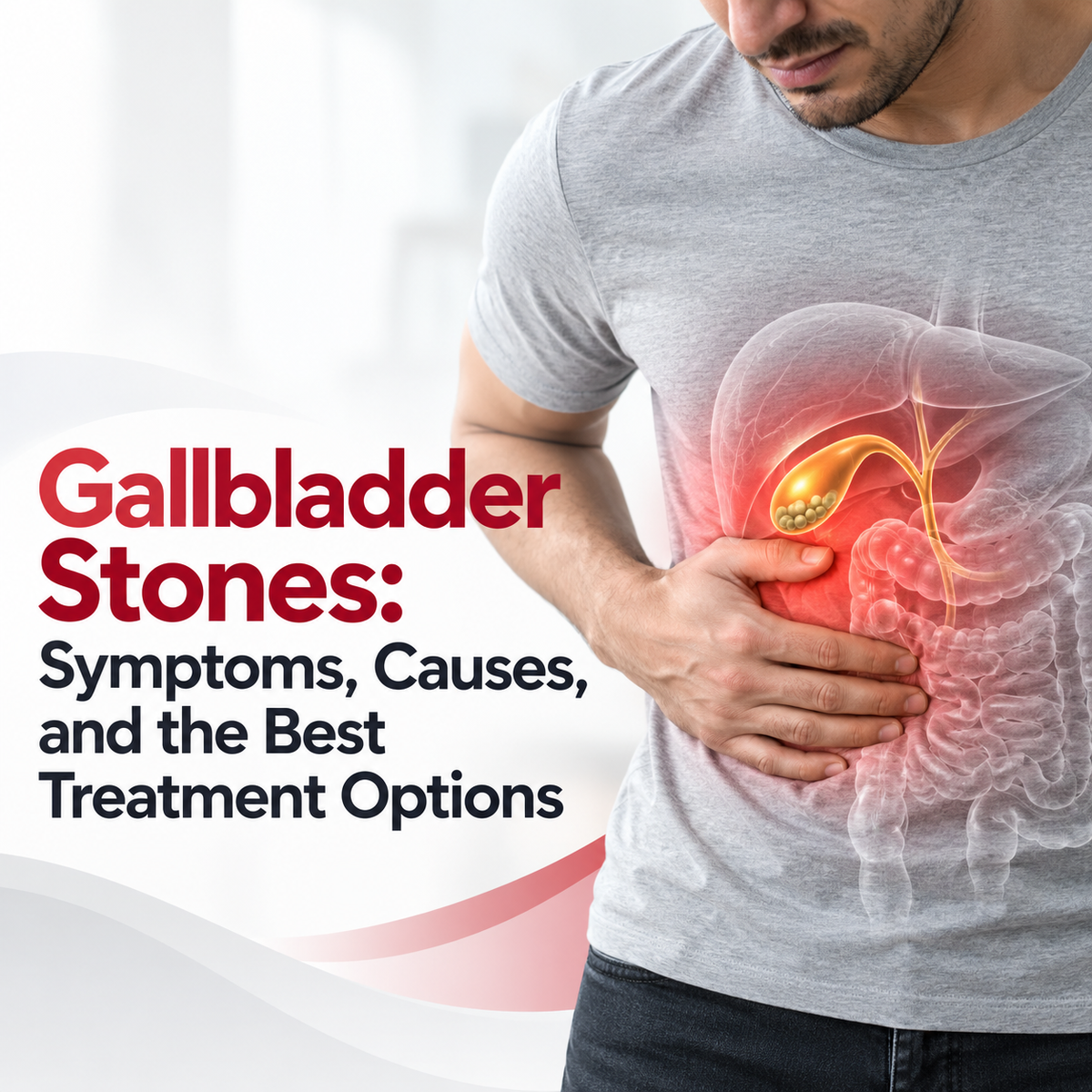
Gallbladder stones, medically known as gallstones or cholelithiasis, are hardened deposits that develop inside the gallbladder. They may remain silent for years or suddenly cause severe pain, nausea, vomiting, infection, jaundice, or inflammation of the pancreas.
For some people, gallstones are discovered accidentally during an ultrasound done for another reason. In others, a stone can block the normal flow of bile and trigger a painful gallbladder attack, often felt in the upper-right side of the abdomen.
The good news is that gallbladder stones can be diagnosed accurately and treated effectively. When symptoms are recurring or complications develop, laparoscopic gallbladder removal surgery, known as laparoscopic cholecystectomy, is generally the standard definitive treatment.
For patients looking for advanced gallbladder stone treatment in Faridabad, Metro Hospital, Faridabad provides comprehensive care with experienced gastrointestinal and laparoscopic surgeons, advanced imaging, ERCP facilities and minimally invasive surgical options.
This detailed guide explains the symptoms of gallbladder stones, their causes, risk factors, complications, diagnosis and the best available treatment options.
The gallbladder is a small, pear-shaped organ located beneath the liver on the upper-right side of the abdomen.
Its main function is to store bile, a digestive fluid produced by the liver. When we eat, particularly meals containing fat, the gallbladder contracts and releases bile into the small intestine to help with digestion.
Gallstones form when substances present in bile become imbalanced and harden into stone-like material.
Gallstones can vary greatly in size. They may be:
Most gallstones are composed mainly of cholesterol, while others are made primarily from bilirubin pigments.
Gallstones that remain inside the gallbladder without causing blockage may not produce symptoms. Problems usually begin when a stone obstructs the gallbladder outlet or moves into one of the bile ducts.
Gallstones are generally divided into two main types.
These are the most common type.
They usually form when bile contains more cholesterol than can remain dissolved.
Cholesterol stones may be yellowish or greenish and can vary in number and size.
Pigment stones are darker and are largely composed of bilirubin.
They may be associated with certain blood disorders, liver conditions or other changes that increase bilirubin levels.
Some patients may have stones containing a mixture of cholesterol, calcium salts and pigments.
Many people with gallstones experience no symptoms at all.
These are known as silent gallstones. They are often detected incidentally during an ultrasound or scan performed for another medical reason.
Silent gallstones generally do not require immediate treatment unless there are specific clinical reasons to intervene.
However, when a gallstone blocks a bile duct, symptoms can occur suddenly.
The most characteristic symptom is pain in the upper-right side of the abdomen, just below the ribs.
The pain may:
This type of pain is commonly called biliary colic or a gallbladder attack.
Not everyone experiences pain only on the right side.
Some people describe severe discomfort in the upper-middle abdomen, just below the breastbone.
Because this location can resemble acidity, gastritis or indigestion, repeated attacks should be evaluated rather than repeatedly treated as gas.
Gallbladder pain may spread towards:
This pattern can provide an additional clue that the pain is related to the gallbladder.
Nausea and vomiting are common during gallbladder attacks.
Severe vomiting associated with persistent abdominal pain should be medically assessed.
Some people with gallbladder disease experience:
These symptoms are not specific to gallstones and can occur with many digestive disorders. Therefore, an ultrasound or other investigations may be required to confirm the diagnosis.
Fever, chills or feeling unusually unwell along with right upper abdominal pain may indicate inflammation or infection of the gallbladder.
This can occur in acute cholecystitis, a potentially serious complication that requires prompt medical evaluation.
If a stone moves into and blocks the common bile duct, bile may not drain normally.
This can cause:
Jaundice associated with abdominal pain requires urgent evaluation because it may indicate a blocked bile duct.
Gallstones form when the chemical composition of bile changes or when the gallbladder does not empty efficiently.
The exact cause can vary between individuals.
Bile normally contains substances that help keep cholesterol dissolved.
If the liver releases more cholesterol into bile than can be adequately dissolved, cholesterol may crystallise and gradually form stones.
Bilirubin is produced when the body breaks down red blood cells.
Certain medical conditions can lead to excessive bilirubin in bile, contributing to the development of pigment stones.
If the gallbladder does not empty completely or often enough, bile may become more concentrated.
Concentrated bile can promote the formation of stones.
Anyone can develop gallstones, but certain factors increase the likelihood.
Women have a higher risk of gallstones than men.
Hormonal factors, including increased oestrogen levels, can influence cholesterol levels in bile and gallbladder function.
The risk of developing gallstones generally rises with age.
People who are overweight or living with obesity have an increased risk of gallstones.
Obesity can increase cholesterol in bile and contribute to stone formation.
Interestingly, losing weight too quickly can also increase gallstone risk.
Very rapid weight loss changes the metabolism of cholesterol and can reduce normal gallbladder emptying.
This is why crash diets and extremely low-calorie diets should be avoided unless medically supervised.
Gallstones can occur more frequently in families, suggesting genetic factors may contribute to risk.
Pregnancy-related hormonal changes can slow gallbladder emptying and increase the risk of stone formation.
People with diabetes may have an increased risk of gallbladder disease.
Conditions affecting the absorption of bile salts, including Crohn’s disease involving parts of the small intestine, can increase the risk of gallstones.
Several of these risk factors are recognised in current clinical guidance.
Yes.
Many gallstones remain harmless, but complications can occur when stones block the gallbladder outlet, common bile duct or pancreatic duct.
When a stone blocks the cystic duct and the gallbladder becomes inflamed, the condition is called acute cholecystitis.
Symptoms can include:
This requires medical treatment and may require surgery.
A gallstone may leave the gallbladder and become lodged in the common bile duct.
This is known as choledocholithiasis.
It can result in:
If a blocked bile duct becomes infected, a serious condition called cholangitis may develop.
Typical features can include:
Severe cases can become life-threatening and require urgent treatment.
The bile duct and pancreatic duct meet before draining into the small intestine.
A gallstone lodged near this junction can obstruct the pancreatic duct and trigger inflammation of the pancreas.
Gallstone pancreatitis may cause:
Gallstone-related pancreatitis is a recognised complication and requires urgent hospital care.
Seek medical evaluation if you experience repeated episodes of upper abdominal pain, particularly after meals.
You should seek urgent medical care if you have:
These symptoms may indicate a blocked bile duct, gallbladder infection, pancreatitis or another serious condition.
Diagnosis usually begins with a clinical history and physical examination.
Your doctor may ask about:
Several investigations may then be recommended.
Ultrasound is usually the first and most useful imaging test for detecting gallstones.
It can help identify:
Ultrasound is considered the preferred imaging test for finding gallstones.
Blood tests can help determine whether gallstones have caused complications.
Tests may assess:
Abnormal values may suggest gallbladder inflammation, bile duct obstruction or pancreatitis.
A CT scan may be advised when the diagnosis is uncertain or when complications are suspected.
Magnetic Resonance Cholangiopancreatography, or MRCP, is a specialised MRI technique used to examine the bile ducts and pancreatic ducts.
It may help identify stones within the common bile duct.
Endoscopic ultrasound, or EUS, can help identify very small stones or bile duct stones that may not be clearly visible on routine imaging.
Endoscopic Retrograde Cholangiopancreatography (ERCP) is used primarily as a therapeutic procedure rather than only as a diagnostic test.
If a stone is lodged in the common bile duct, ERCP may be used to remove it.
Treatment depends on whether the gallstones are causing symptoms or complications.
If gallstones are discovered accidentally and are not causing symptoms, immediate treatment is usually not necessary.
Doctors may recommend observation unless specific risk factors or complications are present.
Once gallstones repeatedly cause pain or other symptoms, definitive treatment is often recommended because attacks can recur.
For most patients with symptomatic gallstones, surgical removal of the gallbladder is the standard treatment.
Laparoscopic cholecystectomy is a minimally invasive procedure used to remove the gallbladder.
Instead of making one large abdominal incision, the surgeon operates through several small incisions using a camera and specialised instruments.
The gallbladder containing the stones is then removed.
A common question is: “Why can’t doctors simply remove the stones and leave the gallbladder?”
The problem is that the gallbladder itself has developed the conditions that allow stones to form.
If only the stones are removed, new stones may form again.
Removing the gallbladder provides definitive treatment for symptomatic gallstone disease.
Compared with traditional open surgery, laparoscopic cholecystectomy generally offers:
The exact recovery period varies between patients depending on age, overall health, severity of inflammation and whether complications are present.
Yes.
The gallbladder stores bile, but it is not essential for survival.
After gallbladder removal, the liver continues producing bile. Instead of being stored in the gallbladder, bile flows directly into the small intestine.
Most people can return to a normal lifestyle after recovery.
Some people may temporarily notice digestive changes after surgery, particularly after fatty meals, but these often improve as the body adjusts.
ERCP is commonly used when gallstones have moved from the gallbladder into the common bile duct.
During the procedure, a flexible endoscope is passed through the mouth into the stomach and small intestine.
The doctor can then access the bile duct and remove obstructing stones.
ERCP treats stones in the bile duct, but it does not remove stones remaining inside the gallbladder.
Patients with gallbladder stones and common bile duct stones may therefore require both ERCP and subsequent gallbladder surgery.
Non-surgical treatment is available in limited situations, but it is generally not the preferred treatment for symptomatic gallstones.
Certain bile acid medicines can sometimes dissolve small cholesterol stones.
However:
These medicines are generally reserved for selected individuals who cannot undergo surgery.
Shock wave treatment has occasionally been used to break gallstones into smaller pieces.
However, it is rarely used for gallbladder stones today because recurrence can occur and laparoscopic surgery generally provides a more definitive solution.
No food, juice or home remedy has been reliably shown to dissolve gallstones already present inside the gallbladder.
Dietary changes may reduce symptoms for some people and can help support overall gallbladder health, but diet should not be considered a replacement for medically indicated treatment.
Official patient guidance also notes that dietary changes cannot remove gallstones that have already formed.
Some patients notice that attacks occur after heavy or fatty meals.
While waiting for treatment, your doctor may recommend avoiding foods that repeatedly trigger symptoms.
Examples can include:
However, completely eliminating all dietary fat is not generally necessary unless advised by your healthcare provider.
A balanced diet containing fibre, vegetables, fruits and whole grains may support digestive and metabolic health.
Not all gallstones are preventable, but certain lifestyle measures may reduce risk.
Obesity increases the risk of gallstones.
Gradual, sustainable weight loss is preferable to crash dieting.
Losing weight very quickly can increase gallstone formation.
If you need to lose significant weight, discuss a safe plan with a healthcare professional.
Include:
A balanced eating pattern is generally better for metabolic and digestive health.
Regular physical activity helps maintain a healthy body weight and supports overall health.
NIDDK recommends maintaining a healthy weight, eating fibre-rich foods, limiting refined carbohydrates and avoiding very rapid weight loss as part of gallstone risk reduction.
Gallstone pain is frequently mistaken for acidity or gas.
Acidity may commonly cause:
Gallstone pain is more commonly:
Because symptoms overlap, recurrent upper abdominal pain should be properly evaluated instead of repeatedly self-treated with antacids.
Gallstones and kidney stones are entirely different conditions.
Gallstones form inside the gallbladder and involve the digestive/biliary system.
Kidney stones form in the urinary tract.
Kidney stone pain often occurs in the back or flank and may travel towards the groin. Urinary symptoms or blood in the urine may also occur.
Gallstone pain typically occurs in the upper-right abdomen and may spread towards the back or shoulder.
Recovery after laparoscopic cholecystectomy is usually quicker than after traditional open surgery.
After surgery, patients may be encouraged to:
The surgeon determines when a patient can return to work, exercise and normal activities.
Recovery may take longer if the surgery was performed during severe infection, pancreatitis or other complications.
Patients searching for the best hospital for gallbladder stone treatment in Faridabad need a facility that can manage not only uncomplicated gallstones but also emergencies and complications such as bile duct stones, infection, jaundice and pancreatitis.
Metro Hospital, Faridabad provides dedicated gallbladder care supported by diagnostic imaging, gastroenterology and minimally invasive surgery.
The hospital’s gallbladder treatment programme includes facilities such as:
Metro Hospital’s dedicated gallbladder treatment page describes advanced diagnostic facilities, ERCP availability and laparoscopic cholecystectomy as a key minimally invasive treatment option.
This combination of diagnostic, endoscopic and surgical services makes Metro Hospital a strong choice for patients seeking comprehensive gallbladder stone treatment in Faridabad.
Gallbladder surgery requires appropriate surgical expertise, particularly when patients have acute inflammation, multiple stones, previous abdominal surgery or other medical conditions.
Metro Hospital’s advanced laparoscopic surgery team includes specialists experienced in gastrointestinal and minimally invasive procedures.
Among them is Dr. Vijender Gupta, Director & HOD – Laser, Laparoscopic, Bariatric, Metabolic Surgery & Robotic Surgery (Unit-I). His listed areas of expertise include gallbladder stones along with advanced laparoscopic and minimally invasive surgery.
Metro Hospital also lists specialists including Dr. Mradul Garg and Dr. Midur Kumar Sharma within its minimally invasive and laparoscopic surgery services.
Gallstones sometimes require more than a surgical consultation.
For example:
A multispeciality hospital can coordinate these services within one clinical setting.
For patients comparing options for the best gallbladder stone treatment in Faridabad, Metro Hospital offers a comprehensive pathway from diagnosis and endoscopic treatment to laparoscopic surgery and postoperative follow-up.
Many gallstones cause no symptoms. When symptoms occur, the most common early sign is sudden pain in the upper-right or upper-middle abdomen, often lasting more than 30 minutes. Nausea, vomiting and pain after meals may also occur.
Gallstone pain is commonly felt below the ribs on the upper-right side of the abdomen. It may also occur in the upper-middle abdomen and can spread towards the back or right shoulder.
Gallstones generally do not simply disappear naturally. Certain medicines can dissolve selected cholesterol stones, but they work slowly, are suitable only for limited cases and stones may recur.
For symptomatic gallstones, laparoscopic cholecystectomy is generally considered the standard definitive treatment. It removes the gallbladder and prevents future gallbladder stone attacks.
Laparoscopic gallbladder removal is performed under general anaesthesia but uses small incisions rather than the larger incision associated with traditional open surgery. The complexity and recovery depend on the individual patient’s condition.
Yes. The gallbladder is not an essential organ. The liver continues producing bile after surgery, and most people can return to a normal lifestyle after recovery.
Yes. If a stone moves into and blocks the common bile duct, bilirubin can accumulate and cause yellowing of the skin or eyes, dark urine and pale stools. This requires prompt medical assessment.
Yes. A stone can block the area where the pancreatic duct drains and cause acute pancreatitis. Severe upper abdominal pain radiating to the back with vomiting requires urgent medical care.
Ultrasound is usually the first and preferred imaging test for gallstones. Additional investigations such as blood tests, MRCP, CT, EUS or ERCP may be needed when complications or bile duct stones are suspected.
Patients with gallbladder stones generally require evaluation by an experienced gastrointestinal or laparoscopic surgeon. At Metro Hospital, Faridabad, Dr. Vijender Gupta specialises in advanced laparoscopic, gastrointestinal and minimally invasive surgery and treats conditions including gallbladder stones.
Patients searching for the best hospital for gallbladder stone treatment in Faridabad can consider Metro Hospital, Faridabad for comprehensive evaluation and treatment. The hospital provides ultrasound and advanced imaging, EUS, ERCP, gastroenterology support and laparoscopic gallbladder surgery under an experienced multidisciplinary team.
No. ERCP is an endoscopic procedure mainly used to remove stones from the common bile duct. Gallbladder surgery, or cholecystectomy, removes the gallbladder itself. Some patients may require both procedures.
Silent gallstones may never cause problems. However, symptomatic stones can lead to recurring pain, gallbladder inflammation, bile duct obstruction, jaundice, cholangitis or pancreatitis. Therefore, recurring symptoms should be medically evaluated.
No. Dietary changes may reduce symptoms and help support overall health, but they do not reliably dissolve gallstones that have already formed.
Gallbladder stones are common, but they should not be ignored when they begin causing symptoms.
Repeated upper-right abdominal pain, nausea, vomiting, pain after meals, jaundice, fever or pain radiating towards the back can indicate gallstone disease or one of its complications.
Silent gallstones may not need treatment, but symptomatic gallstones often require definitive management. For most suitable patients, laparoscopic cholecystectomy remains the standard treatment for recurrent or symptomatic gallstones, while ERCP may be required if stones have entered the common bile duct.
Early diagnosis can help prevent complications such as acute cholecystitis, obstructive jaundice, cholangitis and gallstone pancreatitis.
If you are experiencing symptoms of gallbladder stones and are looking for advanced gallbladder stone treatment in Faridabad, Metro Hospital, Faridabad offers comprehensive diagnostic, gastroenterology and minimally invasive surgical care. With advanced imaging, ERCP facilities and an experienced laparoscopic surgery team, the hospital provides treatment pathways tailored to the patient’s condition.
Do not repeatedly ignore severe or recurring upper abdominal pain as “gas” or “acidity.” A timely medical evaluation can identify the actual cause and help you receive the right treatment before complications develop.
Disclaimer: This blog is intended for general health education and awareness only. It should not replace individual medical advice, diagnosis or treatment. Seek urgent medical attention for severe abdominal pain, persistent vomiting, fever, jaundice or other concerning symptoms.