Appointment
 Find A Doctor
 Lab Report
Heart Rate Normal Range by Age: Complete Pulse Rate Chart
Nov 27, 2026
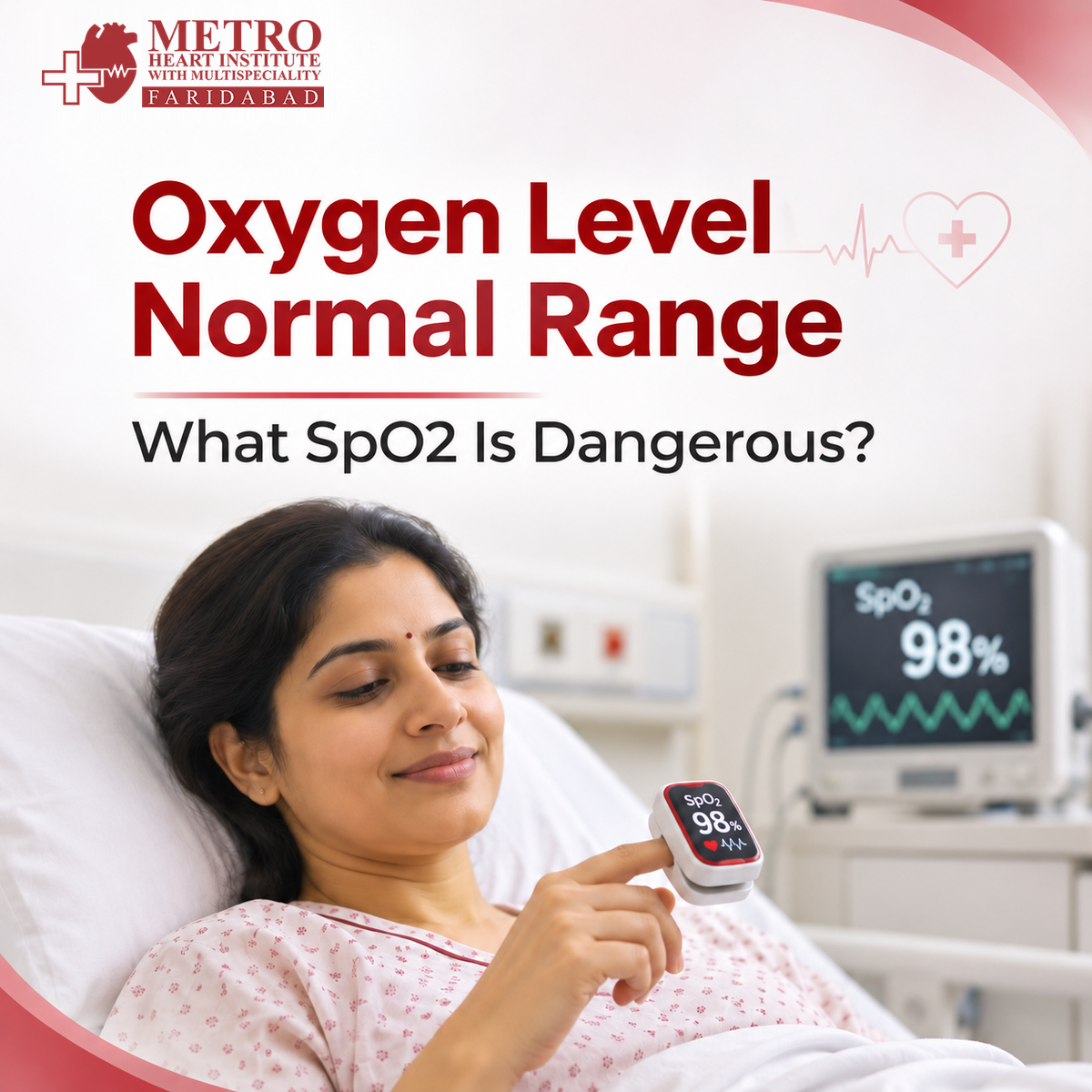
Understanding the oxygen level normal range is important for assessing lung function, respiratory health and the body’s ability to deliver oxygen to vital organs. Blood oxygen saturation, commonly displayed as SpO2 on a pulse oximeter, indicates the estimated percentage of haemoglobin carrying oxygen in the bloodstream.
For most healthy adults and children at or near sea level, the normal blood oxygen saturation level is approximately 95% to 100%.
A persistent oxygen level of 93–94% may require medical evaluation, while an unexpected reading of 92% or below requires urgent assessment. An oxygen saturation level below 90% can indicate significant oxygen deficiency and should be treated as a medical emergency, particularly in people without a prescribed lower oxygen target.
However, normal oxygen levels may differ in individuals with chronic lung disease, those living at high altitudes and patients receiving specialist respiratory treatment.
At Metro Hospital, Faridabad, patients experiencing low oxygen saturation, persistent breathlessness, chronic cough or unexplained breathing difficulties can seek specialist evaluation through the Metro Centre for Respiratory Diseases (MCRD), which provides advanced respiratory diagnostics, pulmonary interventions, respiratory critical care and pulmonary rehabilitation.
This comprehensive guide explains the oxygen level normal range by age, what different SpO2 readings mean, dangerous oxygen levels, common causes of low blood oxygen, pulse oximeter accuracy, treatment options and when to seek emergency medical attention.
SpO2 stands for peripheral oxygen saturation. It represents an estimate of the percentage of haemoglobin in arterial blood that is carrying oxygen.
When you breathe, oxygen enters the lungs and travels into tiny air sacs called alveoli. From there, oxygen passes into the bloodstream and attaches to haemoglobin inside red blood cells.
The heart then pumps oxygen-rich blood throughout the body to support the functioning of the brain, heart, kidneys, muscles and other organs.
For example, an SpO2 reading of 98% indicates that approximately 98% of the available haemoglobin oxygen-binding sites are occupied by oxygen.
SpO2 is commonly measured using a small electronic device called a pulse oximeter.
The normal oxygen saturation range for most healthy individuals is:
95%–100% SpO2
Oxygen saturation may vary slightly depending on:
A single oxygen saturation reading should always be interpreted alongside symptoms, previous readings and overall clinical condition.
The following oxygen saturation chart provides general guidance for adults at or near sea level who do not have a medically prescribed lower oxygen target.
| SpO2 Level | General Interpretation | Recommended Action |
|---|---|---|
| 95–100% | Normal oxygen saturation | Routine monitoring when necessary |
| 93–94% | Below the usual healthy range | Recheck correctly and seek prompt medical advice if persistent |
| 90–92% | Low oxygen saturation | Seek urgent medical assessment |
| 85–89% | Significantly low oxygen saturation | Seek emergency medical attention |
| Below 85% | Critically low oxygen saturation | Immediate emergency medical care |
Important: Do not wait for oxygen saturation to fall below 90% if you are experiencing severe breathlessness, chest pain, confusion, bluish lips or fainting.
Individuals with chronic respiratory conditions may have personalised oxygen targets established by their treating doctor.
Unlike heart rate, which varies substantially throughout childhood, oxygen saturation generally remains within a similar range across most healthy age groups after the newborn transition period.
| Age Group | Typical Healthy SpO2 Range |
|---|---|
| Newborns after normal post-birth transition | 95–100% |
| Infants | 95–100% |
| Children | 95–100% |
| Teenagers | 95–100% |
| Adults aged 18–40 years | 95–100% |
| Adults aged 41–60 years | 95–100% |
| Adults aged 61–70 years | Usually 95–100% |
| Adults above 70 years | Usually 95–100%, with individual variation |
Newborn babies may have lower oxygen saturation during the first minutes after birth as they adapt to breathing outside the womb. Neonatal oxygen readings require specialised interpretation.
Some older adults may have slightly lower baseline oxygen saturation, particularly if they have existing heart or lung conditions. However, a persistent reduction in oxygen levels should not automatically be attributed to ageing.
The normal oxygen saturation range is generally the same for healthy adult men and women.
| Gender | Normal SpO2 Range |
|---|---|
| Adult men | 95–100% |
| Adult women | 95–100% |
Pregnancy, respiratory illness, cardiovascular conditions and measurement accuracy may influence individual readings.
Pregnant women experiencing unexpected low oxygen saturation, chest pain or significant breathlessness should receive prompt medical assessment.
There is no single oxygen saturation threshold that applies to every individual and medical condition.
For most people without chronic oxygen deficiency:
A sudden fall from your usual oxygen saturation may also be important, even when the reading remains close to the normal range.
For example, a patient whose oxygen saturation normally remains around 98% but consistently drops to 94% during an acute respiratory illness may require further assessment.
Yes. An SpO2 reading of 98% falls within the usual healthy oxygen saturation range.
However, a normal oxygen reading does not rule out asthma, heart disease, anaemia, pulmonary embolism or other medical conditions.
Persistent symptoms should still be investigated.
An oxygen saturation of 95% is generally within the normal range for most healthy adults.
If this is your usual reading and you have no concerning symptoms, it may be entirely acceptable.
However, if your oxygen saturation has recently decreased from a consistently higher baseline or you are experiencing breathing difficulties, medical evaluation may be appropriate.
An oxygen saturation of 94% is slightly below the usual healthy range at sea level.
Possible explanations include temporary measurement errors, respiratory infections, underlying lung conditions or individual baseline variations.
Rest briefly, ensure that the pulse oximeter is positioned correctly and repeat the measurement.
If the reading remains at 94%, particularly during an illness or alongside respiratory symptoms, contact a healthcare professional promptly.
For most healthy adults, an SpO2 reading of 92% is below the expected range and requires urgent medical assessment.
Possible causes include pneumonia, COPD exacerbations, severe asthma, heart failure and other respiratory or cardiovascular conditions.
Patients should not rely solely on home remedies or wait for symptoms to become severe.
People with a prescribed lower oxygen saturation target should follow their individual respiratory care plan.
Yes. An unexpected oxygen saturation of 90% is significantly below the normal range for most healthy individuals and requires urgent assessment.
If the reading is falling or accompanied by breathing difficulty, chest pain, confusion or severe weakness, seek emergency medical care immediately.
An oxygen saturation of 85% indicates substantial oxygen deficiency in most circumstances.
Such low oxygen levels may compromise the functioning of vital organs and require immediate hospital assessment.
Do not delay treatment by repeatedly checking the pulse oximeter or attempting to correct severe oxygen deficiency through breathing exercises alone.
Hypoxaemia refers to an abnormally low level of oxygen in arterial blood.
It may occur when the lungs cannot transfer sufficient oxygen into the bloodstream or when blood flow through the lungs is affected.
Common causes include respiratory infections, chronic lung disease, airway obstruction, pulmonary embolism and cardiovascular disorders.
Prolonged or severe hypoxaemia may affect the brain, heart and other vital organs.
Although these terms are often used interchangeably, they describe different conditions.
| Feature | Hypoxaemia | Hypoxia |
|---|---|---|
| Meaning | Abnormally low oxygen in arterial blood | Insufficient oxygen reaching body tissues |
| Assessment | Pulse oximetry and arterial blood gas testing | Clinical assessment and appropriate investigations |
| Common causes | Lung disease, pneumonia, respiratory failure | Hypoxaemia, severe anaemia, circulatory failure |
| Major concern | Reduced blood oxygenation | Inadequate oxygen supply to organs |
Hypoxaemia can lead to tissue hypoxia, but tissue oxygen deficiency can also occur despite a normal SpO2 reading.
Low oxygen saturation may produce noticeable symptoms, although some individuals experience relatively few warning signs.
Breathlessness is one of the most common symptoms associated with respiratory problems and low oxygen levels.
You may notice difficulty walking, climbing stairs or completing everyday activities without becoming unusually breathless.
Sudden or severe breathlessness requires immediate medical attention.
The body may increase its breathing rate in an attempt to obtain more oxygen.
Persistent rapid breathing at rest may indicate respiratory distress, infection or another underlying medical condition.
The heart may beat faster to compensate for inadequate oxygen delivery.
A rapid heartbeat accompanied by low oxygen saturation, chest discomfort or dizziness requires medical assessment.
Inadequate oxygen delivery to tissues may contribute to weakness, tiredness and reduced physical stamina.
However, fatigue can also result from anaemia, thyroid disorders, infections and other medical conditions.
A bluish or greyish discolouration of the lips, tongue or nail beds is known as cyanosis.
It may indicate significant oxygen deficiency or circulatory problems.
Cyanosis accompanied by breathing difficulty is a medical emergency.
Reduced oxygen delivery or impaired circulation may contribute to dizziness, lightheadedness and near-fainting episodes.
These symptoms should not be ignored when accompanied by abnormal oxygen readings.
The brain requires a continuous supply of oxygen to function normally.
Sudden confusion, disorientation or unusual drowsiness may indicate serious illness and requires emergency medical assessment.
Low oxygen saturation and certain cardiopulmonary conditions may be associated with chest tightness or pain.
Chest pain should never be automatically attributed to a respiratory problem because heart-related emergencies can produce similar symptoms.
Breathing difficulty may trigger restlessness, anxiety or a feeling of being unable to get enough air.
These symptoms should not automatically be dismissed as a panic attack, particularly when oxygen saturation is abnormal.
Some people maintain satisfactory oxygen saturation while resting but experience a fall during physical activity.
Unexplained breathlessness or oxygen desaturation while walking may indicate underlying lung or cardiovascular disease.
The Metro Centre for Respiratory Diseases provides specialised exercise-based respiratory assessments for appropriate patients.
Pneumonia causes inflammation within the lungs. The air sacs may become filled with inflammatory fluid, affecting oxygen transfer into the bloodstream.
Patients may experience fever, cough, chest pain, breathlessness and reduced oxygen saturation.
Read Metro Hospital’s guide on World Pneumonia Day: Symptoms, Prevention and Treatment to understand pneumonia and its potential respiratory complications.
COPD is a chronic respiratory condition associated with persistent airflow limitation.
Advanced COPD may affect oxygen exchange, particularly during respiratory infections or acute exacerbations.
Some COPD patients require personalised oxygen saturation targets and long-term respiratory management.
Learn more in Metro Hospital’s detailed COPD Symptoms, Causes and Treatment Guide.
Asthma causes inflammation and narrowing of the airways.
During a severe asthma attack, airflow may become significantly restricted, potentially leading to low blood oxygen levels.
Severe wheezing, inability to speak comfortably and worsening breathlessness despite prescribed rescue medication require emergency care.
Interstitial lung disease refers to a group of conditions that affect the lung tissue surrounding the air sacs.
Inflammation or scarring can reduce the efficiency of oxygen transfer from the lungs into the blood.
Patients may experience persistent dry cough, progressive breathlessness and oxygen desaturation during physical activity.
A pulmonary embolism occurs when a blood clot blocks a blood vessel in the lungs.
It may cause sudden breathlessness, chest pain, rapid heartbeat, coughing blood or fainting.
Pulmonary embolism is a potentially life-threatening emergency. A normal pulse oximeter reading does not rule it out.
When the heart cannot pump blood effectively, fluid may accumulate in the lungs in some patients.
This can interfere with oxygen exchange and contribute to breathlessness, particularly while lying down or performing physical activity.
Obstructive sleep apnoea causes repeated interruptions in breathing during sleep.
These episodes may lead to temporary reductions in oxygen saturation.
Common symptoms include loud snoring, witnessed pauses in breathing, morning headaches and excessive daytime sleepiness.
Viral and bacterial respiratory infections may cause inflammation and interfere with normal lung function.
Severe infections can lead to hypoxaemia, respiratory distress or respiratory failure.
Atmospheric pressure decreases at higher altitudes, reducing the amount of oxygen available with each breath.
Individuals travelling to high-altitude regions may experience lower oxygen saturation than their usual readings.
Severe breathlessness at rest, confusion or difficulty walking at altitude requires immediate medical assistance and may require descent.
Respiratory failure occurs when the respiratory system cannot adequately maintain oxygen levels, remove carbon dioxide or both.
It may develop because of severe pneumonia, COPD exacerbations, neurological conditions, major chest injuries and other critical illnesses.
Respiratory failure requires urgent hospital-based treatment.
Air pollution can irritate the respiratory tract, increase airway inflammation and worsen conditions such as asthma and COPD.
Fine particulate matter, including PM2.5, can penetrate deeply into the lungs and contribute to respiratory and cardiovascular health problems.
Not everyone exposed to pollution will develop low oxygen saturation. However, people with existing respiratory disorders may experience worsening symptoms and impaired oxygenation during severe exacerbations.
This is particularly relevant for residents of Faridabad and Delhi-NCR during periods of poor air quality.
Read Metro Hospital’s guide on Is Pollution Affecting Your Breathing? to learn about pollution-related respiratory symptoms and lung protection measures.
Oxygen saturation targets may differ in some patients with COPD and other conditions associated with carbon dioxide retention.
During acute medical treatment, a target oxygen saturation of approximately 88–92% is commonly used for patients at risk of hypercapnic respiratory failure, pending blood gas assessment and individual medical recommendations.
This does not mean that an oxygen saturation of 88% is automatically safe for every COPD patient.
Important considerations include:
Excessive supplemental oxygen can worsen carbon dioxide retention in susceptible patients.
Patients should never independently increase or decrease prescribed oxygen flow rates unless instructed through their personalised treatment plan.
Oxygen saturation may fluctuate slightly during sleep.
Most healthy individuals maintain oxygen levels close to their usual waking range.
Repeated or prolonged oxygen desaturation during sleep may occur with obstructive sleep apnoea, chronic lung disease, obesity hypoventilation syndrome or certain neurological conditions.
A daytime oxygen saturation reading within the normal range does not rule out sleep-related breathing disorders.
Doctors may recommend overnight oximetry or a sleep study when clinically appropriate.
During physical activity, the body’s oxygen requirements increase.
Healthy lungs and a functioning cardiovascular system generally maintain adequate oxygen saturation despite increased physical effort.
Some individuals with COPD, interstitial lung disease or cardiovascular disorders may experience oxygen desaturation during exercise.
This is known as exertional desaturation.
A supervised Six Minute Walk Test may help assess functional exercise capacity and changes in oxygen saturation during activity.
Do not deliberately perform strenuous exercise to test your oxygen levels if you are already breathless or have low resting SpO2.
A pulse oximeter is a non-invasive device that estimates blood oxygen saturation using light transmitted through body tissue, usually a fingertip.
Follow these steps for a more reliable reading.
Rest for approximately five minutes before taking a resting oxygen saturation measurement.
Cold fingers and poor circulation may interfere with accurate readings.
Allow your hands to reach a comfortable temperature before testing.
Dark nail polish, artificial nails and some nail treatments may interfere with the device’s light sensors.
Place the pulse oximeter on your index or middle finger according to the manufacturer’s instructions.
Avoid unnecessary movement during measurement.
Allow the displayed oxygen saturation and pulse rate to become steady before recording the values.
Note the oxygen saturation, pulse rate, time of measurement and any associated symptoms.
If a reading is unexpectedly low, repeat it correctly without delaying medical care when symptoms are severe.
Pulse oximeters are useful screening and monitoring devices, but their readings are estimates rather than exact measurements.
Factors that may affect accuracy include:
Some pulse oximeters may overestimate oxygen saturation in people with darker skin pigmentation, particularly when actual oxygen levels are low.
This makes it especially important to assess symptoms and changes from baseline rather than relying on a single number.
A pulse oximeter cannot measure carbon dioxide levels or diagnose the cause of breathing difficulty.
| Feature | SpO2 | PaO2 |
|---|---|---|
| Full form | Peripheral oxygen saturation | Partial pressure of arterial oxygen |
| What it measures | Estimated percentage of oxygenated haemoglobin | Pressure exerted by dissolved oxygen in arterial blood |
| Measurement unit | Percentage (%) | mmHg |
| Test | Pulse oximeter | Arterial blood gas test |
| Common healthy adult value | 95–100% | Approximately 80–100 mmHg at sea level |
PaO2 is measured using an arterial blood sample and may provide additional information when evaluating respiratory failure or oxygenation problems.
Yes. Normal oxygen saturation does not necessarily mean that the lungs and heart are functioning normally.
Patients may experience breathlessness with a normal SpO2 reading due to asthma, anaemia, anxiety, early cardiovascular disease, deconditioning or other conditions.
A pulse oximeter measures oxygen saturation but cannot independently assess:
Persistent breathlessness should be investigated even when home oxygen readings appear normal.
Anaemia reduces the amount of haemoglobin available to carry oxygen.
However, a pulse oximeter measures the percentage of available haemoglobin that is oxygenated rather than the total quantity of oxygen carried by the blood.
Therefore, someone with significant anaemia may have an SpO2 reading of 98% but still experience fatigue, breathlessness and inadequate oxygen delivery.
Additional blood tests may be necessary to identify the underlying cause of these symptoms.
Doctors may recommend several investigations depending on symptoms, medical history and suspected causes.
Provides a rapid, non-invasive estimate of blood oxygen saturation and pulse rate.
Measures arterial oxygen, carbon dioxide and blood pH.
It is particularly useful when respiratory failure or carbon dioxide retention is suspected.
May help identify pneumonia, fluid accumulation, collapsed lung and other chest abnormalities.
Provides detailed imaging of lung tissue and other chest structures.
Specialised contrast-enhanced CT examinations may be recommended when pulmonary embolism is suspected.
Pulmonary Function Tests (PFTs) help evaluate airflow, lung capacity and respiratory function.
They may be useful when investigating asthma, COPD, interstitial lung disease and persistent breathlessness.
A diffusion study evaluates how effectively gases transfer from the lungs into the bloodstream.
It can help assess conditions affecting lung tissue and pulmonary circulation.
Evaluates functional exercise capacity and may help identify oxygen desaturation during walking.
Cardiopulmonary Exercise Testing (CPET) evaluates how the heart, lungs and muscles respond to controlled physical activity.
It may be recommended for selected patients with unexplained exercise-related breathlessness.
A sleep study evaluates breathing patterns and associated physiological changes during sleep.
It can help identify obstructive sleep apnoea and other sleep-related breathing disorders.
Healthy lifestyle habits can support respiratory health, but they cannot reliably correct significant hypoxaemia caused by serious illness.
Smoking damages the lungs, contributes to chronic airway inflammation and increases the risk of COPD and lung cancer.
Stopping tobacco use can help preserve lung function and improve long-term respiratory health.
Avoid unnecessary outdoor exposure during severe pollution episodes.
Move strenuous exercise indoors when outdoor air quality is poor and reduce exposure to tobacco smoke, industrial fumes and construction dust.
Appropriate physical activity supports cardiovascular fitness and respiratory efficiency.
Patients with chronic respiratory conditions may benefit from medically supervised pulmonary rehabilitation.
Techniques such as pursed-lip breathing and diaphragmatic breathing may help selected patients manage breathlessness.
However, breathing exercises are not a substitute for emergency treatment when oxygen saturation is dangerously low.
A balanced diet supports respiratory muscles, immune function and overall health.
Patients with chronic lung conditions may require personalised nutritional guidance.
People with asthma, COPD and other chronic respiratory diseases should continue prescribed inhalers and medications according to their doctor’s recommendations.
Appropriate vaccination, hand hygiene and timely medical assessment during respiratory infections may help reduce the risk of serious respiratory complications.
Pulmonary rehabilitation may combine supervised exercise, breathing techniques, education and respiratory disease management.
It can help suitable patients improve exercise tolerance, manage breathlessness and enhance quality of life.
An unexpected fall in oxygen saturation should be taken seriously.
If you are not experiencing severe symptoms, sit upright, stop physical activity and repeat the reading using proper pulse oximeter technique.
If the reading remains abnormally low, seek appropriate medical care.
If you experience severe breathlessness, bluish lips, chest pain, confusion, fainting or a rapidly falling oxygen level, seek emergency medical assistance immediately.
Do not wait for home remedies to work, and do not use someone else’s oxygen equipment or medication.
Patients who have prescribed emergency inhalers or home oxygen should follow their individual treatment plan while arranging appropriate medical assistance.
Treatment depends on the underlying cause, severity of oxygen deficiency and overall medical condition.
Medical oxygen may be administered through a nasal cannula or oxygen mask to improve blood oxygenation.
Oxygen flow and target saturation should be determined by healthcare professionals.
High-flow nasal oxygen delivers heated, humidified oxygen-enriched gas at controlled flow rates.
It may be used in selected hospitalised patients with significant respiratory illness.
Non-invasive ventilation, including BiPAP in appropriate cases, provides breathing support through a specialised mask.
It may be used for selected patients with COPD exacerbations, respiratory failure and other conditions.
Patients with severe respiratory failure may require mechanical ventilation in an intensive care setting.
The decision depends on blood gas findings, respiratory effort, consciousness and overall clinical condition.
Depending on the diagnosis, medical treatment may include antibiotics, bronchodilators, corticosteroids, anticoagulants or other appropriate therapies.
The goal is not simply to raise the oxygen saturation number but to treat the medical condition responsible for impaired oxygenation.
The Metro Centre for Respiratory Diseases (MCRD) brings together specialised respiratory medicine, diagnostic services and multidisciplinary care for patients with acute and chronic lung conditions.
The centre’s services include respiratory medicine, allergy and immunology, advanced pulmonary interventions, sleep medicine, respiratory critical care, thoracic surgery and pulmonary rehabilitation.
The centre provides specialised respiratory diagnostic facilities, including:
These investigations help respiratory specialists assess airway function, lung capacity, gas exchange, respiratory muscle performance, exercise tolerance and other aspects of respiratory health.
Tests are selected according to individual clinical requirements rather than performed routinely for every patient with low oxygen saturation.
Dr. Deepak Talwar is Chairman – Metro Centre for Respiratory Diseases and Director – Pulmonary, Allergy, Sleep & Critical Care, MCRD.
His clinical expertise includes:
Patients with persistent breathlessness, unexplained oxygen desaturation or complex respiratory conditions can seek specialist evaluation for appropriate diagnostic and treatment planning.
Dr. Hemant Goel is Director & HOD – Respiratory & Sleep Medicine at Metro Hospital, Faridabad.
His clinical expertise includes:
Patients experiencing recurrent respiratory infections, chronic cough, reduced exercise tolerance or abnormal oxygen saturation can seek evaluation through the hospital’s respiratory medicine services.
Consider specialist respiratory evaluation if you experience:
Early diagnosis can help identify the underlying respiratory condition and guide appropriate treatment.
Seek immediate medical attention if low oxygen saturation is accompanied by any of the following:
Severe symptoms require emergency assessment even if the pulse oximeter displays a normal reading.
Metro Hospital, Faridabad provides respiratory critical care support for patients with serious respiratory conditions requiring hospital-based assessment and management.
False. An oxygen saturation between 95% and 100% is generally considered normal in healthy individuals at sea level.
False. Oxygen targets must be personalised according to the patient’s clinical condition, baseline saturation and risk of carbon dioxide retention.
False. Asthma, early lung disease, sleep apnoea and other respiratory conditions may occur despite normal resting oxygen saturation.
False. Breathing exercises may help manage certain symptoms but cannot correct every cause of hypoxaemia.
False. Measurement technique, circulation, skin pigmentation, movement and device quality may affect accuracy.
False. Oxygen is a medical treatment that should be administered according to appropriate clinical recommendations.
The normal oxygen saturation range for most healthy adults at or near sea level is approximately 95–100%.
Most healthy 60-year-old adults maintain oxygen saturation between 95% and 100%. Existing respiratory or cardiovascular conditions may influence individual baseline levels.
An SpO2 of 94% is slightly below the usual healthy range at sea level. Persistent readings at this level warrant medical advice, particularly when accompanied by symptoms.
An unexpected reading of 92% is concerning for most healthy adults and requires urgent medical assessment.
There is no universal hospital admission threshold. Doctors consider oxygen saturation, respiratory symptoms, blood gas results, underlying illness and overall clinical condition. Unexpected readings below 90% generally require emergency assessment.
Most healthy individuals maintain oxygen saturation close to their usual waking range during sleep. Repeated significant drops may indicate a sleep-related breathing disorder.
Anxiety may cause breathlessness and rapid breathing, but oxygen saturation usually remains normal during uncomplicated anxiety episodes. An objectively low oxygen reading should not automatically be attributed to anxiety.
Yes. Pneumonia can interfere with oxygen transfer from the lungs into the bloodstream, particularly in moderate or severe infections.
Air pollution may worsen respiratory conditions such as asthma and COPD, potentially affecting oxygenation during serious exacerbations.
Adequate hydration supports general health, but drinking water alone cannot correct significant oxygen deficiency caused by lung disease or other medical conditions.
An oxygen target of 88–92% may be prescribed during acute treatment for selected patients at risk of carbon dioxide retention. It is not a universal normal range for all COPD patients.
No. A pulse oximeter estimates oxygen saturation and pulse rate. Arterial blood gas testing may be needed to assess carbon dioxide levels.
Regular physical activity can improve cardiovascular fitness and exercise tolerance in suitable individuals. However, patients with unexplained oxygen desaturation should undergo medical evaluation before starting an exercise programme.
Yes. Some respiratory conditions may not affect resting oxygen saturation, particularly during their early stages.
Patients experiencing low oxygen saturation, chronic breathlessness or respiratory disorders can consult the Metro Centre for Respiratory Diseases at Metro Hospital, Faridabad for specialist assessment, advanced lung function testing and personalised respiratory care.
Understanding the oxygen level normal range can help individuals recognise potential respiratory health problems and seek timely medical attention.
For most healthy adults and children at or near sea level, normal oxygen saturation ranges between 95% and 100%.
Persistent oxygen levels of 93–94% may require medical advice, readings of 92% or below require urgent assessment, and unexpected oxygen saturation below 90% should generally be treated as a medical emergency.
Low oxygen saturation may occur because of pneumonia, COPD, asthma, interstitial lung disease, pulmonary embolism, heart failure, sleep apnoea and other medical conditions.
While pulse oximeters provide useful monitoring information, their readings should always be interpreted alongside symptoms and individual medical circumstances.
At Metro Hospital, Faridabad, patients with low oxygen levels, chronic cough, persistent breathlessness and complex respiratory disorders can access comprehensive care through the Metro Centre for Respiratory Diseases, supported by specialised respiratory diagnostics, pulmonary rehabilitation, sleep medicine and respiratory critical care.
Do not ignore a persistent fall in oxygen saturation. Identifying the underlying cause and receiving appropriate respiratory care can help protect your lungs, heart and overall health.
Medical Disclaimer: This article is intended for general health education only. Oxygen saturation ranges may vary according to altitude, age, chronic respiratory disease and individual clinical circumstances. Patients receiving prescribed oxygen therapy should follow their treating doctor’s recommendations. Seek immediate medical attention for severe breathlessness, chest pain, confusion, bluish lips, fainting or unexpectedly low oxygen saturation.